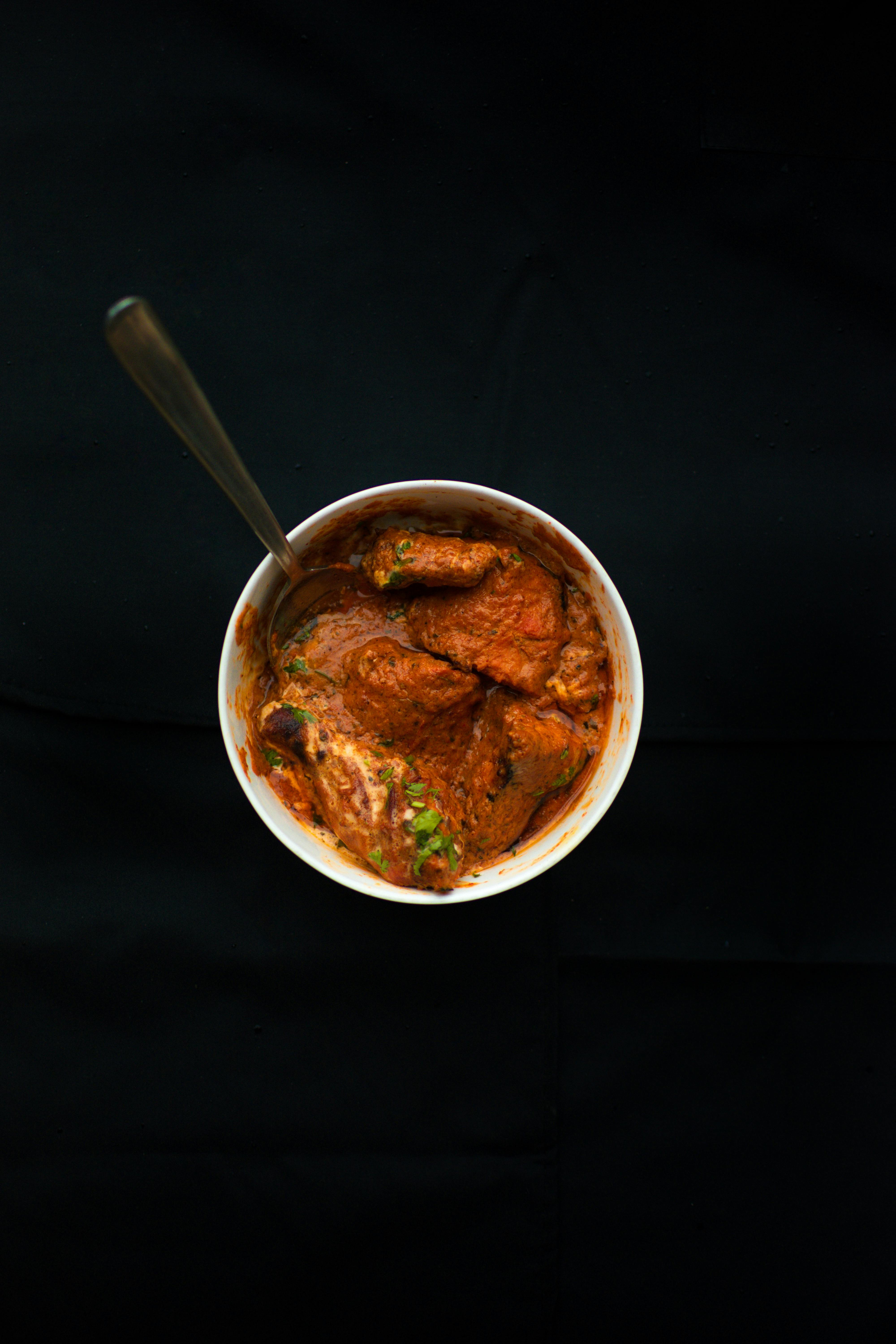
Photo: Yassir Abbas / Pexels
Indian
Lamb Bhuna
The diets react (see scores below)
Common Ingredients
- lamb shoulder
- onion
- tomatoes
- ginger
- garlic
- garam masala
- cumin
- cilantro
Specific recipes may vary.
Incompatible with 4 of 11 diets
Diet Ratings
Lamb Bhuna is fundamentally keto-friendly at its core — lamb shoulder is a fatty, high-quality protein with zero carbs, and the spices are negligible. However, the dish contains onions and tomatoes, which contribute moderate net carbs (onions ~5g net carbs per 100g, tomatoes ~3g net carbs per 100g). In a traditional bhuna preparation, onions are used in meaningful quantities as a base and are cooked down to form the sauce, potentially pushing a single serving toward or past the cautious threshold. In strict keto, this is manageable with portion control and reduced onion quantity, but as served in a restaurant or home in standard portions, carb accumulation is a real concern. No grains, sugars, or starches are present, which keeps this well clear of 'avoid' territory.
Strict keto practitioners argue that onion-heavy curry bases, even without sugar, can push daily net carbs too high when combined with other meals, and advocate for cauliflower or reduced-onion versions. Conversely, lazy keto or targeted keto followers often approve this dish outright, noting the net carbs from tomatoes and onions are moderate and easily accommodated within a 50g daily limit.
Lamb Bhuna contains lamb shoulder as its primary protein, which is unambiguously an animal product (red meat from sheep). This is a direct and clear violation of vegan dietary principles, which exclude all animal flesh. The remaining ingredients — onion, tomatoes, ginger, garlic, garam masala, cumin, and cilantro — are all plant-based, but the presence of lamb makes this dish entirely incompatible with a vegan diet.
Lamb Bhuna is an excellent paleo dish. Lamb shoulder is a nutrient-dense, unprocessed meat that would have been readily available to hunter-gatherers. All remaining ingredients — onion, tomatoes, ginger, garlic, garam masala (a blend of paleo-approved spices such as coriander, cumin, cardamom, cloves, cinnamon, and black pepper), cumin, and cilantro — are whole, unprocessed foods fully compatible with paleo principles. There are no grains, legumes, dairy, seed oils, refined sugars, or artificial additives present. The bhuna cooking style (dry-frying spices and reducing the sauce) aligns naturally with paleo preparation methods. The only minor caveat is that commercial garam masala blends could occasionally contain non-paleo fillers or anti-caking agents, so homemade or clean-label spice blends are preferable.
Lamb Bhuna is centered on lamb shoulder, a red meat high in saturated fat, which Mediterranean diet guidelines restrict to just a few times per month. While many of the supporting ingredients — onion, tomatoes, garlic, ginger, and cilantro — are wholesome plant-based components that align well with Mediterranean principles, the dish as a whole is defined by a substantial portion of red meat. The Indian spice profile (garam masala, cumin) is not inherently problematic but is outside the traditional Mediterranean culinary tradition. The absence of olive oil as the cooking fat and the red meat–forward nature of the dish place it firmly in the 'avoid' category for regular consumption.
Some Mediterranean diet researchers note that lamb is actually consumed in traditional Greek, Turkish, and Middle Eastern Mediterranean cuisines, particularly during festive occasions. A small, occasional serving of lean lamb alongside abundant vegetables could be interpreted as culturally consistent with the broader Mediterranean pattern, provided it is truly infrequent.
Lamb Bhuna is fundamentally incompatible with the carnivore diet despite containing lamb as the primary protein. The dish is heavily plant-based in its construction: onion, tomatoes, ginger, garlic, garam masala, cumin, and cilantro are all plant-derived ingredients that are explicitly excluded on a carnivore diet. While the lamb shoulder itself would be an approved food, the dish as prepared cannot be separated from its plant-based components. The spice blend (garam masala, cumin) and aromatics (onion, garlic, ginger) form the essential character of the dish, and cilantro as garnish adds further plant matter. This is a classic plant-heavy curry preparation — the lamb is merely one ingredient among many non-carnivore foods.
Lamb Bhuna as listed is fully Whole30 compliant. Lamb shoulder is an approved protein, and all other ingredients — onion, tomatoes, ginger, garlic, garam masala, cumin, and cilantro — are whole vegetables, aromatics, and spices explicitly allowed on the program. There are no grains, legumes, dairy, added sugars, or any other excluded ingredients in this dish. Garam masala is a spice blend typically composed of compliant spices (cumin, coriander, cardamom, black pepper, cinnamon, cloves), so no concern there assuming a clean store-bought or homemade blend with no additives.
Lamb Bhuna contains two major high-FODMAP ingredients that make it unsuitable during the elimination phase: onion (high in fructans — one of the most significant FODMAP offenders) and garlic (also high in fructans, consistently rated avoid by Monash University at any standard culinary quantity). These are not incidental trace ingredients but core flavour bases of a bhuna, typically used in substantial amounts. Lamb shoulder itself is low-FODMAP (plain protein), tomatoes are low-FODMAP at standard servings (up to 65g per Monash), ginger is low-FODMAP, and individual spices like cumin and garam masala are generally low-FODMAP at culinary doses. Cilantro is low-FODMAP. However, the onion and garlic alone are sufficient to render this dish high-FODMAP at any realistic restaurant or home-cooked serving. There is no practical way to consume a standard portion of Lamb Bhuna and remain within elimination-phase limits without fundamentally reformulating the dish (e.g., substituting garlic-infused oil and omitting onion entirely).
Lamb Bhuna presents a mixed DASH diet profile. The dish includes DASH-friendly vegetables (onion, tomatoes, garlic, ginger) and beneficial anti-inflammatory spices (cumin, garam masala, cilantro) with no added sodium from processed sources. However, the primary concern is lamb shoulder, which is a fattier cut of red meat — a category DASH guidelines recommend limiting due to higher saturated fat content. Red meat is not explicitly banned by DASH but is advised in small portions and ideally replaced by lean poultry or fish. Lamb shoulder specifically can contain 8-10g+ saturated fat per 100g depending on trimming. On the positive side, this recipe has no high-sodium processed ingredients, no tropical oils, and no added sugars. The vegetable and spice base contributes potassium, magnesium, and fiber. With portion control and trimming visible fat, this dish can fit into a DASH pattern occasionally, but it is not a core DASH food.
NIH DASH guidelines categorize red meat as a food to limit, favoring lean poultry and fish instead. However, some updated clinical interpretations note that lean, trimmed lamb provides high-quality protein, zinc, and iron, and when consumed in modest portions (3oz) within an otherwise DASH-compliant diet, its saturated fat contribution may be acceptable — particularly if replacing higher-sodium processed meat alternatives.
Lamb Bhuna presents a mixed Zone Diet profile. The dish contains lamb shoulder, which is a higher-fat cut with significant saturated fat content — Zone strongly prefers lean proteins like skinless chicken or fish. However, the remaining ingredients are quite Zone-friendly: tomatoes and onions are low-glycemic vegetables, and the spices (garam masala, cumin, ginger, garlic, cilantro) are polyphenol-rich and anti-inflammatory, aligning well with Sears' later emphasis on polyphenols. The core issue is the protein source: lamb shoulder carries substantially more saturated fat than Zone-ideal proteins, making it harder to hit the 30% fat-from-monounsaturated target without tipping into excess saturated fat. With careful portion control — treating it as a single protein block (~1 oz cooked lamb) and pairing with additional low-GI vegetables and a monounsaturated fat source — it can fit into a Zone meal. The bhuna cooking method (dry-frying to reduce liquid) also concentrates the dish without adding extra oils, which is a mild positive. Overall, this is a 'caution' food: usable in Zone but requiring strict portion discipline on the lamb and thoughtful meal construction.
Some Zone practitioners and Sears' later writings (The Anti-Inflammation Zone, The Mediterranean Zone) take a more permissive view of red meat, including lamb, when consumed in moderate portions as part of a polyphenol-rich meal. The spice profile here (ginger, garlic, cumin, garam masala) is strongly anti-inflammatory, which Sears would view favorably in his post-2000 framework. A strict early-Zone reading would rate this lower due to saturated fat concerns, while a later anti-inflammatory Zone reading might push the score toward 6-7 given the polyphenol density of the dish.
Lamb Bhuna presents a mixed anti-inflammatory profile. On the positive side, the spice base is genuinely strong: garlic and ginger are well-established anti-inflammatory ingredients with research supporting reduction in CRP and IL-6. Garam masala typically contains turmeric, coriander, and other polyphenol-rich spices, and cumin adds further antioxidant value. Onions provide quercetin (a potent flavonoid), tomatoes contribute lycopene, and cilantro adds additional phytonutrients. Together these ingredients represent a meaningful anti-inflammatory contribution. The problem is the primary protein: lamb shoulder is a fatty cut of red meat, high in saturated fat and arachidonic acid, both of which are associated with pro-inflammatory signaling. Anti-inflammatory guidelines consistently classify red meat as a food to limit, not emphasize. A bhuna preparation also tends to be a dry, concentrated sauce cooked down in the fat rendered from the meat, meaning the saturated fat content is not diluted. If lean lamb cuts were used and portions were modest, this dish would rate higher — the spice profile alone is exceptional. As written, with lamb shoulder as the base, this sits in 'caution' territory: anti-inflammatory spices on a pro-inflammatory protein.
Dr. Andrew Weil's framework places red meat in the 'limit' category (not 'avoid'), and lamb is often considered nutritionally preferable to beef due to higher conjugated linoleic acid (CLA) and omega-3 content, particularly from grass-fed animals — some integrative practitioners accept occasional lamb as part of a broadly anti-inflammatory pattern. However, mainstream anti-inflammatory protocols and the IF Rating system consistently penalize red meat regardless of sourcing, and lamb shoulder's saturated fat load remains a concern in regular consumption.
Lamb Bhuna uses lamb shoulder, which is a fatty cut with significant saturated fat content — a meaningful drawback for GLP-1 patients who are sensitive to high-fat meals. The cooking method (bhuna involves dry-frying spices and slow-cooking meat in its own juices with minimal water) concentrates fat rather than diluting it, and lamb shoulder can render considerable fat into the dish. On the positive side, lamb is a complete protein source, and the dish contains onion, tomatoes, ginger, and garlic — all nutrient-dense, low-calorie ingredients with anti-inflammatory properties. The spice blend (garam masala, cumin) is moderate rather than fiery, so acute GI irritation is less of a concern than with chili-heavy curries. The main liabilities are the saturated fat load from shoulder cut and the slowed gastric emptying on GLP-1s, which makes high-fat meals more likely to cause nausea, bloating, and reflux. A small portion of the protein component with sauce minimized is workable; a full restaurant serving is likely problematic.
Some GLP-1-focused dietitians accept lamb in moderate portions given its high protein density and rich micronutrient profile (iron, zinc, B12), arguing that a carefully portioned serving of a fatty protein is preferable to skipping protein altogether. Others hold that saturated fat from red meat should be consistently limited on GLP-1 therapy due to both GI side effect risk and cardiovascular considerations in a population often managing metabolic syndrome.
*See how scores were generated at our methodology page.
Nutritional profile
Six traits that cut across every diet.
Fiber & Plants
How much whole-plant food and fiber it delivers.
Healthy Fats
The quality of its fats (unsaturated, omega-3).
Whole / Unprocessed
How close it is to its natural, unprocessed form.
Gut Gentle
How easy it is on digestion (low FODMAP, few irritants).
Low Glycemic
How little it spikes your blood sugar.
Protein Density
How much protein it packs per calorie.
Controversy Index
Higher controversy = more disagreement between diets.
Diet-Specific Tips
 Keto — 6/10
View tips
- Lamb shoulder is an excellent high-fat, zero-carb keto protein
- Onions are the primary carb concern — used heavily as a sauce base in bhuna style
- Tomatoes add additional net carbs (~3-5g per serving)
- No grains, added sugars, or starches present
- Spices (garam masala, cumin, ginger, garlic) are negligible in carb contribution
- Portion control of the onion/tomato base is key to keeping this keto-compatible
- Restaurant portions may use significantly more onion than home preparation
 Paleo — 9/10
View tips
- Lamb shoulder is a high-quality, unprocessed paleo protein
- All vegetables (onion, tomatoes) are whole and paleo-approved
- Ginger, garlic, cumin, and cilantro are natural herbs and spices fully paleo-compliant
- Garam masala is a blend of paleo-friendly spices with no grain or legume components
- No grains, legumes, dairy, seed oils, or refined sugars in the recipe
- Commercial spice blends should be checked for additives or fillers
 Whole30 — 9/10
View tips
- Lamb shoulder is a fully compliant Whole30 protein
- All aromatics (onion, garlic, ginger) are approved vegetables
- Tomatoes are compliant whole vegetables
- Garam masala and cumin are approved spices — verify store-bought blend contains no added sugar or anti-caking agents beyond compliant ones
- Cilantro is an approved herb
- No dairy, grains, legumes, or added sugars present
 DASH — 5/10
View tips
- Lamb shoulder is red meat with significant saturated fat — a category DASH advises limiting
- No high-sodium processed ingredients; spice-based flavoring is DASH-friendly
- Vegetables (tomato, onion, garlic, ginger) contribute potassium and fiber, supporting DASH goals
- Portion control critical: a 3oz serving of trimmed lamb is more acceptable than larger portions
- Leaner cuts (leg of lamb) or substituting with chicken would improve DASH compatibility
- No added sugars, tropical oils, or sugary beverages — positives for DASH adherence
 Zone — 5/10
View tips
- Lamb shoulder is a high-fat cut with elevated saturated fat — Zone prefers lean protein sources
- Saturated fat content makes hitting 30% monounsaturated fat target more difficult
- Tomatoes and onions are favorable low-glycemic Zone carbohydrates
- Ginger, garlic, cumin, and garam masala are polyphenol-rich and anti-inflammatory, aligning with Sears' later work
- No added oils reported in ingredients — bhuna method is relatively low-fat
- Strict portioning (~1 oz cooked lamb per block) required to manage fat intake
- Leaner lamb cuts (leg of lamb) would significantly improve Zone compatibility
 Anti-Inflammatory — 5/10
View tips
- Lamb shoulder is red meat high in saturated fat and arachidonic acid — pro-inflammatory primary protein
- Ginger and garlic are well-supported anti-inflammatory ingredients (reduced CRP in clinical studies)
- Garam masala spice blend likely contains turmeric and coriander — meaningful polyphenol content
- Cumin provides antioxidant and anti-inflammatory compounds
- Onions contribute quercetin, a potent anti-inflammatory flavonoid
- Tomatoes add lycopene and other carotenoids
- Bhuna cooking method concentrates rendered lamb fat in the sauce
- Dish rates higher than many red meat preparations due to exceptional spice density
 GLP-1 Friendly — 4/10
View tips
- Lamb shoulder is a high-fat, high-saturated-fat cut — worsens GLP-1 GI side effects
- Bhuna cooking method retains and concentrates fat rather than removing it
- Good complete protein source supporting the 100-120g daily protein target
- Tomatoes, onion, garlic, ginger add nutrient density with minimal calorie cost
- Spice profile is moderate — not acutely high-risk for reflux or nausea
- High-fat content slows gastric emptying further on top of GLP-1 effect
- Small portion of meat with vegetables preferred; full restaurant serving not recommended
- Would score higher if made with lamb leg or loin instead of shoulder