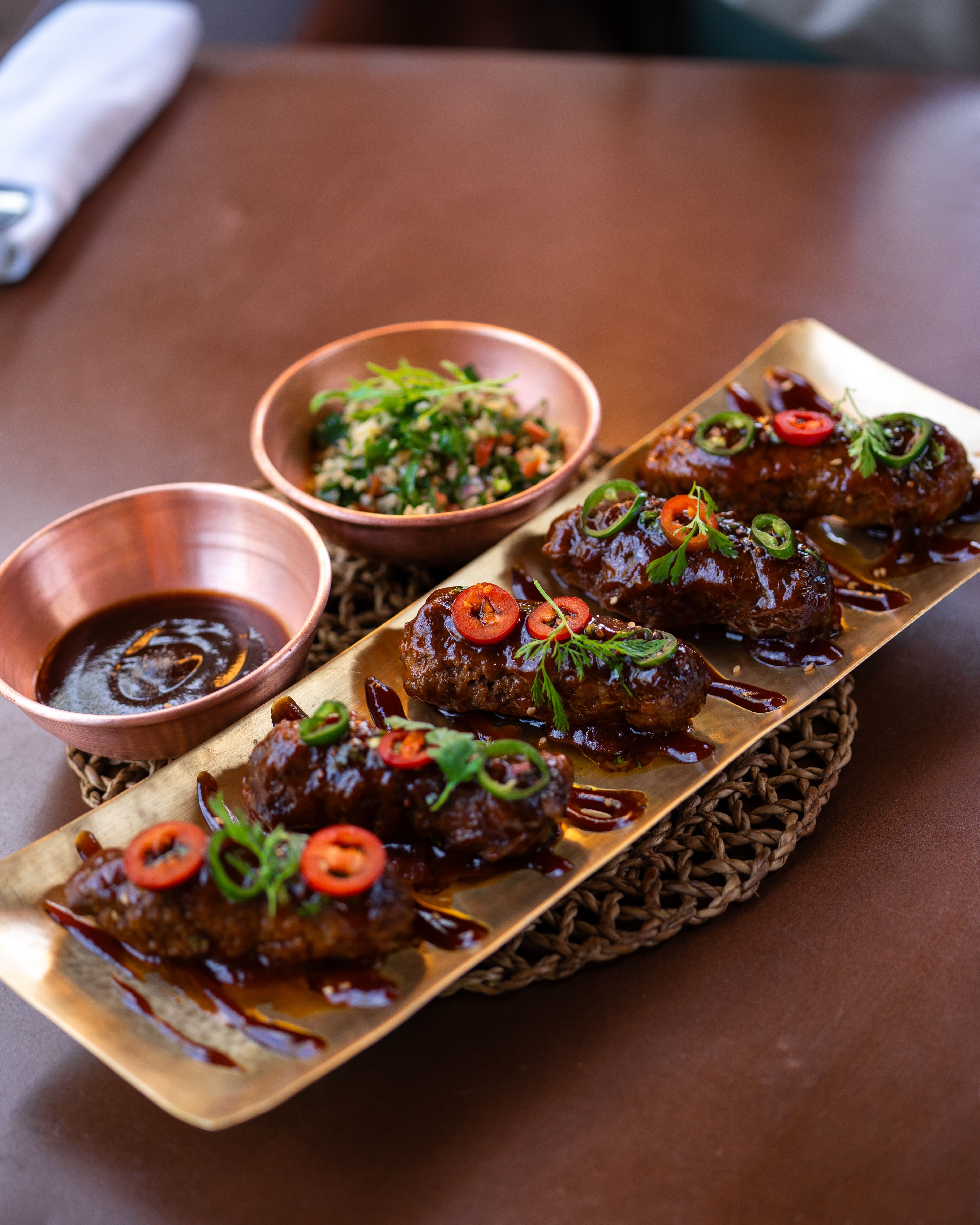
Middle-Eastern
Lamb Kofta
The diets react (see scores below)
Common Ingredients
- ground lamb
- onion
- parsley
- cumin
- coriander
- garlic
- cinnamon
- sumac
Specific recipes may vary.
Incompatible with 4 of 11 diets
Diet Ratings
Lamb kofta is an excellent keto dish. Ground lamb is naturally high in fat and protein with zero carbohydrates. The aromatics (onion, garlic, parsley) are used in small quantities as flavoring and contribute minimal net carbs per serving. Spices like cumin, coriander, cinnamon, and sumac are used in trace amounts and add negligible carbs. There are no grains, added sugars, or starchy ingredients. A standard serving of 3-4 kofta skewers would contain well under 5g net carbs, primarily from the onion and garlic, making this highly compatible with ketogenic macros.
Lamb Kofta is fundamentally incompatible with a vegan diet. The primary ingredient is ground lamb, which is animal flesh — a direct violation of the core vegan principle of excluding all animal products. The remaining ingredients (onion, parsley, cumin, coriander, garlic, cinnamon, sumac) are all plant-based, but the dish cannot be considered vegan in any form due to the lamb content.
Lamb Kofta is an excellent paleo dish. Ground lamb is a nutrient-dense, unprocessed meat well aligned with hunter-gatherer eating. Every other ingredient — onion, parsley, garlic, cumin, coriander, cinnamon, and sumac — is a whole vegetable, herb, or spice with no paleo objections. There are no grains, legumes, dairy, seed oils, refined sugars, or processed additives present. The dish is minimally processed (ground and shaped meat with aromatics), which is entirely consistent with paleo philosophy.
Lamb is red meat, which the Mediterranean diet limits to a few times per month. Ground lamb in kofta form is relatively high in saturated fat. While the aromatics (onion, parsley, garlic, cumin, coriander, cinnamon, sumac) are all Mediterranean-friendly and nutritionally positive, the primary protein source makes this a dish to consume only occasionally. It is not a staple and does not align with frequent consumption patterns encouraged by the diet.
Traditional Eastern Mediterranean and Middle Eastern cuisines — particularly Levantine and Greek traditions — do incorporate lamb as a culturally significant protein, and some Mediterranean diet researchers acknowledge that lean, grass-fed lamb consumed sparingly fits within the broader dietary pattern. The spice-rich, herb-forward preparation here is consistent with traditional Mediterranean cooking styles, and occasional consumption could be accepted within a generally plant-forward diet.
While ground lamb is an excellent carnivore-approved ruminant meat, Lamb Kofta as traditionally prepared is heavily plant-laden and incompatible with the carnivore diet. The dish contains multiple plant-based ingredients: onion, parsley, cumin, coriander, garlic, cinnamon, and sumac. These are all excluded plant foods — vegetables, herbs, and spices derived from plant sources. The protein base is ideal, but the dish as a whole cannot be considered carnivore-compatible in its traditional form. A carnivore practitioner would need to strip this down to ground lamb with salt only, which would no longer be kofta.
Lamb Kofta as described contains only Whole30-compliant ingredients. Ground lamb is an approved protein, onion and garlic are vegetables, parsley is an allowed herb, and cumin, coriander, cinnamon, and sumac are all compliant spices. There are no excluded ingredients — no grains, legumes, dairy, added sugars, or other disallowed substances. This is a straightforward whole-food dish built around meat and natural seasonings, perfectly aligned with the Whole30 program.
Lamb Kofta as traditionally prepared contains two well-established high-FODMAP ingredients that disqualify it during the elimination phase: onion and garlic. Both are among the highest-fructan foods tested by Monash University and are problematic even in small quantities. Onion is consistently rated as high-FODMAP at any reasonable serving, and garlic contains concentrated fructans that trigger symptoms even in sub-gram amounts. Ground lamb itself is low-FODMAP (plain meat contains no FODMAPs), and the spices — cumin, coriander, cinnamon, and sumac — are low-FODMAP at culinary amounts. Parsley is also low-FODMAP. However, the inclusion of both onion and garlic as structural ingredients (not mere traces) makes this dish a clear avoid during the elimination phase. The dish could be made low-FODMAP by omitting onion and garlic entirely and substituting garlic-infused oil for flavor, but as traditionally written it is not safe.
Lamb kofta is problematic for DASH diet adherence primarily because lamb is a red meat with relatively high saturated fat content. NIH/NHLBI DASH guidelines explicitly limit red meat consumption and recommend lean meats, poultry, and fish as preferred protein sources. Ground lamb is particularly high in saturated fat (roughly 9-10g per 100g), which conflicts with DASH's emphasis on limiting saturated fat to protect cardiovascular health. On the positive side, this recipe avoids added sodium (no salt listed), incorporates beneficial aromatics and spices (garlic, onion, parsley), and the spice blend (cumin, coriander, cinnamon, sumac) adds flavor without sodium. The absence of high-sodium sauces or processed ingredients prevents this from falling into the 'avoid' category. Occasional consumption of a small portion may be acceptable within a broader DASH eating pattern, but it is not a recommended food and should not be a regular feature of a DASH diet.
Lamb kofta presents a mixed Zone picture. The primary concern is the protein source: ground lamb is moderately fatty red meat, not a lean Zone-preferred protein. Depending on the fat content of the ground lamb (typically 15-20% fat), a single serving will carry significant saturated fat alongside the protein, making the fat block accounting complex and potentially throwing off the 30/30/40 ratio. However, the spice blend (cumin, coriander, cinnamon, sumac, garlic, parsley) is excellent from a Zone/anti-inflammatory standpoint — polyphenol-rich and metabolically neutral. Onion and garlic contribute minimal favorable carbs. To fit the Zone, a measured portion (~3 oz cooked) could serve as the protein block of a meal, paired with low-glycemic vegetables and minimal added fat given the lamb's intrinsic fat content. The dish is not inherently 'avoid' territory — it's a real-food protein source with no refined carbs or trans fats — but it requires careful portioning and complementary meal construction to stay in Zone ratios.
Dr. Sears' earlier Zone writings (Enter the Zone, 1995) placed fatty red meats firmly in the 'unfavorable' protein category due to saturated fat content and arachidonic acid concerns, which can promote pro-inflammatory eicosanoids — counter to Zone's core anti-inflammatory goal. Later writings (The Zone Diet and inflammation protocols) softened this stance somewhat for grass-fed red meat, which has a better omega-6/omega-3 ratio. If the lamb is grass-fed, some Zone practitioners would rate this more favorably (score 6-7); if it is conventionally raised grain-fed lamb, the arachidonic acid load is a genuine concern and the lower score is warranted.
Lamb Kofta presents a genuinely mixed anti-inflammatory profile. On the positive side, the spice blend is a standout: garlic, cumin, coriander, cinnamon, and sumac are all well-supported anti-inflammatory ingredients. Sumac in particular is exceptionally high in polyphenols and anthocyanins. Parsley contributes flavonoids and vitamin C. Onion provides quercetin. Together, the spice and herb components are strongly anti-inflammatory and partially offset the concerns around the protein source. The primary concern is ground lamb, which is classified as red meat with meaningful saturated fat content. Anti-inflammatory frameworks consistently recommend limiting red meat due to its association with elevated CRP and IL-6 inflammatory markers, arachidonic acid content, and saturated fat load. Ground lamb specifically tends to be higher in fat than lean cuts. However, lamb is less processed than cured or deli meats, contains some zinc and B12, and is not in the same category as processed red meat. Moderate consumption in the context of an otherwise anti-inflammatory diet — as is typical of traditional Middle Eastern eating patterns — is more defensible than frequent consumption. The overall dish lands squarely in 'caution': acceptable occasionally, not a regular staple.
Some anti-inflammatory practitioners, including those following Mediterranean-adjacent frameworks, view lamb consumed occasionally within a spice-rich, vegetable-forward dietary pattern as compatible with anti-inflammatory eating — particularly grass-fed lamb, which has a more favorable omega-3 to omega-6 ratio. Conversely, stricter anti-inflammatory protocols (and plant-forward interpretations of Dr. Weil's pyramid) would flag any regular red meat consumption, including lamb, as pro-inflammatory regardless of preparation.
Lamb kofta is a protein-rich dish but ground lamb is typically 20-25% fat by weight, making it a high-saturated-fat protein source compared to preferred GLP-1 options like chicken breast or fish. A standard serving (2-3 kofta, ~150g) provides roughly 20-25g protein, which meets the per-meal target, but also delivers 15-20g of fat, a significant portion of which is saturated. The spice blend — cumin, coriander, cinnamon, sumac, garlic — is generally well-tolerated and not aggressively spicy, which is a meaningful advantage over heat-heavy preparations. Onion and parsley contribute minor fiber but nothing substantial. The dish is not fried in the traditional recipe (grilled or baked), which is a positive factor for digestibility and fat management. However, the high fat content per serving risks worsening GLP-1 side effects such as nausea, bloating, and slowed gastric emptying compounded by dietary fat. It is not an empty-calorie food and does provide real nutritional value, but it competes poorly on fat profile versus preferred proteins.
Some GLP-1-focused dietitians accept lamb kofta as a culturally appropriate protein source when portion-controlled, noting that the grilled preparation and moderate spice profile make it more tolerable than other red meat preparations. Others flag the saturated fat content as a consistent trigger for GI side effects in GLP-1 patients and recommend substituting leaner ground turkey or chicken in the kofta preparation.
*See how scores were generated at our methodology page.
Nutritional profile
Six traits that cut across every diet.
Fiber & Plants
How much whole-plant food and fiber it delivers.
Healthy Fats
The quality of its fats (unsaturated, omega-3).
Whole / Unprocessed
How close it is to its natural, unprocessed form.
Gut Gentle
How easy it is on digestion (low FODMAP, few irritants).
Low Glycemic
How little it spikes your blood sugar.
Protein Density
How much protein it packs per calorie.
Controversy Index
Higher controversy = more disagreement between diets.
Diet-Specific Tips
 Keto — 9/10
View tips
- Ground lamb is zero-carb and naturally high in fat — ideal keto protein source
- Spices used in trace amounts contribute negligible net carbs
- Onion and garlic are used as flavoring only; minimal carb contribution per serving
- No grains, breadcrumbs, or fillers in traditional recipe
- Whole, unprocessed ingredients align with clean keto principles
- Total net carbs per serving estimated under 3-5g
 Paleo — 9/10
View tips
- Ground lamb is a whole, unprocessed paleo-approved protein
- All spices (cumin, coriander, cinnamon, sumac) are natural and paleo-compliant
- Onion, parsley, and garlic are whole vegetables/herbs with no paleo concerns
- No grains, legumes, dairy, or seed oils present
- Preparation method is simple and unprocessed
- Sumac is a wild-harvested berry spice with strong paleo credentials
 Whole30 — 9/10
View tips
- Ground lamb is an explicitly approved protein
- All spices (cumin, coriander, cinnamon, sumac) are Whole30-compliant
- Onion, garlic, and parsley are allowed vegetables/herbs
- No grains, legumes, dairy, or added sugars present
- Dish is not a recreation of a banned food category (not bread, pancakes, etc.)
- Sumac is a natural dried berry spice — fully compliant
 DASH — 4/10
View tips
- Lamb is red meat — explicitly limited by NIH/NHLBI DASH guidelines
- High saturated fat content in ground lamb (~9-10g per 100g) conflicts with DASH fat limits
- No added sodium in ingredient list — a positive factor
- Beneficial aromatics: garlic, onion, parsley contribute micronutrients
- Spice-forward seasoning adds flavor without relying on salt
- Occasional small portions may fit within a DASH pattern, but not a recommended staple
- Substituting lean ground turkey or chicken would significantly improve DASH compatibility
 Zone — 5/10
View tips
- Ground lamb is a moderately fatty red meat — not a lean Zone-preferred protein source
- Saturated fat and arachidonic acid content may promote pro-inflammatory eicosanoids, counter to Zone principles
- Grass-fed lamb improves the omega-6/omega-3 ratio and partially mitigates the inflammatory concern
- Spice profile (sumac, cumin, coriander, cinnamon, parsley) is polyphenol-rich and strongly anti-inflammatory — a Zone positive
- No refined carbohydrates, no added sugar, no seed oils — clean ingredient list
- Portion control is essential: ~3 oz cooked to stay within ~1 protein block (~21-25g protein)
- Intrinsic fat in lamb reduces or eliminates the need for added fat blocks in the accompanying meal
- Must be balanced with low-glycemic vegetable carbs and minimal added fat to achieve 40/30/30 ratio
 Anti-Inflammatory — 5/10
View tips
- Lamb is red meat — anti-inflammatory frameworks recommend limiting red meat due to saturated fat and arachidonic acid content
- Ground lamb is higher in fat than lean cuts, increasing saturated fat load
- Sumac is exceptionally rich in polyphenols and anthocyanins — a strong anti-inflammatory ingredient
- Garlic, cumin, coriander, and cinnamon are all well-supported anti-inflammatory spices
- Parsley contributes flavonoids and antioxidants; onion provides quercetin
- Grass-fed lamb has a more favorable omega-3 profile than grain-fed
- No refined carbohydrates, added sugars, seed oils, or processed additives in this preparation
- Traditional dietary context (Middle Eastern cuisine) often pairs with vegetables, legumes, and whole grains — overall pattern matters
 GLP-1 Friendly — 5/10
View tips
- High saturated fat content from ground lamb (~20-25% fat) risks worsening nausea and bloating
- Adequate protein per serving (~20-25g) meets per-meal GLP-1 protein targets
- Grilled or baked preparation avoids added frying fats — a meaningful advantage
- Spice profile is moderate and generally GLP-1-tolerable — no high-heat chilies
- Low fiber contribution — no substantial digestive support
- Portion-sensitive: one kofta is manageable; multiple servings significantly increase fat load
- Fatty red meat is a limited-confidence category with split clinical opinion for GLP-1 patients