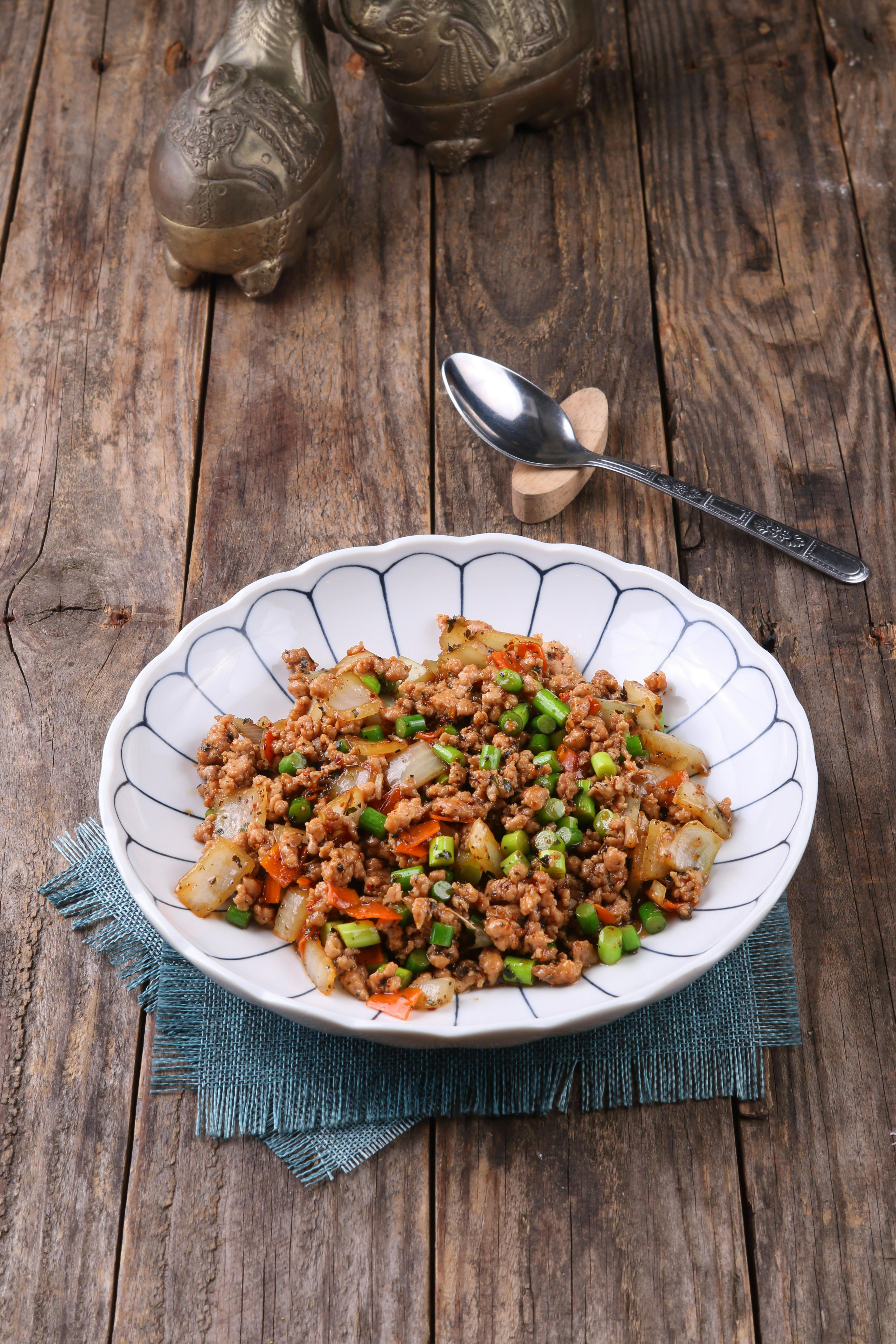
The diets react (see scores below)
Common Ingredients
- ground chicken
- toasted rice powder
- lime juice
- fish sauce
- mint
- cilantro
- shallots
- chiles
Specific recipes may vary.
Incompatible with 2 of 11 diets
Diet Ratings
Larb Gai is predominantly keto-friendly — ground chicken is a clean protein, and fresh herbs (mint, cilantro), shallots, chiles, lime juice, and fish sauce add minimal net carbs. The main concern is toasted rice powder (khao khua), a traditional and essential ingredient that adds starchy carbs. A typical serving uses 1-2 tablespoons per dish, contributing roughly 8-12g net carbs from the rice powder alone. Combined with shallots and lime juice, total net carbs per serving can approach 12-18g — manageable within a daily keto budget but not negligible. The dish is low-fat since it centers on lean ground chicken, which also slightly conflicts with the high-fat keto ideal. With rice powder reduced or omitted, it becomes much more keto-compatible.
Some lazy keto and flexible keto practitioners consider Larb Gai fully acceptable, arguing that the small amount of rice powder used per serving (1-2 tsp per individual portion) keeps net carbs low enough to approve outright, especially if total daily carbs are tracked and budgeted. Conversely, strict keto adherents reject any grain-derived ingredient entirely, regardless of quantity, making the rice powder a hard disqualifier.
Larb Gai contains two clear animal-derived ingredients: ground chicken (poultry) and fish sauce (made from fermented fish). Both are unambiguously non-vegan. The remaining ingredients — toasted rice powder, lime juice, mint, cilantro, shallots, and chiles — are all plant-based, but the dish as described cannot be considered vegan due to its primary protein and seasoning base. A vegan version could be made by substituting mushrooms or tofu for the chicken and using soy sauce or a vegan fish sauce alternative.
Larb Gai is a fresh, herb-forward Thai salad with many paleo-approved ingredients — ground chicken, lime juice, mint, cilantro, shallots, and chiles are all clearly paleo. However, two ingredients create issues: (1) Toasted rice powder (khao khua) is a traditional and essential component of authentic larb, and rice is a grain, making it non-paleo. (2) Fish sauce, while made from fermented fish, almost universally contains added salt and sometimes sugar or preservatives, placing it in a gray zone — most paleo practitioners accept it in small amounts as a flavoring, but strict interpretations flag the additives. The dish is close to paleo but cannot be fully approved in its authentic form due to the rice powder. A simple substitution — omitting the rice powder or replacing it with ground toasted coconut or crushed nuts for texture — would bring it into approved territory.
Larb Gai is a lean, herb-forward dish that aligns reasonably well with Mediterranean principles in several ways: ground chicken is a lean poultry protein acceptable in moderation, and the dish is loaded with fresh herbs (mint, cilantro), shallots, chiles, and lime juice — all whole plant foods strongly encouraged in the Mediterranean diet. Toasted rice powder is a minor ingredient used as a thickener, contributing negligible refined grain content. Fish sauce adds sodium but is used in small quantities. The main limiting factor is the absence of olive oil (a core Mediterranean requirement) and the non-Mediterranean culinary tradition. Poultry is categorized as moderate/occasional, placing this dish in the 'caution' zone rather than a full approval. Overall it is a clean, minimally processed, herb-rich dish that fits Mediterranean values better than most non-Mediterranean foods.
Some Mediterranean diet practitioners applying a flexible, principle-based interpretation (rather than a strictly regional one) might rate this higher, noting that its emphasis on lean protein, abundant fresh herbs, and acid-based dressing closely mirrors the spirit of Mediterranean eating. Others might downgrade it slightly for the fish sauce sodium load and lack of olive oil, which is the canonical Mediterranean fat source.
Larb Gai is a Thai salad that is fundamentally incompatible with the carnivore diet. While it does contain ground chicken and fish sauce (both animal-derived), the dish is dominated by plant-based ingredients: toasted rice powder (a grain), lime juice (fruit), mint, cilantro, shallots (vegetables/alliums), and chiles (nightshade). The toasted rice powder serves as a key textural and flavor component, making it a grain-based dish at its core. The majority of the ingredient list consists of plant foods that are explicitly excluded from the carnivore diet. Fish sauce alone cannot redeem this dish from an avoid rating.
Larb Gai as described contains all Whole30-compliant ingredients: ground chicken (meat, allowed), lime juice (fruit juice, allowed), fish sauce (typically just fish and salt — compliant versions exist and are common), fresh mint, cilantro, shallots, and chiles (all vegetables/herbs, allowed). The one ingredient worth noting is toasted rice powder (khao khua), which is a small amount of toasted rice used as a textural seasoning. Rice is technically a grain excluded on Whole30, even in powdered form. However, the quantity used is minimal — typically a teaspoon or two — and serves as an authentic seasoning rather than a grain-based filler. The dish is otherwise a clean, whole-food preparation with no added sugars, dairy, legumes, or other excluded ingredients. Fish sauce label-checking is recommended to ensure no added sugar or non-compliant additives.
Toasted rice powder is made from rice, a grain explicitly excluded on Whole30. Official Whole30 guidelines do not carve out an exception for rice used as a seasoning or in trace amounts — the rule is categorical. Some community members and coaches consider any rice-derived ingredient non-compliant regardless of quantity, which would push this dish to 'avoid' or require omitting the rice powder entirely for a compliant version.
Larb Gai contains several low-FODMAP ingredients (ground chicken, lime juice, fish sauce, mint, cilantro, chiles, toasted rice powder) but is compromised by shallots, which are high-FODMAP due to fructans. Shallots are in the same problematic category as onions and are typically avoided entirely during the elimination phase. The amount of shallots used in a standard larb recipe is usually significant enough to push the dish into high-FODMAP territory. Fish sauce is generally low-FODMAP in typical culinary amounts. Toasted rice powder (khao khua) is low-FODMAP. Chiles are low-FODMAP. The dish could be made low-FODMAP by omitting shallots or substituting the green tops of spring onions, but as traditionally prepared with shallots, caution is warranted.
Monash University rates shallots as high-FODMAP even at small servings due to significant fructan content, and most clinical FODMAP practitioners recommend avoiding them entirely during elimination. Some practitioners might rate this dish as 'avoid' rather than 'caution' given that shallots are a core structural ingredient in larb and not easily minimized without fundamentally changing the dish.
Larb Gai is a lean protein salad with many DASH-friendly ingredients — ground chicken is a lean protein, lime juice and herbs (mint, cilantro) add nutrients without sodium, shallots and chiles are low-calorie vegetables, and toasted rice powder adds minimal whole grain fiber. However, fish sauce is the critical concern: a typical Larb Gai serving uses 2-3 tablespoons of fish sauce, which contributes approximately 1,200-1,800mg of sodium — a substantial portion of even the standard DASH daily limit of 2,300mg, and potentially exceeding the low-sodium DASH limit of 1,500mg in a single dish. This places it firmly in 'caution' territory despite its otherwise clean ingredient profile. Portion control and reducing fish sauce (or substituting low-sodium alternatives) would significantly improve its DASH compatibility.
NIH DASH guidelines emphasize limiting sodium broadly, making high fish sauce dishes problematic by default. However, some DASH-oriented dietitians note that when fish sauce is used sparingly and the overall meal is otherwise sodium-minimal (no other processed foods that day), the dish's lean protein, anti-inflammatory herbs, and absence of saturated fat make it a reasonable occasional choice within a managed daily sodium budget.
Larb Gai is an excellent Zone Diet candidate. Ground chicken provides lean protein that maps cleanly onto Zone protein blocks (~7g per block). The dish is predominantly protein and low-glycemic vegetables/herbs — mint, cilantro, shallots, chiles, and lime juice are all favorable Zone carbohydrate sources with negligible glycemic impact. Fish sauce adds sodium but minimal macronutrient distortion. The primary concern is the toasted rice powder (khao khua), which is a modest source of higher-glycemic starch; however, the quantity used is typically small (1-2 teaspoons as a textural/flavor element per serving), contributing only a few grams of carbohydrate, making it nutritionally negligible in Zone block calculations. The dish is naturally low in fat, which means it would need a monounsaturated fat addition (e.g., a side of avocado, a drizzle of olive oil, or a small handful of almonds) to complete the 30% fat target. Overall, Larb Gai is a protein-forward, herb-rich, low-glycemic dish that fits the Zone framework well with minor adjustments.
Some Zone practitioners may rate this slightly lower because toasted rice powder, while used in small amounts, is a refined starch and technically an 'unfavorable' carbohydrate in Sears' classification system. Traditional Zone guidance would flag any rice-derived ingredient. Additionally, the near-absence of fat in the dish as traditionally prepared means it cannot be considered a complete Zone meal without deliberate fat addition — a consideration that could push the practical rating toward 'caution' for those who eat it as a standalone dish without modification.
Larb Gai is a strong performer on the anti-inflammatory framework. Ground chicken is a lean poultry protein — acceptable to moderate per anti-inflammatory guidelines. The dish's real strength lies in its herb and spice profile: mint and cilantro are rich in polyphenols and antioxidants, shallots contain quercetin (a well-researched anti-inflammatory flavonoid), and fresh chiles provide capsaicin, which has demonstrated anti-inflammatory effects in research including reduction of NF-κB signaling. Lime juice adds vitamin C and supports antioxidant activity. Fish sauce, while high in sodium, is used in small amounts as a condiment and introduces umami without meaningful inflammatory load. Toasted rice powder is a whole-grain-derived thickener used in modest quantities. The dish is naturally free of refined carbohydrates, added sugars, seed oils, or processed additives. It is prepared without cooking oil in most traditional recipes, eliminating concerns about pro-inflammatory fats. The combination of lean protein with a dense herb-forward, citrus-based profile aligns well with Dr. Weil's Anti-Inflammatory Food Pyramid emphasis on colorful plant matter, spices, and clean proteins.
Larb Gai is a strong GLP-1-friendly dish. Ground chicken is a lean, high-protein base that delivers roughly 25-28g of protein per standard serving with relatively low fat. The dish is light, requires no heavy oil or frying, and is served at small volumes — well-suited to the reduced appetite and small-portion preference of GLP-1 patients. Lime juice, fish sauce, herbs (mint, cilantro), and shallots add flavor with negligible calories and no meaningful fat load. Toasted rice powder adds a small amount of carbohydrate and minimal fiber, but the quantity per serving is very small (typically 1-2 teaspoons). The fresh herb content contributes micronutrients and the dish is generally easy to digest. The main concern is the chile content, which can worsen reflux or nausea — common GLP-1 side effects — in sensitive individuals. Sodium from fish sauce is moderate and worth noting for patients with hypertension, but is not a GLP-1-specific concern. Overall this dish aligns well with priority rules: high protein density, low fat, nutrient-dense, small-portion friendly.
Some GLP-1 nutrition practitioners would flag the chile content as a meaningful caution, since spicy foods can exacerbate nausea, reflux, and gastric discomfort that are already elevated on GLP-1 therapy — particularly in the early dose-escalation phase. Individual tolerance to spice varies considerably, and clinicians who work with GLP-1 patients experiencing significant GI side effects may recommend requesting this dish mild or chile-free rather than approving it as written.
*See how scores were generated at our methodology page.
Nutritional profile
Six traits that cut across every diet.
Fiber & Plants
How much whole-plant food and fiber it delivers.
Healthy Fats
The quality of its fats (unsaturated, omega-3).
Whole / Unprocessed
How close it is to its natural, unprocessed form.
Gut Gentle
How easy it is on digestion (low FODMAP, few irritants).
Low Glycemic
How little it spikes your blood sugar.
Protein Density
How much protein it packs per calorie.
Controversy Index
Higher controversy = more disagreement between diets.
Diet-Specific Tips
 Keto — 5/10
View tips
- Toasted rice powder (khao khua) is a grain-based ingredient adding ~8-12g net carbs per serving
- Ground chicken is lean protein, not high-fat — less aligned with keto macros
- Herbs, chiles, and fish sauce are negligible in net carbs
- Shallots and lime juice add minor but non-trivial carbs
- Dish can be modified by reducing or omitting rice powder for better keto compatibility
- Overall net carbs per serving sit in a borderline range requiring portion awareness
 Paleo — 5/10
View tips
- Toasted rice powder is a grain-based ingredient (rice) and is non-paleo — this is the primary disqualifier
- Fish sauce typically contains added salt and sometimes sugar; accepted by most practical paleo adherents but flagged by strict interpretations
- Ground chicken, lime juice, fresh herbs (mint, cilantro), shallots, and chiles are all paleo-approved
- The dish is easily modified to be fully paleo by omitting or substituting the rice powder
- No seed oils, dairy, legumes, or refined sugars otherwise present
 Mediterranean — 5/10
View tips
- Lean poultry protein — acceptable in moderation per Mediterranean guidelines
- Rich in fresh herbs, shallots, and chiles — whole plant foods strongly encouraged
- No olive oil — a core Mediterranean dietary pillar is absent
- Toasted rice powder is minimal and not a significant refined grain concern
- Fish sauce adds sodium but is used in small, flavoring quantities
- Whole, minimally processed ingredients with no added sugars
- Non-Mediterranean culinary tradition but principle-compatible profile
 Whole30 — 8/10
View tips
- Ground chicken is fully compliant
- Lime juice, fish sauce (check label), fresh herbs, shallots, and chiles are all compliant
- Toasted rice powder (khao khua) is derived from rice, a Whole30-excluded grain
- Rice powder is used in very small amounts as a traditional seasoning, but no official exception exists
- Fish sauce should be label-checked for added sugars or non-compliant additives
 Low-FODMAP — 5/10
View tips
- Shallots are high-FODMAP (fructans) and a core ingredient in traditional larb
- Ground chicken is low-FODMAP and safe
- Fish sauce is low-FODMAP at standard culinary amounts
- Toasted rice powder (khao khua) is low-FODMAP
- Lime juice, mint, and cilantro are all low-FODMAP
- Chiles are low-FODMAP
- Dish can be modified by replacing shallots with spring onion greens only
 DASH — 5/10
View tips
- Fish sauce is very high in sodium (~1,400mg per 2 tbsp), significantly impacting daily DASH sodium limits
- Ground chicken is a lean protein aligned with DASH guidelines
- Mint, cilantro, shallots, and chiles are DASH-approved low-sodium vegetables/herbs
- Lime juice provides potassium and flavor without sodium
- Toasted rice powder adds minimal fiber but no concerning nutrients
- Dish contains no saturated fat, added sugar, or processed ingredients beyond fish sauce
- Low-sodium fish sauce substitution would raise score to 7-8
 Zone — 8/10
View tips
- Ground chicken is a lean Zone-favorable protein source
- Herbs and aromatics (mint, cilantro, shallots, chiles) are low-glycemic favorable carbs
- Lime juice and fish sauce add minimal glycemic load
- Toasted rice powder is a small amount of unfavorable starch but negligible in typical serving quantities
- Dish is naturally very low in fat — requires monounsaturated fat addition to complete Zone ratios
- Rich in polyphenols from herbs and chiles, aligning with Sears' anti-inflammatory emphasis
- No processed ingredients, seed oils, or added sugars
 Anti-Inflammatory — 8/10
View tips
- Lean chicken protein — anti-inflammatory approved protein category
- Chiles provide capsaicin with demonstrated anti-inflammatory properties
- Mint and cilantro are polyphenol-rich herbs
- Shallots contain quercetin, a potent anti-inflammatory flavonoid
- Lime juice adds antioxidant vitamin C
- No seed oils, refined carbohydrates, added sugars, or processed additives
- Fish sauce used as condiment — high sodium but negligible inflammatory impact at typical serving quantities
- Toasted rice powder is whole-grain derived and used in small amounts
 GLP-1 Friendly — 8/10
View tips
- High lean protein from ground chicken (~25-28g per serving)
- Low fat — no frying, no added oil in traditional preparation
- Small serving volume works well with reduced GLP-1 appetite
- Fresh herbs contribute micronutrients and are easy to digest
- Toasted rice powder is minimal in quantity — negligible glycemic impact at typical serving
- Chile content is a real concern for GLP-1 patients with active nausea or reflux
- Fish sauce adds sodium — relevant for hypertensive patients but not GLP-1-specific
- Fiber content is low — dish pairs well with a fiber-rich side like cucumber or cabbage