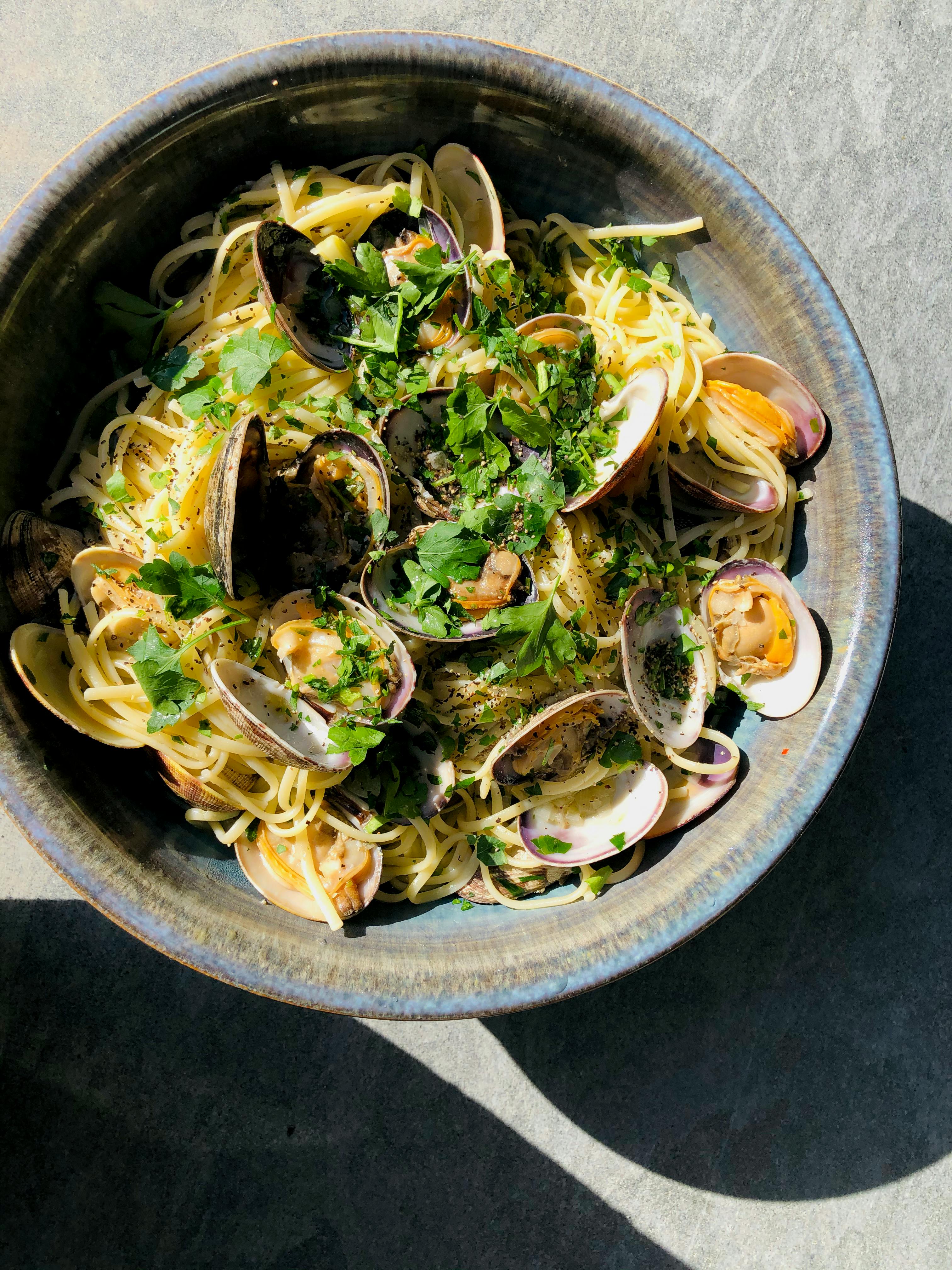
Photo: Laurel Segel / Pexels
Italian
Linguine with Clams
The diets react (see scores below)
Common Ingredients
- linguine
- littleneck clams
- white wine
- garlic
- olive oil
- parsley
- red pepper flakes
- lemon
Specific recipes may vary.
Incompatible with 6 of 11 diets
Diet Ratings
Linguine with Clams is fundamentally incompatible with ketogenic eating due to the linguine pasta, which is a refined grain product delivering roughly 40-45g of net carbs per standard serving (2 oz dry). This single ingredient alone exceeds or maxes out the entire daily net carb budget for ketosis. The remaining ingredients — clams, olive oil, garlic, white wine, parsley, lemon — are individually keto-friendly or manageable in moderation, but they cannot redeem the dish as long as pasta is its base. Clams are an excellent lean protein with minimal carbs, olive oil is an ideal keto fat, and garlic/parsley add negligible carbs. White wine adds a small carb load (~2-4g per serving) which is a minor secondary concern. The dish would need to be fundamentally reconstructed — replacing linguine with zucchini noodles or hearts of palm pasta — to become keto-compatible.
Linguine with Clams contains littleneck clams as the primary protein, which are marine bivalve mollusks — unambiguously animal products. Consuming clams requires harvesting and killing living animals, making this dish incompatible with a vegan diet under any mainstream vegan framework. The remaining ingredients (linguine, white wine, garlic, olive oil, parsley, red pepper flakes, lemon) are all plant-based, but the clams disqualify the dish entirely.
Linguine with Clams is disqualified from paleo compliance primarily due to linguine, a wheat-based pasta that is a grain and one of the most clearly excluded foods in the paleo framework. While the remaining ingredients are largely paleo-friendly — littleneck clams are an excellent ancestral protein, olive oil is approved, garlic and parsley are whole herbs, red pepper flakes and lemon are clean — the white wine sits in a gray area as alcohol, and the dish's foundation is fundamentally built on a non-paleo grain. There is no version of traditional linguine that is paleo-compliant. The dish as named and constructed cannot be approved or even cautioned; it must be avoided due to the central grain ingredient.
Linguine with clams is a quintessential Mediterranean dish that exemplifies the diet's core principles. Clams are an excellent seafood protein, rich in omega-3s, iron, and vitamin B12, and seafood is strongly encouraged 2-3 times per week. Olive oil serves as the primary fat, garlic, parsley, lemon, and red pepper flakes are classic Mediterranean aromatics and flavor enhancers with anti-inflammatory properties. White wine is a traditional cooking ingredient in Italian and broader Mediterranean cuisine. The only minor consideration is that linguine is a refined pasta rather than a whole grain, which slightly tempers the score, but pasta in moderate portions with seafood and olive oil is a traditional and accepted part of the Mediterranean dietary pattern, particularly in southern Italian coastal traditions.
Linguine with Clams is fundamentally incompatible with the carnivore diet. While clams are an approved animal protein, they represent a small fraction of this dish. The foundation is linguine pasta — a grain-based, plant-derived food that is strictly excluded. Additional plant-based ingredients include garlic, olive oil (plant oil), parsley (herb), red pepper flakes (spice/plant), and lemon (fruit). White wine is also excluded as a fermented plant product. The dish is essentially a pasta dish with clam flavoring, making it a clear avoid regardless of the animal protein present.
Linguine is a wheat-based pasta, which is a grain and explicitly excluded on Whole30. Additionally, white wine is alcohol, which is also excluded. The remaining ingredients — littleneck clams, garlic, olive oil, parsley, red pepper flakes, and lemon — are all Whole30-compliant, but the two core structural ingredients of this dish (the pasta and the wine) disqualify it entirely. There is no compliant version of this dish as named; replacing both the linguine and the wine would produce a fundamentally different dish.
This dish contains two major high-FODMAP ingredients that make it unsafe during the elimination phase. First, linguine is a wheat-based pasta, which is high in fructans at any standard serving size (a typical 180g cooked portion is well above the low-FODMAP threshold). Second, garlic is one of the highest-FODMAP foods tested by Monash University, containing significant fructans even in very small amounts — a single clove is enough to trigger symptoms in sensitive individuals. These two ingredients alone disqualify the dish during elimination. The remaining ingredients are generally low-FODMAP: littleneck clams are a shellfish with no significant FODMAPs, white wine is low-FODMAP at a standard serving, olive oil is FODMAP-free, parsley is low-FODMAP, red pepper flakes are low-FODMAP in typical amounts, and lemon is low-FODMAP. However, the wheat pasta and garlic cannot be overlooked. The dish could be made low-FODMAP with substitutions: use a certified gluten-free rice or corn pasta, and replace garlic cloves with garlic-infused olive oil (FODMAPs are water-soluble and do not transfer into oil).
Linguine with clams aligns reasonably well with DASH principles but requires some qualification. Clams are an excellent lean protein source rich in potassium, magnesium, iron, and B12, and are explicitly compatible with DASH guidelines emphasizing fish and seafood. Olive oil is a DASH-approved fat, and garlic, parsley, lemon, and red pepper flakes are all favorable additions with no sodium concerns. The main DASH considerations are: (1) Linguine is a refined grain rather than a whole grain — DASH emphasizes whole grains, though refined pasta is not categorically excluded; (2) Clams have moderate natural sodium (~95mg per 3oz cooked), and restaurant or home preparations often add additional salt during cooking, pushing sodium higher; (3) White wine adds minimal nutritional concern in cooking quantities. The dish contains no saturated fat, no processed meat, no added sugar, and no high-sodium processed ingredients as listed — making it a genuinely better-than-average restaurant pasta dish. Scored at 6 rather than higher primarily because of refined grain pasta and sodium accumulation risk from clams plus any added salt. Substituting whole wheat linguine and monitoring salt addition would push this to an 'approve' rating.
NIH DASH guidelines emphasize whole grains and do not explicitly include refined pasta as a primary grain choice, and standard DASH sodium limits (2,300mg) could be approached with generous clam portions and cooking salt. However, updated clinical interpretation increasingly recognizes that pasta, especially in moderate portions with seafood and olive oil (Mediterranean-DASH overlap), fits well within a heart-healthy dietary pattern — some DASH-oriented cardiologists would rate this dish more favorably, particularly the low-saturated-fat, nutrient-dense shellfish profile.
Linguine with Clams has a strong Zone-friendly protein core (clams are lean, low-fat, high-quality protein with excellent omega-3 content) and good fat from olive oil (monounsaturated). The significant problem is the linguine — refined white pasta is a high-glycemic, 'unfavorable' carbohydrate in Zone terminology that spikes insulin rapidly. A standard restaurant or home serving of linguine will deliver far too many carb blocks relative to the protein and fat, badly skewing the 40/30/30 ratio. To fit Zone parameters, linguine portions would need to be dramatically reduced (roughly 1/3 cup cooked pasta max per meal) and supplemented with additional low-glycemic vegetables. Garlic, parsley, lemon, white wine, and red pepper flakes are all Zone-neutral or positive (polyphenols, anti-inflammatory). The dish is not inherently avoidable — clams and olive oil are excellent Zone building blocks — but as typically prepared and served, the pasta load makes it very difficult to keep in Zone balance without significant modification.
Linguine with clams is a mixed dish from an anti-inflammatory perspective. On the positive side, clams are an excellent source of lean protein, omega-3 fatty acids, zinc, selenium, and vitamin B12 — all nutrients with anti-inflammatory or immune-supportive roles. Olive oil provides oleocanthal and monounsaturated fats, garlic contains allicin and organosulfur compounds with demonstrated anti-inflammatory effects, parsley is rich in flavonoids and vitamin C, red pepper flakes contribute capsaicin (anti-inflammatory), and lemon adds vitamin C and polyphenols. White wine in cooking (most alcohol burns off) is a minor concern. The main limiting factor is the refined pasta (white linguine), which is a refined carbohydrate that can spike blood glucose and modestly promote inflammatory pathways. If whole grain or legume-based pasta were used, this dish would score solidly higher. As prepared with standard white linguine, the dish is balanced — the excellent anti-inflammatory protein and aromatics partially offset the refined grain base — landing it in the 'caution/moderate' range rather than a clear approval.
Some anti-inflammatory practitioners would approve this dish outright, arguing that the overall Mediterranean dietary pattern it represents — seafood, olive oil, garlic, herbs — is strongly anti-inflammatory, and that modest amounts of refined pasta in the context of a nutrient-dense meal are not clinically meaningful. Dr. Weil's framework, for example, does not eliminate pasta but recommends moderation; a reasonable portion of white linguine alongside clams and olive oil is consistent with Mediterranean anti-inflammatory eating. Others, particularly those following stricter low-glycemic anti-inflammatory protocols, would maintain the refined carbohydrate concern more strongly.
Linguine with clams has a genuinely split nutritional profile for GLP-1 patients. Clams are an excellent protein source — lean, highly digestible, and rich in vitamin B12, iron, and zinc, all nutrients at risk during calorie restriction. Olive oil provides heart-healthy unsaturated fat in moderate amounts. However, the dish is anchored by refined white pasta (linguine), which is low in fiber, high in refined carbohydrates, and calorie-dense relative to its nutritional value — a poor fit for patients who need every calorie to count. A standard restaurant portion of linguine is also large by GLP-1 standards, and the pasta itself slows digestion in combination with GLP-1's already-slowed gastric emptying, potentially worsening fullness, bloating, or discomfort. The white wine and garlic are generally well-tolerated in cooking quantities. Red pepper flakes may irritate some patients prone to reflux or nausea. The dish can be made significantly more GLP-1-friendly by reducing pasta volume, substituting whole wheat or legume-based pasta for fiber, and loading in extra clams — but as typically prepared, the refined carbohydrate base limits the score.
Some GLP-1-focused dietitians are more permissive with refined pasta in the context of an otherwise lean, nutrient-dense dish, noting that clams deliver strong protein and micronutrient density and that portion control, not ingredient elimination, is the operative lever. Others flag that pasta's low satiety-per-calorie ratio makes it a poor choice for patients with dramatically reduced appetite who cannot afford low-density calories.
*See how scores were generated at our methodology page.
Nutritional profile
Six traits that cut across every diet.
Fiber & Plants
How much whole-plant food and fiber it delivers.
Healthy Fats
The quality of its fats (unsaturated, omega-3).
Whole / Unprocessed
How close it is to its natural, unprocessed form.
Gut Gentle
How easy it is on digestion (low FODMAP, few irritants).
Low Glycemic
How little it spikes your blood sugar.
Protein Density
How much protein it packs per calorie.
Controversy Index
Higher controversy = more disagreement between diets.
Diet-Specific Tips
 Mediterranean — 9/10
View tips
- Clams are an excellent lean seafood protein, fulfilling the 2-3x weekly seafood recommendation
- Extra virgin olive oil is the primary fat source, fully aligned with Mediterranean principles
- Garlic, parsley, lemon, and red pepper flakes are classic anti-inflammatory Mediterranean aromatics
- White wine used in cooking is a traditional Mediterranean technique
- Refined linguine pasta is less ideal than whole grain alternatives, but moderate pasta portions are accepted in traditional Italian Mediterranean practice
- Dish is low in saturated fat and free of added sugars or heavily processed ingredients
 DASH — 6/10
View tips
- Clams are lean, low-fat, DASH-compatible seafood rich in potassium, magnesium, and protein
- Olive oil is a DASH-approved unsaturated fat
- Linguine is a refined grain, not whole grain — DASH prefers whole grain pasta
- Natural sodium in clams plus any added salt can accumulate toward daily DASH limits
- No saturated fat, processed ingredients, added sugar, or red meat
- Whole wheat linguine substitution would significantly improve DASH compatibility
- Portion control important — large servings of pasta increase refined carbohydrate load
- Lemon, garlic, parsley, and red pepper flakes are all DASH-friendly flavor enhancers
 Zone — 5/10
View tips
- Clams are an excellent lean Zone protein source with favorable omega-3 fatty acids
- Olive oil provides ideal monounsaturated fat — a cornerstone of Zone fat choices
- Refined linguine pasta is a high-glycemic 'unfavorable' carbohydrate in Zone terminology
- Standard pasta portions deliver 4-6+ carb blocks, far exceeding a balanced Zone meal
- Garlic, parsley, lemon, and red pepper flakes are polyphenol-rich and anti-inflammatory
- White wine adds minor carb load but is largely negligible in cooking quantities
- Dish can be Zone-adapted by reducing pasta to ~1/3 cup cooked and adding leafy greens or zucchini noodles
 Anti-Inflammatory — 6/10
View tips
- Clams: lean protein rich in omega-3s, zinc, selenium, and B12 — strongly anti-inflammatory
- Olive oil: oleocanthal and MUFAs with well-documented anti-inflammatory properties
- Garlic: allicin and organosulfur compounds reduce inflammatory markers
- Red pepper flakes: capsaicin has anti-inflammatory effects
- Parsley and lemon: polyphenols, vitamin C, antioxidant support
- White linguine: refined carbohydrate — main pro-inflammatory concern in this dish
- White wine: minor issue; most alcohol cooks off, but residual concerns remain
 GLP-1 Friendly — 5/10
View tips
- Clams are a lean, high-quality protein source with excellent micronutrient density (B12, iron, zinc)
- Linguine is a refined grain with low fiber and low nutrient density per calorie — a poor fit for GLP-1 calorie budgets
- Olive oil provides acceptable unsaturated fat in moderate cooking quantities
- Standard restaurant portions of pasta are too large for GLP-1 patients; portion control is critical
- Slowed gastric emptying may amplify discomfort from a heavy starch load
- Red pepper flakes may worsen reflux or nausea in sensitive patients
- White wine cooks off alcohol in typical preparation and is not a meaningful concern at recipe quantities
- Dish is upgradeable: whole wheat or legume pasta, extra clams, smaller pasta portion significantly improve the profile