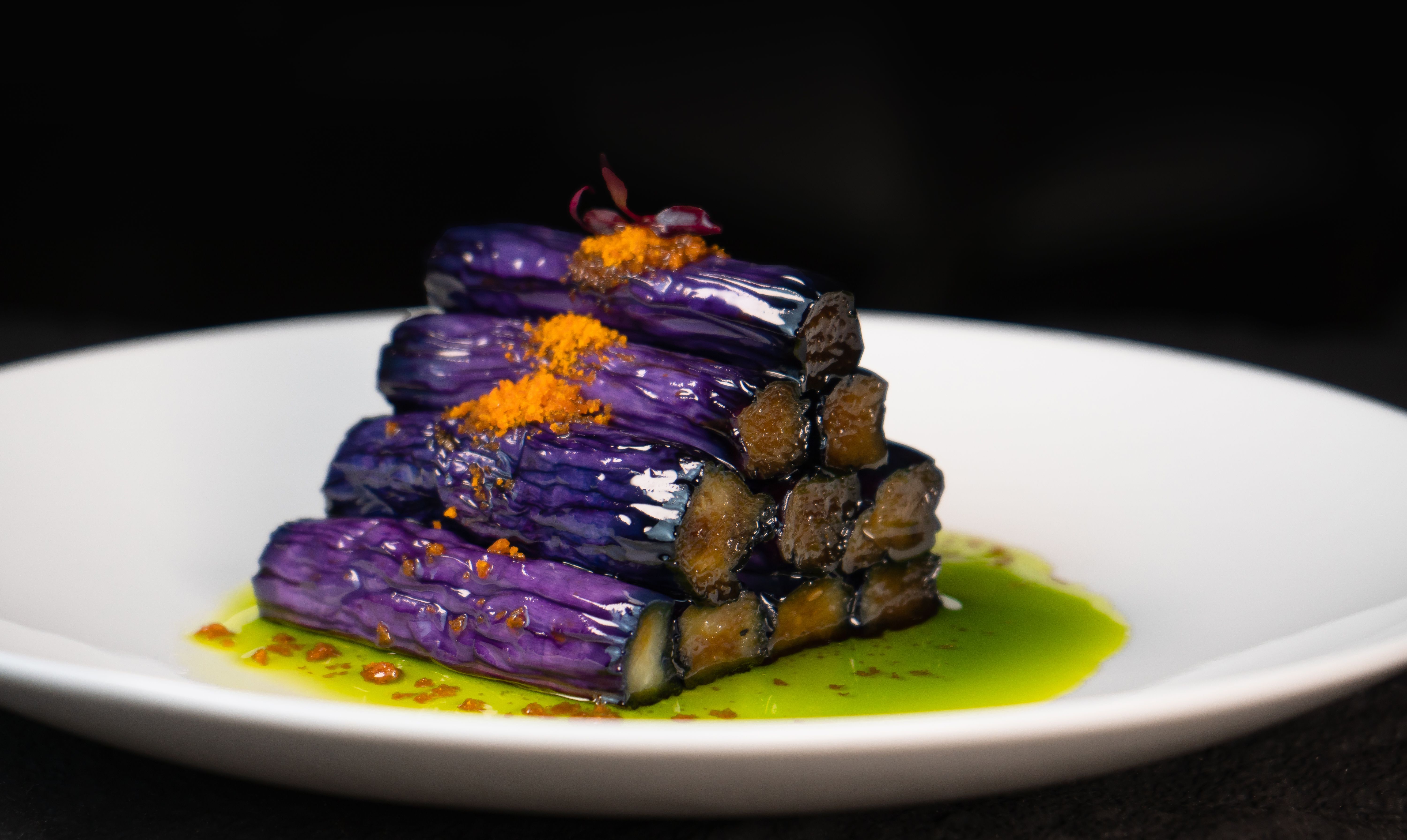
Photo: Change C.C / Pexels
Chinese
Ma Po Eggplant
The diets react (see scores below)
Common Ingredients
- Chinese eggplant
- doubanjiang
- Sichuan peppercorns
- garlic
- ginger
- ground pork
- scallions
- soy sauce
Specific recipes may vary.
Incompatible with 6 of 11 diets
Diet Ratings
Ma Po Eggplant contains several keto-compatible ingredients — ground pork provides fat and protein, doubanjiang and Sichuan peppercorns are used in small amounts, and garlic/ginger add negligible carbs. However, Chinese eggplant is the dominant ingredient and carries moderate net carbs (~6-8g per cup cooked). A standard restaurant serving of this dish can easily contain 2-3 cups of eggplant, pushing net carbs to 15-25g from eggplant alone. Soy sauce adds minimal carbs but doubanjiang (fermented bean paste) can contribute additional carbs depending on brand and quantity. With careful portioning — a small side-dish serving rather than a full main — this dish can fit within a daily keto budget, but it requires vigilance. The absence of thickening starches (cornstarch is common in restaurant versions) in this listed ingredient set is a positive factor, though restaurant preparations often include it.
Some strict keto practitioners would avoid this dish entirely due to the cumulative carb load from eggplant plus fermented bean pastes, arguing that vegetable-heavy dishes displace higher-fat options and make hitting macros harder. Others following a more relaxed 'lazy keto' approach would approve it freely given eggplant's fiber content and the presence of ground pork.
This dish contains ground pork, a direct animal product that is unambiguously non-vegan. While the base of the dish — eggplant, doubanjiang, Sichuan peppercorns, garlic, ginger, scallions, and soy sauce — is entirely plant-based, the inclusion of ground pork disqualifies it from any vegan rating. A vegan version of Ma Po Eggplant is easily achievable by simply omitting the pork or substituting with crumbled tofu or plant-based ground meat, which is in fact a common preparation.
Ma Po Eggplant contains multiple non-paleo ingredients that disqualify it outright. Doubanjiang is a fermented broad bean and chili paste — broad beans are legumes, strictly excluded from paleo. Soy sauce is derived from fermented soybeans (a legume) and wheat (a grain), both firmly off-limits. These are not trace or incidental ingredients; they are foundational flavor components of the dish. The base ingredients — eggplant, garlic, ginger, ground pork, scallions, and Sichuan peppercorns — are all paleo-approved, but the dish as traditionally prepared cannot be considered paleo due to its core condiments.
Ma Po Eggplant has a mixed Mediterranean diet profile. Eggplant is a staple Mediterranean vegetable, and the aromatics (garlic, ginger, scallions) align well with plant-forward principles. However, ground pork is a red meat, which the Mediterranean diet limits to a few times per month. Doubanjiang and soy sauce are fermented, minimally processed condiments used in small amounts, so they are acceptable despite being non-traditional. The dish is not heavily processed and centers on a vegetable, but the red meat inclusion and absence of olive oil as the cooking fat are notable drawbacks. Overall, it is acceptable occasionally but does not align closely with Mediterranean staples.
Some Mediterranean diet interpreters would rate this lower, emphasizing that red meat (pork) should be rare and that non-olive-oil cooking fats and high-sodium fermented sauces push the dish further from core principles. Conversely, a more flexible interpretation focused on the vegetable-forward nature and whole ingredients could view this as an acceptable occasional dish, especially if pork is used as a minor flavoring rather than a main protein.
Ma Po Eggplant is fundamentally incompatible with the carnivore diet. The dish is dominated by plant-based ingredients: Chinese eggplant is the primary component, and it is accompanied by doubanjiang (fermented bean paste), soy sauce (fermented soy — a legume), Sichuan peppercorns, garlic, ginger, and scallions — all strictly excluded plant foods. While ground pork is present, it is a minor supporting ingredient in a dish that is overwhelmingly plant-derived and processed with fermented plant condiments. No amount of pork can redeem a dish whose foundation, flavor profile, and bulk are entirely plant-based.
This dish contains two excluded ingredients: soy sauce (made from soybeans, which are a legume and explicitly excluded) and doubanjiang (a fermented broad bean and chili paste, which also contains soy and is a legume-based product). Both are core to the dish's flavor profile and cannot simply be omitted without fundamentally changing the dish. The remaining ingredients — eggplant, Sichuan peppercorns, garlic, ginger, ground pork, and scallions — are all Whole30-compliant on their own, but the two soy/legume-based condiments make this dish non-compliant as described.
This dish contains multiple high-FODMAP ingredients that make it unsuitable during the elimination phase. Garlic is one of the highest-FODMAP foods tested by Monash University, containing significant fructans even in tiny amounts. Doubanjiang (spicy bean paste) is fermented from broad beans and chili, and typically contains garlic and onion — making it a concentrated source of fructans and GOS. Chinese eggplant at a standard serving (around 180g) becomes moderate-to-high FODMAP due to fructans, though small portions (~75g) may be tolerable. Scallion bulbs (white parts) are high in fructans, though the green tops are low-FODMAP. Ground pork itself is low-FODMAP, as are ginger, soy sauce (in small amounts), and Sichuan peppercorns. However, the combination of garlic and doubanjiang alone renders this dish a clear avoid — these are foundational flavor ingredients that cannot be reduced to negligible amounts without fundamentally changing the dish.
Ma Po Eggplant as commonly prepared contains multiple high-sodium ingredients that place it firmly outside DASH diet guidelines. Doubanjiang (fermented broad bean and chili paste) is extremely high in sodium, often contributing 500-900mg per tablespoon. Soy sauce adds another significant sodium load, easily pushing a single serving well above 1,000-1,500mg of sodium — approaching or exceeding the entire daily sodium budget on the low-sodium DASH plan. Ground pork, while a lean protein in moderate amounts, adds saturated fat. The eggplant itself is a DASH-friendly vegetable, and garlic, ginger, and scallions are beneficial aromatics, but the overall sodium profile of this dish is disqualifying. This is not a borderline case: the combination of doubanjiang and soy sauce as primary seasoning agents makes this dish fundamentally incompatible with DASH principles as commonly prepared.
Ma Po Eggplant has a reasonable Zone-compatible foundation but requires careful management. Eggplant is a low-glycemic, favorable Zone carbohydrate. Garlic, ginger, scallions, and Sichuan peppercorns are polyphenol-rich and anti-inflammatory, aligning well with Sears' later emphasis on polyphenols. Ground pork provides protein but is higher in saturated fat than ideal Zone proteins like skinless chicken or fish, making it an 'unfavorable' protein source. Doubanjiang (fermented chili bean paste) adds sodium and some sugar but in small quantities contributes flavor without dramatically altering macros. The main Zone challenge is the fat profile: ground pork brings saturated fat, and this dish is typically cooked in oil (often sesame or vegetable oil), which can skew the fat ratio and introduce omega-6 heavy seed oils. The dish as listed lacks a clear lean protein dominance and the fat source is not primarily monounsaturated. With a portion of roughly 3 oz ground pork, generous eggplant, and minimal added oil, this could fit a Zone meal — but it requires deliberate portioning. The carb-to-protein ratio may also be unbalanced depending on serving size, as eggplant is low-calorie and protein from ground pork needs to be substantial enough to hit the 30% protein target.
Zone practitioners who emphasize Sears' later anti-inflammatory work may be more lenient about ground pork in moderate amounts, noting that the dish's polyphenol density from doubanjiang, Sichuan peppercorns, garlic, and ginger is exceptionally high — a key positive in Sears' OmegaRx Zone evolution. Some would rate this higher as a Zone-friendly dish if lean ground pork or turkey is substituted and a monounsaturated oil like sesame is used sparingly.
Ma Po Eggplant is a dish with genuinely mixed anti-inflammatory properties. On the positive side, eggplant is a rich source of nasunin (an anthocyanin antioxidant) and chlorogenic acid, both with anti-inflammatory properties. Garlic, ginger, and Sichuan peppercorns are potent anti-inflammatory spices well-supported by research. Scallions add polyphenols and quercetin. Doubanjiang (fermented broad bean and chili paste) contains capsaicin and fermented compounds that may support gut health, though it is very high in sodium and often contains additives. Soy sauce adds more sodium and umami but is fermented and used in small quantities. The ground pork is the primary complicating factor — it is a red meat, moderate in saturated fat, and the anti-inflammatory framework recommends limiting red meat. However, the quantity in a vegetable-forward dish like this is likely modest. The nightshade question (eggplant is a nightshade) adds further debate for autoimmune individuals. Overall, this is a nutritionally mixed dish — rich in anti-inflammatory spices and a beneficial vegetable, but pulled down by processed fermented condiments high in sodium and the presence of ground pork.
Mainstream anti-inflammatory nutrition (Dr. Weil's pyramid, Mediterranean-influenced frameworks) would view this dish favorably due to its vegetable-forward profile, potent spices (garlic, ginger, chili), and fermented ingredients — possibly rating it approve at a 6–7. However, AIP and autoimmune-focused protocols would flag both the nightshade (eggplant) and the high-sodium processed condiments (doubanjiang, soy sauce) as potentially pro-inflammatory, particularly for individuals with gut permeability or autoimmune conditions.
Ma Po Eggplant is a flavorful dish with some GLP-1-friendly elements but several notable drawbacks. Eggplant is low-calorie, high in fiber, and easy to digest when cooked soft — a positive. Ground pork adds protein but also brings moderate-to-high saturated fat depending on the cut used (typically 70-80% lean). Doubanjiang is a fermented chili bean paste that is intensely spicy and high in sodium, both of which can worsen GLP-1 side effects: spice may aggravate reflux and nausea, and high sodium can contribute to water retention and cardiovascular strain in a population already managing metabolic risk. Sichuan peppercorns add additional GI stimulation. The dish as a whole is categorized with no primary protein, meaning protein density per serving is low — a significant concern given the 100-120g daily protein target. Oil is typically used generously in this preparation, increasing fat load. This is a portion-sensitive dish that may be tolerable for GLP-1 patients with good GI tolerance, but the spice level and fat content make it a poor routine choice.
Some GLP-1-focused dietitians would note that ground pork, if used in sufficient quantity with a leaner grind (90% lean), could push this dish into acceptable territory as an occasional meal — the fermented doubanjiang also offers probiotic-adjacent benefits from fermentation that may support gut health.
*See how scores were generated at our methodology page.
Nutritional profile
Six traits that cut across every diet.
Fiber & Plants
How much whole-plant food and fiber it delivers.
Healthy Fats
The quality of its fats (unsaturated, omega-3).
Whole / Unprocessed
How close it is to its natural, unprocessed form.
Gut Gentle
How easy it is on digestion (low FODMAP, few irritants).
Low Glycemic
How little it spikes your blood sugar.
Protein Density
How much protein it packs per calorie.
Controversy Index
Higher controversy = more disagreement between diets.
Diet-Specific Tips
 Keto — 5/10
View tips
- Eggplant is moderate in net carbs (~6-8g/cup); large servings can exceed daily limits
- Ground pork contributes fat and protein, improving macro profile
- Doubanjiang and soy sauce add small additional carbs; brand variation matters
- No grains or added sugars in listed ingredients — a positive sign
- Restaurant versions often add cornstarch thickener not listed here, which would increase carbs
- Portion control is essential; a half-cup to one-cup serving is keto-manageable
 Mediterranean — 5/10
View tips
- Eggplant is a core Mediterranean vegetable — positive
- Ground pork is a red meat, limited to a few times per month in Mediterranean diet
- No olive oil used as primary fat — not aligned with Mediterranean cooking fat principles
- Garlic, ginger, scallions are whole aromatic ingredients — positive
- Doubanjiang and soy sauce add sodium but are used as condiments in small amounts
- Dish is not heavily processed and centers on a whole vegetable
 Zone — 5/10
View tips
- Eggplant is a favorable low-glycemic Zone carbohydrate
- Ground pork is higher in saturated fat than ideal Zone lean proteins
- Doubanjiang and Sichuan peppercorns are polyphenol-rich, anti-inflammatory ingredients
- Fat balance depends on cooking oil choice — seed oils would worsen Zone compatibility
- Protein portion must be sized carefully (~3 oz) to hit Zone 30% protein target
- Dish lacks a naturally monounsaturated fat source; adding avocado oil or limiting added fat improves Zone fit
 Anti-Inflammatory — 5/10
View tips
- Eggplant provides nasunin and chlorogenic acid — strong antioxidants
- Garlic, ginger, Sichuan peppercorn, and chili in doubanjiang are well-documented anti-inflammatory spices
- Ground pork is a red/processed-adjacent meat — anti-inflammatory framework recommends limiting
- Doubanjiang and soy sauce are high-sodium fermented condiments — fermentation is a mild positive, but sodium load and additives are concerns
- Eggplant is a nightshade — broadly considered anti-inflammatory for the general population, but debated for autoimmune individuals
- Dish is vegetable-forward with no refined carbohydrates or added sugars
 GLP-1 Friendly — 4/10
View tips
- High spice level from doubanjiang and Sichuan peppercorns may worsen GLP-1-related nausea and reflux
- No primary protein designation — protein density per serving is low relative to GLP-1 daily targets
- Ground pork contributes saturated fat, increasing risk of GI side effects
- Eggplant is fiber-rich, low-calorie, and soft-cooked — a positive for digestion
- High sodium content from soy sauce and doubanjiang is a concern for metabolic health
- Typically prepared with significant oil — increases overall fat load per serving
- Fermented ingredients (doubanjiang) may offer minor gut health benefits