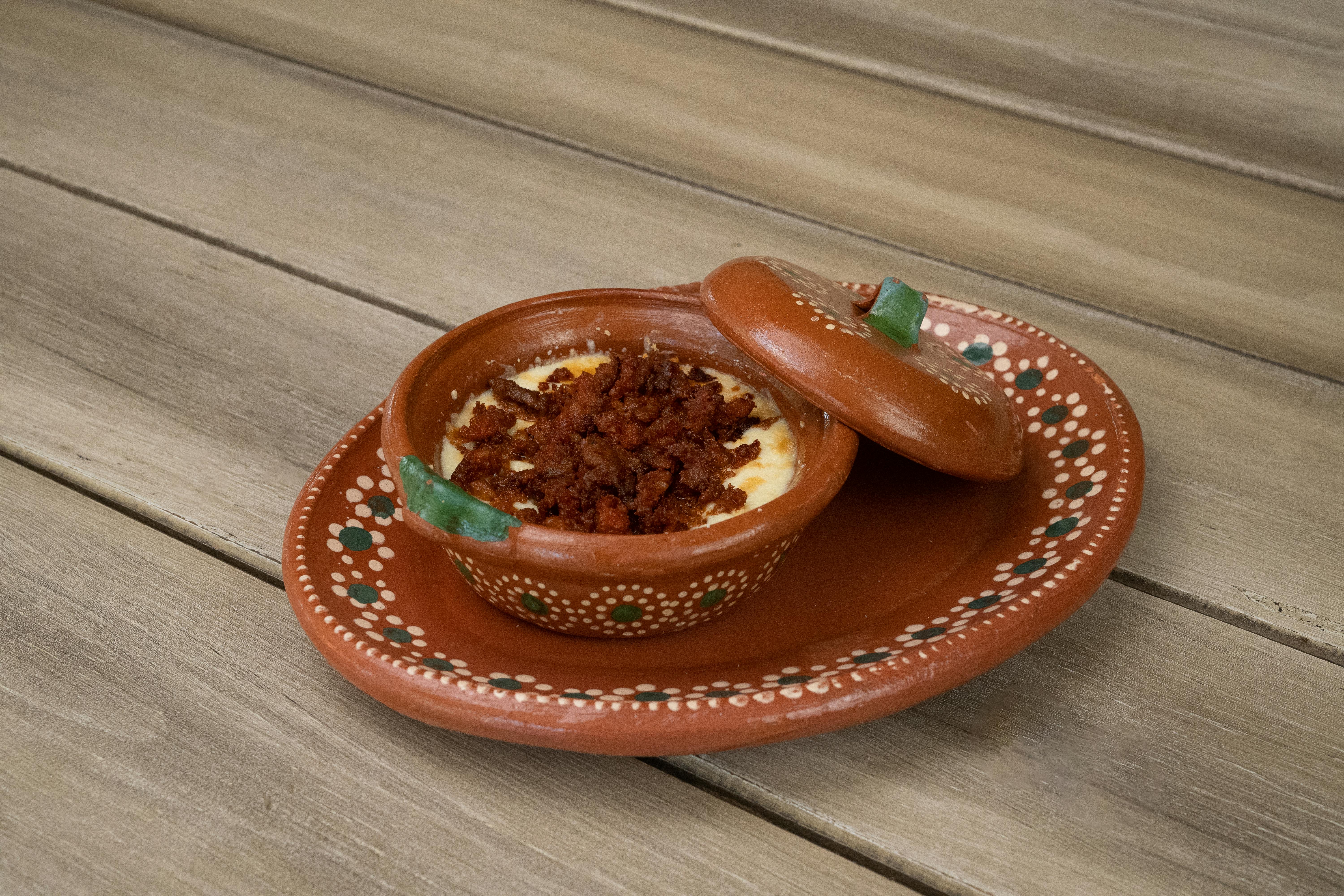
Photo: Allan González / Pexels
Mexican
Machaca con Huevo
The diets react (see scores below)
Common Ingredients
- dried shredded beef
- eggs
- tomato
- onion
- jalapeño
- bell pepper
- cilantro
- flour tortilla
Specific recipes may vary.
Incompatible with 7 of 11 diets
Diet Ratings
Machaca con Huevo as traditionally prepared contains a flour tortilla, which is a grain-based, high-carb item that immediately disqualifies the dish in its standard form. A single medium flour tortilla contains roughly 20-25g of net carbs, nearly hitting or exceeding the entire daily keto limit on its own. The filling itself — dried shredded beef, eggs, tomato, onion, jalapeño, bell pepper, and cilantro — is largely keto-compatible with moderate vegetable carbs, but the dish is defined by and served with the tortilla. Rated as the most common form of the dish, it must be marked avoid. Without the tortilla, the scramble portion alone would likely rate a 7-8 (approve).
Machaca con Huevo contains two clear animal products: dried shredded beef (meat) and eggs. Both are unambiguously non-vegan ingredients. The remaining ingredients — tomato, onion, jalapeño, bell pepper, cilantro, and flour tortilla — are plant-based, but the presence of beef and eggs makes this dish entirely incompatible with a vegan diet. There is no meaningful debate within the vegan community about either of these ingredients.
Machaca con Huevo is disqualified from a paleo perspective primarily due to the flour tortilla, which is made from wheat — a grain explicitly excluded from the paleo diet. The tortilla alone is sufficient to render this dish non-compliant. Additionally, traditional machaca (dried shredded beef) is often prepared with added salt and sometimes preservatives, making it a processed meat that falls outside strict paleo guidelines. The remaining ingredients — eggs, tomato, onion, jalapeño, bell pepper, and cilantro — are all paleo-approved whole foods. The dish has strong paleo potential in its core components, but the flour tortilla is a fundamental violation with clear consensus across all major paleo authorities.
Machaca con Huevo significantly conflicts with Mediterranean diet principles on multiple fronts. The primary protein is dried shredded beef, which is a red meat that should be limited to only a few times per month under Mediterranean guidelines. Combining red meat with eggs creates a double protein load that exceeds recommended intake patterns. The flour tortilla is a refined grain product, adding another strike against the dish. While several ingredients — tomato, onion, jalapeño, bell pepper, and cilantro — are excellent Mediterranean-compatible vegetables, they are insufficient to redeem the overall profile. The dish lacks olive oil as a fat source, whole grains, legumes, or fish. The preservation process for dried beef (machaca) also raises concerns about sodium content and processing level. Eggs alone would qualify as a moderate 'caution' food, but the combination with red meat and refined grain wrapper pushes this firmly into 'avoid' territory.
Machaca con Huevo contains two carnivore-compliant ingredients — dried shredded beef and eggs — but the dish is heavily loaded with plant-based ingredients: tomato, onion, jalapeño, bell pepper, and cilantro are all excluded vegetables/aromatics on the carnivore diet. The flour tortilla is a grain-based processed carbohydrate, making it one of the clearest violations of carnivore principles. The combination of multiple plant foods and a grain wrapper means this dish is fundamentally incompatible with carnivore eating, regardless of the quality animal proteins present.
Machaca con Huevo as described contains a flour tortilla, which is made from wheat — a grain explicitly excluded on Whole30. Beyond that, tortillas also fall squarely on the official Whole30 list of prohibited 'baked goods/junk food recreations' (wraps and tortillas are named explicitly). The remaining ingredients — dried shredded beef, eggs, tomato, onion, jalapeño, bell pepper, and cilantro — are all Whole30-compliant on their own. The dish could be made compliant by simply omitting the tortilla and serving the machaca con huevo on its own or over compliant vegetables.
Machaca con Huevo contains two high-FODMAP ingredients that make it unsuitable during the elimination phase at standard servings. First, onion is one of the highest fructan-containing foods according to Monash University and is high-FODMAP at virtually any culinary quantity — even 1/4 of a small onion exceeds safe thresholds. Second, flour tortillas are made from wheat, which is high in fructans and clearly rated high-FODMAP by Monash at a standard serving (one medium tortilla). The remaining ingredients are generally low-FODMAP: dried shredded beef and eggs are protein sources with no FODMAPs, tomato is low-FODMAP at standard servings (up to 65g), jalapeño is low-FODMAP, bell pepper (red or green) is low-FODMAP in moderate amounts, and cilantro is a low-FODMAP herb. However, the combination of onion and wheat flour tortilla creates two independent high-FODMAP triggers, making the dish a clear avoid during elimination phase. The dish could theoretically be modified (omit onion, use corn tortilla instead of flour) to become FODMAP-friendly, but as traditionally prepared it is not suitable.
Machaca con Huevo contains several DASH-friendly ingredients — tomato, onion, jalapeño, bell pepper, and cilantro are all vegetables that align well with DASH principles. Eggs are an acceptable lean protein in moderation under current DASH-aligned interpretations. However, the dish has two significant concerns: (1) Dried shredded beef (machaca) is a preserved, concentrated meat product that typically carries high sodium levels from the drying/salting process, which conflicts directly with DASH sodium limits (<2,300mg/day standard, <1,500mg for low-sodium DASH). (2) Flour tortillas are refined grains — DASH emphasizes whole grains over refined grains. Red/processed beef is also not a DASH-emphasized protein. The vegetable mix is a genuine positive, and if the machaca is prepared at home with minimal added salt and paired with a whole-wheat tortilla, the dish could score higher. As commonly consumed (commercial machaca + white flour tortilla), it sits in caution territory.
NIH DASH guidelines recommend limiting red meat and sodium, which both dried beef and flour tortillas challenge. However, updated clinical interpretations note that the abundant vegetables (tomato, onion, bell pepper, jalapeño) contribute meaningful potassium and fiber, and some DASH-oriented dietitians accept small portions of lean beef in mixed dishes — particularly when sodium is managed through home preparation or rinsing/reducing the dried beef.
Machaca con Huevo has a solid Zone foundation but requires modification to fully align. The protein base — dried shredded beef and eggs — is excellent for Zone portioning, providing lean, easily measured protein blocks. The vegetables (tomato, onion, jalapeño, bell pepper, cilantro) are all favorable Zone carbohydrates: low-glycemic, colorful, and polyphenol-rich, which Sears would strongly endorse. The main Zone challenge is the flour tortilla, which is a high-glycemic refined carbohydrate — an 'unfavorable' carb in Zone terminology that spikes insulin and disrupts the hormonal balance Sears targets. Dried/cured beef may also carry higher sodium and potentially some added ingredients, and the fat profile of the beef is more saturated than the monounsaturated fats Sears prefers. However, the overall dish is far from a Zone disaster: the vegetable-heavy filling provides favorable carb blocks, the protein sources are proportionally solid, and the tortilla — while unfavorable — can be minimized (e.g., a small corn or half portion) or swapped for a low-carb wrap. Eaten without the tortilla or with careful block accounting, this dish approaches Zone-favorable territory easily.
Some Zone practitioners following Sears' later anti-inflammatory writings (The OmegaRx Zone, The Mediterranean Zone) would be more permissive here, noting that the dish's abundant polyphenol-rich vegetables partially offset the tortilla's glycemic load, and that one small flour tortilla can be accounted for within a carb block budget at a given meal. Others would flag dried beef's sodium and potential preservatives as minor anti-inflammatory concerns not always emphasized in earlier Zone texts.
Machaca con Huevo presents a mixed anti-inflammatory profile. On the positive side, the dish contains several genuinely anti-inflammatory components: tomato provides lycopene and vitamin C; jalapeño and bell pepper offer capsaicin, vitamin C, and carotenoids; onion contributes quercetin; and cilantro adds polyphenols. Eggs are a moderate-category food with beneficial choline and selenium, though some sources flag their arachidonic acid content. The primary concern is the dried shredded beef (machaca), which is red meat — a food anti-inflammatory frameworks place in the 'limit' category due to saturated fat content and associations with elevated inflammatory markers like CRP and IL-6 in research. The flour tortilla adds refined carbohydrates, which are also flagged in anti-inflammatory guidelines as mildly pro-inflammatory. However, machaca is a very lean preparation — the drying and shredding process removes most fat — which mitigates some of the red meat concern compared to, say, a fatty cut. The overall dish is not processed in the industrial sense, is vegetable-rich, and is cooked without seed oils or additives in traditional preparation. In moderate portions, it is acceptable but not an anti-inflammatory standout, primarily held back by the red meat and refined carb components.
Strict anti-inflammatory protocols (e.g., Dr. Weil's pyramid) place red meat in the 'limit' category and refined grains in 'caution,' which would push this dish toward the lower end of acceptable. However, some integrative nutrition perspectives note that lean, minimally processed beef like machaca has a materially different fat and inflammatory profile than fatty red meat, and that the substantial vegetable content meaningfully offsets the dish's inflammatory load — making it a reasonable moderate choice rather than something to actively avoid.
Machaca con huevo is a protein-rich breakfast combining dried shredded beef and eggs with fiber-supporting vegetables (tomato, onion, bell pepper, jalapeño, cilantro), making it nutritionally solid for GLP-1 patients in several respects. The dual protein sources can easily deliver 25-35g protein per serving, meeting the per-meal protein target. The vegetable mix adds modest fiber and micronutrients. However, several factors temper the rating: (1) Traditional dried/shredded beef (machaca) is often a fattier cut and can be high in sodium from the drying/curing process, which may exacerbate water retention and digestive discomfort. (2) The flour tortilla adds refined carbohydrates with low fiber and minimal nutritional density — a meaningful drawback given the premium on nutrient density per calorie for GLP-1 patients. (3) Jalapeño may worsen reflux or nausea in patients already experiencing GLP-1 GI side effects. (4) Fat content is moderate-to-high depending on how much oil or lard is used in preparation. Served without the flour tortilla or swapped for a small whole-wheat tortilla, and prepared with minimal added fat, this dish moves closer to an approve. As prepared with a standard flour tortilla and typical restaurant-level oil use, caution is the appropriate rating.
Some GLP-1-focused dietitians would rate this higher, emphasizing the strong dual protein profile and vegetable content as more clinically important than the refined tortilla, particularly if the patient is struggling to meet protein targets. Others flag the sodium load of cured beef and the spice level as meaningful GI risk factors that vary significantly by individual tolerance on GLP-1 therapy.
*See how scores were generated at our methodology page.
Nutritional profile
Six traits that cut across every diet.
Fiber & Plants
How much whole-plant food and fiber it delivers.
Healthy Fats
The quality of its fats (unsaturated, omega-3).
Whole / Unprocessed
How close it is to its natural, unprocessed form.
Gut Gentle
How easy it is on digestion (low FODMAP, few irritants).
Low Glycemic
How little it spikes your blood sugar.
Protein Density
How much protein it packs per calorie.
Controversy Index
Higher controversy = more disagreement between diets.
Diet-Specific Tips
 DASH — 4/10
View tips
- Dried shredded beef is high in sodium due to preservation process — conflicts with DASH sodium targets
- Red/processed beef is not a DASH-emphasized protein source
- Eggs acceptable in moderation under current DASH-aligned guidelines
- Flour tortilla is a refined grain — whole-wheat tortilla would improve DASH compatibility
- Tomato, onion, bell pepper, jalapeño, and cilantro are DASH-positive vegetables providing potassium and fiber
- Sodium content highly variable — home-prepared low-sodium machaca significantly improves the profile
- Overall dish can be modified toward DASH compliance but as commonly consumed requires caution
 Zone — 6/10
View tips
- Flour tortilla is a high-glycemic 'unfavorable' carb that disrupts Zone insulin control
- Eggs and dried shredded beef provide easily portioned protein blocks near the 25g/meal target
- Tomato, onion, bell pepper, and jalapeño are all favorable low-glycemic Zone carbohydrates
- Dish lacks a clear monounsaturated fat source — adding avocado or olive oil would improve Zone fat profile
- Dried beef may contain added sodium or preservatives, a minor anti-inflammatory concern in Sears' later work
- Dish is highly modifiable: removing or halving the tortilla, adding avocado, and controlling beef portion can bring it close to Zone-compliant
 Anti-Inflammatory — 5/10
View tips
- Dried shredded beef (red meat) is in the 'limit' category due to saturated fat and inflammatory potential
- Machaca is very lean — drying process removes most fat, reducing red meat concern
- Eggs are a moderate/caution food with mixed inflammatory evidence
- Tomato, bell pepper, jalapeño, and onion provide antioxidants, carotenoids, quercetin, and capsaicin
- Cilantro adds polyphenols with anti-inflammatory properties
- Flour tortilla contributes refined carbohydrates, a mild pro-inflammatory factor
- No seed oils, trans fats, or artificial additives in traditional preparation
- Vegetable-to-protein ratio is favorable compared to many red meat dishes
 GLP-1 Friendly — 6/10
View tips
- High dual protein content (beef + eggs) supports the 15-30g per meal target
- Vegetable mix (tomato, onion, bell pepper, cilantro) adds micronutrients and modest fiber
- Flour tortilla contributes refined carbs with low fiber and low nutrient density
- Dried/cured beef is often high in sodium, which can worsen fluid retention and GI discomfort
- Jalapeño may trigger or worsen reflux and nausea in GLP-1 patients with active GI side effects
- Fat content is preparation-dependent — lard or excess oil significantly worsens the profile
- Swapping flour tortilla for whole-wheat or omitting it improves score meaningfully