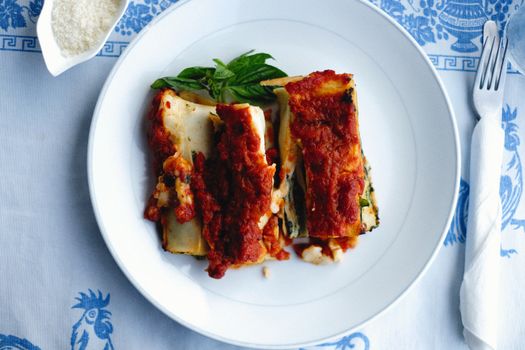
Photo: Alexey Demidov / Pexels
The diets react (see scores below)
Common Ingredients
- manicotti pasta
- ricotta
- spinach
- mozzarella
- Parmesan
- marinara sauce
- egg
- nutmeg
Specific recipes may vary.
Incompatible with 6 of 11 diets
Diet Ratings
Manicotti is fundamentally incompatible with a ketogenic diet. The primary component — manicotti pasta tubes — is made from refined wheat flour, delivering an enormous carbohydrate load (roughly 35-40g net carbs per serving from the pasta alone). Marinara sauce adds additional sugars and carbs. The ricotta, mozzarella, and Parmesan filling would otherwise be keto-friendly, but they cannot offset the overwhelming carb content of the pasta shell and sauce. A single standard serving would likely exceed the entire daily carb allowance for ketosis.
Manicotti as described contains multiple animal-derived ingredients that disqualify it from a vegan diet. Ricotta is a dairy cheese, mozzarella is a dairy cheese, Parmesan is a dairy cheese (and traditionally made with animal rennet), and egg is a direct animal product used as a binder in the filling. This dish is fundamentally built around dairy and eggs, making it clearly non-vegan. A vegan version could theoretically be made by substituting tofu-cashew ricotta, vegan mozzarella and Parmesan, and a flax or chia egg, but the dish as described is not vegan.
Manicotti is fundamentally incompatible with the paleo diet. The dish is built on manicotti pasta, a wheat-based grain product that is explicitly excluded under all paleo frameworks. Beyond the pasta, the filling contains ricotta, mozzarella, and Parmesan — three dairy products that are strictly avoided in paleo. This dish has multiple core violations (grains + dairy) with no ambiguity whatsoever. The only paleo-compliant ingredients are spinach, egg, and nutmeg. There is no version of traditional manicotti that could be considered paleo without replacing virtually every primary ingredient.
Manicotti is an Italian pasta dish with a mixed Mediterranean profile. On the positive side, it contains spinach (a Mediterranean staple), marinara sauce (tomatoes, olive oil), and moderate amounts of ricotta and Parmesan, which are acceptable dairy components. However, the dish is built on refined pasta (manicotti tubes are made from white flour), which contradicts the preference for whole grains. The dairy load is fairly high with three cheese types plus egg, pushing it into the 'moderate' category rather than a daily staple. There is no primary protein from fish, legumes, or poultry — the dish is cheese-heavy. The spinach and tomato sauce are positives, but the refined grain base and high dairy content together place this in the caution range rather than an avoid, as it still reflects genuine Italian Mediterranean cooking traditions.
Traditional Southern Italian cuisine regularly features stuffed pasta dishes like manicotti as celebratory or Sunday meals, and some Mediterranean diet authorities from Italy would consider this an acceptable occasional dish within a broader plant-forward dietary pattern. However, modern clinical Mediterranean diet guidelines (e.g., PREDIMED-style protocols) would flag the refined pasta and high saturated fat from multiple cheeses as departures from optimal adherence.
Manicotti is almost entirely plant-based and grain-based, making it wholly incompatible with the carnivore diet. The dish is built around pasta (wheat/grain), spinach (vegetable), and marinara sauce (tomatoes, plant-based). While it does contain small amounts of animal-derived ingredients — egg, ricotta, mozzarella, and Parmesan — these are minor components in a dish that is fundamentally a vehicle for carbohydrates and plant foods. Nutmeg is a plant-derived spice, and the entire dish concept is antithetical to carnivore principles. There is no meaningful way to adapt this dish while retaining its identity.
Manicotti is thoroughly non-compliant with Whole30 on multiple counts. The manicotti pasta itself is a grain-based product (wheat flour), which is explicitly excluded. Beyond that, ricotta, mozzarella, and Parmesan are all dairy products, also explicitly excluded. Even if the pasta were somehow substituted, the dish in its traditional form would still be disqualified by the dairy. Additionally, manicotti is a pasta/noodle dish, which falls squarely into the 'no recreating baked goods/junk food' category of excluded noodle and pasta dishes. Spinach, egg, nutmeg, and marinara sauce (if compliant) are fine on their own, but they cannot save this dish.
Manicotti is problematic on multiple FODMAP fronts. The pasta tubes are made from wheat flour, which is high in fructans — a major FODMAP trigger. Ricotta cheese is high in lactose at typical serving sizes (a standard filling portion would use several tablespoons to fill multiple tubes). Mozzarella is low-FODMAP in small amounts but the quantity used in a baked manicotti dish often exceeds safe thresholds. Marinara sauce frequently contains onion and garlic, both of which are high-FODMAP fructan sources. Even a homemade marinara needs careful vetting to ensure it is onion- and garlic-free. Spinach is low-FODMAP. Parmesan is low-FODMAP (aged hard cheese, minimal lactose). Egg is low-FODMAP. Nutmeg at culinary quantities is low-FODMAP. However, the combination of wheat pasta, lactose-rich ricotta, and likely fructan-containing marinara sauce makes this dish unsuitable during the elimination phase without substantial reformulation.
Manicotti contains several DASH-friendly components (spinach, tomato-based marinara, refined pasta as a moderate carb source) but is complicated by its dairy profile. The ricotta, mozzarella, and Parmesan combination creates a high-saturated-fat, high-sodium dish that doesn't align well with DASH's emphasis on low-fat dairy. A typical restaurant or homemade serving can easily deliver 700–1,000mg of sodium largely from the cheeses and marinara sauce, plus 8–12g of saturated fat. The spinach filling is a genuine DASH positive (potassium, magnesium, fiber), and the tomato-based sauce provides lycopene and potassium. The pasta is refined (not whole grain), which is a missed opportunity. With modifications — part-skim ricotta, reduced-fat mozzarella, light use of Parmesan, low-sodium marinara, and whole-grain pasta tubes — this dish moves closer to DASH compliance. As typically prepared, it lands in the caution zone: acceptable occasionally and in moderate portions, but not a DASH staple.
NIH DASH guidelines specify low-fat or fat-free dairy and sodium limits that this dish routinely exceeds as prepared. However, updated clinical interpretations note that the full-fat dairy restriction is being revisited in light of recent meta-analyses suggesting neutral or even favorable cardiovascular effects of dairy fat, and some DASH-oriented dietitians would approve a modified version made with part-skim cheeses and low-sodium marinara as a reasonable DASH meal.
Manicotti presents a mixed Zone picture. The pasta (manicotti tubes) is a high-glycemic refined carbohydrate — one of the unfavorable carbs in Zone terminology — and it dominates the dish structurally, making it hard to control the carb block load. A typical serving of 2-3 manicotti tubes would deliver a significant glycemic spike well beyond the ~36g net carbs target for a 4-block meal. On the protein side, ricotta, mozzarella, Parmesan, and egg provide a reasonable protein base, but these are dairy proteins with moderate-to-high saturated fat content rather than the lean proteins (skinless chicken, fish) the Zone favors. Spinach is a Zone-favorable low-glycemic vegetable that adds polyphenols and offsets some of the glycemic load slightly. Marinara sauce, if unsweetened, contributes lycopene and reasonable carb blocks. Nutmeg is negligible. Fat content from the cheeses skews saturated rather than monounsaturated (the Zone ideal). The dish is not categorically impossible to fit into a Zone framework — a very small portion with a large side salad and no additional carbs could approximate balance — but as traditionally served, the pasta-heavy, dairy-fat-heavy profile pushes it into 'caution' territory. It is a classic example of a Zone 'unfavorable' meal that requires significant portion control and meal restructuring to approach the 40/30/30 ratio.
Some Zone practitioners and later Sears writings on anti-inflammatory eating acknowledge that the polyphenols in tomato-based sauces and the spinach component provide real benefits, and that a very small portion of manicotti (1 tube) paired with a large salad and olive oil dressing could be made to approximate Zone ratios. Additionally, whole-wheat or high-protein pasta versions could shift the carb quality meaningfully, making this more workable. The rigid 'avoid pasta' stance is most prominent in early Zone materials; Sears' later work on polyphenols and Mediterranean eating patterns is somewhat more accommodating of occasional whole-grain pasta in small amounts.
Manicotti presents a mixed anti-inflammatory profile. On the positive side, spinach is a leafy green rich in antioxidants (vitamins C, K, folate, carotenoids like lutein) and is broadly anti-inflammatory. Marinara sauce made from tomatoes provides lycopene and other polyphenols. Nutmeg has mild anti-inflammatory properties as a spice. Egg contributes some beneficial nutrients including choline and selenium. However, the dish has several pro-inflammatory concerns: the pasta is a refined carbohydrate with a high glycemic load, which can promote inflammatory signaling (elevated blood glucose, insulin response). Ricotta, mozzarella, and Parmesan together constitute a high load of full-fat dairy — while not as inflammatory as butter or cream, the combined quantity of saturated fat across three dairy products is a meaningful concern. The dish is also calorie-dense and relatively low in fiber or omega-3 fatty acids. The overall profile is neither strongly pro- nor anti-inflammatory — it's a comfort food with isolated beneficial ingredients (spinach, tomato, egg) embedded in a refined carb and multi-dairy structure. Acceptable occasionally but not aligned with anti-inflammatory eating as a regular meal.
Some anti-inflammatory practitioners (influenced by Dr. Weil's more flexible pyramid) would argue that the lycopene from marinara and antioxidants from spinach meaningfully offset the refined carb load, especially if pasta is cooked al dente (lower glycemic response). Conversely, stricter anti-inflammatory and functional medicine frameworks (e.g., those emphasizing blood sugar control and dairy reduction) would rate this more harshly, citing the refined pasta and multi-cheese combination as reliably pro-inflammatory triggers.
Manicotti is a mixed-nutrition dish that presents several challenges for GLP-1 patients. The ricotta and mozzarella provide moderate protein (roughly 15-20g per 2-tube serving), and spinach adds some fiber and micronutrients. However, the refined pasta tubes are low-fiber, high-glycemic, and easy to overeat without satiety payoff. The cheese filling is calorie-dense and moderately high in saturated fat, which can worsen nausea, bloating, and reflux — common GLP-1 side effects. Gastric emptying is already slowed on GLP-1 medications, and a dense, cheesy pasta dish sits heavily in the stomach. Marinara sauce is a positive element — tomato-based, relatively low fat, some fiber — but doesn't offset the overall profile. Nutmeg and egg are nutritionally negligible at typical amounts. The dish is not fried or ultra-processed, and the dairy protein content keeps it from being an avoid, but it scores low within the caution range due to refined carbohydrate dominance, saturated fat load, and poor protein density relative to calorie density.
Some GLP-1-focused RDs view ricotta-based dishes as acceptable dairy protein sources, particularly for patients who struggle to meet protein targets on small appetites — the cheese blend can deliver meaningful protein in a palatable, small-portion format. Others flag that many GLP-1 patients develop temporary lactose sensitivity, making dairy-heavy dishes a common trigger for GI complaints, and recommend substituting cottage cheese or tofu-based fillings to improve protein density and digestibility.
*See how scores were generated at our methodology page.
Nutritional profile
Six traits that cut across every diet.
Fiber & Plants
How much whole-plant food and fiber it delivers.
Healthy Fats
The quality of its fats (unsaturated, omega-3).
Whole / Unprocessed
How close it is to its natural, unprocessed form.
Gut Gentle
How easy it is on digestion (low FODMAP, few irritants).
Low Glycemic
How little it spikes your blood sugar.
Protein Density
How much protein it packs per calorie.
Controversy Index
Higher controversy = more disagreement between diets.
Diet-Specific Tips
 Mediterranean — 5/10
View tips
- Refined white pasta shell — not a whole grain
- High dairy content: ricotta, mozzarella, and Parmesan combined
- Spinach is a positive Mediterranean vegetable component
- Marinara sauce provides lycopene-rich tomatoes consistent with Mediterranean eating
- No primary protein from fish or legumes
- Traditional Italian dish, but cheese-heavy preparation exceeds moderate dairy guidance
- Egg adds some nutritional value but contributes to overall saturated fat load
 DASH — 5/10
View tips
- High saturated fat from ricotta, mozzarella, and Parmesan — conflicts with DASH low-fat dairy requirement
- Elevated sodium from multiple cheeses and marinara sauce (~700–1,000mg per serving)
- Spinach filling is a strong DASH positive (potassium, magnesium, fiber)
- Tomato-based marinara contributes potassium and lycopene
- Refined pasta rather than whole grain — lower fiber than DASH prefers
- Egg adds lean protein with moderate cholesterol; acceptable in DASH context
- Dish is modifiable: part-skim cheeses and low-sodium marinara significantly improve DASH compatibility
 Zone — 4/10
View tips
- Manicotti pasta is a high-glycemic refined carbohydrate — classified 'unfavorable' in Zone methodology
- Cheese-heavy protein source (ricotta, mozzarella, Parmesan) is higher in saturated fat than lean Zone-preferred proteins
- No lean protein source (chicken, fish, egg whites alone) to anchor the protein block cleanly
- Spinach is a Zone-favorable ingredient but insufficient to offset the overall glycemic load
- Traditional serving size (2-3 tubes) likely exceeds Zone carb block targets significantly
- Fat profile skews saturated (dairy) rather than monounsaturated (olive oil, avocado, almonds)
- Marinara sauce contributes beneficial polyphenols (lycopene) — a modest Zone positive
- Could theoretically fit Zone ratios only with very small portion and significant meal restructuring
 Anti-Inflammatory — 4/10
View tips
- Refined pasta is a high-glycemic carbohydrate that can promote inflammatory signaling
- Spinach provides anti-inflammatory antioxidants including carotenoids and folate
- Multiple full-fat cheeses (ricotta, mozzarella, Parmesan) contribute significant saturated fat
- Marinara sauce (tomatoes) offers lycopene and polyphenols with anti-inflammatory properties
- No omega-3 fatty acids present; low fiber overall
- Egg provides modest anti-inflammatory nutrients (selenium, choline)
- Nutmeg contributes minor anti-inflammatory spice benefit
- Overall macronutrient profile is calorie-dense and unbalanced for anti-inflammatory goals
 GLP-1 Friendly — 4/10
View tips
- Refined pasta tubes are low-fiber and high-glycemic, adding calories without meaningful nutritional return
- Moderate protein from ricotta, mozzarella, and egg, but protein density per calorie is suboptimal
- Saturated fat from multiple cheeses may worsen nausea, bloating, and reflux on GLP-1 medications
- Heavy, dense texture is poorly suited to slowed gastric emptying — high risk of GI discomfort
- Spinach and marinara add fiber and micronutrients but insufficient to offset the overall profile
- Portion-sensitive: a small serving (1-2 tubes) is more tolerable than a full restaurant portion
- Dairy content may trigger lactose-related GI symptoms in GLP-1 patients with newly developed sensitivity