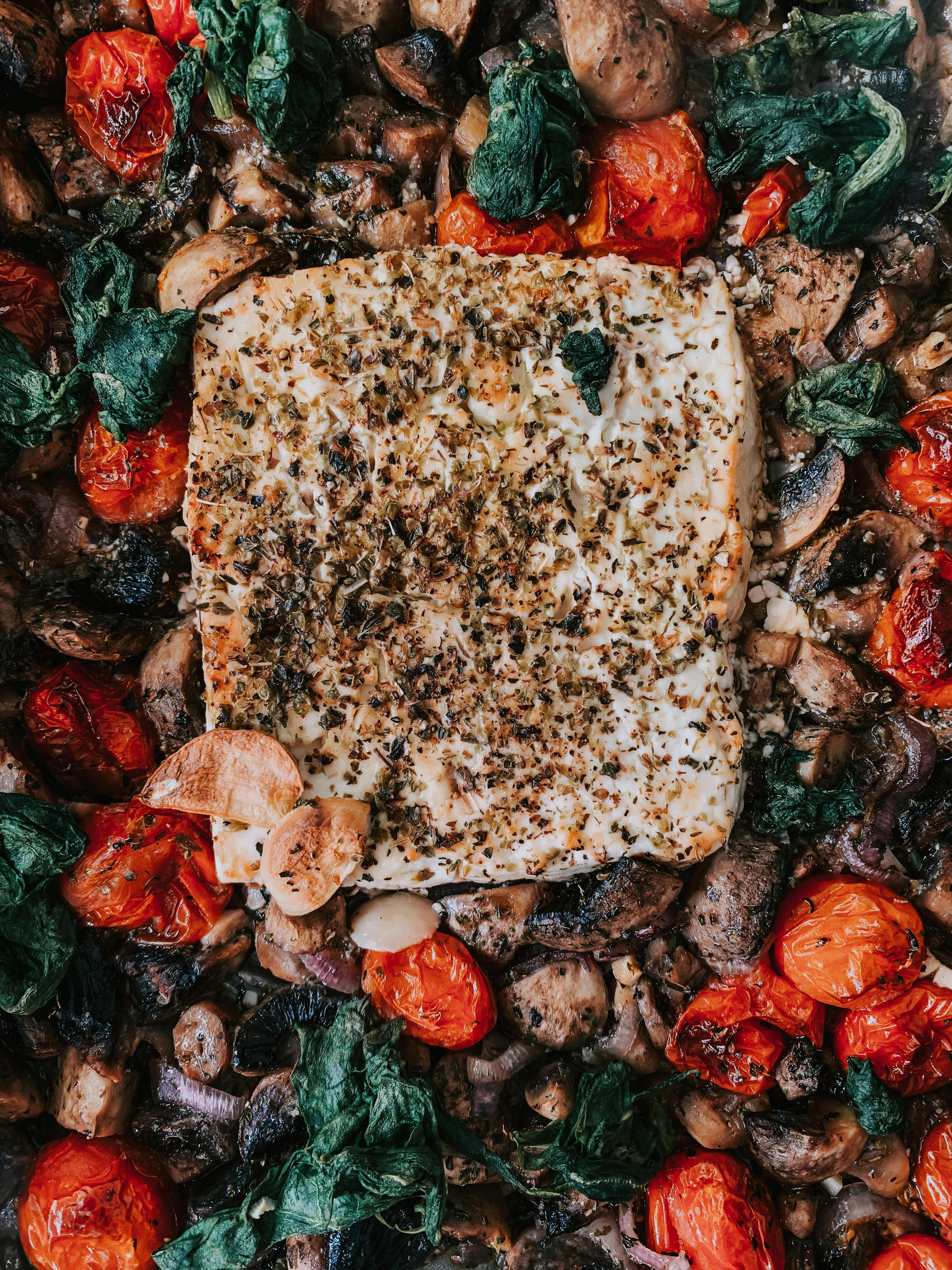
Mediterranean
Mediterranean Baked Cod
The diets react (see scores below)
Common Ingredients
- cod fillet
- cherry tomatoes
- Kalamata olives
- capers
- garlic
- olive oil
- lemon
- oregano
Specific recipes may vary.
Incompatible with 3 of 11 diets
Diet Ratings
Mediterranean Baked Cod is well-suited for a ketogenic diet. Cod is a lean, high-quality protein with virtually zero carbs. The dish is enriched with olive oil, a keto-approved healthy fat, and flavored with Kalamata olives and capers — both very low in net carbs and contributing beneficial fats and minerals. Cherry tomatoes add minimal net carbs (~3-4g per small serving), garlic contributes trace carbs, and lemon juice used as seasoning is negligible. Oregano is carb-free at culinary quantities. The overall net carb count for a standard serving is comfortably under 6-8g, fitting well within daily keto limits. The main note is that cod is relatively lean, so the dish's fat profile depends heavily on the amount of olive oil and olives used — generous portions of both are encouraged to meet keto fat targets.
Mediterranean Baked Cod contains cod fillet as its primary protein, which is a fish — an animal product explicitly excluded from all vegan diets. While the remaining ingredients (cherry tomatoes, Kalamata olives, capers, garlic, olive oil, lemon, and oregano) are entirely plant-based and vegan-friendly, the presence of cod makes this dish incompatible with a vegan diet. There is no ambiguity here: fish are animals, and consuming them violates the foundational principle of veganism regardless of how they are caught or prepared.
Mediterranean Baked Cod is an excellent paleo dish. Cod is a wild-caught fish rich in lean protein and omega-3 fatty acids, fully aligned with paleo principles. Cherry tomatoes, Kalamata olives, capers, garlic, lemon, and oregano are all whole, unprocessed plant foods available to hunter-gatherers. Olive oil is a preferred paleo fat source. The only minor consideration is capers and Kalamata olives, which are typically brined and may contain added salt — strict paleo excludes added salt, but the foods themselves are otherwise unprocessed and paleo-compliant. Overall, this dish is a strong paleo choice with no grains, legumes, dairy, seed oils, or refined ingredients.
Mediterranean Baked Cod is an exemplary Mediterranean diet dish. Cod is a lean white fish that satisfies the 2-3 times weekly seafood recommendation. Every other ingredient — cherry tomatoes, Kalamata olives, capers, garlic, extra virgin olive oil, lemon, and oregano — is a cornerstone of traditional Mediterranean cooking. The dish is entirely whole-food, plant-forward in its supporting ingredients, uses olive oil as the primary fat, and contains zero processed foods, refined grains, or added sugars. This is precisely the type of preparation celebrated in Greek and Southern Italian coastal cuisines and endorsed by leading Mediterranean diet researchers such as those behind the PREDIMED study.
While cod is a carnivore-approved fish, this dish is overwhelmingly plant-based in its composition. Cherry tomatoes, Kalamata olives, capers, garlic, lemon, oregano, and olive oil are all plant-derived and explicitly excluded from the carnivore diet. The only carnivore-compatible component is the cod fillet itself. The dish as prepared is essentially a plant-heavy Mediterranean preparation that uses fish as a minor protein element alongside numerous forbidden ingredients. No amount of reframing makes this compatible with carnivore principles.
Mediterranean Baked Cod is fully compliant with Whole30 guidelines. Every ingredient is explicitly allowed: cod is a compliant seafood, cherry tomatoes and lemon are fresh vegetables/fruits, Kalamata olives and capers are whole, minimally processed foods (though labels should be checked to confirm no non-compliant additives like sulfites — however, sulfites are now permitted per the 2024 rule change), garlic and oregano are compliant herbs/spices, and olive oil is a natural compliant fat. This dish represents exactly the kind of whole, unprocessed, nutrient-dense meal the Whole30 program encourages.
This dish contains garlic cloves, which are one of the highest-FODMAP foods tested by Monash University — rich in fructans and problematic even in very small amounts. Garlic alone is sufficient to classify this dish as high-FODMAP during the elimination phase. The remaining ingredients are largely low-FODMAP: cod is a plain protein with no FODMAPs, cherry tomatoes are low-FODMAP at standard servings (up to ~75g), Kalamata olives are low-FODMAP at ~15g (about 4-5 olives), capers are low-FODMAP in small amounts, olive oil is FODMAP-free, lemon juice is low-FODMAP, and oregano as a dried herb is used in negligible quantities. The dish could be made low-FODMAP with one simple substitution: replace garlic cloves with garlic-infused olive oil (FODMAPs are water-soluble and do not transfer into oil during infusion).
Mediterranean Baked Cod is largely DASH-friendly: cod is an excellent lean protein, olive oil is a heart-healthy unsaturated fat endorsed by DASH principles, cherry tomatoes and garlic provide potassium and antioxidants, and lemon and oregano add flavor without sodium. However, two ingredients introduce meaningful sodium concerns that prevent a full approval. Kalamata olives are high in sodium (roughly 735mg per 100g) and capers are extremely high in sodium (approximately 2,350mg per 100g, even after rinsing). Depending on portion sizes of these two ingredients, a single serving of this dish could approach or exceed 600–900mg of sodium, which is significant against the standard DASH target of <2,300mg/day and especially the low-sodium DASH target of <1,500mg/day. The dish is not categorically excluded — cod, tomatoes, olive oil, and aromatics are DASH staples — but the olives and capers require careful portion control to keep the dish within DASH sodium limits.
NIH DASH guidelines broadly support lean fish and vegetable-rich Mediterranean dishes but caution against high-sodium condiments like olives and capers. However, some DASH-oriented clinicians and Mediterranean diet researchers note that when olives and capers are used in small culinary quantities (as a flavor accent rather than a main ingredient), the overall sodium load may remain acceptable, and the potassium-rich tomatoes and the dish's overall nutrient density support cardiovascular health in the spirit of DASH.
Mediterranean Baked Cod is a near-ideal Zone Diet meal. Cod is an exceptionally lean, high-quality protein — low in fat and rich in omega-3 fatty acids, making it a top-tier Zone protein source. Olive oil provides the monounsaturated fat that Sears consistently recommends as the preferred fat block. Cherry tomatoes, garlic, lemon, and capers are all low-glycemic, polyphenol-rich carbohydrate sources that align perfectly with the Zone's emphasis on colorful vegetables and anti-inflammatory eating. Kalamata olives contribute additional monounsaturated fat and polyphenols. Oregano adds further polyphenol benefit. The dish naturally trends toward the 40/30/30 ratio with modest oil portioning: cod provides lean protein (~25g per 4 oz fillet), tomatoes and lemon juice cover the carb blocks at very low glycemic load, and olive oil plus olives cover the fat blocks. This is essentially a textbook Zone plate — lean fish, non-starchy vegetables, and monounsaturated fat — aligned with both the original Zone protocol and Sears' later anti-inflammatory refinements.
Mediterranean Baked Cod is a near-ideal anti-inflammatory dish. Cod is a lean white fish providing high-quality protein with a favorable omega-6 to omega-3 ratio and very low saturated fat. Extra virgin olive oil is one of the cornerstone anti-inflammatory foods, rich in oleocanthal (which mimics ibuprofen's anti-inflammatory mechanism) and monounsaturated fats. Cherry tomatoes deliver lycopene, vitamin C, and other carotenoids with well-documented antioxidant and anti-inflammatory properties. Kalamata olives add additional monounsaturated fats and polyphenols. Capers are exceptionally rich in quercetin and kaempferol, two potent flavonoids that suppress inflammatory cytokines. Garlic contains allicin and organosulfur compounds that reduce NF-κB activation and lower CRP levels. Oregano is among the highest-antioxidant herbs measured by ORAC, with rosmarinic acid and thymol supporting anti-inflammatory pathways. Lemon provides vitamin C and hesperidin, further supporting antioxidant status. Every single ingredient in this dish aligns positively with anti-inflammatory principles — there are no pro-inflammatory components, no refined carbohydrates, no added sugars, no seed oils, and no processed additives. This is the archetype of a Mediterranean anti-inflammatory meal.
Mediterranean Baked Cod is an excellent GLP-1 companion dish. Cod is a lean, high-protein white fish (roughly 20-25g protein per 4-5oz serving) with minimal fat, making it easy to digest and ideal for the slowed gastric emptying caused by GLP-1 medications. The baked preparation avoids the nausea and bloating risks of fried or greasy cooking. Cherry tomatoes and capers contribute fiber, antioxidants, and hydration-supporting water content. Olive oil provides heart-healthy unsaturated fats in what is typically a modest amount. Garlic, lemon, and oregano add flavor without relying on heavy sauces, spice heat, or added sugar. Kalamata olives add small amounts of healthy monounsaturated fat and flavor density, making small portions satisfying. The only minor consideration is sodium from the olives and capers, which is worth noting for patients managing blood pressure, but this does not significantly affect GLP-1 tolerability. Overall, this dish is nutrient-dense per calorie, portion-friendly, high in lean protein, and easy on the GI system — hitting nearly every GLP-1 dietary priority.
*See how scores were generated at our methodology page.
Nutritional profile
Six traits that cut across every diet.
Fiber & Plants
How much whole-plant food and fiber it delivers.
Healthy Fats
The quality of its fats (unsaturated, omega-3).
Whole / Unprocessed
How close it is to its natural, unprocessed form.
Gut Gentle
How easy it is on digestion (low FODMAP, few irritants).
Low Glycemic
How little it spikes your blood sugar.
Protein Density
How much protein it packs per calorie.
Controversy Index
Higher controversy = more disagreement between diets.
Diet-Specific Tips
 Keto — 8/10
View tips
- Cod is a zero-carb, high-quality protein source
- Olive oil provides healthy monounsaturated fats — core keto fat source
- Kalamata olives add healthy fats with negligible net carbs
- Cherry tomatoes contribute minor net carbs (~3-5g per serving) — manageable
- Capers and garlic are trace-carb flavor enhancers
- Lemon juice used as seasoning keeps carbs minimal
- Lean protein base means extra olive oil needed to hit keto fat ratios
- No grains, sugars, or high-carb ingredients present
 Paleo — 9/10
View tips
- Cod is a clean, lean wild-caught fish — fully paleo approved
- Olive oil is a preferred paleo fat (not a seed oil)
- All vegetables, herbs, and aromatics are whole and unprocessed
- Kalamata olives and capers are typically brined with salt — strict paleo discourages added salt, but the base ingredients remain paleo-compliant
- No grains, legumes, dairy, refined sugar, or seed oils present
- Lemon juice provides natural acidity with no additives
 Mediterranean — 10/10
View tips
- Cod is a lean white fish, fully aligned with the 2-3 times/week seafood guideline
- Extra virgin olive oil is the sole fat source, the canonical Mediterranean fat
- Cherry tomatoes, olives, capers, and garlic are traditional Mediterranean plant ingredients
- Herbs (oregano) and lemon provide flavor without processed additives
- No refined grains, added sugars, or processed ingredients present
- Dish mirrors traditional Greek and Southern Italian coastal preparations
 Whole30 — 9/10
View tips
- Cod is a fully compliant protein source
- All vegetables and aromatics (cherry tomatoes, garlic) are Whole30 approved
- Kalamata olives are compliant — added sulfites no longer excluded per 2024 rule change
- Capers are compliant; check label only for non-compliant preservatives beyond sulfites
- Olive oil is an explicitly allowed natural fat
- Lemon and oregano are compliant flavor enhancers
- No excluded ingredients present — no grains, dairy, legumes, or added sugar
- Dish reflects the whole-food spirit of the Whole30 program
 DASH — 6/10
View tips
- Cod is an ideal DASH lean protein — low in saturated fat, low in sodium, high in protein
- Olive oil provides heart-healthy monounsaturated fats aligned with DASH principles
- Cherry tomatoes contribute potassium, fiber, and antioxidants — core DASH vegetables
- Kalamata olives are high in sodium (~735mg/100g); portion control is essential
- Capers are very high in sodium (~2,350mg/100g); even small amounts add significant sodium
- Lemon and oregano are excellent DASH-compatible flavor enhancers that reduce the need for added salt
- Overall dish can be DASH-compliant if olive and caper quantities are kept small (e.g., 5–6 olives, 1 tsp capers)
- Low-sodium or rinsed capers and olives would improve the DASH score substantially
 Zone — 9/10
View tips
- Cod is a top-tier Zone lean protein, low in fat and rich in omega-3s
- Olive oil is the gold-standard Zone fat source — monounsaturated and anti-inflammatory
- Cherry tomatoes, capers, and lemon are low-glycemic, polyphenol-rich carb blocks
- Kalamata olives add monounsaturated fat and additional polyphenols
- No high-glycemic carbohydrates, no saturated fat concerns, no processed ingredients
- Naturally approaches 40/30/30 macronutrient ratio with standard portioning
- Oregano and garlic contribute anti-inflammatory polyphenols per Sears' later writings
 Anti-Inflammatory — 9/10
View tips
- Cod provides lean protein with favorable omega-3 to omega-6 ratio and minimal saturated fat
- Extra virgin olive oil supplies oleocanthal and monounsaturated fats — a cornerstone anti-inflammatory food
- Capers are extraordinarily rich in quercetin and kaempferol, among the most potent dietary flavonoids
- Garlic contains allicin and organosulfur compounds that measurably reduce CRP and NF-κB activity
- Cherry tomatoes deliver lycopene and carotenoids with strong antioxidant and anti-inflammatory evidence
- Kalamata olives add additional polyphenols and healthy monounsaturated fats
- Oregano is one of the highest-antioxidant herbs, containing rosmarinic acid and thymol
- No pro-inflammatory ingredients present — no refined carbs, seed oils, added sugar, or processed additives
- Dish embodies the Mediterranean dietary pattern, which has the strongest evidence base among anti-inflammatory dietary frameworks
 GLP-1 Friendly — 9/10
View tips
- Lean white fish provides 20-25g high-quality protein per serving with very low fat
- Baked preparation is easy to digest and avoids GI side effect triggers
- Olive oil delivers unsaturated fat in a controlled, small amount
- Cherry tomatoes and capers add fiber, micronutrients, and water content
- Kalamata olives and capers are sodium-dense — relevant for hypertensive patients but does not affect GLP-1 tolerability
- Lemon and herbs provide flavor satisfaction in small portions without sugar or heavy sauces
- Excellent nutrient density per calorie — ideal for reduced-appetite patients