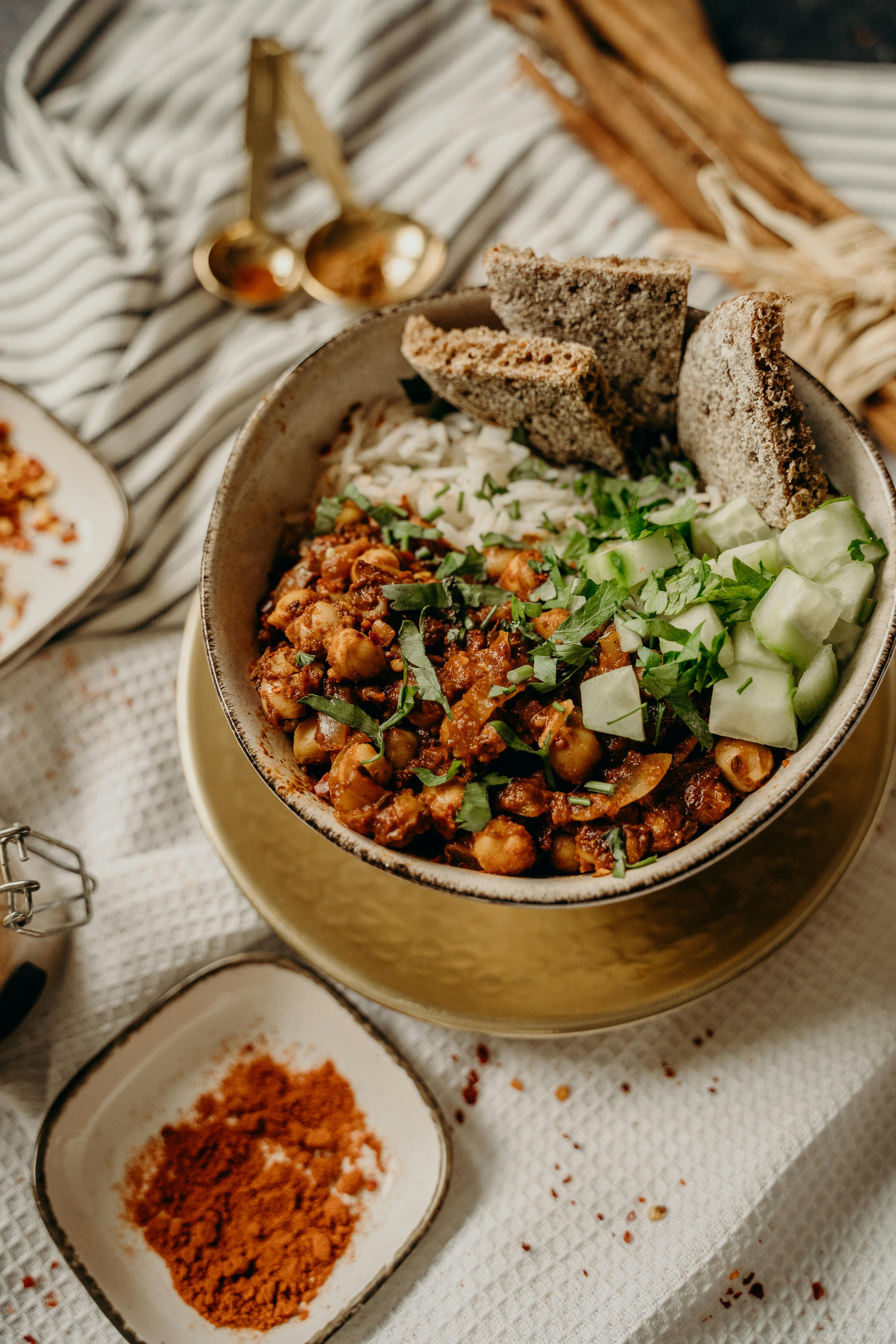
Photo: Alesia Kozik / Pexels
Mediterranean
Mediterranean Chickpea Stew
The diets react (see scores below)
Common Ingredients
- chickpeas
- tomatoes
- spinach
- onion
- garlic
- olive oil
- cumin
- paprika
Specific recipes may vary.
Incompatible with 5 of 11 diets
Diet Ratings
Mediterranean Chickpea Stew is fundamentally incompatible with a ketogenic diet due to chickpeas being the primary protein and bulk ingredient. Chickpeas contain approximately 45g of net carbs per cup (cooked), meaning even a modest serving easily blows the entire daily keto carb budget of 20-50g. The remaining ingredients — tomatoes, onion, and garlic — add additional net carbs on top of this. While olive oil and spinach are keto-friendly, they cannot offset the massive carbohydrate load from chickpeas. This dish is essentially a high-carb legume stew that would reliably knock most individuals out of ketosis.
Mediterranean Chickpea Stew is composed entirely of whole plant foods with no animal products or animal-derived ingredients. Chickpeas provide complete protein and fiber, tomatoes and spinach contribute micronutrients and antioxidants, and olive oil, onion, garlic, cumin, and paprika are all unambiguously plant-based. This is a nutrient-dense, minimally processed whole-food meal that aligns perfectly with both strict vegan and whole-food plant-based dietary frameworks. There are no contested ingredients, no animal derivatives, and no processing concerns.
Chickpeas are legumes, which are explicitly excluded from the Paleolithic diet. This is one of the most consistent and well-established rules across all major paleo authorities, including Loren Cordain, Mark Sisson, and Robb Wolf. Legumes contain lectins, phytic acid, and other antinutrients that paleo proponents argue were not a significant part of the ancestral human diet and impair nutrient absorption. While the remaining ingredients — tomatoes, spinach, onion, garlic, olive oil, cumin, and paprika — are all paleo-compatible, the primary protein and foundational ingredient of this dish is a disqualifying legume. The dish cannot be adapted without fundamentally changing its identity.
This dish is a quintessential Mediterranean meal. Every ingredient aligns perfectly with core Mediterranean diet principles: chickpeas provide plant-based protein and fiber (legumes are a dietary staple), tomatoes and spinach are nutrient-dense vegetables eaten abundantly, onion and garlic are foundational aromatics in Mediterranean cooking, and extra virgin olive oil is the canonical fat source. The spices cumin and paprika add flavor without any processed ingredients, added sugars, or refined grains. This stew is precisely the kind of plant-forward, whole-food dish that Mediterranean diet guidelines emphasize eating multiple times per week.
Mediterranean Chickpea Stew is entirely plant-based and contains zero animal products. Every single ingredient — chickpeas, tomatoes, spinach, onion, garlic, olive oil, cumin, and paprika — is explicitly excluded on the carnivore diet. Chickpeas are legumes, a category universally rejected by all carnivore practitioners due to antinutrients (lectins, phytates). The remaining ingredients are vegetables, plant oils, and plant-derived spices. This dish represents the direct opposite of carnivore eating principles.
Chickpeas are legumes, and legumes are explicitly excluded on the Whole30 program. Unlike green beans, sugar snap peas, and snow peas — which are specifically excepted despite being legumes — chickpeas receive no such exception. All other ingredients (tomatoes, spinach, onion, garlic, olive oil, cumin, paprika) are fully Whole30-compliant, but the primary protein and foundational ingredient of this dish is a disqualifying one. There is no compliant substitution that would preserve the character of a chickpea stew.
This dish contains multiple high-FODMAP ingredients that make it unsuitable during the elimination phase. Chickpeas are high in GOS (galacto-oligosaccharides) and are high-FODMAP even at moderate servings (Monash rates canned chickpeas as low-FODMAP only at 1/4 cup/42g, which is a very small portion for a stew where chickpeas are the primary protein). Onion is one of the highest-FODMAP foods tested, rich in fructans, and is high-FODMAP at any serving size. Garlic is similarly very high in fructans and must be completely avoided during elimination. Tomatoes are generally low-FODMAP at standard servings, spinach is low-FODMAP at small amounts, olive oil is low-FODMAP, and cumin and paprika are low-FODMAP spices. However, the combination of chickpeas as the primary protein alongside both onion and garlic creates a dish with three significant FODMAP triggers, making it a clear avoid during the elimination phase. Even if chickpeas were replaced with a low-FODMAP protein, the onion and garlic alone would disqualify this dish.
Mediterranean Chickpea Stew is an excellent fit for the DASH eating plan. Chickpeas are a DASH-endorsed legume, rich in plant-based protein, fiber, potassium, and magnesium — all nutrients emphasized by NIH/NHLBI DASH guidelines. Tomatoes and spinach contribute additional potassium, magnesium, and fiber, directly supporting DASH's vegetable servings goals. Onion and garlic add flavor without sodium, reducing reliance on salt. Olive oil is a DASH-approved unsaturated vegetable oil, low in saturated fat. Cumin and paprika are sodium-free spices that enhance flavor without compromising sodium targets. The dish contains no red meat, no added sugar, no tropical oils, no full-fat dairy, and no processed ingredients. Sodium content is naturally low given the ingredient list (assuming no added salt or low-sodium canned chickpeas/tomatoes). This dish aligns strongly with DASH's emphasis on legumes, vegetables, and heart-healthy fats.
Mediterranean Chickpea Stew is a nutritionally solid dish that aligns well with many Zone principles but requires careful portioning to hit the 40/30/30 target. Chickpeas serve as both the primary protein and carbohydrate source — a dual role that creates a macro imbalance challenge. A typical serving provides moderate protein (~7-9g per half cup) but is carbohydrate-heavy (~20g net carbs per half cup), skewing the ratio toward carbs. Spinach, tomatoes, and onion are favorable low-glycemic Zone carbs that add polyphenols and micronutrients with minimal glycemic impact. Olive oil contributes ideal monounsaturated fat, aligning perfectly with Zone fat guidelines. Garlic, cumin, and paprika offer anti-inflammatory polyphenols consistent with Sears' later anti-inflammatory focus. The primary challenge: chickpeas are classified as 'unfavorable' carbohydrates in classic Zone terminology due to their higher carb density, and the dish lacks a lean animal protein source, making it harder to hit the 25g protein target per meal without overshooting carbs. A Zone practitioner would need to add egg whites, low-fat cheese, or another lean protein alongside a controlled chickpea portion, and measure blocks carefully given chickpeas' dual protein/carb counting requirement (they count as primarily carb blocks with minor protein contribution in Zone block math).
In Sears' later works emphasizing anti-inflammatory nutrition and the Mediterranean diet, legumes like chickpeas are viewed more favorably as a protein-carb source with a low glycemic index (~28 GI) and high fiber content, reducing net carb impact. Some Zone practitioners, particularly those following vegetarian Zone protocols, treat chickpeas as a legitimate primary protein source and plan blocks accordingly, potentially rating this dish higher (7-8) as a well-constructed vegetarian Zone meal with favorable fat from olive oil and polyphenol-rich vegetables.
This Mediterranean Chickpea Stew is an exemplary anti-inflammatory dish. Chickpeas are a legume explicitly emphasized in anti-inflammatory frameworks — they deliver plant protein, soluble fiber, and resistant starch that support a healthy gut microbiome and reduce inflammatory markers like CRP. Tomatoes provide lycopene (a potent carotenoid antioxidant) and vitamin C; cooking tomatoes in olive oil, as this stew involves, is known to significantly enhance lycopene bioavailability. Spinach contributes flavonoids, carotenoids (lutein, beta-carotene), vitamin K, and magnesium — all associated with reduced oxidative stress and inflammation. Extra virgin olive oil is one of the cornerstone ingredients of the anti-inflammatory diet, rich in oleocanthal (an ibuprofen-like COX inhibitor) and monounsaturated fats. Garlic and onion provide quercetin, allicin, and organosulfur compounds with well-documented anti-inflammatory and immunomodulatory effects. Cumin offers antioxidant compounds including apigenin and luteolin, while paprika (from peppers) delivers capsaicinoids and carotenoids. The dish is entirely plant-based, free from processed ingredients, refined carbohydrates, added sugars, trans fats, or excessive saturated fat. Every ingredient aligns positively with anti-inflammatory principles, and the combination reflects the Mediterranean dietary pattern, which has the strongest evidence base of any dietary pattern for reducing systemic inflammation.
Mediterranean Chickpea Stew is a strong GLP-1-friendly dish. Chickpeas deliver a meaningful combination of plant protein (~15g per cup) and fiber (~12g per cup), directly supporting the two top dietary priorities. Spinach and tomatoes add micronutrient density and water content, supporting hydration. Olive oil is a preferred unsaturated fat, and the spices used (cumin, paprika) are mild and well-tolerated by most GLP-1 patients. The dish is easy to digest when cooked soft, works well in small portions, and is low in saturated fat. The main limitation is that chickpeas alone may not meet the 15-30g protein-per-meal target for all patients — a standard serving lands around 12-15g protein, so pairing with a small amount of additional lean protein (e.g., grilled chicken, a soft-boiled egg) may be advisable for those targeting the higher end of daily protein goals.
Some GLP-1-focused dietitians caution that legumes like chickpeas can cause gas and bloating in patients already experiencing GI side effects from slowed gastric emptying, particularly in the early weeks of treatment or after dose escalation. Others consider the fiber and protein density valuable enough to outweigh this risk and recommend gradual introduction rather than avoidance.
*See how scores were generated at our methodology page.
Nutritional profile
Six traits that cut across every diet.
Fiber & Plants
How much whole-plant food and fiber it delivers.
Healthy Fats
The quality of its fats (unsaturated, omega-3).
Whole / Unprocessed
How close it is to its natural, unprocessed form.
Gut Gentle
How easy it is on digestion (low FODMAP, few irritants).
Low Glycemic
How little it spikes your blood sugar.
Protein Density
How much protein it packs per calorie.
Controversy Index
Higher controversy = more disagreement between diets.
Diet-Specific Tips
 Vegan — 9/10
View tips
- All ingredients are whole plant foods
- Chickpeas are an excellent plant-based protein source
- No animal products, dairy, eggs, or animal-derived additives
- Olive oil is the only processed ingredient, keeping the dish predominantly whole-food
- Spices (cumin, paprika) are fully plant-based
- No cross-contamination concerns inherent to the ingredient list
 Mediterranean — 10/10
View tips
- Chickpeas are a core Mediterranean legume and excellent plant-based protein source
- Tomatoes and spinach are whole vegetables consumed abundantly in the Mediterranean diet
- Extra virgin olive oil as the cooking fat perfectly aligns with primary fat source guidelines
- No processed ingredients, refined grains, or added sugars
- Garlic and onion are traditional Mediterranean aromatics with documented health benefits
- Cumin and paprika reflect authentic Mediterranean and Middle Eastern spice traditions
- Dish is naturally high in fiber, micronutrients, and healthy fats
 DASH — 9/10
View tips
- Chickpeas are a DASH-endorsed legume high in fiber, potassium, and plant protein
- Spinach and tomatoes are core DASH vegetables rich in potassium and magnesium
- Olive oil is a DASH-approved unsaturated fat
- No saturated fat, red meat, or added sugar
- Sodium-free spices (cumin, paprika) support low-sodium cooking
- Sodium depends on preparation — canned chickpeas or tomatoes with added salt should be rinsed or replaced with low-sodium versions
- Supports multiple DASH food group servings: legumes, vegetables, healthy fats
 Zone — 6/10
View tips
- Chickpeas are carbohydrate-dominant in Zone block counting, skewing the 40/30/30 ratio toward carbs
- No lean animal protein source — vegetarian protein requires larger fat block adjustment (3g fat per block vs 1.5g)
- Olive oil is an ideal Zone monounsaturated fat source
- Spinach, tomatoes, onion, and garlic are all favorable low-glycemic Zone carbohydrates
- High polyphenol content (spinach, tomatoes, garlic, cumin, paprika) supports Sears' anti-inflammatory goals
- Portion control critical: a large serving easily overshoots carb blocks while undershooting protein target
- Chickpeas have low glycemic index (~28) which partially offsets their carb density
 Anti-Inflammatory — 9/10
View tips
- Chickpeas: emphasized legume in anti-inflammatory frameworks — fiber, plant protein, micronutrients reduce CRP
- Extra virgin olive oil: oleocanthal acts as natural COX inhibitor; cornerstone of anti-inflammatory diet
- Tomatoes: lycopene bioavailability enhanced by cooking in fat; strong antioxidant carotenoid profile
- Spinach: flavonoids, lutein, beta-carotene, vitamin K — associated with reduced oxidative stress
- Garlic and onion: allicin, quercetin, organosulfur compounds with anti-inflammatory and immunomodulatory effects
- Cumin and paprika: anti-inflammatory spices containing apigenin, luteolin, and carotenoids
- No pro-inflammatory ingredients: no refined grains, added sugars, trans fats, seed oils, or processed additives
- Mediterranean dietary pattern has the strongest evidence base for reducing systemic inflammation
 GLP-1 Friendly — 8/10
View tips
- Good plant-based protein source (~12-15g per serving) but may fall short of 15-30g per meal target without supplementation
- High fiber content (~10-12g per serving) supports digestion and constipation prevention
- Olive oil provides preferred unsaturated fat in moderate amounts
- Spinach and tomatoes contribute micronutrient density and water content
- Mild spices (cumin, paprika) are generally well-tolerated and unlikely to worsen reflux or nausea
- Soft cooked texture supports easy digestibility
- Legume-based dishes may cause gas or bloating in some GLP-1 patients, especially early in treatment