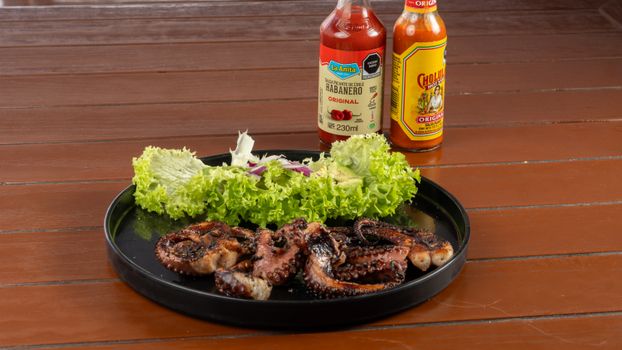
Photo: Alejandro Aznar / Pexels
Mediterranean
Grilled Octopus Salad
The diets react (see scores below)
Common Ingredients
- octopus
- arugula
- red onion
- capers
- olive oil
- lemon juice
- red wine vinegar
- parsley
Specific recipes may vary.
Incompatible with 2 of 11 diets
Diet Ratings
Grilled octopus salad is highly compatible with a ketogenic diet. Octopus is a lean, low-carb protein source with negligible carbohydrates. Arugula is a fiber-rich leafy green with very low net carbs. Red onion adds minimal carbs in small salad quantities. Capers, parsley, lemon juice, and red wine vinegar contribute trace carbs. Olive oil as the dressing base provides healthy monounsaturated fats aligning with keto fat goals. The overall net carb count for a standard serving is well within the 20-50g daily limit, likely under 5-7g net carbs per serving. The main consideration is that octopus is a leaner protein rather than a fatty one, so the dish is somewhat lower in fat than ideal keto ratios, but olive oil compensates. A generous pour of olive oil can bring the fat ratio closer to keto targets.
Grilled Octopus Salad contains octopus as its primary protein, which is an animal (seafood/mollusk). All animal flesh is categorically excluded from a vegan diet. While the remaining ingredients — arugula, red onion, capers, olive oil, lemon juice, red wine vinegar, and parsley — are entirely plant-based, the presence of octopus makes this dish wholly incompatible with veganism.
Grilled Octopus Salad is an excellent paleo dish. Octopus is a wild-caught seafood fully consistent with Paleolithic eating patterns. Arugula, red onion, parsley, lemon juice, and red wine vinegar are all unprocessed, whole plant foods available to hunter-gatherers. Olive oil is a paleo-approved fat. Capers, while a processed/pickled product, are minimally processed (caper buds preserved in brine) and widely accepted in the paleo community. The only minor consideration is that capers are typically packed in salt or brine, and strict paleo discourages added salt — though this is a very minor concern and capers themselves are a natural food. Overall, this dish is clean, nutrient-dense, and free from grains, legumes, dairy, refined sugars, and seed oils.
Grilled Octopus Salad is an exemplary Mediterranean dish. Octopus is a lean seafood widely consumed across Greek, Italian, and Spanish Mediterranean coastal cuisines, fully aligned with the recommendation to eat fish and seafood 2-3 times weekly. The dish is built on a foundation of plant-based ingredients — arugula, red onion, capers, and fresh parsley — dressed with extra virgin olive oil, lemon juice, and red wine vinegar, which are all canonical Mediterranean pantry staples. There are no refined grains, added sugars, processed ingredients, or unhealthy fats present. This dish could not be more authentically Mediterranean.
While octopus is an animal-derived seafood that would be acceptable on the carnivore diet, this dish is overwhelmingly plant-based. The majority of the ingredients — arugula, red onion, capers, olive oil, lemon juice, red wine vinegar, and parsley — are all plant-derived and strictly excluded from the carnivore diet. Olive oil is a plant oil, lemon juice and red wine vinegar are plant-derived acids, and arugula, capers, onion, and parsley are all vegetables/plant foods. This dish is essentially a Mediterranean salad with octopus as a topping, not a carnivore-compatible preparation. The score is slightly above 1 only because octopus itself is a valid carnivore protein source.
Every ingredient in this Grilled Octopus Salad is fully compliant with Whole30 rules. Octopus is a seafood and explicitly allowed. Arugula, red onion, capers, and parsley are all whole vegetables/herbs with no excluded components. Olive oil is a natural fat and approved. Lemon juice is a natural citrus juice with no added sweeteners. Red wine vinegar is explicitly listed as an accepted vinegar type on Whole30. There are no grains, legumes, dairy, added sugars, or any other excluded ingredients present. This is a clean, whole-food Mediterranean dish that aligns perfectly with the program's spirit.
This dish contains one clear high-FODMAP ingredient and one dose-dependent concern. Red onion is a significant source of fructans and is high-FODMAP at virtually any meaningful serving size — even small amounts (e.g., 1/4 cup or ~28g) exceed safe thresholds per Monash. This alone warrants at least a 'caution' rating. The remaining ingredients are largely low-FODMAP: octopus (seafood, FODMAP-free), arugula (low-FODMAP at standard serves), olive oil (fat-soluble, FODMAP-free), lemon juice (low-FODMAP at up to 125ml), red wine vinegar (low-FODMAP at standard amounts), parsley (low-FODMAP as a garnish). Capers are not well-tested by Monash but are typically used in small quantities and are not known to be high-FODMAP. The dish could be made low-FODMAP by omitting the red onion or substituting the green tops of spring onions, but as described it contains red onion which is a high-FODMAP ingredient during elimination phase.
Monash University rates red onion as high-FODMAP even at small servings (fructans are present at levels exceeding thresholds). Some clinical FODMAP practitioners would rate this dish as 'avoid' rather than 'caution' because red onion is difficult to portion-control in a salad context and its fructan content is problematic even at small quantities. If red onion is used only as a trace garnish (a few thin rings), some practitioners may consider it borderline, but strict elimination protocol would advise avoidance.
Grilled Octopus Salad aligns well with many DASH principles: octopus is a lean seafood protein low in saturated fat, and the salad base of arugula, red onion, and parsley provides potassium, magnesium, and fiber. Olive oil and lemon juice are heart-healthy fats and acids consistent with DASH. However, capers are notably high in sodium — a single tablespoon of capers can contain 200-300mg sodium, and combined with octopus (which naturally contains moderate sodium and may absorb more during brining or preparation), the dish's total sodium load can approach or exceed DASH thresholds in a single serving. Red wine vinegar is fine, but the overall sodium contribution from capers and octopus preparation methods warrants portion caution. If capers are minimized and octopus is grilled fresh without added salt, the dish scores closer to an approve.
NIH DASH guidelines emphasize limiting sodium and do not specifically address octopus, placing it in a gray zone; most DASH-aligned clinicians would approve this dish when prepared with sodium awareness (rinsed or minimized capers, no added salt), while more conservative DASH practitioners may flag the cumulative sodium from seafood and cured condiments as a concern worth tracking against daily limits.
Grilled Octopus Salad aligns very well with Zone Diet principles. Octopus is an exceptionally lean protein — very low in fat, high in protein, and provides a clean protein block with minimal saturated fat. The carbohydrate base consists entirely of low-glycemic, high-polyphenol vegetables: arugula (a leafy green Sears specifically endorses for its polyphenol content), red onion, capers, and parsley. The fat component is olive oil, the gold standard of Zone-approved monounsaturated fat. Lemon juice and red wine vinegar add flavor with negligible macronutrient impact. The dish maps naturally onto Zone blocks — octopus as the protein block(s), the vegetable medley as low-glycemic carb blocks, and olive oil as fat blocks. The anti-inflammatory profile is excellent: omega-3s from octopus, polyphenols from arugula and capers, monounsaturated fat from olive oil, and no seed oils, refined carbs, or added sugar. The primary Zone consideration is portion control of the octopus (targeting ~25g protein per meal, roughly 100-110g cooked octopus) and measuring olive oil to stay within the 10-15g fat block range. This dish could be constructed as a textbook Zone meal with minimal adjustment.
Grilled Octopus Salad is a strongly anti-inflammatory dish by Mediterranean diet standards. Octopus is a lean seafood with a favorable omega-3 to omega-6 ratio, low in saturated fat, and rich in minerals like selenium, zinc, and copper — all relevant to inflammatory regulation. It is not a fatty fish like salmon, so its omega-3 contribution is more modest, but it is far preferable to red meat or processed protein. The dressing uses extra virgin olive oil — a cornerstone of anti-inflammatory eating due to oleocanthal — and lemon juice plus red wine vinegar, both of which contribute polyphenols without added sugar or pro-inflammatory fats. Arugula is a cruciferous leafy green rich in glucosinolates, vitamin K, and antioxidants with documented anti-inflammatory activity. Red onion provides quercetin, a potent anti-inflammatory flavonoid. Capers are one of the highest natural sources of quercetin and rutin. Parsley supplies apigenin and luteolin, both flavonoids with anti-inflammatory properties. There are no refined carbohydrates, trans fats, added sugars, seed oils, or processed ingredients. The only mild caveat is that octopus has moderate cholesterol content and may be served with additional salt in some preparations, but neither significantly undermines the dish's anti-inflammatory profile for the general population.
Octopus, like all shellfish, contains arachidonic acid (an omega-6 precursor to pro-inflammatory eicosanoids), which leads some strict anti-inflammatory and autoimmune protocol practitioners to limit shellfish frequency. However, the overall lipid profile of octopus is lean and the arachidonic acid content is relatively low compared to red meat, and mainstream anti-inflammatory frameworks including Dr. Weil's pyramid consider lean seafood and shellfish broadly acceptable.
Grilled octopus salad is a strong GLP-1-friendly dish. Octopus is an exceptionally lean, high-protein seafood — a typical 4-5 oz serving delivers roughly 25-30g of protein with very little fat, making it ideal for meeting daily protein targets while eating smaller portions. The arugula base adds fiber, micronutrients, and high water content. Capers, red onion, and parsley contribute antioxidants and flavor without caloric burden. The dressing uses olive oil (unsaturated fat) and acid-based components (lemon juice, red wine vinegar), which are well-tolerated and anti-inflammatory. The dish is light, easy to digest, and nutrient-dense per calorie — aligning well with GLP-1 priorities. The main caution is portion control of olive oil, as added fat can accumulate quickly and worsen GI side effects if the dressing is heavy-handed.
Some GLP-1-focused dietitians note that octopus has a chewy, dense texture that may be harder to tolerate for patients experiencing delayed gastric emptying or nausea, particularly early in treatment or around dose escalation; a softer protein source might be better tolerated in those cases. Additionally, the arugula's natural bitterness and peppery compounds occasionally trigger mild reflux in sensitive patients, though this is uncommon.
*See how scores were generated at our methodology page.
Nutritional profile
Six traits that cut across every diet.
Fiber & Plants
How much whole-plant food and fiber it delivers.
Healthy Fats
The quality of its fats (unsaturated, omega-3).
Whole / Unprocessed
How close it is to its natural, unprocessed form.
Gut Gentle
How easy it is on digestion (low FODMAP, few irritants).
Low Glycemic
How little it spikes your blood sugar.
Protein Density
How much protein it packs per calorie.
Controversy Index
Higher controversy = more disagreement between diets.
Diet-Specific Tips
 Keto — 8/10
View tips
- Octopus is very low in carbs and a clean protein source
- Arugula is a keto-friendly leafy green with minimal net carbs
- Olive oil provides healthy fats, boosting fat macros
- Red onion should be used sparingly to keep carbs low
- Lemon juice and red wine vinegar contribute only trace carbs
- No grains, added sugars, or starchy vegetables present
- Total estimated net carbs per serving well under 10g
 Paleo — 9/10
View tips
- Octopus is wild-caught seafood — strongly paleo-approved protein
- Arugula, red onion, and parsley are whole, unprocessed vegetables
- Olive oil is a preferred paleo fat source
- Lemon juice and red wine vinegar are natural, minimally processed acidic components
- Capers are a natural food but typically packed in salt/brine — a minor concern for strict paleo adherents who avoid added salt
- No grains, legumes, dairy, refined sugar, or seed oils present
 Mediterranean — 9/10
View tips
- Octopus is a lean, nutrient-dense seafood central to traditional Mediterranean coastal cuisines
- Extra virgin olive oil used as the primary fat — core to the Mediterranean diet
- Rich in plant-based components: arugula, red onion, capers, parsley
- Dressed with lemon juice and red wine vinegar — traditional Mediterranean flavor profile
- Zero processed ingredients, added sugars, or refined grains
- Naturally low in saturated fat and high in protein and omega-3 fatty acids
 Whole30 — 9/10
View tips
- Octopus is compliant seafood
- Red wine vinegar is explicitly approved by Whole30
- Olive oil is a compliant natural fat
- Lemon juice is a compliant citrus ingredient
- Arugula, red onion, capers, and parsley are all whole, compliant foods
- No excluded ingredients present
- Dish honors the whole-food spirit of the program
 Low-FODMAP — 5/10
View tips
- Red onion is high-FODMAP due to fructans — the primary concern in this dish
- Octopus is a plain protein and contains no FODMAPs
- Arugula is low-FODMAP at standard salad servings
- Olive oil, lemon juice, and red wine vinegar are all low-FODMAP
- Capers lack Monash testing data but are used in small quantities and not considered high-FODMAP
- Dish is easily modified by replacing red onion with spring onion greens to become low-FODMAP
 DASH — 6/10
View tips
- Octopus is a lean seafood with moderate natural sodium; preparation method (brined vs. fresh-grilled) significantly affects sodium content
- Capers are high in sodium (~200-300mg per tablespoon) and can push dish toward DASH sodium limits
- Arugula, red onion, and parsley are DASH-approved vegetables rich in potassium and magnesium
- Olive oil is a recommended DASH fat source
- Lemon juice and red wine vinegar add flavor without significant sodium, supporting reduced-salt cooking
- Low-sodium preparation (rinsed capers, no added salt) would improve the score toward approve
 Zone — 8/10
View tips
- Octopus is extremely lean protein — ideal Zone protein block with very low saturated fat
- All carbohydrates from low-glycemic vegetables (arugula, red onion, capers, parsley) — favorable Zone carb sources
- Olive oil is the primary fat source — ideal monounsaturated Zone fat block
- Strong anti-inflammatory profile: omega-3s from octopus, polyphenols from arugula and capers
- No unfavorable carbohydrates, no refined sugars, no trans or seed oils
- Mediterranean preparation naturally aligns with Zone macronutrient ratios
- Portion control needed: ~100-110g octopus for protein block, measured olive oil for fat block
 Anti-Inflammatory — 8/10
View tips
- Octopus is a lean, low-saturated-fat seafood with modest omega-3 content and beneficial minerals
- Extra virgin olive oil provides oleocanthal with well-documented anti-inflammatory effects
- Red onion and capers are among the richest natural sources of quercetin and rutin (anti-inflammatory flavonoids)
- Arugula is a cruciferous green with glucosinolates and antioxidants
- Parsley contributes apigenin and luteolin, bioactive anti-inflammatory flavonoids
- No refined carbohydrates, added sugars, trans fats, or seed oils
- Red wine vinegar and lemon juice add polyphenols without pro-inflammatory ingredients
- Octopus contains some arachidonic acid, a mild consideration for autoimmune-sensitive individuals
 GLP-1 Friendly — 8/10
View tips
- Octopus is very high in protein and extremely low in fat — excellent protein density per calorie
- Lean seafood protein supports muscle preservation during GLP-1-induced weight loss
- Arugula provides fiber, hydration, and micronutrients in a low-calorie base
- Olive oil dressing uses unsaturated fat — GLP-1 preferred fat source, but quantity matters
- No fried components, no refined carbohydrates, no added sugar
- Small-portion friendly — nutritionally complete even in modest servings
- Dense chewy texture of octopus may be harder to tolerate for patients with active nausea or early dose escalation
- Acid-based dressing (lemon, vinegar) may occasionally worsen reflux in sensitive individuals