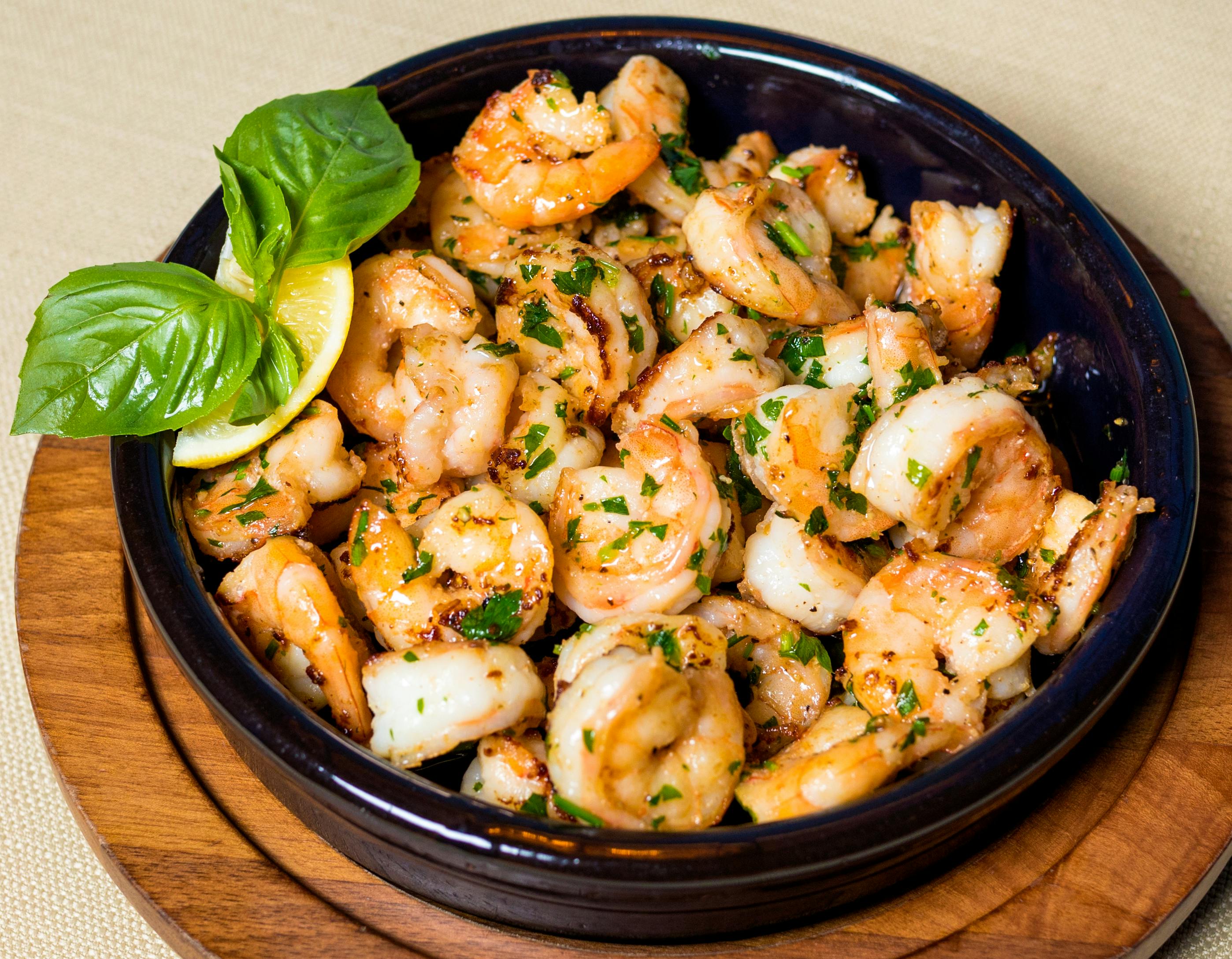
Photo: Farhad Ibrahimzade / Pexels
Mediterranean
Grilled Mediterranean Shrimp
The diets react (see scores below)
Common Ingredients
- shrimp
- olive oil
- lemon juice
- garlic
- oregano
- parsley
- red pepper flakes
- salt
Specific recipes may vary.
Incompatible with 3 of 11 diets
Diet Ratings
Grilled Mediterranean Shrimp is an excellent keto dish. Shrimp is a lean, high-quality protein with virtually zero carbs. Olive oil adds healthy monounsaturated fats and boosts the fat content appropriately. Lemon juice contributes a negligible amount of carbs in the small quantities typically used as a marinade or finish. Garlic adds minimal carbs per serving. All other ingredients — oregano, parsley, red pepper flakes, and salt — are herbs and spices with trace carbs. The entire dish as prepared stays well within daily net carb limits, even in generous portions. No added sugars, no grains, no starchy components. Whole, minimally processed ingredients throughout.
Grilled Mediterranean Shrimp is unambiguously non-vegan. Shrimp is a seafood — an animal product — and serves as the primary protein in this dish. All mainstream vegan organizations (Vegan Society, PETA, etc.) classify all seafood, including crustaceans such as shrimp, as animal products excluded from a vegan diet. The remaining ingredients (olive oil, lemon juice, garlic, oregano, parsley, red pepper flakes, salt) are all plant-based, but the presence of shrimp makes the dish incompatible with a vegan diet regardless.
This dish is almost entirely paleo-approved: shrimp is an excellent Paleolithic protein, olive oil is a preferred paleo fat, lemon juice, garlic, oregano, parsley, and red pepper flakes are all whole, unprocessed paleo staples. The single problematic ingredient is salt (added salt), which is explicitly excluded under strict paleo rules. Without the salt, this dish would score a 9-10. The inclusion of salt drops it to caution territory, as added/refined salt is discouraged by foundational paleo authorities like Loren Cordain, who argues Paleolithic humans obtained sodium naturally from whole foods rather than isolated salt.
Many modern paleo practitioners and frameworks (Mark Sisson's Primal Blueprint, Whole30, and much of the practical paleo community) permit the use of unrefined salts such as sea salt or Himalayan pink salt in moderation, arguing that trace mineral content and culinary necessity make them an acceptable inclusion. If using unrefined salt, most real-world paleo adherents would consider this dish fully approved.
Grilled Mediterranean Shrimp is an exemplary Mediterranean dish. Shrimp is a lean seafood that fully aligns with the diet's recommendation to consume fish and seafood 2-3 times weekly. Extra virgin olive oil serves as the primary fat, exactly as prescribed. The remaining ingredients — lemon juice, garlic, oregano, parsley, and red pepper flakes — are quintessential Mediterranean aromatics and flavor builders with no nutritional drawbacks. There are no refined grains, added sugars, processed ingredients, or saturated fat concerns. This dish is whole, minimally processed, and plant-forward in its seasoning profile while delivering high-quality lean protein from seafood.
While shrimp is a carnivore-approved seafood, this dish is heavily compromised by multiple plant-derived ingredients. Olive oil is a plant-based oil excluded from carnivore. Lemon juice, garlic, oregano, parsley, and red pepper flakes are all plant-derived foods (fruit juice, allium, herbs, and spices) that violate the core carnivore principle of eating exclusively animal products. Only the shrimp and salt are carnivore-compliant. The dish as prepared is essentially a plant-seasoned seafood dish that cannot be considered carnivore in any tier of the diet.
Every ingredient in this dish is explicitly compliant with Whole30 rules. Shrimp is a whole seafood protein, olive oil is a natural fat, lemon juice is a natural acid, garlic and herbs (oregano, parsley, red pepper flakes) are allowed seasonings, and salt is explicitly permitted. There are no excluded ingredients — no grains, legumes, dairy, added sugars, or any other banned substances. This is a textbook Whole30-compliant meal.
This dish contains garlic, which is one of the highest-FODMAP ingredients known — it is extremely high in fructans and must be avoided entirely during the elimination phase, even in very small amounts. There is no safe serving size for whole garlic for most IBS sufferers on the FODMAP elimination diet. The remaining ingredients are all low-FODMAP: shrimp is a protein with no FODMAPs, olive oil is fat-soluble and FODMAP-free, lemon juice is low-FODMAP at standard servings, oregano and parsley are low-FODMAP as dried or fresh herbs in typical culinary quantities, red pepper flakes are low-FODMAP in small amounts, and salt contains no FODMAPs. The dish fails solely due to garlic. A simple fix would be to substitute garlic-infused olive oil (FODMAPs are water-soluble, not fat-soluble, so the oil carries flavor without fructans) and omit the garlic cloves entirely.
Grilled Mediterranean Shrimp is built on largely DASH-friendly components: shrimp is a lean, low-fat protein; olive oil is a heart-healthy unsaturated fat endorsed by DASH principles; lemon juice, garlic, oregano, parsley, and red pepper flakes are all low-sodium, nutrient-rich flavor enhancers fully consistent with DASH. The dish is low in saturated fat, contains no added sugar, and the cooking method (grilling) adds no extra fat. The two moderating factors are shrimp's natural cholesterol content (roughly 170mg per 3oz serving) and the added salt in the recipe. Shrimp is relatively high in dietary cholesterol, which historically gave DASH practitioners pause, though current dietary guidelines have moved away from strict cholesterol caps. The added salt is the more pressing DASH concern — home preparation with salt can easily push sodium into the 400-600mg range per serving depending on quantity used, which is significant within a <2,300mg/day (or especially <1,500mg/day) daily budget. With salt minimized or replaced by lemon and herbs, this dish would score 8-9 and earn a clear approval. As written with salt included, it warrants caution and portion awareness rather than avoidance.
NIH DASH guidelines historically flagged shrimp due to its cholesterol content and recommended limiting high-cholesterol shellfish; however, updated clinical interpretation following the 2020-2025 Dietary Guidelines — which removed the 300mg/day cholesterol cap — leads most DASH-oriented clinicians to permit shrimp freely given its low saturated fat profile, with the primary concern now being sodium from added salt rather than dietary cholesterol.
Grilled Mediterranean Shrimp is an near-ideal Zone meal component. Shrimp is one of the leanest protein sources available — very high protein, extremely low fat, and virtually zero carbohydrates — making it exceptionally easy to hit a 7g protein block with minimal fat or carb interference. Olive oil provides the fat component in the form of monounsaturated fatty acids, which Dr. Sears consistently identifies as the preferred Zone fat source for its anti-inflammatory profile. Lemon juice adds negligible carbohydrates. Garlic, oregano, parsley, and red pepper flakes contribute polyphenols and anti-inflammatory compounds that align perfectly with Sears' later emphasis on polyphenol intake as a key pillar of the Zone lifestyle. The absence of any high-glycemic carbohydrates, saturated fats, omega-6 seed oils, or processed ingredients means there are no Zone-unfavorable elements in this dish. The only structural note is that this dish, as described, is protein and fat — it would need to be paired with a low-glycemic carbohydrate source (e.g., a large vegetable salad, roasted peppers, or a small serving of fruit) to complete a balanced Zone meal at the 40/30/30 ratio. As a protein-and-fat building block, however, it is essentially a textbook Zone component.
Grilled Mediterranean Shrimp is an exceptionally well-aligned anti-inflammatory dish. Shrimp is a lean, low-fat seafood that provides high-quality protein, selenium (a key antioxidant mineral), and modest amounts of omega-3 fatty acids (EPA and DHA), placing it firmly in the 'approve' category as a seafood source. Extra virgin olive oil is a cornerstone of anti-inflammatory eating, rich in oleocanthal (a natural COX inhibitor), monounsaturated fats, and polyphenols that have been shown to reduce CRP and other inflammatory markers. Garlic contains allicin and organosulfur compounds with well-documented anti-inflammatory and immunomodulatory properties. Oregano and parsley are potent herb sources of flavonoids and antioxidants. Red pepper flakes contain capsaicin, which has demonstrated anti-inflammatory effects in research. Lemon juice adds vitamin C and flavonoids. The cooking method (grilling) avoids inflammatory seed oils and heavy saturated fats. There are no refined carbohydrates, added sugars, processed ingredients, or trans fats in this dish. The combination of seafood, EVOO, garlic, and Mediterranean herbs is precisely the dietary pattern associated with reduced systemic inflammation in multiple large-scale studies including the PREDIMED trial.
Grilled Mediterranean Shrimp is an excellent GLP-1-friendly dish. Shrimp is one of the leanest, highest protein-density seafoods available — approximately 20-24g of protein per 100g serving with minimal fat. Grilling preserves that lean profile without adding unhealthy fats. Olive oil is used in a small amount as a marinade, contributing heart-healthy unsaturated fats consistent with GLP-1 dietary guidance. Lemon juice, garlic, oregano, and parsley are all digestive-friendly, nutrient-dense additions with negligible caloric impact. The dish is easy to digest, light on the stomach, and works well in small portions — all critical for GLP-1 patients. The one minor consideration is red pepper flakes, which in large amounts could irritate the GI tract in sensitive patients, but at typical seasoning levels this is unlikely to be problematic. Overall, this dish hits the top priorities: high protein, low fat, easy digestibility, and nutrient density per calorie.
*See how scores were generated at our methodology page.
Nutritional profile
Six traits that cut across every diet.
Fiber & Plants
How much whole-plant food and fiber it delivers.
Healthy Fats
The quality of its fats (unsaturated, omega-3).
Whole / Unprocessed
How close it is to its natural, unprocessed form.
Gut Gentle
How easy it is on digestion (low FODMAP, few irritants).
Low Glycemic
How little it spikes your blood sugar.
Protein Density
How much protein it packs per calorie.
Controversy Index
Higher controversy = more disagreement between diets.
Diet-Specific Tips
 Keto — 9/10
View tips
- Shrimp is virtually zero-carb and a clean protein source
- Olive oil provides healthy monounsaturated fats, improving macro ratio
- Lemon juice used in small marinade quantities contributes negligible net carbs
- All seasonings (oregano, parsley, red pepper flakes, garlic) are low-carb in standard serving amounts
- No grains, added sugars, or starchy ingredients present
- Whole, unprocessed ingredients align with strict keto principles
 Paleo — 6/10
View tips
- Shrimp is a clean, paleo-approved protein with high nutritional value
- Olive oil is a preferred paleo-compliant fat source
- Lemon juice, garlic, oregano, parsley, and red pepper flakes are all whole-food paleo staples
- Added salt is excluded under strict Cordain-school paleo guidelines
- Unrefined sea salt or Himalayan salt is widely accepted by mainstream modern paleo practitioners
- No grains, legumes, dairy, seed oils, or processed ingredients present
 Mediterranean — 9/10
View tips
- Shrimp is lean seafood, strongly encouraged 2-3 times per week
- Extra virgin olive oil is the sole fat source, perfectly aligned with Mediterranean principles
- All herbs and aromatics (garlic, oregano, parsley, lemon) are staple Mediterranean flavors
- Zero processed ingredients, refined grains, or added sugars
- Grilling is a healthy, low-fat cooking method traditional in Mediterranean cuisine
- High protein, low saturated fat nutritional profile
 Whole30 — 10/10
View tips
- Shrimp is a compliant whole seafood protein
- Olive oil is an approved natural fat
- Lemon juice is a compliant natural acid/flavoring
- Garlic, oregano, parsley, and red pepper flakes are all allowed herbs and spices
- Salt is explicitly permitted on Whole30
- No excluded ingredients present
- Simple, whole-food preparation aligns perfectly with Whole30 philosophy
 DASH — 6/10
View tips
- Shrimp is a lean, low-saturated-fat protein well-aligned with DASH lean protein guidelines
- Olive oil provides heart-healthy monounsaturated fat consistent with DASH vegetable oil allowance
- Added salt raises sodium concern — reducing or omitting salt significantly improves DASH compatibility
- Shrimp contains moderate dietary cholesterol (~170mg/3oz), a historically debated factor now largely deprioritized in updated guidelines
- All herbs and aromatics (garlic, oregano, parsley, lemon, red pepper flakes) are DASH-positive flavor enhancers
- Grilling is a DASH-compatible cooking method with no added saturated fat
- Low-sodium version of this dish (salt omitted) would rate 8-9 and receive clear approval
 Zone — 9/10
View tips
- Shrimp is a top-tier Zone lean protein — high protein density, negligible fat, zero carbs
- Olive oil is Dr. Sears' preferred fat source — monounsaturated and anti-inflammatory
- Garlic, oregano, parsley, and red pepper flakes are polyphenol-rich, supporting Sears' anti-inflammatory Zone framework
- No high-glycemic carbohydrates, refined ingredients, saturated fat, or omega-6 seed oils present
- Dish requires pairing with low-glycemic vegetables or fruit to complete the 40/30/30 macro ratio
- Grilling method avoids added fat beyond the olive oil, keeping fat portion controllable
 Anti-Inflammatory — 9/10
View tips
- Shrimp provides lean protein with omega-3s (EPA/DHA) and selenium
- Extra virgin olive oil supplies oleocanthal and polyphenols with proven anti-inflammatory action
- Garlic contributes allicin and organosulfur anti-inflammatory compounds
- Oregano and parsley are rich in flavonoids and antioxidants
- Red pepper flakes contain capsaicin, a natural anti-inflammatory compound
- No refined carbohydrates, added sugars, seed oils, or processed ingredients
- Grilling is a clean cooking method that preserves nutritional integrity
- Aligned with the PREDIMED Mediterranean dietary pattern associated with reduced CRP and IL-6
 GLP-1 Friendly — 9/10
View tips
- Shrimp is extremely high in protein with very low fat — ideal protein density for GLP-1 patients
- Grilling method avoids added fats and preserves lean profile
- Olive oil contributes unsaturated fat in small marinade quantities — appropriate and beneficial
- Lemon juice and herbs are GI-friendly and add micronutrient value with no caloric cost
- Red pepper flakes are used as a seasoning — generally tolerable, but patients with GLP-1-related reflux or nausea should use sparingly
- Small-portion friendly — a modest serving of shrimp still delivers substantial protein
- No high-fat, fried, sugary, or carbonated elements present