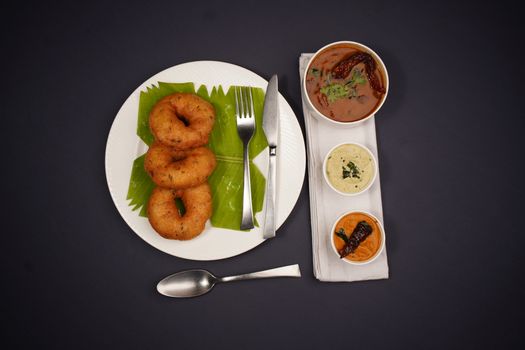
Photo: Jack Baghel / Pexels
The diets react (see scores below)
Common Ingredients
- urad dal
- ginger
- green chilies
- cumin seeds
- black pepper
- curry leaves
- cilantro
- salt
Specific recipes may vary.
Incompatible with 6 of 11 diets
Diet Ratings
Medu Vada is made primarily from urad dal (black lentils), which is a high-carbohydrate legume. Urad dal contains approximately 60g of carbs per 100g dry weight, and a standard serving of 2-3 vadas easily provides 30-45g of net carbs, well capable of exceeding the daily keto limit on its own. Legumes as a whole are incompatible with ketogenic diets due to their starch content. The spices and aromatics (ginger, chilies, cumin, curry leaves, cilantro) are keto-friendly, but the primary base ingredient makes this dish fundamentally incompatible with ketosis. The deep-frying adds fat, but the carbohydrate load from the lentil batter completely disqualifies it.
Medu Vada as described is entirely plant-based. The dish is made from urad dal (black gram lentils) as its protein base, seasoned with whole spices and herbs — ginger, green chilies, cumin seeds, black pepper, curry leaves, and cilantro — all of which are plants. No animal products or animal-derived ingredients are present. This is a whole-food, minimally processed snack that aligns well with vegan dietary principles. Traditionally, Medu Vada is deep-fried, which doesn't affect its vegan status but may be a consideration for health-focused plant-based eaters. Note that some restaurant versions may be served with chutneys containing dairy (e.g., raita), but the vada itself is fully vegan.
Medu Vada is fundamentally incompatible with the Paleo diet. The primary ingredient, urad dal (black gram lentils), is a legume — one of the most clearly excluded food categories in Paleo. Legumes are rejected due to their high lectin and phytic acid content, which Paleo authorities argue impairs nutrient absorption and damages gut lining. Beyond the base ingredient, the dish also contains added salt, another item excluded from strict Paleo. The remaining ingredients — ginger, green chilies, cumin seeds, black pepper, curry leaves, and cilantro — are all Paleo-approved herbs and spices, but they cannot redeem a dish whose entire structure is built around a non-compliant legume base.
Medu Vada is made from urad dal (black lentils), which is an excellent legume-based protein fully aligned with Mediterranean diet principles. The spices and aromatics (ginger, cumin, curry leaves, cilantro, chilies) are all whole, plant-based ingredients with no nutritional concerns. However, the traditional preparation method involves deep-frying in oil, which is the critical complicating factor. If fried in refined vegetable oils or seed oils, this conflicts with the Mediterranean emphasis on extra virgin olive oil as the primary fat. Additionally, deep-frying adds significant saturated or trans fat depending on the oil used. The base ingredient profile is excellent, but the cooking method prevents a full approval. If baked or air-fried using olive oil, this dish would score much higher.
Some Mediterranean diet interpreters would approve the ingredient list outright, noting that legume-based dishes with whole spices are nutritionally exemplary regardless of regional cuisine origin. Others might argue that occasional deep-fried legume dishes parallel traditional Mediterranean fritters (e.g., falafel, panelle) which appear in some Mediterranean dietary traditions and are acceptable in moderation.
Medu Vada is entirely plant-based with zero animal-derived ingredients. The primary protein is urad dal (black lentils), a legume explicitly excluded from the carnivore diet. Every single ingredient — urad dal, ginger, green chilies, cumin seeds, black pepper, curry leaves, cilantro, and salt — is plant-derived (except salt). Legumes are among the most anti-carnivore foods due to their high carbohydrate content, antinutrients (lectins, phytates, oxalates), and complete absence of animal origin. There is no version of carnivore that would accommodate this dish.
Medu Vada is made primarily from urad dal (black gram lentils), which is a legume explicitly excluded on the Whole30 program. Legumes — including all beans, lentils, and dal varieties — are prohibited for the full 30 days. While the remaining ingredients (ginger, green chilies, cumin seeds, black pepper, curry leaves, cilantro, salt) are all individually Whole30-compliant, the foundational ingredient renders this dish non-compliant. There are no exceptions for urad dal the way there are for green beans, sugar snap peas, or snow peas.
Medu Vada is made primarily from urad dal (black gram lentils), which is high in GOS (galacto-oligosaccharides) — a key FODMAP that must be avoided during the elimination phase. Unlike canned lentils where some GOS leaches into the liquid, urad dal is used as a ground batter in Medu Vada, meaning all the GOS content is retained in the final dish. A standard serving of 2-3 vadas would contain a significant quantity of urad dal (roughly 60-90g or more), well above any safe threshold. The remaining ingredients — ginger, green chilies, cumin seeds, black pepper, curry leaves, cilantro, and salt — are all low-FODMAP condiments and spices at the quantities used in this recipe. However, the primary ingredient urad dal makes this dish high-FODMAP regardless of the supporting ingredients.
Medu Vada is made from urad dal (black lentils), which is a DASH-friendly legume rich in protein, fiber, potassium, and magnesium. The spices and aromatics (ginger, green chilies, cumin, black pepper, curry leaves, cilantro) are all DASH-compatible and may offer anti-inflammatory benefits. However, the primary concern is the cooking method: Medu Vada is deep-fried, which significantly increases total fat content. While the fat used is typically vegetable oil (not a tropical oil), the total fat load from deep frying is not emphasized in DASH guidelines. Additionally, salt is added to the batter, contributing sodium. The base ingredient itself would score highly, but the frying method and added salt push this into 'caution' territory. If baked or air-fried with minimal salt, this dish would align much more closely with DASH principles.
NIH DASH guidelines do not specifically address deep-fried legume preparations, and some DASH-oriented clinicians note that urad dal's strong nutritional profile (high fiber, potassium, plant protein) may partially offset the fat from frying when consumed in moderate portions. However, traditional DASH guidance consistently limits high-fat preparations, so conservative DASH practitioners would likely recommend limiting frequency or modifying the cooking method.
Medu Vada is made primarily from urad dal (black lentils), which provides a reasonable protein and carbohydrate profile. Urad dal is a legume with moderate glycemic index and decent protein content, making it a workable Zone ingredient. However, the traditional preparation involves deep-frying, which dramatically shifts the fat profile — adding significant omega-6-heavy seed or vegetable oil (typically refined coconut or sunflower oil) rather than the monounsaturated fats favored in the Zone. The fat content from frying is difficult to control and block-measure accurately. The spices (ginger, cumin, green chilies, curry leaves, cilantro) are all Zone-positive anti-inflammatory ingredients. The carb-to-protein ratio in urad dal leans carb-heavy, requiring careful portioning to hit 40/30/30. Without the frying, the base ingredients would score higher. As a snack, it can technically be worked into Zone blocks with controlled portion sizes, but the frying method makes it an 'unfavorable' Zone food.
Some Zone practitioners following Dr. Sears' later anti-inflammatory framework might rate this higher because urad dal is a polyphenol-rich legume with a relatively low glycemic load, and the spice blend is strongly anti-inflammatory. If prepared baked rather than fried, this dish aligns much more closely with Zone ideals. The legume-based protein, while less complete than animal protein, fits the vegetarian Zone block framework where fat blocks are larger (3g fat per block).
Medu Vada's base ingredient — urad dal (black lentils) — is a legume that aligns well with anti-inflammatory principles: high in plant protein, fiber, B vitamins, and minerals that support gut health and reduce inflammatory markers. The spice profile is genuinely impressive from an anti-inflammatory standpoint: ginger (gingerols inhibit COX-2), green chilies (capsaicin), cumin seeds (antioxidant aldehydes), black pepper (piperine enhances curcumin absorption and has independent anti-inflammatory effects), curry leaves (carbazole alkaloids, antioxidants), and cilantro (quercetin, beta-carotene) all earn strong marks. However, the critical issue is preparation: traditional Medu Vada is deep-fried, typically in refined seed oils (sunflower, vegetable, or palm oil) which are flagged under anti-inflammatory guidelines due to high omega-6 content, oxidation under heat, and potential trans fat formation. This transforms an otherwise excellent ingredient profile into a mixed assessment. The frying method also adds significant refined fat calories and a pro-inflammatory cooking byproduct burden. If baked or air-fried in olive oil, this dish would score 8+. As traditionally deep-fried, the preparation method moderates the score significantly despite the stellar spice and legume base.
Some anti-inflammatory practitioners and researchers (including those aligned with Mediterranean and Dr. Weil's frameworks) argue that occasional deep-frying in high-oleic oils is acceptable and that the anti-inflammatory payload from the legume and spice base outweighs infrequent frying exposure. Conversely, stricter anti-inflammatory protocols flag any deep-frying as a significant concern due to lipid oxidation products (aldehydes, acrolein) generated at high heat, which have been linked to elevated CRP and oxidative stress in emerging research.
Medu Vada is a traditional South Indian snack made from urad dal batter that is deep-fried into a donut shape. Despite the protein and fiber potential of urad dal, the deep-frying preparation method is the critical disqualifying factor for GLP-1 patients. Deep-frying adds substantial fat, makes the food heavy and greasy, and significantly worsens the GI side effects associated with GLP-1 medications — particularly nausea, bloating, and reflux. GLP-1s slow gastric emptying, meaning high-fat fried foods sit in the stomach even longer than usual, amplifying discomfort. The spice profile (green chilies, black pepper, ginger in combination) also adds GI irritation risk for sensitive patients. The urad dal base does offer protein (~7-9g per 2 vadas) and fiber, but these benefits are negated by the frying method. This is a case where the ingredient list looks more promising than the prepared dish actually is.
*See how scores were generated at our methodology page.
Nutritional profile
Six traits that cut across every diet.
Fiber & Plants
How much whole-plant food and fiber it delivers.
Healthy Fats
The quality of its fats (unsaturated, omega-3).
Whole / Unprocessed
How close it is to its natural, unprocessed form.
Gut Gentle
How easy it is on digestion (low FODMAP, few irritants).
Low Glycemic
How little it spikes your blood sugar.
Protein Density
How much protein it packs per calorie.
Controversy Index
Higher controversy = more disagreement between diets.
Diet-Specific Tips
 Vegan — 9/10
View tips
- Urad dal is a whole plant food and excellent protein source
- All spices and aromatics are fully plant-derived
- No dairy, eggs, or animal-derived additives in the ingredient list
- Deep-frying is the traditional preparation — vegan-compliant but less favored by whole-food plant-based advocates
- Accompaniments (chutneys, sambar) should be verified separately if dining out
 Mediterranean — 5/10
View tips
- Urad dal is a legume — a Mediterranean diet staple and excellent plant-based protein source
- All spices and aromatics are whole, unprocessed plant foods
- Traditional preparation involves deep-frying, which significantly increases fat content
- Oil type used for frying matters greatly — refined oils conflict with the olive oil principle
- No refined grains, added sugars, red meat, or highly processed ingredients
- Comparable to falafel (a Mediterranean-accepted legume fritter) in concept, though not in tradition
 DASH — 5/10
View tips
- Urad dal is a DASH-approved legume: high in plant protein, fiber, potassium, and magnesium
- Deep-frying significantly increases total fat content, which DASH guidelines discourage
- Added salt raises sodium content — amount depends on preparation but warrants attention
- All spices and aromatics are DASH-compatible with no sodium or saturated fat concerns
- No saturated fat, trans fat, added sugar, or red meat — core DASH concerns are absent
- Baked or air-fried version with reduced salt would score 7-8 and qualify as 'approve'
 Zone — 5/10
View tips
- Urad dal provides moderate protein and low-to-moderate glycemic carbohydrates — a workable Zone carb/protein source
- Traditional deep-frying adds substantial omega-6-heavy oils, misaligning with Zone's monounsaturated fat preference
- Spices (ginger, cumin, curry leaves, chilies) are strongly anti-inflammatory and Zone-positive
- As a vegetarian protein, fat blocks are calculated at 3g per block, but frying fat is uncontrolled
- Legume carb-to-protein ratio skews carb-heavy, requiring careful portioning to achieve 40/30/30
- Baked or air-fried preparation would significantly improve Zone compatibility
 Anti-Inflammatory — 6/10
View tips
- Urad dal (black lentils) is a high-fiber, high-protein legume strongly aligned with anti-inflammatory principles
- Ginger contains gingerols with documented COX-2 inhibition and anti-inflammatory effects
- Black pepper provides piperine, an anti-inflammatory compound that also enhances bioavailability of other phytonutrients
- Cumin, green chilies, curry leaves, and cilantro all contribute antioxidants and polyphenols
- Traditional deep-frying is the primary concern — refined seed oils (often sunflower or vegetable) are high in omega-6 and prone to oxidation at frying temperatures
- Preparation method (deep-frying vs. air-frying/baking) is the decisive variable in this dish's inflammatory profile
- No refined carbohydrates, added sugars, or artificial additives in the ingredient list