Photo: Luis Antonio Rockdríguez / Pexels
The diets react (see scores below)
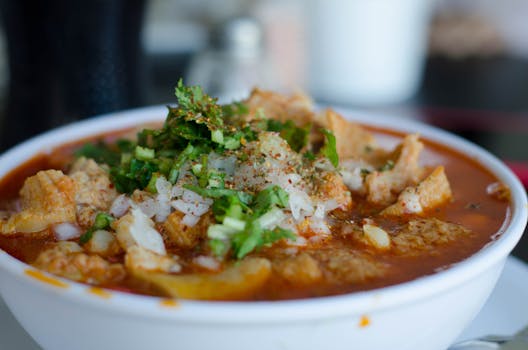
Common Ingredients
- beef tripe
- hominy
- guajillo chiles
- ancho chiles
- onion
- garlic
- Mexican oregano
- lime
Specific recipes may vary.
Incompatible with 7 of 11 diets
Diet Ratings
Menudo is disqualified primarily by hominy, which is dried nixtamalized corn — a high-carb grain product. A single cup of hominy contains roughly 20-24g net carbs, meaning even a modest bowl of menudo could consume or exceed the entire daily keto carb budget in that one ingredient alone. The remaining components — beef tripe, chiles, onion, garlic, oregano, lime — are largely keto-friendly in reasonable amounts, but they cannot offset the hominy. Tripe is actually an excellent keto protein (low fat, zero carbs), and guajillo/ancho chiles add minimal carbs in small quantities. However, the dish as traditionally prepared with hominy is fundamentally incompatible with ketosis. A keto-adapted version could theoretically omit the hominy, but that would no longer be authentic menudo.
Menudo is a traditional Mexican tripe soup whose primary protein is beef tripe — the stomach lining of a cow — which is unambiguously an animal product. No plant-based substitution is present in this formulation. While the remaining ingredients (hominy, guajillo and ancho chiles, onion, garlic, oregano, lime) are all fully plant-based, the inclusion of beef tripe makes this dish incompatible with a vegan diet under any mainstream or fringe definition of veganism.
Menudo is disqualified from paleo compliance by one non-negotiable ingredient: hominy. Hominy is dried maize (corn) that has been nixtamalized — a grain that is explicitly excluded under all paleo frameworks. Grains are among the most clearly prohibited foods in the paleo diet due to their anti-nutrient content (lectins, phytates) and their absence from the pre-agricultural diet. The remaining ingredients are largely paleo-friendly: beef tripe is an unprocessed organ meat highly valued in ancestral eating, guajillo and ancho chiles are whole dried peppers, onion, garlic, Mexican oregano, and lime are all approved. However, the presence of hominy as a core structural ingredient — not a minor additive — means the dish cannot be approved or even cautioned; it must be avoided as traditionally prepared.
Menudo's primary protein is beef tripe, which is organ meat from cattle — a form of red meat that the Mediterranean diet limits to only a few times per month. While the dish has genuinely positive elements (hominy provides whole grain-like nutrition, chiles and aromatics like onion, garlic, and oregano are strongly aligned with Mediterranean principles, and lime adds brightness without processed ingredients), the foundation of the dish is beef offal. Organ meats are high in saturated fat and cholesterol, and beef in any form sits at the restricted end of the Mediterranean dietary pyramid. The absence of olive oil and any plant-based fat source is also notable. The dish is minimally processed and uses whole, real ingredients, which prevents a score of 1-2, but the beef tripe base keeps it in 'avoid' territory for regular consumption.
Some Mediterranean diet researchers note that traditional coastal and rural Mediterranean communities did consume organ meats occasionally as resourceful, whole-food eating — nothing was wasted. From this perspective, tripe consumed infrequently (a few times monthly) in a broth-based soup rich in vegetables and whole grains could be marginally acceptable, placing it closer to a 'caution' rating rather than a firm avoid.
Menudo is fundamentally incompatible with the carnivore diet despite its excellent animal-based centerpiece. Beef tripe is a prized organ meat on carnivore — rich in collagen, connective tissue, and micronutrients — and would be enthusiastically approved on its own. However, this dish contains multiple plant-based ingredients that disqualify it entirely: hominy (processed corn, a grain), guajillo and ancho chiles (plant-derived), onion, garlic, Mexican oregano (all plant foods), and lime (fruit). The majority of the dish by ingredient count is plant material. Stripping the tripe out and cooking it with only salt and water would make it carnivore-compliant, but traditional Menudo as prepared cannot be approved.
Menudo contains hominy, which is a processed form of corn — a grain that is explicitly excluded on the Whole30 program. All other ingredients (beef tripe, guajillo chiles, ancho chiles, onion, garlic, Mexican oregano, lime) are fully compliant. However, hominy is a non-negotiable disqualifier. Without hominy, a tripe-based chile broth soup would be entirely Whole30 compliant.
Menudo contains multiple high-FODMAP ingredients that make it unsuitable during the elimination phase. Onion and garlic are among the highest-fructan foods tested by Monash University and are clearly avoid-level ingredients at any reasonable cooking quantity. Even when cooked into a broth, fructans from onion and garlic leach into the liquid, making the entire soup high-FODMAP — unlike fat-soluble compounds, these water-soluble FODMAPs cannot be strained out safely. Hominy (nixtamalized corn) is another concern: while plain corn is generally low-FODMAP in small servings, hominy in the larger portions typical of menudo has not been well-characterized by Monash, and GOS content may be a factor. The remaining ingredients — beef tripe, guajillo and ancho chiles, Mexican oregano, and lime — are individually low-FODMAP or used in small enough quantities to be acceptable. However, the onion and garlic alone are disqualifying for elimination-phase compliance regardless of any modifications to other components.
Menudo presents a mixed DASH profile. The base ingredients include several DASH-friendly components: hominy (whole grain, good fiber and potassium), guajillo and ancho chiles (rich in vitamins and antioxidants), onion, garlic, and lime (all DASH-positive). However, beef tripe is the primary concern — it is an organ meat that is relatively high in cholesterol and saturated fat compared to lean poultry or fish preferred by DASH. Tripe is also moderately high in dietary cholesterol. The more significant DASH concern is sodium: traditional restaurant-style menudo is typically very high in sodium (often 1,000–1,500mg+ per bowl) due to added salt in the broth and seasoning, which conflicts directly with DASH sodium targets of <2,300mg/day (or <1,500mg for low-sodium DASH). Hominy canned forms also add sodium. However, homemade menudo prepared with sodium-controlled broth and no added salt could reduce this concern substantially. The dish is not inherently processed or laden with added sugars or trans fats, and the vegetable and spice components provide meaningful potassium, magnesium, and fiber. On balance, this is an acceptable occasional dish with modifications, placing it firmly in the caution zone.
NIH DASH guidelines emphasize limiting red and organ meats and controlling sodium, which would push menudo toward avoid in its typical restaurant preparation. However, updated clinical interpretations note that tripe is actually lower in saturated fat than many red meat cuts, and a homemade low-sodium version with careful portioning could align reasonably well with DASH principles — some DASH-oriented dietitians would allow it occasionally within weekly red meat limits.
Menudo presents a mixed Zone Diet profile. Beef tripe is a lean protein source — it's relatively low in fat and provides a solid protein base, fitting reasonably well into the Zone's lean protein category. However, tripe is an organ meat with a somewhat unusual amino acid and fat profile compared to Sears' preferred proteins like skinless chicken or fish. The hominy is the primary concern: it's a processed corn product with a moderately high glycemic index, making it an 'unfavorable' Zone carbohydrate. A typical serving of menudo contains a meaningful amount of hominy, which would push the carbohydrate block toward high-glycemic territory. On the positive side, the guajillo and ancho chiles, onion, and garlic are all polyphenol-rich, anti-inflammatory vegetables that Sears would strongly endorse. The fat content of tripe is relatively low, so the meal would need supplemental monounsaturated fat (e.g., a small amount of olive oil or avocado on the side) to hit the 30% fat target. With careful portioning — reducing hominy and increasing the chile/vegetable base — menudo can be adapted into a Zone-compatible meal, but as traditionally served it skews toward higher-glycemic carbs and an unbalanced macro ratio.
Some Zone practitioners would rate menudo more favorably, noting that tripe is genuinely lean, the chile and vegetable base is polyphenol-rich and anti-inflammatory (aligning well with Sears' later anti-inflammatory Zone framework), and hominy's glycemic impact is partially mitigated by its fiber content and the soup's broth environment. In Sears' later writings emphasizing polyphenols and omega-3 balance, the rich chile base could be seen as a standout positive. Others would score it lower, noting that hominy is derived from corn — a grain Sears consistently lists as unfavorable — and that tripe is not among his recommended protein sources.
Menudo presents a genuinely mixed anti-inflammatory profile. On the positive side, guajillo and ancho chiles are rich in carotenoids (capsanthin, beta-carotene) and polyphenols with documented anti-inflammatory activity. Mexican oregano contains rosmarinic acid and flavonoids, both anti-inflammatory compounds. Garlic and onion contribute quercetin and allicin. Lime provides vitamin C and flavanoids. Hominy (nixtamalized corn) is a whole grain with moderate fiber content. These components collectively provide meaningful antioxidant and anti-inflammatory support. On the negative side, beef tripe is an organ meat from red meat — a category the anti-inflammatory framework recommends limiting. Organ meats contain arachidonic acid, a precursor to pro-inflammatory eicosanoids, though tripe is lower in fat than most muscle cuts and relatively low in saturated fat compared to other beef products. The dish contains no significant omega-3 sources to counterbalance the omega-6 load. Hominy is moderate-glycemic but not a refined carbohydrate. Overall, the strong anti-inflammatory spice and vegetable base partially offsets the pro-inflammatory potential of the tripe, landing this in caution/moderate territory. It's a culturally significant, minimally processed traditional dish that compares favorably to many red meat preparations.
Some anti-inflammatory practitioners, particularly those following AIP or autoimmune-focused protocols, would rate this more cautiously — organ meats like tripe carry higher arachidonic acid loads that may amplify inflammatory signaling in sensitive individuals, and corn/hominy is excluded from stricter anti-inflammatory protocols. Conversely, nose-to-tail advocates including some ancestral health researchers argue organ meats are nutrient-dense with unique anti-inflammatory compounds like glycine (abundant in tripe's collagen), and that traditional whole-food preparations like menudo should not be equated with processed red meat.
Menudo is a nutrient-dense traditional Mexican soup with a genuinely mixed GLP-1 profile. Beef tripe is a lean organ meat — lower in fat than most beef cuts and a reasonable protein source (~17-20g per cup of soup), supporting the #1 priority. Hominy adds some fiber and carbohydrates, and the broth-based preparation is easy on digestion and hydrating, both positives for GLP-1 patients. Guajillo and ancho chiles are mild-to-moderate dried chiles that add antioxidants and flavor without the acute capsaicin load of fresh hot chiles, making them less likely to worsen reflux or nausea than something like habanero or sriracha. Lime and garlic are beneficial additions. The main drawbacks are that tripe is an organ meat with a chewy, dense texture that some GLP-1 patients find difficult to tolerate given slowed gastric emptying, and the fat content is variable depending on how thoroughly the tripe is cleaned and prepared — poorly cleaned tripe can carry significant fat. Hominy is a refined-adjacent starchy grain with modest fiber relative to whole grains. Protein per serving is moderate but not high-density enough to be a primary protein vehicle without a larger portion. Overall this is an acceptable and nutritious choice in moderation, particularly if the tripe is well-trimmed and the broth is not heavily fatty.
Some GLP-1-focused dietitians would be cautious about tripe specifically due to its dense, chewy texture and unpredictable fat content depending on preparation — patients with significant gastroparesis-like slowing may find it sits heavily. Others consider it a culturally appropriate lean protein worth encouraging, noting that the broth format actually aids tolerability compared to solid high-fat meats.
*See how scores were generated at our methodology page.
Nutritional profile
Six traits that cut across every diet.
Fiber & Plants
How much whole-plant food and fiber it delivers.
Healthy Fats
The quality of its fats (unsaturated, omega-3).
Whole / Unprocessed
How close it is to its natural, unprocessed form.
Gut Gentle
How easy it is on digestion (low FODMAP, few irritants).
Low Glycemic
How little it spikes your blood sugar.
Protein Density
How much protein it packs per calorie.
Controversy Index
Higher controversy = more disagreement between diets.
Diet-Specific Tips
 DASH — 5/10
View tips
- Beef tripe is an organ meat with moderate saturated fat and higher cholesterol, less preferred than lean poultry or fish on DASH
- Typical restaurant menudo is very high in sodium (1,000–1,500mg+ per serving), conflicting with DASH sodium limits
- Hominy provides whole grain fiber, potassium, and magnesium — DASH-positive
- Guajillo and ancho chiles, onion, garlic, and lime are all DASH-friendly ingredients with micronutrient benefits
- Homemade preparation with sodium control can significantly improve DASH compatibility
- Canned hominy adds sodium; fresh or low-sodium versions preferred
- No added sugars, trans fats, or heavy saturated fat sources beyond tripe itself
 Zone — 5/10
View tips
- Beef tripe is a lean protein, fitting Zone's preference for low-fat animal proteins
- Hominy (processed corn) is a high-glycemic, 'unfavorable' Zone carbohydrate that complicates macro balance
- Guajillo chiles, ancho chiles, onion, and garlic are polyphenol-rich, anti-inflammatory Zone-favorable ingredients
- Tripe's low fat content means supplemental monounsaturated fat is needed to achieve the 30% fat target
- Reducing hominy portion and loading up on the vegetable/chile base improves Zone compatibility significantly
- Lime juice contributes polyphenols and virtually no glycemic load — a Zone-positive garnish
 Anti-Inflammatory — 5/10
View tips
- Beef tripe is a red meat/organ meat — category to limit in anti-inflammatory diet due to arachidonic acid and saturated fat
- Tripe is relatively low in fat compared to other beef cuts, with notable collagen and glycine content
- Guajillo and ancho chiles are rich in carotenoids and polyphenols with anti-inflammatory properties
- Garlic and onion contribute quercetin and allicin — well-documented anti-inflammatory compounds
- Mexican oregano provides rosmarinic acid and flavonoids
- Hominy (nixtamalized corn) is a minimally processed whole grain — acceptable but not strongly anti-inflammatory
- No omega-3 sources present; no significant omega-6 oil used in preparation
- Lime contributes vitamin C and flavonoids
- Traditional minimally processed preparation — no refined ingredients, trans fats, or additives
 GLP-1 Friendly — 5/10
View tips
- Tripe is lean organ meat with moderate protein (~17-20g per serving) — supports protein priority
- Broth-based preparation is hydrating and easier to digest than solid or fried preparations
- Hominy adds carbohydrates and some fiber but is not a high-fiber grain
- Guajillo and ancho chiles are mild dried chiles — low capsaicin risk for GI irritation
- Tripe texture is dense and chewy — may be poorly tolerated if gastric emptying is significantly slowed
- Fat content variable depending on tripe preparation and cleaning quality
- Nutrient-dense, whole-ingredient soup with no empty calories or ultra-processed components
- Portion-friendly as a broth soup — works well in small servings