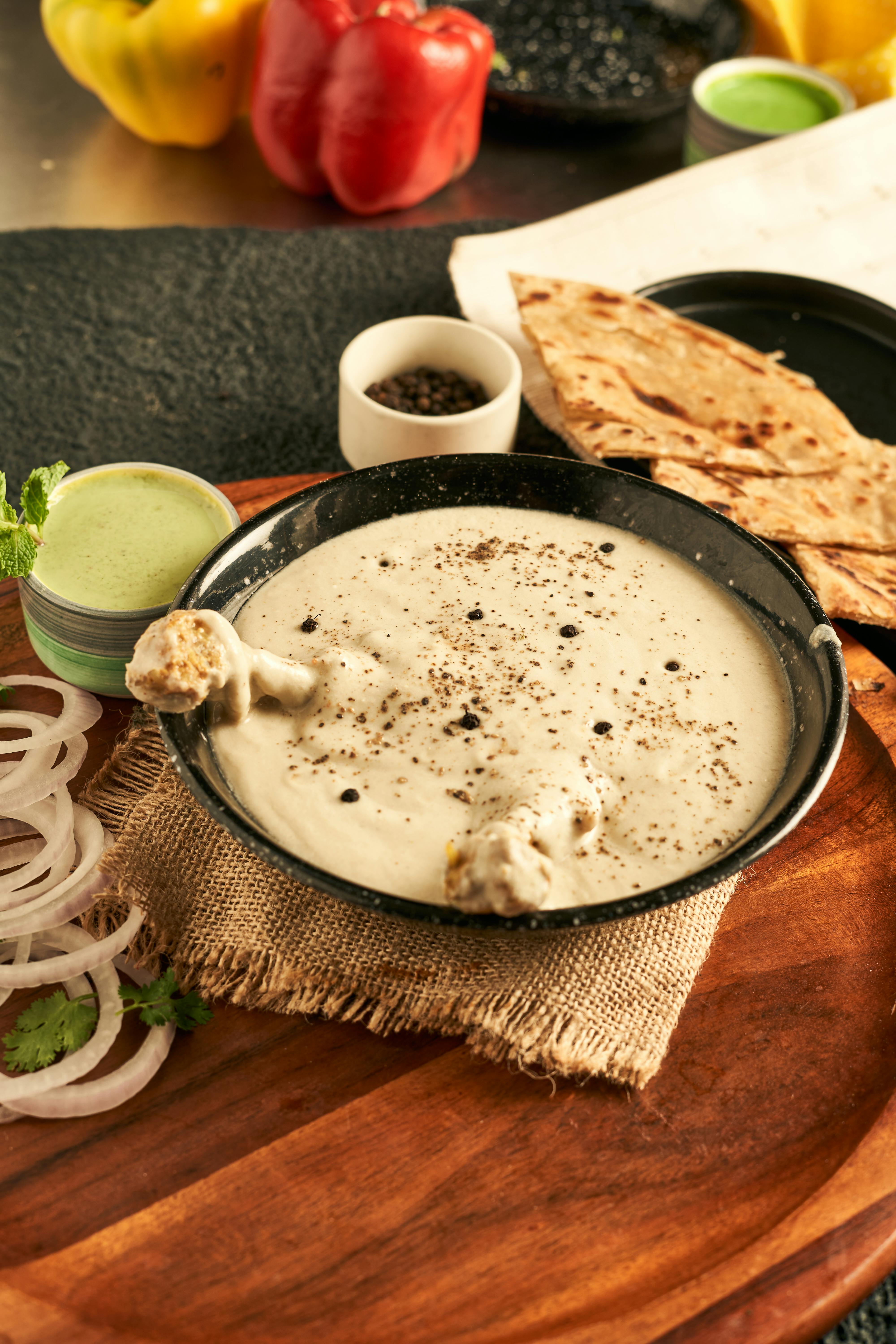
Photo: dhiraj jain / Pexels
Indian
Methi Malai Chicken
The diets react (see scores below)
Common Ingredients
- chicken
- heavy cream
- kasuri methi
- cashews
- onion
- ginger
- garlic
- garam masala
Specific recipes may vary.
Incompatible with 5 of 11 diets
Diet Ratings
Methi Malai Chicken is largely keto-friendly due to its high-fat base (heavy cream), quality protein (chicken), and low-carb aromatics (ginger, garlic, kasuri methi). However, cashews are the main concern — they are among the highest-carb nuts (~8-9g net carbs per 28g serving) and are commonly used in significant quantities to thicken the gravy. Onions also add moderate carbs. With portion control on cashews and onions, this dish can fit within a keto framework, but the cashew-heavy preparation common in restaurant versions may push net carbs too high. A home-prepared version using fewer cashews or substituting with heavy cream alone is more reliably keto.
Strict keto practitioners would flag cashews entirely, as even small amounts add meaningful carbs and some argue any nut-based thickener should be replaced with cream-only sauces to maintain safe margins. Lazy keto adherents, however, generally allow this dish freely given the dominant fat profile from cream and the moderate carb load spread across a serving.
Methi Malai Chicken contains multiple animal-derived ingredients that are strictly excluded from a vegan diet. Chicken is poultry (animal flesh), and heavy cream is a dairy product derived from cow's milk. Both are unambiguously non-vegan. The remaining ingredients — kasuri methi (dried fenugreek leaves), cashews, onion, ginger, garlic, and garam masala — are all plant-based, but the presence of chicken and heavy cream makes this dish entirely incompatible with a vegan diet.
Methi Malai Chicken is disqualified primarily by heavy cream, which is a dairy product excluded under strict paleo rules. The remaining ingredients — chicken, kasuri methi (dried fenugreek leaves), cashews, onion, ginger, garlic, and garam masala — are all paleo-compliant. However, heavy cream is the defining sauce base of this dish, making it non-paleo in its traditional form. The dish could theoretically be adapted using coconut cream as a substitute, but as presented it must be avoided.
Some modern paleo practitioners, particularly those following a primal or ancestral health framework like Mark Sisson's Primal Blueprint, tolerate full-fat dairy such as heavy cream in moderation, arguing that the fat content is low in the problematic casein and lactose fractions. Under this lens, the dish could be considered a cautious inclusion rather than an outright avoid.
Methi Malai Chicken contains chicken (acceptable in moderation on the Mediterranean diet) alongside heavy cream and cashews, which create a rich, high-saturated-fat sauce that moves this dish away from Mediterranean principles. Chicken itself is a permitted protein eaten a few times per week, and the aromatics (onion, ginger, garlic) and kasuri methi (fenugreek leaves) are positively regarded plant-based ingredients. However, heavy cream is not a Mediterranean staple fat — extra virgin olive oil is — and the generous cream base substantially increases saturated fat content beyond what the diet endorses. Cashews add healthy fats and some plant-forward value, partially offsetting concerns. The absence of red meat, processed ingredients, or added sugars keeps this out of 'avoid' territory, but the heavy cream-dominant sauce prevents a full approval.
Some modern Mediterranean diet practitioners argue that occasional dishes featuring dairy-based sauces (analogous to yogurt or cheese used in Eastern Mediterranean and Levantine cuisines) can fit within the dietary pattern if consumed infrequently. A lighter adaptation substituting Greek yogurt for heavy cream would align more closely with traditional Mediterranean cooking of the Levant and Turkey.
Methi Malai Chicken contains multiple plant-derived ingredients that disqualify it from the carnivore diet. Kasuri methi (dried fenugreek leaves) is a plant herb, cashews are nuts, onion and garlic are vegetables, and garam masala is a blend of plant-based spices. While chicken and heavy cream are animal-derived and could individually be consumed on carnivore (with cream being debated), the dish as prepared is dominated by plant-based components. No amount of seasoning or sauce modification makes this dish carnivore-compatible without a complete recipe overhaul.
Methi Malai Chicken contains heavy cream, which is a dairy product and explicitly excluded on the Whole30 program. All dairy (milk, cheese, yogurt, cream, sour cream) is eliminated, with the only exception being ghee and clarified butter. Heavy cream does not fall under any exception. All other ingredients — chicken, kasuri methi (dried fenugreek leaves), cashews, onion, ginger, garlic, and garam masala — are individually Whole30-compliant, but the heavy cream disqualifies the dish as traditionally prepared.
Methi Malai Chicken contains multiple high-FODMAP ingredients that make it unsuitable during the elimination phase. Garlic and onion are among the highest-FODMAP foods tested by Monash University — both are rich in fructans and must be avoided entirely during elimination. Cashews are high in GOS and oligos, making them high-FODMAP even at small servings (Monash rates them as high-FODMAP at just 10 nuts/~15g). These three ingredients alone make this dish a clear avoid. Chicken, heavy cream (lactose is minimal in cream at standard servings), kasuri methi (dried fenugreek leaves — low-FODMAP in small amounts), and ginger are generally low-FODMAP, but the presence of onion, garlic, and cashews as core structural ingredients cannot be worked around without fundamentally changing the dish. Garam masala in small amounts is typically low-FODMAP. The dish as traditionally prepared is not safe during the FODMAP elimination phase.
Methi Malai Chicken sits in a gray zone for DASH compliance. The positives are meaningful: chicken is a lean protein explicitly endorsed by DASH guidelines, kasuri methi (dried fenugreek leaves) is a nutrient-dense herb rich in fiber and minerals, and aromatics like onion, ginger, and garlic contribute beneficial phytochemicals. However, the dish is anchored by two DASH-problematic ingredients. Heavy cream is a high-saturated-fat dairy product — DASH explicitly calls for fat-free or low-fat dairy and limits saturated fat intake. Cashews, while containing heart-healthy unsaturated fats and magnesium (DASH-friendly nutrients), are calorie-dense and require strict portion control. The combination of heavy cream and cashews significantly raises the saturated fat and caloric load of the dish. Sodium can be moderate if home-prepared without added salt, but restaurant versions may contain higher sodium. Overall, the dish is not categorically off-limits but cannot be considered a core DASH food due to its cream-based preparation.
NIH DASH guidelines clearly restrict full-fat dairy like heavy cream due to saturated fat content. However, some updated clinical interpretations note that recent meta-analyses (e.g., Lancet 2017, Dehghan et al.) have challenged the strength of the saturated fat–cardiovascular disease link, and some DASH-oriented practitioners may allow small amounts of cream in an otherwise compliant diet — particularly when the dish also includes nutrient-rich ingredients like fenugreek and lean chicken.
Methi Malai Chicken presents a mixed Zone Diet profile. The chicken is an excellent lean protein source, and kasuri methi (dried fenugreek leaves) along with onion, garlic, and ginger are favorable low-glycemic additions with anti-inflammatory polyphenol benefits. However, two ingredients create Zone friction: heavy cream contributes significant saturated fat and calories, pushing fat content well above the 30% Zone target while delivering the wrong fat type (saturated rather than monounsaturated); and cashews, while providing some monounsaturated fat, are carb-dense and calorically dense, making block-balancing tricky. The dish can technically fit into a Zone framework with portion control — a modest serving (3-4 oz chicken, small sauce portion) limits the cream and cashew load — but as typically prepared, the fat ratio skews high and saturated. The carb block is naturally low given the sauce-based nature of the dish, so pairing with a large vegetable side would help restore the 40/30/30 ratio. Garam masala offers anti-inflammatory benefits consistent with Sears' later omega-3/polyphenol emphasis.
Zone practitioners following Sears' later works (e.g., The OmegaRx Zone) may be more permissive about saturated fat in modest amounts, arguing that the anti-inflammatory compounds in fenugreek, ginger, and garlic offset concerns. Some would approve a carefully portioned serving paired with non-starchy vegetables. However, the heavy cream volume typical in this dish makes macronutrient balancing genuinely difficult, supporting the caution rating.
Methi Malai Chicken presents a mixed anti-inflammatory profile. On the positive side, the dish contains several noteworthy anti-inflammatory ingredients: kasuri methi (dried fenugreek leaves) offers polyphenols and has been studied for its anti-inflammatory and blood sugar-regulating effects; ginger, garlic, onion, and garam masala spices (typically containing turmeric, coriander, cumin, black pepper, cinnamon, and cardamom) all carry meaningful anti-inflammatory credentials. Lean chicken is a moderate-category protein. On the negative side, heavy cream is a full-fat dairy product high in saturated fat, which is classified as a 'limit' item under anti-inflammatory guidelines, and cashews while nutritious are high in omega-6 fatty acids relative to omega-3s. The cream-heavy base makes this dish more pro-inflammatory than a similarly spiced tomato- or yogurt-based preparation. Kasuri methi is a genuine standout — fenugreek contains compounds like diosgenin and flavonoids that reduce inflammatory markers in research, which partially offsets the cream. The spice blend is a meaningful asset, but the structural reliance on heavy cream prevents this dish from reaching 'approve' territory. This would rate higher if cream were substituted with coconut milk, Greek yogurt, or a cashew-based lighter sauce.
Some anti-inflammatory practitioners, particularly those following a whole-foods or Ayurvedic-aligned framework, consider full-fat dairy in small quantities acceptable or even beneficial when it comes from quality sources, citing fat-soluble vitamins and conjugated linoleic acid (CLA). However, mainstream anti-inflammatory nutrition guidance from Dr. Weil and the IF Rating system consistently places full-fat dairy in the 'limit' category due to saturated fat content and its association with elevated inflammatory markers like CRP at high intake levels.
Methi Malai Chicken is a creamy North Indian dish built around a good lean protein base (chicken), but the sauce is heavily reliant on heavy cream and cashews — both high-fat, calorie-dense ingredients that significantly increase the fat load per serving. Heavy cream is a saturated fat source that can worsen GLP-1 side effects including nausea, bloating, and reflux due to slowed gastric emptying. Cashews add healthy unsaturated fats but also contribute calories with modest protein return. On the positive side, kasuri methi (dried fenugreek leaves) offers mild digestive and anti-inflammatory benefits, and the aromatics (onion, ginger, garlic) are GLP-1-friendly. Garam masala is generally well tolerated. The dish is not fried and the spice level is mild, which helps digestibility. If prepared with reduced cream (substituting Greek yogurt or a light cream alternative) and fewer cashews, it could rate higher. As typically prepared in restaurants or home cooking, the high saturated fat content from cream and the calorie density of the sauce make this a caution food best consumed in small portions with attention to the sauce-to-chicken ratio.
Some GLP-1-focused dietitians may rate this higher when home-prepared with cream substitutions, arguing the chicken protein and fenugreek benefits outweigh the fat concerns in a small serving; others caution that restaurant versions are often very high in cream and should be avoided entirely on injection days or during early dose escalation when GI sensitivity is highest.
*See how scores were generated at our methodology page.
Nutritional profile
Six traits that cut across every diet.
Fiber & Plants
How much whole-plant food and fiber it delivers.
Healthy Fats
The quality of its fats (unsaturated, omega-3).
Whole / Unprocessed
How close it is to its natural, unprocessed form.
Gut Gentle
How easy it is on digestion (low FODMAP, few irritants).
Low Glycemic
How little it spikes your blood sugar.
Protein Density
How much protein it packs per calorie.
Controversy Index
Higher controversy = more disagreement between diets.
Diet-Specific Tips
 Keto — 6/10
View tips
- Heavy cream base is highly keto-compatible and provides healthy fats
- Chicken is an excellent moderate-protein keto source
- Cashews contribute 8-9g net carbs per oz and are the primary concern
- Kasuri methi (dried fenugreek leaves) is very low carb and keto-safe
- Onions add ~3-4g net carbs per serving — manageable in small quantities
- Garam masala and other spices are negligible in carb content
- Restaurant versions likely use more cashews than home preparations
 Mediterranean — 4/10
View tips
- Chicken is an acceptable Mediterranean protein in moderation
- Heavy cream is high in saturated fat and not a Mediterranean-endorsed fat source
- Kasuri methi, onion, garlic, and ginger are positive plant-based aromatics
- Cashews provide healthy plant fats but are calorie-dense
- No red meat, refined grains, or added sugars present
- Olive oil is absent as the primary cooking fat
 DASH — 4/10
View tips
- Heavy cream is high in saturated fat, explicitly limited by DASH guidelines
- Chicken is a DASH-approved lean protein
- Cashews provide magnesium and healthy fats but are calorie-dense — portion control required
- Kasuri methi (fenugreek) is nutrient-dense and DASH-friendly
- Sodium level depends heavily on preparation — home-cooked versions can be lower sodium
- Substituting heavy cream with low-fat yogurt or evaporated skim milk would significantly improve DASH compliance
- Overall saturated fat content from cream + cashews combination is a primary concern
 Zone — 5/10
View tips
- Chicken is an ideal Zone lean protein source — favorable
- Heavy cream is high in saturated fat, pushing fat ratio above Zone targets and away from preferred monounsaturated sources
- Cashews add carb load and caloric density, complicating block counting
- Kasuri methi (fenugreek), ginger, and garlic are anti-inflammatory polyphenol-rich ingredients — Zone-positive
- Dish is naturally low-carb in sauce form, requiring vegetable pairing to hit 40% carb target
- Portion control of the sauce is critical — small serving can fit a Zone block structure
- No high-glycemic starches or sugars present, which is a Zone positive
 Anti-Inflammatory — 5/10
View tips
- Kasuri methi (fenugreek) is a strong anti-inflammatory ingredient with polyphenols and diosgenin
- Garlic, ginger, onion, and garam masala spices provide meaningful antioxidant and anti-inflammatory compounds
- Heavy cream is a full-fat dairy product high in saturated fat — classified as 'limit' under anti-inflammatory guidelines
- Cashews contribute some omega-6 fatty acids, though as whole nuts the effect is modest
- Lean chicken is an acceptable moderate-category protein
- Dish would score higher with cream replaced by Greek yogurt, light coconut milk, or a reduced-cream base
 GLP-1 Friendly — 4/10
View tips
- Heavy cream is high in saturated fat and may worsen nausea and reflux on GLP-1 medications
- Cashews add calorie density with limited protein return per serving
- Chicken provides good lean protein but its benefit is partially offset by the high-fat sauce
- Kasuri methi (fenugreek) has mild digestive benefits and is GLP-1 compatible
- Mild spice profile improves tolerability compared to other Indian curries
- Sauce-to-chicken ratio is critical — a cream-heavy portion significantly worsens the fat profile
- Not suitable as a restaurant order during dose escalation; better as a home-modified preparation