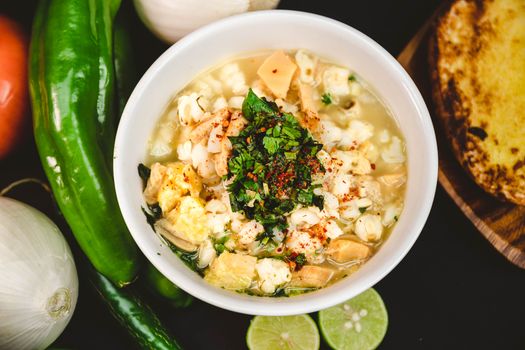
Photo: Miguel Galaz / Pexels
Mexican
Mexican Street Corn Soup
The diets react (see scores below)
Common Ingredients
- corn kernels
- poblano peppers
- chicken broth
- cotija cheese
- mayonnaise
- lime
- chili powder
- cilantro
Specific recipes may vary.
Incompatible with 5 of 11 diets
Diet Ratings
Corn is a starchy grain-like vegetable with very high net carbs — approximately 25-30g net carbs per cup of corn kernels. A soup built primarily on corn as its base ingredient is fundamentally incompatible with ketosis. A standard serving of this soup would easily contain 30-50g of net carbs from the corn alone, potentially blowing the entire daily carb budget in a single dish. While some individual ingredients are keto-friendly (chicken broth, cotija cheese, mayonnaise, poblano peppers, cilantro, lime juice in small amounts), they cannot offset the overwhelming carb load from the primary ingredient. This dish cannot be made keto-compliant without completely replacing the corn, which would make it an entirely different recipe.
This dish contains multiple animal-derived ingredients that disqualify it from a vegan diet. Chicken broth is made from animal carcasses, cotija cheese is a dairy product (aged cow's milk cheese), and standard mayonnaise is made with eggs. These are not trace or cross-contamination issues — they are core, intentional ingredients listed in the recipe. The plant-based components (corn, poblano peppers, lime, chili powder, cilantro) are all vegan-friendly, but the dish as described cannot be considered vegan in any meaningful sense. A vegan version would require substituting vegetable broth for chicken broth, omitting or replacing cotija with a plant-based alternative, and using egg-free vegan mayonnaise.
Mexican Street Corn Soup contains multiple non-paleo ingredients that disqualify it outright. Corn is a grain and is explicitly excluded from the paleo diet. Cotija cheese is a dairy product, also excluded. Mayonnaise, in its commercial form, is typically made with soybean or canola oil — both seed oils that are prohibited. These three ingredients alone make this dish firmly non-paleo, and there is strong consensus across all major paleo authorities on each of these exclusions. The paleo-compliant ingredients — poblano peppers, chicken broth, lime, chili powder, and cilantro — cannot offset the foundational violations.
This soup contains several Mediterranean-friendly ingredients (corn, poblano peppers, lime, cilantro, chili powder) alongside more problematic ones. Corn is a whole plant food, and the peppers and aromatics align well with Mediterranean principles. However, mayonnaise is a processed condiment typically made with refined vegetable oils rather than olive oil, and cotija cheese adds moderate saturated fat from dairy. Chicken broth is acceptable as a base. The dish is not plant-forward in the Mediterranean sense, nor does it use olive oil as the primary fat. It lacks legumes, whole grains, or seafood that would elevate it. Overall, it is a vegetable-based soup with moderate dairy and a processed condiment — acceptable occasionally but not a Mediterranean staple.
Some Mediterranean diet interpreters would view this more favorably as a vegetable-dominant soup with minimal meat, arguing that dairy-based cheeses and egg-based condiments in modest quantities are within the 'moderate dairy' allowance; swapping mayonnaise for an olive oil-lime drizzle would bring it closer to Mediterranean ideals.
Mexican Street Corn Soup is almost entirely plant-based and is fundamentally incompatible with the carnivore diet. The primary ingredient is corn, a grain that is strictly excluded. Poblano peppers, lime, chili powder, and cilantro are all plant-derived and prohibited. Mayonnaise typically contains plant-based oils (soybean or canola) and is not a carnivore-approved food. Cotija cheese is an animal-derived dairy product, and chicken broth is animal-derived, but these two ingredients are minor components in a dish that is overwhelmingly plant-based. There is no meaningful animal protein in this dish, and the ingredient profile directly contradicts every tier of carnivore eating, including the most lenient interpretations.
This dish contains two excluded ingredients. Cotija cheese is a dairy product, which is explicitly excluded on Whole30 (the only dairy exception is ghee/clarified butter). Mayonnaise as commonly found contains soybean oil or other non-compliant additives, and standard commercial mayo often includes sugar or soy-based ingredients — both excluded. Additionally, corn is a grain excluded on Whole30, making corn kernels non-compliant. With multiple core excluded ingredients (dairy, corn/grains, and likely non-compliant mayo), this soup cannot be made Whole30-compliant without fundamentally changing its character.
This soup has a mixed FODMAP profile that requires careful portion management. Corn kernels are low-FODMAP at a half-cup (75g) serving but become high-FODMAP at larger amounts due to polyols (sorbitol) — in a soup serving, it's easy to consume more than the safe threshold. Poblano peppers are generally considered low-FODMAP in moderate amounts, similar to other capsicum varieties. Chicken broth is low-FODMAP if homemade or from a FODMAP-friendly stock (no onion/garlic). Cotija cheese is an aged hard cheese, which is typically low-FODMAP (lactose is minimal). Mayonnaise made from oil and egg is low-FODMAP. Lime juice and chili powder are low-FODMAP in typical culinary amounts. Cilantro is low-FODMAP. The main risks are: (1) corn portion exceeding the safe threshold in a full soup bowl, (2) commercial chicken broth often containing onion or garlic, and (3) no declared garlic or onion but these are traditional components that may be assumed in the recipe.
Monash University rates canned corn at 1/2 cup as low-FODMAP, but a full bowl of corn-heavy soup will likely push well past this threshold, increasing polyol load. Clinical FODMAP practitioners often advise elimination-phase patients to treat corn-dominant dishes with extra caution due to serving size creep and the variability between canned and fresh corn FODMAP levels.
Mexican Street Corn Soup contains several DASH-friendly ingredients — corn kernels (whole grain/vegetable), poblano peppers (vegetable rich in potassium and vitamins), lime, cilantro, and chili powder — but is significantly offset by problematic components. Cotija cheese is a high-sodium, full-fat aged cheese that directly conflicts with DASH guidelines favoring low-fat dairy and low sodium. Mayonnaise adds saturated fat and sodium, neither of which is emphasized in DASH. Chicken broth, especially as commonly purchased, is a major sodium contributor (typically 800–1,000mg per cup). The combination of cotija, mayonnaise, and chicken broth can easily push a single serving well above acceptable sodium thresholds for DASH. The vegetable and fruit components are genuinely DASH-positive, but the overall dish as typically prepared is too sodium- and saturated fat-laden to approve. Modifications using low-sodium broth, reduced cotija, and a Greek yogurt substitute for mayonnaise would substantially improve its DASH compatibility.
NIH DASH guidelines emphasize limiting sodium and saturated fat, which clearly flags cotija cheese and mayonnaise as problematic ingredients. However, some updated DASH-oriented clinicians note that when portion sizes are controlled and low-sodium broth is used, the vegetable density and potassium from corn and peppers can partially offset concerns — particularly for non-hypertensive individuals where the 2,300mg sodium ceiling applies rather than the stricter 1,500mg threshold.
Mexican Street Corn Soup presents several Zone challenges. Corn is explicitly classified as an 'unfavorable' high-glycemic carbohydrate in Zone methodology — Dr. Sears groups it alongside potatoes and bananas as a starchy vegetable to limit. As the primary (and dominant) carbohydrate source in this dish, corn drives the glycemic load significantly upward. Mayonnaise contributes omega-6-heavy seed oils (typically soybean or canola), which conflicts with Zone's anti-inflammatory emphasis on monounsaturated and omega-3 fats. Cotija cheese adds saturated fat. On the positive side, poblano peppers are a favorable Zone vegetable (low-glycemic, high in polyphenols), chicken broth is essentially calorie-neutral, and lime/cilantro/chili powder are all Zone-friendly flavor enhancers. The dish also lacks any meaningful lean protein source, making it structurally incomplete as a Zone meal — it would need a lean protein addition (grilled chicken, shrimp) to approach the 40/30/30 ratio. The fat profile from mayo is problematic from an anti-inflammatory standpoint. With portion control (small serving, avocado-based mayo substitution, lean protein added), it could be incorporated into a Zone meal, but as presented it skews high-glycemic and omega-6 heavy.
Some Zone practitioners in later Sears writings take a more lenient view of corn in small portions, particularly in mixed dishes where the overall glycemic load is moderated by fiber and fat content. The poblano peppers and cheese do slow glucose absorption somewhat. If made with avocado-oil mayonnaise and served in a small portion alongside lean protein, stricter Zone followers might allow this as a side dish block, rating it slightly higher (5-6). However, the lack of protein and corn-as-primary-carb make this a structurally challenging Zone dish regardless of interpretation.
Mexican Street Corn Soup has a mixed anti-inflammatory profile. On the positive side, poblano peppers contribute capsaicin and antioxidants (vitamin C, carotenoids), lime provides vitamin C and flavonoids, chili powder adds anti-inflammatory capsaicin and polyphenols, and cilantro offers antioxidant compounds. Corn kernels provide some fiber and carotenoids (lutein, zeaxanthin), though they are a starchy, moderate-glycemic ingredient. Chicken broth is neutral to mildly beneficial. The problematic elements are mayonnaise — a seed oil-based condiment high in omega-6 fatty acids — and cotija cheese, a full-fat dairy product with saturated fat that falls in the 'limit' category per anti-inflammatory guidance. Neither ingredient is severely pro-inflammatory in moderate quantities, but together they shift the dish away from an ideal anti-inflammatory profile. The overall dish is a mixed bag: vibrant anti-inflammatory spices and vegetables offset by added fat sources that are concerning in regular use. In moderation, this is acceptable rather than harmful.
Most anti-inflammatory frameworks would flag the mayonnaise (typically made from soybean or canola oil) as a meaningful source of omega-6 fatty acids that should be limited or replaced with an avocado-based or olive oil alternative; however, some mainstream nutrition experts (including AHA-aligned researchers) consider these oils acceptable in moderate amounts and would focus more on the overall vegetable-rich, spice-forward character of the dish as net beneficial.
Mexican Street Corn Soup is a flavorful but nutritionally imbalanced choice for GLP-1 patients. The primary concerns are mayonnaise (high in fat and largely empty calories) and cotija cheese (saturated fat, modest protein), which together drive up the fat content meaningfully without delivering strong protein or fiber returns. Corn is a starchy vegetable with moderate fiber but a higher glycemic load than non-starchy vegetables, and it is not a meaningful protein source. Chicken broth adds negligible protein. The dish has no primary protein source, which is a significant gap given that protein is the top priority for GLP-1 patients. On the positive side, poblano peppers add fiber and micronutrients, lime and cilantro are excellent low-calorie flavor contributors, and chili powder is generally well-tolerated at moderate amounts. The soup format is easy to digest and portion-friendly, both positives for GLP-1 patients. This dish could move toward 'approve' territory with simple modifications — adding shredded chicken breast or white beans would address the protein deficit, and reducing or replacing the mayonnaise with Greek yogurt would lower fat while adding protein.
Some GLP-1-focused dietitians may rate this more favorably as an occasional side or starter given its relatively easy digestibility, vegetable content, and small-portion friendliness — particularly for patients in early stages managing significant nausea who need calorie-accessible foods. Others would flag the mayonnaise and lack of protein as disqualifying for a main dish, recommending it only as a small accompaniment to a protein-forward meal.
*See how scores were generated at our methodology page.
Nutritional profile
Six traits that cut across every diet.
Fiber & Plants
How much whole-plant food and fiber it delivers.
Healthy Fats
The quality of its fats (unsaturated, omega-3).
Whole / Unprocessed
How close it is to its natural, unprocessed form.
Gut Gentle
How easy it is on digestion (low FODMAP, few irritants).
Low Glycemic
How little it spikes your blood sugar.
Protein Density
How much protein it packs per calorie.
Controversy Index
Higher controversy = more disagreement between diets.
Diet-Specific Tips
 Mediterranean — 5/10
View tips
- Corn and poblano peppers are whole plant foods, positively aligned
- Mayonnaise is a processed condiment made from refined oils, not olive oil — a notable departure
- Cotija cheese contributes saturated fat from dairy, acceptable in moderation
- No red meat or added sugars present
- Chicken broth is neutral and acceptable
- Dish lacks legumes, whole grains, or seafood that would strengthen Mediterranean alignment
- Not traditional Mediterranean cuisine, but vegetable-forward profile offers partial compatibility
 Low-FODMAP — 5/10
View tips
- Corn kernels are low-FODMAP at ≤75g (1/2 cup) but high-FODMAP at larger servings due to sorbitol — soup portions risk exceeding this
- Commercial chicken broth frequently contains onion and/or garlic, making it a high-FODMAP risk unless specifically FODMAP-safe
- Cotija is an aged cheese with minimal lactose — generally safe
- Mayonnaise (oil/egg-based) is low-FODMAP
- Poblano peppers are low-FODMAP in moderate amounts similar to other capsicums
- Lime juice, chili powder, and cilantro are all low-FODMAP at typical culinary quantities
- No garlic or onion listed, but these are classic elote-style ingredients that may be implied — absence noted favorably
 DASH — 4/10
View tips
- Cotija cheese is high in sodium and saturated fat, conflicting with DASH low-fat dairy and sodium limits
- Chicken broth (standard) is a significant sodium source, often 800–1,000mg per cup
- Mayonnaise adds saturated fat and additional sodium, not aligned with DASH fat guidelines
- Corn and poblano peppers are DASH-positive vegetables providing fiber and potassium
- Lime, cilantro, and chili powder are sodium-free flavor enhancers that support DASH principles
- Low-sodium broth substitution and reduced cotija would meaningfully improve DASH compatibility
- As commonly prepared, a single bowl could approach or exceed the 1,500–2,300mg daily sodium target alone
 Zone — 4/10
View tips
- Corn is an 'unfavorable' high-glycemic carbohydrate explicitly flagged by Dr. Sears
- No lean protein source present — structurally incomplete as a Zone meal
- Mayonnaise typically contains omega-6-heavy soybean oil, conflicting with anti-inflammatory Zone principles
- Cotija cheese adds saturated fat
- Poblano peppers are a Zone-favorable low-glycemic vegetable with polyphenols
- Chicken broth, lime, cilantro, and chili powder are Zone-neutral/positive ingredients
- Dish would require lean protein addition and portion control to approach Zone ratios
 Anti-Inflammatory — 5/10
View tips
- Poblano peppers: rich in capsaicin, vitamin C, and carotenoids — anti-inflammatory
- Chili powder and cilantro: polyphenols and antioxidants support anti-inflammatory rating
- Lime: vitamin C and flavonoids, positive contribution
- Corn kernels: moderate glycemic index, some fiber and carotenoids, but starchy — neutral
- Mayonnaise: high omega-6 seed oil base — concerning for regular consumption
- Cotija cheese: full-fat dairy with saturated fat — in the 'limit' category
- Chicken broth: neutral, no inflammatory concern
- No omega-3 sources present — missed opportunity for anti-inflammatory boost
 GLP-1 Friendly — 4/10
View tips
- No meaningful protein source — significant gap for GLP-1 patients requiring 100-120g+ daily
- Mayonnaise is high in fat and low in nutritional value, worsening nausea and GI side effects
- Cotija cheese adds saturated fat with only modest protein contribution
- Corn is starchy with moderate fiber but higher glycemic load than non-starchy vegetables
- Soup format is easy to digest and portion-friendly — positives for GLP-1 patients
- Poblano peppers, lime, and cilantro contribute fiber and micronutrients with minimal caloric cost
- Chili powder at moderate levels is generally well-tolerated; not a significant reflux risk for most patients
- Easily improvable: adding chicken breast or beans and swapping mayo for Greek yogurt would substantially raise the score