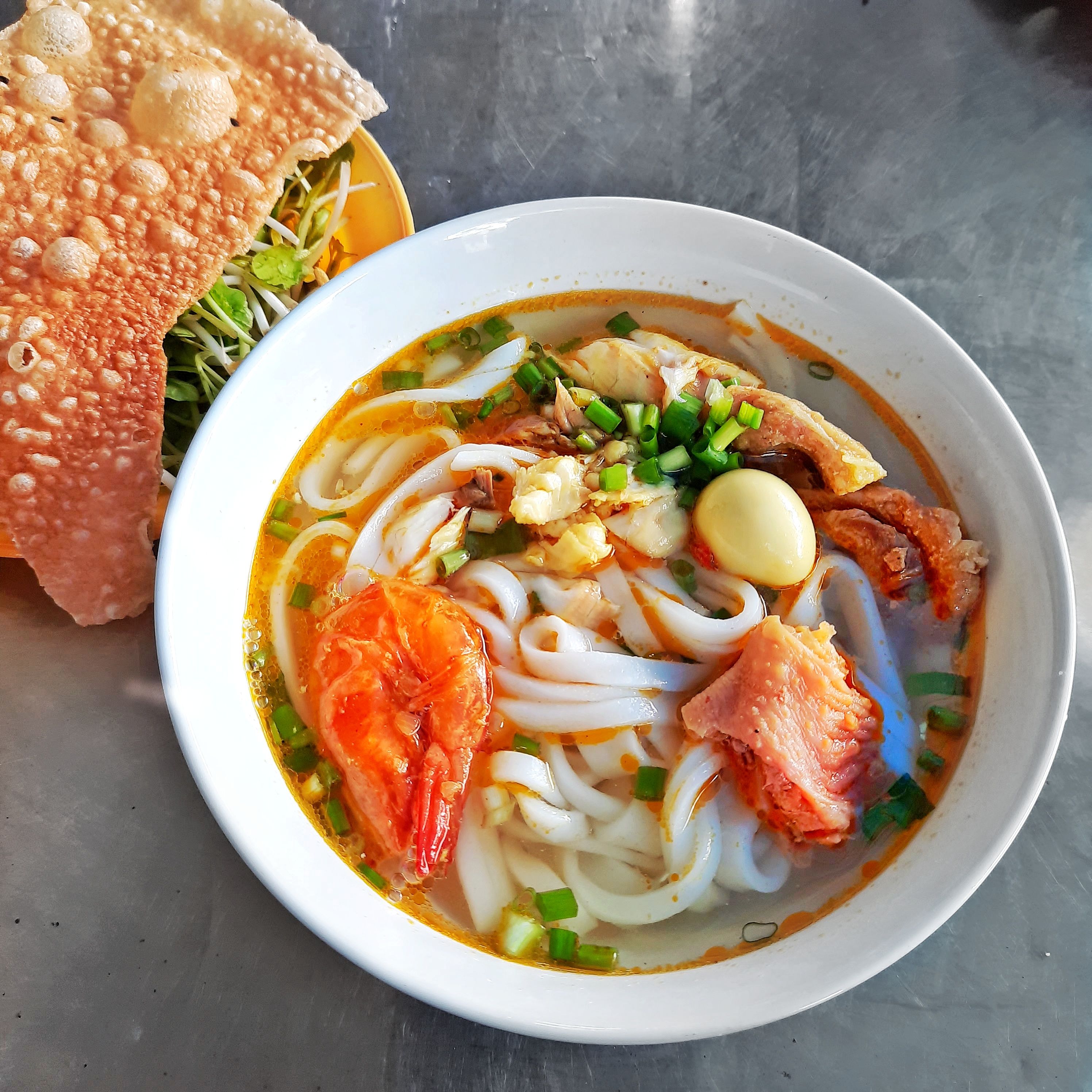
The diets react (see scores below)
Common Ingredients
- rice noodles
- turmeric
- shrimp
- pork
- peanuts
- rice crackers
- Thai basil
- fish sauce
Specific recipes may vary.
Incompatible with 5 of 11 diets
Diet Ratings
Mì Quảng is fundamentally incompatible with ketogenic diets. The dish is built around rice noodles as its primary base, which are a high-carb grain product delivering approximately 40-50g of net carbs per standard serving alone — already at or exceeding the entire daily keto carb budget. Rice crackers (bánh đa) served alongside add further starch and carbs. Peanuts, while moderate in carbs, add additional net carbs on top. The protein components (shrimp and pork) and aromatics (turmeric, Thai basil, fish sauce) are keto-friendly, but they cannot offset the dominant carbohydrate load from the noodles and crackers. This dish as traditionally prepared is not adaptable to keto without fundamentally reconstructing it (e.g., replacing rice noodles with shirataki or zucchini noodles and omitting the rice crackers), at which point it would no longer be Mì Quảng.
Mì Quảng contains multiple animal products that are explicitly excluded from a vegan diet. Shrimp and pork are both animal flesh, and fish sauce is derived from fermented fish — all three are clear disqualifiers. There is no ambiguity here; this dish is fundamentally built around animal proteins and animal-derived condiments. The plant-based components (rice noodles, turmeric, peanuts, rice crackers, Thai basil) are vegan-friendly, but they cannot offset the presence of seafood, meat, and fish sauce.
Mì Quảng contains multiple non-paleo ingredients that make it incompatible with the Paleolithic diet. Rice noodles are a grain-based product and strictly excluded from paleo. Peanuts are legumes, not true nuts, and are also excluded. Rice crackers are a processed grain food, adding a second grain violation. Fish sauce, while traditionally fermented, typically contains added salt and sometimes sugar, placing it in the avoid category. The shrimp, pork, Thai basil, and turmeric are all paleo-approved ingredients, but the foundation of the dish — rice noodles and rice crackers — along with the peanuts, make this dish fundamentally incompatible with paleo principles. There is no meaningful way to adapt Mì Quảng while retaining its identity as a dish.
Mì Quảng is a Vietnamese noodle dish with a mixed Mediterranean diet profile. On the positive side, it contains shrimp (encouraged seafood), peanuts (a legume/nut providing healthy fats), fresh herbs like Thai basil, anti-inflammatory turmeric, and fish sauce as a minimally processed flavoring. However, the dish also includes pork (red meat, limited to a few times per month under Mediterranean guidelines), rice noodles (refined grain, not a whole grain), and rice crackers (refined grain). The combination of a moderate-to-limited protein (pork) with refined carbohydrates and no olive oil as the fat source places this dish in the caution zone. The shrimp and peanuts are positives, but pork's red meat classification and the refined grain base prevent an approval rating.
Some Mediterranean diet interpreters might score this more favorably, noting that the shrimp content is substantial and seafood-forward, the peanuts provide plant-based fats analogous to nuts, and the pork portion in traditional Mì Quảng is relatively small — more of a garnish than a primary protein. Others would penalize it more heavily for the dual refined grain components (rice noodles + rice crackers) and the absence of olive oil or Mediterranean-style vegetables.
Mì Quảng is fundamentally incompatible with the carnivore diet. While it does contain carnivore-approved ingredients (pork and shrimp are both acceptable animal proteins, and fish sauce is generally tolerated), the dish is built around a base of rice noodles — a grain-derived carbohydrate that is strictly excluded. Additionally, it contains multiple plant-based components: turmeric (a plant spice), peanuts (a legume), rice crackers (grain-based), and Thai basil (a herb). The only salvageable elements are the pork, shrimp, and fish sauce. The overall dish as prepared and served is entirely off-plan for carnivore.
Mì Quảng contains multiple excluded ingredients. Rice noodles are a grain-based product (rice is an excluded grain on Whole30). Peanuts are legumes, which are explicitly excluded. Rice crackers are also grain-based and excluded. These are not edge cases or spirit-of-the-program debates — grains and legumes are categorically prohibited, and this dish is built around rice noodles as its foundational ingredient. The dish cannot be made compliant in its traditional form.
Mì Quảng is a Central Vietnamese noodle dish with several low-FODMAP-friendly components, but a few ingredients require attention. Rice noodles are low-FODMAP and safe. Plain shrimp and pork are low-FODMAP proteins. Turmeric is low-FODMAP. Fish sauce in typical culinary quantities (1-2 tablespoons per dish) is low-FODMAP as it is fermented fish liquid with no significant FODMAPs. Thai basil is low-FODMAP. Rice crackers (bánh tráng nướng) are generally low-FODMAP when made from plain rice. The two main concerns are: (1) Peanuts — Monash rates peanuts as low-FODMAP at 32g (about 28 nuts), but they contain GOS and become high-FODMAP at larger servings. Traditional Mì Quảng is often garnished generously with peanuts, making portion control critical. (2) Traditional broth and additional seasonings not listed — many restaurant preparations include shallots, garlic, or onion in the broth base, which are high-FODMAP fructan sources. If prepared authentically at home with garlic and shallot-free broth and a controlled peanut portion (~28g), the dish is likely low-FODMAP. As typically served in restaurants, hidden fructan sources make this a caution item.
Monash University rates peanuts as low-FODMAP at ≤32g, and all other listed ingredients are individually low-FODMAP; however, clinical FODMAP practitioners commonly flag Mì Quảng during elimination due to the near-universal use of garlic and shallots in the broth preparation, which are not always listed in ingredient descriptions but are standard in traditional recipes.
Mì Quảng is a Vietnamese noodle dish that contains several DASH-compatible elements — lean shrimp, pork (in moderate portions), rice noodles, fresh herbs like Thai basil, and turmeric (an anti-inflammatory spice). However, fish sauce is a primary seasoning and is extremely high in sodium (approximately 1,400–1,500mg per tablespoon), making it the central concern for DASH compliance. Fish sauce alone can push a single serving well toward or beyond the 1,500–2,300mg daily sodium targets. Pork is acceptable in lean cuts but must be portion-controlled given saturated fat considerations. Peanuts are DASH-friendly in small amounts (nuts are encouraged) but add caloric density. Rice crackers (bánh tráng nướng) are typically low in sodium when plain. Rice noodles are refined rather than whole grain, which is a modest negative. The dish lacks significant dairy or leafy vegetables that would boost calcium/magnesium. Overall, the dish can fit DASH principles if fish sauce is reduced or replaced with low-sodium alternatives, and portions are controlled — but as typically prepared in restaurants, sodium content is likely excessive.
NIH DASH guidelines explicitly restrict high-sodium condiments like fish sauce; however, some DASH-oriented clinicians note that when consumed in a traditional Vietnamese home context with generous fresh herbs, vegetables, and lean protein, and prepared with reduced fish sauce quantities, this dish can align reasonably well with DASH macronutrient targets — the key variable being preparation method rather than the dish category itself.
Mì Quảng presents a mixed Zone Diet profile. The proteins — shrimp and pork — are lean and favorable Zone building blocks, providing a good protein base. Turmeric is excellent from an anti-inflammatory standpoint, aligning with Sears' later polyphenol emphasis. Thai basil and fish sauce are low-calorie flavor components that don't meaningfully disrupt the Zone balance. However, the dish has several Zone challenges: rice noodles are a high-glycemic refined carbohydrate that counts as an 'unfavorable' carb block, driving up glycemic load significantly. Rice crackers (bánh tráng) compound this with additional refined starch. Peanuts contribute fat but lean omega-6 heavy, which conflicts with Sears' anti-inflammatory fat preferences (monounsaturated > polyunsaturated omega-6). The dish is also typically noodle-heavy with modest protein portions, making the 40/30/30 ratio difficult to achieve without significant modification. A Zone-adapted version would reduce noodles to a small portion (1-2 blocks), increase shrimp/pork, skip or minimize crackers, and add more vegetables — but as traditionally prepared, the carb-to-protein ratio skews heavily carb-forward.
Some Zone practitioners in Sears' later writings give more latitude to small amounts of rice noodles as part of a culturally balanced meal, noting that the overall glycemic load depends on portion size and the presence of protein and fat to slow absorption. The shrimp and pork combination does provide blunting of the glycemic response, and the peanuts — while omega-6 heavy — do contribute monounsaturated fat as well. A small traditional serving could theoretically be balanced with a larger protein portion.
Mì Quảng presents a mixed anti-inflammatory profile. On the positive side, turmeric is a cornerstone anti-inflammatory spice (curcumin), Thai basil provides polyphenols and flavonoids, shrimp offers lean protein with some omega-3s and astaxanthin, and peanuts contribute healthy monounsaturated fats and resveratrol (though they are technically legumes with moderate omega-6 content). Fish sauce, while high in sodium, is a fermented condiment used in small quantities and contributes minimal inflammatory load at typical serving amounts. The negatives center on pork, which depending on cut can contribute saturated fat, and the rice noodles and rice crackers, which are refined carbohydrates with a moderate-to-high glycemic index offering little fiber — a meaningful concern in an anti-inflammatory context. The dish is broth-light (more of a dressed noodle), which limits some beneficial liquid but also means less fat pooling. Overall, this is a moderate-to-acceptable dish: the turmeric and fresh herbs are meaningful positives, but the refined carbohydrate load and pork fat content temper the score. Prepared with lean pork cuts and eaten in moderate portions, it sits comfortably in the 'caution/acceptable' zone rather than being strongly pro- or anti-inflammatory.
Some anti-inflammatory practitioners, particularly those following stricter protocols like the Autoimmune Protocol (AIP), would flag pork and shrimp as potential immune triggers and note that refined rice noodles spike blood sugar and promote inflammatory cascades. However, mainstream anti-inflammatory frameworks including Dr. Weil's pyramid permit moderate lean protein and occasional refined grains, especially when offset by potent anti-inflammatory spices like turmeric and fresh herbs — placing this dish in an acceptable range for the general population.
Mì Quảng is a partially favorable dish for GLP-1 patients but has several meaningful drawbacks. On the positive side, shrimp and pork provide real protein, and the dish includes fresh herbs (Thai basil) and a modest broth base with anti-inflammatory turmeric. However, the dish is defined by a relatively large serving of rice noodles — a refined, low-fiber carbohydrate — which crowds out protein and fiber density per calorie. The peanuts add healthy unsaturated fats but also significant fat and calories in a context where every bite should be nutrient-dense. The rice crackers (bánh tráng nướng) are fried or toasted refined starch with minimal nutritional value, adding empty calories and potential GI irritability. Fish sauce is fine in small amounts. The pork component is often fatty belly or shoulder cuts in traditional preparation, which increases saturated fat load and may worsen nausea or reflux. The dish is notably low in fiber despite the fresh herbs. For GLP-1 patients, this dish can work in a modified form — extra shrimp, reduced noodles, skip the rice crackers, choose lean pork — but as traditionally prepared, it skews too carb-heavy and fat-variable to approve outright.
Some GLP-1-focused dietitians would rate this more favorably as a whole-food, minimally processed dish compared to Western alternatives at similar calorie levels, arguing that the dual protein sources and fresh herb garnishes make it a reasonable choice when portion-controlled. Others would flag the refined noodle base and fatty pork cuts as meaningful concerns for patients already managing slowed gastric emptying and GI sensitivity.
*See how scores were generated at our methodology page.
Nutritional profile
Six traits that cut across every diet.
Fiber & Plants
How much whole-plant food and fiber it delivers.
Healthy Fats
The quality of its fats (unsaturated, omega-3).
Whole / Unprocessed
How close it is to its natural, unprocessed form.
Gut Gentle
How easy it is on digestion (low FODMAP, few irritants).
Low Glycemic
How little it spikes your blood sugar.
Protein Density
How much protein it packs per calorie.
Controversy Index
Higher controversy = more disagreement between diets.
Diet-Specific Tips
 Mediterranean — 5/10
View tips
- Shrimp is an approved Mediterranean seafood source (positive)
- Pork is red meat, restricted to a few times per month (negative)
- Rice noodles are refined grains, not whole grains (negative)
- Rice crackers add additional refined carbohydrates (negative)
- Peanuts contribute plant-based healthy fats (positive)
- Turmeric and fresh herbs align with plant-forward Mediterranean flavors (positive)
- No olive oil; fish sauce is the primary condiment (neutral)
- Dish is whole and minimally processed overall (positive)
 Low-FODMAP — 5/10
View tips
- Rice noodles are low-FODMAP and safe in standard servings
- Shrimp and pork are FODMAP-free proteins
- Peanuts are low-FODMAP only up to ~32g — traditional generous garnishing may exceed this threshold
- Turmeric, Thai basil, and fish sauce are all low-FODMAP in typical culinary amounts
- Plain rice crackers are low-FODMAP
- High risk of hidden garlic and shallots in the broth — standard restaurant preparation likely includes these high-fructan aromatics
- Home preparation with garlic-free, shallot-free broth and controlled peanut portions can make this dish elimination-phase safe
 DASH — 5/10
View tips
- Fish sauce is very high in sodium (~1,400–1,500mg/tbsp), posing the primary DASH concern
- Shrimp is a lean, DASH-approved protein source
- Pork should be lean cuts and portion-controlled to limit saturated fat
- Rice noodles are refined carbohydrates, not whole grain — a mild negative
- Peanuts align with DASH nut recommendations in small portions
- Thai basil and turmeric are DASH-positive herbs/spices
- Rice crackers add negligible sodium if plain but are refined carbs
- Dish is low in DASH-emphasized vegetables, calcium, and magnesium
- Low-sodium fish sauce or reduced quantity would significantly improve DASH score
 Zone — 5/10
View tips
- Rice noodles are a high-glycemic 'unfavorable' carb in Zone terminology
- Rice crackers add additional refined starch, increasing glycemic load
- Shrimp and pork are lean, favorable Zone protein sources
- Turmeric provides anti-inflammatory polyphenols, strongly aligned with Sears' later work
- Peanuts are omega-6 dominant fat, less ideal than olive oil or avocado
- Traditional serving ratios are carb-heavy, making 40/30/30 difficult without modification
- No low-glycemic vegetables present to offset refined carb load
 Anti-Inflammatory — 6/10
View tips
- Turmeric (curcumin) is a well-established anti-inflammatory compound — a significant positive
- Thai basil contributes polyphenols, flavonoids, and eugenol with anti-inflammatory properties
- Shrimp provides lean protein with modest omega-3s and anti-inflammatory astaxanthin
- Rice noodles and rice crackers are refined carbohydrates with minimal fiber — pro-inflammatory when consumed in excess
- Pork can be moderate-to-high in saturated fat depending on cut, contributing to inflammatory load
- Peanuts offer healthy fats and resveratrol but have moderate omega-6 content
- Fish sauce adds sodium but is used in small amounts; fermented foods have some gut-health benefit
- No major pro-inflammatory red flags (no trans fats, no seed oils, no added sugars, no processed additives)
 GLP-1 Friendly — 5/10
View tips
- Dual protein sources (shrimp + pork) support protein goals but quantity depends on preparation
- Rice noodles are refined, low-fiber carbohydrates that dominate the dish volume
- Pork is often fatty cuts (belly/shoulder) increasing saturated fat and GI side effect risk
- Peanuts provide healthy fats but add caloric density in a low-appetite context
- Rice crackers contribute empty calories and fried/toasted refined starch — not GLP-1 friendly
- Very low fiber overall despite fresh herb garnish
- Fish sauce is acceptable in small amounts
- Turmeric has anti-inflammatory properties — minor positive
- Dish is highly modifiable: lean pork, extra shrimp, half noodles, no crackers improves the profile significantly