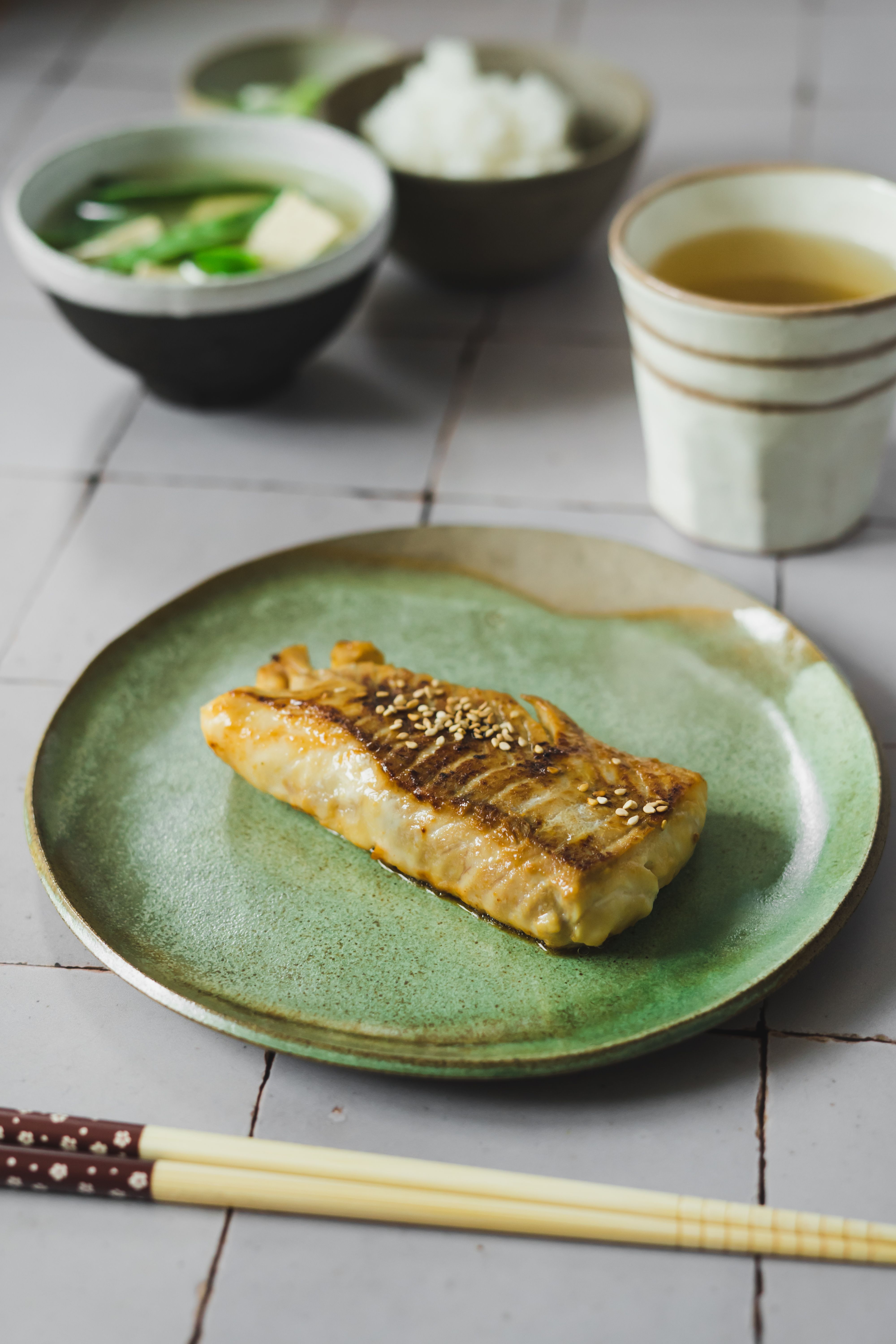
Photo: Julias Torten und Törtchen / Pexels
Japanese
Miso-Glazed Cod
The diets react (see scores below)
Common Ingredients
- black cod
- white miso
- sake
- mirin
- sugar
- ginger
- sesame oil
Specific recipes may vary.
Incompatible with 5 of 11 diets
Diet Ratings
Miso-Glazed Cod is fundamentally incompatible with ketogenic eating in its traditional form. While black cod itself is an excellent keto protein (high in omega-3 fats, zero carbs), the glaze is the problem. White miso contains significant carbohydrates (~8g per 2 tbsp), but the primary offenders are mirin (a sweet rice wine with ~14g carbs per tbsp, derived from fermented rice), sake (fermented rice, moderate carbs), and most critically, added sugar, which is explicitly forbidden on keto. A standard marinade portion for this dish typically uses 2-3 tbsp mirin, 1-2 tsp sugar, and 2-3 tbsp miso, contributing an estimated 20-35g net carbs per serving — easily pushing or exceeding the entire daily keto carb budget in one dish. Sesame oil and ginger are keto-friendly, but they cannot offset the high-sugar, high-carb glaze components.
Miso-Glazed Cod is unambiguously non-vegan. The primary protein is black cod (Sablefish), a fish and therefore an animal product. All vegan frameworks — from Vegan Society to PETA to whole-food plant-based advocates — exclude fish without exception. The remaining ingredients (white miso, sake, mirin, sugar, ginger, sesame oil) are plant-derived and would individually be vegan-compatible, but the presence of cod alone disqualifies the entire dish.
Miso-Glazed Cod contains multiple non-paleo ingredients that disqualify it from approval. White miso is a fermented soybean paste — soy is a legume and firmly excluded from the paleo diet. Sake and mirin are rice-based alcoholic condiments derived from grains, making them doubly problematic. Refined sugar is explicitly excluded. Sesame oil is a seed oil, which is on the avoid list. While black cod itself is an excellent paleo protein and ginger is fully approved, the marinade/glaze is built almost entirely from non-paleo ingredients. This is not a borderline case — the majority of the flavor components violate core paleo principles.
Miso-Glazed Cod features black cod (sablefish), an excellent fatty fish rich in omega-3s that aligns well with the Mediterranean diet's emphasis on fish 2-3 times weekly. However, the preparation is distinctly Japanese, not Mediterranean. The glaze includes added sugar and mirin (sweetened rice wine), introducing refined sugars that Mediterranean guidelines discourage. Sake is an acceptable cooking alcohol. White miso adds sodium but also fermented soy benefits. Sesame oil is a plant-based fat but is not the canonical Mediterranean fat (extra virgin olive oil). Overall, the protein base is excellent, but the sweet glaze with added sugars and the non-Mediterranean flavor profile introduce enough concerns to warrant caution rather than full approval.
Some modern Mediterranean diet interpreters focus primarily on the quality of protein and overall dietary pattern rather than strict ingredient sourcing; from this perspective, the omega-3-rich black cod is so nutritionally aligned with Mediterranean principles that the modest sugar in the glaze could be considered an acceptable occasional compromise, pushing the dish closer to approval.
Miso-Glazed Cod is fundamentally incompatible with the carnivore diet. While black cod itself is a perfectly acceptable animal protein, the glaze is composed almost entirely of plant-derived and processed ingredients. Miso is a fermented soybean paste — a legume product — which is strictly excluded. Sake and mirin are grain-derived alcoholic/sweet rice wines, also excluded. Sugar is a processed plant-derived sweetener. Ginger is a plant root. Sesame oil is a plant-derived oil. Only the cod itself would be permissible. This dish is essentially a plant-heavy preparation using fish as a vehicle for multiple carnivore-incompatible ingredients.
Miso-Glazed Cod contains multiple excluded ingredients that make it clearly non-compliant with Whole30. White miso is made from soybeans, which are a legume and explicitly excluded. Sake is alcohol, which is excluded. Mirin is a sweet rice wine that contains both alcohol and sugar — doubly excluded. Sugar is explicitly listed as an excluded added sweetener. While black cod, ginger, and sesame oil are compliant, the foundational glaze ingredients (miso, sake, mirin, sugar) are all disqualifying on their own, let alone in combination.
Miso-Glazed Cod is largely low-FODMAP but requires attention to ingredient quantities, particularly white miso. Black cod (sablefish) is a plain protein and fully low-FODMAP. Sake and mirin are low-FODMAP in typical cooking amounts (small quantities used in glazes). Sugar is low-FODMAP. Sesame oil is low-FODMAP (fat-soluble, no FODMAPs transfer to oil). Fresh ginger is low-FODMAP at standard culinary amounts (up to ~1 tsp per serve). The key concern is white miso: Monash has tested miso paste and rates it as low-FODMAP at 1 tablespoon (17g) but high-FODMAP at larger servings due to GOS and fructans from fermented soybeans. A typical miso glaze recipe uses 2–4 tablespoons of miso per serving, which can easily exceed the safe threshold. The GOS content in particular makes over-portioning risky. If the miso is used sparingly (≤1 tbsp per serving), the dish is likely safe; at typical restaurant or recipe portions, it may not be.
Monash University rates white miso as low-FODMAP at ≤1 tablespoon per serve, but many clinical FODMAP practitioners advise caution with miso-based dishes during the elimination phase because standard recipe portions (2–4 tbsp per serving) commonly exceed this threshold, and fermented soy products can vary in residual GOS content depending on fermentation duration and brand.
Miso-glazed cod presents a mixed DASH profile. Black cod (sablefish) is an excellent lean protein source rich in omega-3 fatty acids, which aligns well with DASH principles emphasizing fish. However, the glaze introduces significant concerns: white miso is notably high in sodium (approximately 600-900mg per tablespoon), and the combination with sake and mirin adds moderate sugar content. A typical miso glaze can contribute 400-800mg of sodium per serving, which consumes a substantial portion of the DASH daily sodium budget (1,500-2,300mg). The added sugar from mirin, sugar, and mirin is also a DASH concern. Sesame oil is an unsaturated vegetable oil acceptable under DASH. The dish is not categorically excluded — fish is strongly encouraged — but the high-sodium miso glaze requires portion discipline and careful preparation to fit within DASH sodium limits.
NIH DASH guidelines emphasize limiting sodium, which miso's high salt content clearly conflicts with. However, updated clinical interpretations note that miso's fermented nature may offer cardiovascular benefits (probiotics, isoflavones from soy), and some DASH-oriented dietitians allow miso-based dishes if the total daily sodium budget is managed carefully — particularly if low-sodium miso is substituted, which can reduce sodium by up to 40%.
Miso-Glazed Cod is a mixed Zone Diet picture. Black cod (sablefish) is an excellent protein source rich in omega-3 fatty acids, which aligns perfectly with Dr. Sears' anti-inflammatory emphasis — it's one of the highest omega-3 fish available. However, the glaze introduces Zone complications. White miso adds modest sodium and some carbs but is relatively benign. The real issue is the combination of mirin, sake, and sugar in the glaze: these are high-glycemic carbohydrate sources that spike insulin, which is exactly what the Zone aims to prevent. Mirin and sake are essentially sugar-alcohol-water solutions, and added sugar is a Zone red flag. The sesame oil is omega-6 heavy rather than monounsaturated, which conflicts with Sears' anti-inflammatory fat guidance (though in small amounts it's manageable). The dish can work in the Zone if the glaze is used sparingly — the sugar/mirin content can be reduced significantly without destroying the dish — and if paired with low-glycemic vegetables to balance the macros. As typically prepared in restaurants, the glaze is generous and the sugar content is substantial enough to make careful portioning essential. The protein base is genuinely excellent; the glaze is the limiting factor.
Some Zone practitioners would rate this higher, noting that the glaze quantity per serving may be small enough that the glycemic impact is modest, and that black cod's exceptional omega-3 profile (higher than salmon by some measures) makes it a premium Zone protein. Dr. Sears' later anti-inflammatory writings particularly emphasize omega-3 rich fish as foundational, which could push this dish toward a stronger approval if the glaze is lightened. Others would rate it lower, emphasizing that mirin and sake are essentially liquid sugar with negligible nutritional value, precisely the type of insulin-spiking ingredient Sears consistently warns against.
Miso-glazed black cod is a strong anti-inflammatory dish anchored by black cod (sablefish), one of the richest sources of omega-3 fatty acids (EPA and DHA) among commonly eaten fish — comparable to salmon. Omega-3s are among the most evidence-backed anti-inflammatory nutrients, directly suppressing inflammatory cytokines like IL-6 and TNF-alpha. White miso (fermented soy) is a whole soy food emphasized in anti-inflammatory frameworks for its isoflavones, probiotics, and beneficial peptides. Ginger contributes gingerols, well-researched anti-inflammatory and antioxidant compounds. Sesame oil, used in small quantities as a finishing oil, contains sesamin and sesamol — lignans with antioxidant properties — though it is moderately high in omega-6, making quantity relevant. The main concern is sugar and mirin (also sugary), which introduce added sugars that in excess can drive inflammatory pathways. However, in the context of a glaze used in typical culinary quantities, the sugar load is moderate and offset by the strong anti-inflammatory profile of the fish, miso, and ginger. Sake contributes minimally beyond flavor. Overall, this dish aligns well with Dr. Weil's Anti-Inflammatory Pyramid — emphasizing fatty fish, whole soy, and anti-inflammatory spices — and the added sugar is the only meaningful caveat.
The small amount of added sugar (from sugar and mirin) is generally considered negligible at typical serving quantities by most anti-inflammatory practitioners, but strict interpretations — including those informed by blood sugar and insulin response research — would flag any added sugar as a detracting factor. Additionally, sesame oil's omega-6 content draws caution from protocols emphasizing omega-3:omega-6 balance, though most anti-inflammatory authorities (including Dr. Weil) consider sesame oil acceptable in moderation.
Miso-glazed cod is a nutrient-dense, high-protein dish with meaningful omega-3 fatty acids, making it a generally solid choice for GLP-1 patients. However, black cod (sablefish) is notably high in fat compared to other white fish — roughly 15-18g fat per 5oz serving — which places it closer to a fatty fish like salmon than a lean protein like halibut or tilapia. The miso glaze introduces moderate sodium (a concern for fluid retention and blood pressure) and added sugars from mirin and sugar, which reduce the overall glycemic profile. The sake and mirin also contribute trace alcohol and simple carbohydrates. Sesame oil adds additional fat, though it is an unsaturated fat. On the positive side, miso provides probiotics and umami satisfaction in small portions, ginger supports digestion and may ease nausea, and the dish is easy to digest and works well in small servings. The overall fat content is the primary drawback for GLP-1 patients who are sensitive to fat-induced nausea and delayed gastric emptying.
Some GLP-1-focused dietitians actively recommend black cod for its exceptional omega-3 content and argue that the fat profile is predominantly unsaturated and anti-inflammatory, outweighing the GI risk for patients who tolerate fatty fish well. Others flag the high fat per serving as a meaningful nausea trigger given GLP-1-slowed gastric emptying and recommend substituting leaner cod (Atlantic cod or Pacific cod) with the same miso glaze to preserve flavor while reducing fat load.
*See how scores were generated at our methodology page.
Nutritional profile
Six traits that cut across every diet.
Fiber & Plants
How much whole-plant food and fiber it delivers.
Healthy Fats
The quality of its fats (unsaturated, omega-3).
Whole / Unprocessed
How close it is to its natural, unprocessed form.
Gut Gentle
How easy it is on digestion (low FODMAP, few irritants).
Low Glycemic
How little it spikes your blood sugar.
Protein Density
How much protein it packs per calorie.
Controversy Index
Higher controversy = more disagreement between diets.
Diet-Specific Tips
 Mediterranean — 6/10
View tips
- Black cod is a fatty fish rich in omega-3s, strongly encouraged by Mediterranean guidelines
- Added sugar (granulated) and mirin conflict with Mediterranean low-sugar principles
- Sesame oil is plant-based but not extra virgin olive oil, the canonical Mediterranean fat
- Sake and miso are fermented, not inherently problematic, but non-Mediterranean ingredients
- Overall dish is healthy but culturally and compositionally diverges from Mediterranean staples
 Low-FODMAP — 5/10
View tips
- Black cod is a plain protein — fully low-FODMAP
- White miso is low-FODMAP only at ≤1 tbsp (17g) per serve; typical glaze recipes exceed this
- GOS and fructans in miso become problematic above the safe serving threshold
- Sake and mirin are low-FODMAP in small cooking quantities
- Sesame oil is fat-based — no FODMAP concerns
- Fresh ginger is low-FODMAP at culinary amounts (≤1 tsp per serve)
- Sugar is low-FODMAP
 DASH — 5/10
View tips
- Black cod is a DASH-approved lean fish rich in omega-3 fatty acids
- White miso is very high in sodium (~600-900mg per tablespoon), a primary DASH concern
- Combined glaze may contribute 400-800mg sodium per serving
- Mirin and added sugar contribute moderate refined sugar content, which DASH limits
- Sake adds minimal nutritional concern in cooking quantities
- Sesame oil is an acceptable unsaturated fat under DASH
- Low-sodium miso substitution would significantly improve DASH compatibility
- Dish is salvageable for DASH with reduced miso quantity and low-sodium miso
 Zone — 6/10
View tips
- Black cod is an excellent omega-3-rich lean protein, highly favorable for Zone anti-inflammatory goals
- White miso is acceptable in small portions — adds flavor with modest carb load
- Mirin, sake, and sugar in the glaze are high-glycemic carbohydrate sources that spike insulin — directly contrary to Zone principles
- Sesame oil is omega-6 dominant rather than monounsaturated, conflicting with Zone fat quality guidelines
- Dish can be Zone-adapted by reducing glaze sugar and pairing with low-GI vegetables
- As typically restaurant-prepared, the glaze is generous enough to create meaningful glycemic concern
- Strong protein base partially redeems the dish — the issue is the glaze, not the fish itself
 Anti-Inflammatory — 8/10
View tips
- Black cod (sablefish) is exceptionally high in anti-inflammatory omega-3 fatty acids (EPA/DHA)
- White miso is a fermented whole soy food with isoflavones and probiotic properties
- Ginger provides potent gingerols with well-documented anti-inflammatory effects
- Added sugar (from sugar and mirin) is a mild pro-inflammatory concern, though quantity is culinary/moderate
- Sesame oil is acceptable in small finishing quantities but is omega-6-containing
- No seed oils, trans fats, artificial additives, or heavily processed ingredients
- Fermented components (miso, sake) support gut health, linked to reduced systemic inflammation
 GLP-1 Friendly — 6/10
View tips
- High omega-3 fatty acids from black cod — beneficial for inflammation and cardiovascular health
- Black cod is significantly higher in fat (~15-18g per 5oz) than lean white fish, raising GI side effect risk
- Miso glaze adds moderate sodium and added sugars (mirin, sugar) — portion control on the glaze is important
- Ginger supports digestion and may help reduce GLP-1-related nausea
- Good protein density per serving (~25-30g for a standard fillet)
- Easy to digest and works well in small portions
- Sesame oil adds unsaturated fat — acceptable in small amounts but contributes to overall fat load
- Substituting leaner cod species would elevate this to an approve-level dish