Photo: Marvin Sacdalan / Pexels
Chinese
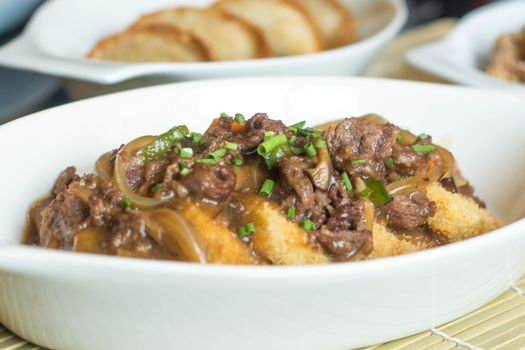
Mongolian Beef
The diets react (see scores below)
Common Ingredients
- flank steak
- scallions
- soy sauce
- brown sugar
- ginger
- garlic
- cornstarch
- sesame oil
Specific recipes may vary.
Incompatible with 8 of 11 diets
Diet Ratings
Mongolian Beef in its traditional form is clearly incompatible with a ketogenic diet. The two primary offenders are brown sugar and cornstarch. Brown sugar is a direct added sugar that spikes blood glucose and immediately disrupts ketosis, and it is used in significant quantity to create the characteristic sweet glaze. Cornstarch is a high-glycemic starch used both as a coating for the beef and as a thickener for the sauce, adding further net carbs. Together, a standard restaurant or home serving could easily contain 30-50g of net carbs, potentially exceeding an entire day's keto carb budget in a single dish. The flank steak, garlic, ginger, scallions, soy sauce (in small amounts), and sesame oil would individually be keto-compatible, but the sauce construction as written makes this dish a keto avoid without significant recipe modification.
Mongolian Beef contains flank steak as its primary protein, which is a direct animal product (beef). This unambiguously disqualifies the dish from any vegan diet. All other ingredients (scallions, soy sauce, brown sugar, ginger, garlic, cornstarch, sesame oil) are plant-based, but the presence of beef renders the entire dish non-vegan with no room for debate.
Mongolian Beef contains multiple non-paleo ingredients that are clear violations of the diet's core principles. Soy sauce is a fermented soy product (a legume) and contains wheat (a grain), making it doubly non-compliant. Brown sugar is refined sugar, explicitly excluded. Cornstarch is derived from corn, a grain, and is used as a processed thickener. Sesame oil is a seed oil, which is excluded in favor of paleo-approved fats. While flank steak, scallions, ginger, and garlic are fully paleo-approved, the dish as traditionally prepared cannot be considered paleo-compatible due to the foundational role these non-compliant ingredients play in the sauce.
Mongolian Beef strongly contradicts Mediterranean diet principles on multiple fronts. The primary protein is red meat (flank steak), which the Mediterranean diet restricts to only a few times per month. The dish is also high in added sugar (brown sugar) and uses a sweet, soy-based sauce that is highly processed and sodium-heavy — both of which conflict with Mediterranean principles of minimal added sugars and minimal processed ingredients. Cornstarch adds refined carbohydrates, and the overall flavor profile and preparation method are far removed from Mediterranean culinary traditions. While garlic, ginger, and scallions are plant-based positives, and sesame oil has some acceptable fat profile, these minor elements do not offset the core issues.
Mongolian Beef is heavily incompatible with the carnivore diet despite containing beef as its base. The dish is loaded with plant-derived and processed ingredients that are entirely excluded on carnivore: soy sauce (fermented soybean product), brown sugar (refined plant sugar), ginger and garlic (plant spices/aromatics), cornstarch (grain-derived thickener), and sesame oil (plant seed oil). Scallions are also plant-derived. Only the flank steak itself is carnivore-appropriate. The sauce alone contains multiple anti-carnivore ingredients including sugar, soy, and plant oils. This dish as prepared is essentially a plant-sauce-coated beef dish and cannot be adapted without completely reinventing the recipe.
Mongolian Beef as described contains multiple Whole30-excluded ingredients. Soy sauce is a soy-based product, which is explicitly excluded on Whole30. Brown sugar is added sugar, also explicitly excluded. Cornstarch is derived from corn and is explicitly listed as an excluded ingredient. These three ingredients alone make this dish clearly non-compliant, regardless of the otherwise acceptable components (flank steak, scallions, ginger, garlic, sesame oil).
Mongolian Beef contains two major high-FODMAP ingredients that make it unsuitable during the elimination phase. Garlic is one of the highest-FODMAP foods tested by Monash University, containing significant fructans even in very small amounts — there is no safe serving size during elimination. Scallions (green onions) are FODMAP-dependent on the part used: the green tops are low-FODMAP, but the white bulb portions are high in fructans and are commonly used together or indistinguishably in this dish. Brown sugar is low-FODMAP in small amounts, but combined with the other high-FODMAP ingredients, this dish cannot be considered safe. Soy sauce contains small amounts of wheat (fructans) but is generally considered low-FODMAP at standard serving sizes (1 tablespoon) due to dilution. Flank steak, cornstarch, ginger, and sesame oil are all low-FODMAP. However, the presence of garlic alone is sufficient to classify this dish as high-FODMAP and unsuitable for the elimination phase without significant recipe modification.
Mongolian Beef is fundamentally incompatible with DASH diet principles. The dish is built around soy sauce as a primary flavoring agent, which is extremely high in sodium — a single tablespoon of regular soy sauce contains approximately 900–1,000mg sodium, and a typical serving of Mongolian Beef may contain 2–3 tablespoons, potentially delivering 1,500–2,000mg of sodium in a single dish — far exceeding DASH limits for an individual meal. Flank steak, while leaner than many beef cuts, is still red meat, which DASH explicitly limits. Brown sugar adds significant amounts of added sugar, another nutrient DASH restricts. Sesame oil contributes additional fat, though it is an unsaturated fat and less problematic. The overall nutritional profile — high sodium, red meat, added sugar — directly conflicts with the core DASH priorities of sodium restriction and limiting red meat intake.
Mongolian Beef presents a mixed Zone Diet profile. The flank steak provides lean protein (a favorable Zone choice when trimmed), and garlic, ginger, and scallions are excellent low-glycemic, polyphenol-rich vegetables that align well with Zone principles. However, the dish has several Zone challenges: brown sugar is a high-glycemic sweetener that Sears would classify as unfavorable, driving up insulin response; cornstarch adds additional high-glycemic carbohydrate load; and sesame oil is omega-6-heavy seed oil, which conflicts with Sears' anti-inflammatory emphasis. The soy sauce is high in sodium but macronutrically negligible. In a typical restaurant portion, the sugar-and-cornstarch sauce likely skews the carbohydrate ratio too high and too glycemic, pushing the 40/30/30 balance off-target. With careful home preparation — reducing brown sugar, substituting a small amount of arrowroot for cornstarch, adding non-starchy vegetables, and using a measured portion of flank steak (~3 oz) — this dish can be brought closer to Zone compliance. As typically prepared and served, however, the glycemic load from the sauce makes it a Zone caution.
Some Zone practitioners argue that in a home-cooked portion-controlled version, the total grams of brown sugar and cornstarch per serving may be modest enough to fit within 2-3 carbohydrate blocks when distributed across a full meal with abundant vegetables. Dr. Sears' later writings (The OmegaRx Zone, The Zone Diet) place increasing emphasis on overall polyphenol and omega-3 intake rather than rigid exclusion of moderate sugar use, suggesting that an occasional small portion with added non-starchy vegetables could be acceptable within a Zone framework.
Mongolian Beef presents a mixed anti-inflammatory profile. On the positive side, garlic and ginger are well-established anti-inflammatory spices with meaningful bioactive compounds (allicin and gingerols/shogaols respectively), and scallions contribute antioxidant flavonoids. Sesame oil, used in small amounts as a finishing oil, has some antioxidant lignan content (sesamin, sesamolin). However, several factors work against this dish: (1) Flank steak is red meat, which the anti-inflammatory framework recommends limiting due to saturated fat content and arachidonic acid, which can promote inflammatory eicosanoids. (2) Brown sugar is an added sugar — while less refined than white sugar, it still contributes meaningfully to glycemic load and can drive inflammatory signaling (NF-κB pathway) when consumed regularly. (3) Soy sauce, while fermented, is very high in sodium; excess sodium is associated with endothelial inflammation. (4) Cornstarch is a refined carbohydrate with no fiber or micronutrient value. The dish is not categorically pro-inflammatory — the portions of red meat are typically moderate in this preparation, and the anti-inflammatory spices provide real benefit — but the combination of red meat, added sugar, and refined starch makes it a 'limit, not avoid' food. Acceptable occasionally in the context of an otherwise anti-inflammatory diet.
Mongolian Beef presents a mixed nutritional profile for GLP-1 patients. Flank steak is a relatively lean cut of beef and provides meaningful protein (~25-28g per 4oz serving), which is a genuine positive. However, the dish is disqualified from approval by several factors: the brown sugar-heavy sauce contributes significant added sugar and empty calories, the cornstarch coating and sauce thickening add refined carbohydrates with no fiber or nutritional value, and sesame oil — while an unsaturated fat — adds caloric density. Flank steak also carries more saturated fat than preferred proteins like chicken breast or fish. The high-sodium soy sauce base may worsen water retention and bloating. Restaurant versions are typically served in large portions with excess sauce and are often wok-fried at high heat with additional oil, compounding the fat load. The sweet, rich sauce may also trigger nausea or reflux due to slowed gastric emptying on GLP-1 medications. A home-prepared version with reduced sugar, reduced oil, and a modest portion over fiber-rich vegetables or cauliflower rice would score meaningfully higher.
Some GLP-1-focused dietitians accept lean beef like flank steak as a legitimate protein source and would not categorically flag the dish, arguing that portion control and sauce modification make it workable; others consistently deprioritize red meat for GLP-1 patients due to its higher saturated fat content and slower digestibility compared to poultry or fish, which matters more when gastric emptying is already delayed.
*See how scores were generated at our methodology page.
Nutritional profile
Six traits that cut across every diet.
Fiber & Plants
How much whole-plant food and fiber it delivers.
Healthy Fats
The quality of its fats (unsaturated, omega-3).
Whole / Unprocessed
How close it is to its natural, unprocessed form.
Gut Gentle
How easy it is on digestion (low FODMAP, few irritants).
Low Glycemic
How little it spikes your blood sugar.
Protein Density
How much protein it packs per calorie.
Controversy Index
Higher controversy = more disagreement between diets.
Diet-Specific Tips
 Zone — 4/10
View tips
- Flank steak is a relatively lean protein and a favorable Zone protein source
- Brown sugar is a high-glycemic, unfavorable Zone carbohydrate that spikes insulin
- Cornstarch adds additional high-glycemic carbohydrate load to the sauce
- Sesame oil is omega-6-heavy, conflicting with Zone anti-inflammatory principles
- Scallions, garlic, and ginger are favorable low-glycemic, polyphenol-rich Zone vegetables
- Typical restaurant portions likely exceed Zone carbohydrate and calorie targets
- Home preparation with reduced sugar and added non-starchy vegetables can improve Zone compatibility
 Anti-Inflammatory — 4/10
View tips
- Red meat (flank steak): limit per anti-inflammatory guidelines due to saturated fat and arachidonic acid
- Brown sugar: added sugar drives inflammatory signaling via glycemic load and NF-κB activation
- Garlic and ginger: meaningful anti-inflammatory benefit from allicin and gingerols
- Soy sauce: high sodium, associated with vascular inflammation at excess levels
- Cornstarch: refined carbohydrate, no fiber, raises glycemic load
- Sesame oil: small anti-inflammatory benefit from lignans when used as finishing oil
- Scallions: antioxidant flavonoids provide modest benefit
 GLP-1 Friendly — 4/10
View tips
- Flank steak provides ~25-28g protein per serving — a genuine positive for GLP-1 protein targets
- Brown sugar adds significant added sugar and empty calories — counterproductive on reduced-calorie intake
- Cornstarch coating adds refined carbs with no fiber benefit
- High sodium from soy sauce may worsen bloating
- Saturated fat from beef is higher than preferred lean proteins
- Sesame oil adds caloric density with limited volume
- Sweet, rich sauce may worsen nausea or reflux due to delayed gastric emptying
- Restaurant portions typically oversized and oil-heavy — portion control critical
- Home-prepared with reduced sugar and oil scores higher than restaurant version