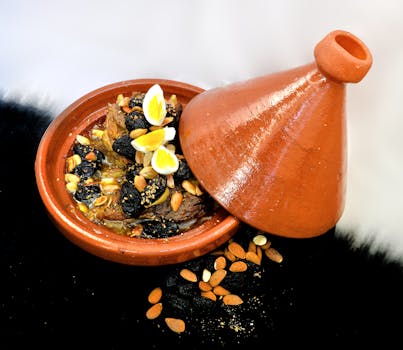
Photo: Moussa Idrissi / Pexels
African
Lamb Tagine with Prunes
The diets react (see scores below)
Common Ingredients
- lamb
- prunes
- almonds
- onion
- cinnamon
- ginger
- saffron
- honey
Specific recipes may vary.
Incompatible with 6 of 11 diets
Diet Ratings
Lamb Tagine with Prunes is fundamentally incompatible with a ketogenic diet. The two primary offenders are prunes and honey. Prunes are extremely high in sugar and net carbs (roughly 17-18g net carbs per 5 prunes), and honey is essentially pure sugar (~17g carbs per tablespoon). Together, these two ingredients alone can easily push a single serving well past the entire daily 20-50g net carb limit. The dish is a classic sweet-savory preparation where the sugary elements are central to the recipe's character, not optional additions. While lamb itself is an excellent keto protein and the spices (cinnamon, ginger, saffron) are fine, and almonds and onion are manageable in small amounts, the prunes and honey cannot be reduced to keto-compatible levels without fundamentally changing the dish into something else entirely.
Lamb Tagine with Prunes is unequivocally non-vegan. The primary protein is lamb, a direct animal product (red meat from sheep), which is categorically excluded under all vegan frameworks. There is no ambiguity here. Additionally, honey is present, which the majority of vegan organizations (including the Vegan Society and PETA) also exclude as an animal-derived product. The remaining ingredients — prunes, almonds, onion, cinnamon, ginger, and saffron — are all plant-based, but the inclusion of lamb alone is sufficient to render this dish entirely incompatible with a vegan diet.
Lamb Tagine with Prunes is largely paleo-compatible, but honey pushes it into caution territory. Lamb is an excellent paleo protein, almonds and onion are fully approved, and cinnamon, ginger, and saffron are all paleo-approved spices. Prunes (dried plums) are technically paleo as a whole fruit, though their concentrated sugar content raises concern for strict practitioners. Honey is the primary flag here — it is a natural sweetener that falls into the paleo 'caution' zone due to its high sugar content, though it is widely accepted in moderation by most paleo authorities as a pre-agricultural food source. The overall dish is free from grains, legumes, dairy, seed oils, and processed ingredients, making it a reasonable paleo choice when honey is used sparingly.
Strict Cordain-school paleo would flag honey as a form of concentrated sugar to be minimized or avoided, and prunes as a high-glycemic dried fruit that should be replaced with fresh whole fruit. Some practitioners following strict ancestral templates would reduce or eliminate both for blood sugar management reasons.
Lamb is red meat, which the Mediterranean diet limits to a few times per month. This tagine centers lamb as the primary protein, placing it in the 'avoid' category for regular consumption. The dish does include beneficial Mediterranean-compatible ingredients—almonds (healthy fats, plant-based), onion, and aromatic spices like cinnamon, ginger, and saffron are all fine. However, prunes add concentrated fruit sugars, and honey is an added sugar, both of which push this dish toward sweetness that modern Mediterranean guidelines discourage. The North African tagine tradition does overlap geographically with Mediterranean culinary culture, but the combination of red meat as the centerpiece plus honey and fruit-sweetened sauce makes this a dish to reserve for rare occasions.
North African cuisine—particularly Moroccan—is geographically and culturally part of the broader Mediterranean basin, and some Mediterranean diet researchers (notably those following a cultural rather than strictly clinical interpretation) include traditional Moroccan dishes as legitimate expressions of the diet. In this view, the small amount of honey, the use of whole fruit (prunes), and the spice-forward preparation could be seen as an occasional, culturally authentic inclusion rather than a dietary violation.
Lamb Tagine with Prunes is fundamentally incompatible with the carnivore diet. While lamb is an excellent ruminant meat and would score highly on its own, this dish is dominated by plant-based ingredients that are strictly excluded: prunes (fruit), almonds (nuts), onion (vegetable), cinnamon (plant spice), ginger (plant spice), and saffron (plant spice). Honey, though animal-produced, is plant-derived nectar and debated even in the most permissive carnivore circles. Only the lamb itself is carnivore-compliant. The dish as a whole represents a classic plant-heavy preparation that violates nearly every core carnivore principle.
Honey is an added sugar and is explicitly excluded on the Whole30 program. All forms of added sugar — real or artificial — are not permitted for the 30 days, and honey is one of the most commonly cited examples of a real sugar that must be avoided. Every other ingredient in this dish (lamb, prunes, almonds, onion, cinnamon, ginger, saffron) is fully Whole30-compliant, but the inclusion of honey makes the dish as described non-compliant. If the honey were omitted or replaced with a compliant sweetener (such as fruit juice), this tagine could easily be made compliant.
This dish contains multiple high-FODMAP ingredients that make it unsuitable during the elimination phase. Prunes are high in polyols (sorbitol) and are a classic high-FODMAP food to avoid entirely. Onion is one of the highest-fructan foods and a primary trigger for IBS symptoms — it cannot be made safe by portion reduction in a cooked dish where FODMAPs leach into the sauce. Honey is high in excess fructose and must be avoided during elimination. While lamb itself is FODMAP-free, cinnamon and ginger are low-FODMAP at culinary doses, almonds are low-FODMAP at small servings (10 nuts), and saffron is fine, the combination of prunes, onion, and honey creates an unavoidable high-FODMAP dish. Three separate high-FODMAP ingredients disqualify this recipe entirely for the elimination phase.
Lamb Tagine with Prunes sits in DASH's 'caution' zone for several reasons. Lamb is classified as red meat, which DASH explicitly limits due to its higher saturated fat content compared to poultry and fish. However, this dish has genuine DASH-positive elements: prunes are rich in potassium and fiber, almonds provide magnesium and healthy unsaturated fats, onion and spices (cinnamon, ginger, saffron) add flavor without sodium, and honey is used in modest amounts typical of tagine recipes. The dish appears naturally low in sodium, which is a significant DASH advantage. The key concern is the lamb itself — DASH guidelines recommend limiting red meat to ≤2 servings per week, and lean cuts (e.g., trimmed leg of lamb) are preferable to fattier cuts. Portion size is critical: a modest 3 oz serving of lean lamb within a larger vegetable-forward preparation is more acceptable than a large portion of fatty lamb shoulder. The combination of prunes and honey adds natural sugar, but within typical tagine proportions this is not a major DASH concern. Overall, this dish can fit into a DASH diet occasionally and in modest portions, especially if lean lamb cuts are used and portions are controlled.
NIH DASH guidelines categorically limit red meat including lamb due to saturated fat concerns, suggesting this dish should be eaten rarely if at all. However, updated clinical interpretations note that lean lamb trimmed of visible fat has a saturated fat profile closer to beef sirloin, and when paired with high-potassium, high-fiber ingredients like prunes and almonds in a sodium-controlled preparation, many DASH-oriented dietitians consider occasional moderate consumption acceptable within the weekly red meat allowance.
Lamb Tagine with Prunes presents a mixed Zone profile. The lamb is a moderate protein source but is fattier than ideal Zone proteins (skinless chicken, fish), contributing more saturated fat. Prunes are a high-sugar dried fruit explicitly unfavorable in Zone methodology — concentrated sugars with significant glycemic impact. Honey adds further high-glycemic, nutritionally empty sugar. On the positive side, almonds provide excellent monounsaturated fat (a Zone-favored fat block), onion contributes low-glycemic vegetable carbs, and the spices (cinnamon, ginger, saffron) are anti-inflammatory polyphenol sources Sears would endorse. The dish can be incorporated into a Zone meal with careful portioning: limit the prunes to a very small serving (1 block ≈ 3 prunes), skip or minimize honey, and rely on almonds for the fat block. The lamb portion should be controlled to ~3 oz to hit ~21-25g protein. The overall macro balance is achievable but requires significant modification from a traditional recipe preparation.
Some Zone practitioners following Sears' later anti-inflammatory writings (The OmegaRx Zone, The Mediterranean Zone) might rate this more favorably given the strong polyphenol profile from spices and the Mediterranean-style olive/almond fats. Sears increasingly emphasized polyphenol-rich foods as central to Zone success. Conversely, strict early-Zone practitioners would flag the prunes, honey, and lamb fat more strongly, potentially dropping this to a 4. The rating depends heavily on whether recipe modifications (reducing prunes/honey) are assumed.
Lamb Tagine with Prunes presents a genuinely mixed anti-inflammatory profile. On the positive side, the spice blend is excellent: cinnamon and ginger are well-supported anti-inflammatory agents, and saffron contains crocin and safranal with emerging evidence for reducing inflammatory markers. Almonds provide vitamin E, healthy monounsaturated fats, and fiber — all beneficial. Prunes (dried plums) are rich in polyphenols and antioxidants and have shown anti-inflammatory effects in research. Onion contributes quercetin, a notable flavonoid. The main concern is lamb itself. As a red meat, it falls into the 'limit' category of anti-inflammatory frameworks. Lamb is relatively high in saturated fat (though it also contains some CLA and zinc) and arachidonic acid, a precursor to pro-inflammatory eicosanoids. It lacks the omega-3 richness that earns fatty fish their top rating. Honey is an added sugar and should be used sparingly — it has some antioxidant properties but contributes to glycemic load. The overall dish is not categorically pro-inflammatory: the spice foundation is genuinely strong, and the fruit-and-nut profile adds meaningful antioxidant value. But the red meat base and added honey pull the score down from an approve. Consumed occasionally in modest portions, this dish is acceptable within an anti-inflammatory eating pattern.
Some anti-inflammatory practitioners — particularly those following Mediterranean or Dr. Weil's pyramid framework — would view this dish more favorably, noting that lamb from grass-fed sources has a better omega-3 to omega-6 ratio than grain-fed beef, and that the rich polyphenol load from prunes, spices, and almonds may offset the saturated fat concerns. Conversely, stricter anti-inflammatory or autoimmune protocols (such as AIP) would rate this lower due to red meat, and would also flag honey as a concentrated sugar source warranting avoidance.
Lamb tagine with prunes presents a mixed nutritional profile for GLP-1 patients. Lamb does provide meaningful protein, but it is a fatty red meat with significant saturated fat content — particularly in cuts typically used for tagine (shoulder, shank), which can worsen GLP-1 side effects like nausea, bloating, and delayed gastric emptying. Prunes add some fiber and micronutrients but also contribute concentrated natural sugars, and honey adds further sugar load with minimal nutritional return. Almonds offer healthy unsaturated fats but add to the overall fat density of the dish. On the positive side, the spices (cinnamon, ginger, saffron) are anti-inflammatory and generally well-tolerated, and onion adds fiber. The slow-cooked preparation does improve digestibility compared to fried or grilled fatty meats. However, the combination of high saturated fat from lamb, concentrated sugar from prunes and honey, and moderate-to-high caloric density per serving makes this a poor fit for GLP-1 patients — especially those experiencing GI side effects. It is not a dish to avoid entirely if consumed in a small portion with lean lamb, reduced honey, and no prune excess, but in its standard form it falls firmly in caution territory.
Some GLP-1-focused dietitians acknowledge that slow-cooked lamb, when trimmed of visible fat, can be a reasonable protein source and that the fiber from prunes partially offsets the sugar concern; they may permit small portions for dietary adherence and cultural relevance. Others take a stricter stance, treating fatty red meat as a consistent trigger for GLP-1 GI side effects and flagging the prune-and-honey combination as a meaningful sugar load that undermines appetite regulation goals.
*See how scores were generated at our methodology page.
Nutritional profile
Six traits that cut across every diet.
Fiber & Plants
How much whole-plant food and fiber it delivers.
Healthy Fats
The quality of its fats (unsaturated, omega-3).
Whole / Unprocessed
How close it is to its natural, unprocessed form.
Gut Gentle
How easy it is on digestion (low FODMAP, few irritants).
Low Glycemic
How little it spikes your blood sugar.
Protein Density
How much protein it packs per calorie.
Controversy Index
Higher controversy = more disagreement between diets.
Diet-Specific Tips
 Paleo — 6/10
View tips
- Lamb is a fully approved paleo protein
- Almonds, onion, and all spices (cinnamon, ginger, saffron) are paleo-approved
- Honey is a natural sweetener accepted in moderation but flagged by stricter paleo interpretations
- Prunes are whole-food derived but concentrated in sugar as a dried fruit
- No grains, legumes, dairy, seed oils, or processed ingredients present
- Overall dish is paleo-friendly with mindful use of honey
 DASH — 5/10
View tips
- Lamb is red meat — DASH recommends limiting red meat due to saturated fat content
- No added sodium in ingredient list — significant DASH advantage
- Prunes are high in potassium and dietary fiber — DASH-positive
- Almonds provide magnesium, healthy fats, and protein — DASH-approved nut
- Honey adds natural sugar — acceptable in small amounts but monitored
- Spices replace sodium for flavor — strongly aligned with DASH principles
- Portion control critical: lean cut and ≤3 oz serving recommended
- Occasional consumption (≤2x/week) fits within DASH red meat limits
 Zone — 5/10
View tips
- Lamb is higher in saturated fat than ideal Zone protein sources like skinless chicken or fish
- Prunes are a concentrated dried fruit — high sugar, high glycemic, explicitly unfavorable in Zone carb classifications
- Honey is a high-glycemic sweetener that adds empty carb blocks and is difficult to balance in the Zone ratio
- Almonds provide excellent monounsaturated fat blocks — a top-tier Zone fat source
- Onion contributes favorable low-glycemic vegetable carb blocks
- Spices (cinnamon, ginger, saffron) are anti-inflammatory polyphenol sources consistent with Sears' later Zone philosophy
- Dish can be Zone-adapted by severely limiting prunes and honey and controlling lamb portion size to ~3 oz
 Anti-Inflammatory — 5/10
View tips
- Lamb is red meat — categorized as 'limit' in anti-inflammatory frameworks due to saturated fat and arachidonic acid content
- Cinnamon and ginger are well-established anti-inflammatory spices with research-backed effects on CRP and IL-6
- Saffron contains crocin with emerging anti-inflammatory and antioxidant evidence
- Almonds provide vitamin E, monounsaturated fats, and fiber — all anti-inflammatory
- Prunes are high in polyphenols and have demonstrated anti-inflammatory effects in research
- Onion contributes quercetin, a potent anti-inflammatory flavonoid
- Honey adds antioxidants but also concentrated sugar — should be used sparingly
- Grass-fed lamb improves the omega-3 to omega-6 ratio compared to grain-fed red meats
 GLP-1 Friendly — 4/10
View tips
- Lamb is a high-saturated-fat protein — typical tagine cuts (shoulder, shank) worsen GLP-1 GI side effects
- Prunes and honey add concentrated sugars with limited nutritional payoff per calorie
- High overall fat and sugar density reduces nutrient-per-calorie value critical for GLP-1 patients
- Slow-cooking improves digestibility relative to fried or grilled fatty meats — a partial positive
- Almonds contribute healthy unsaturated fats but increase caloric and fat density further
- Small portion with lean lamb and reduced sweeteners could make this marginally acceptable
- Spices (ginger, cinnamon, saffron) are well-tolerated and anti-inflammatory — a minor positive