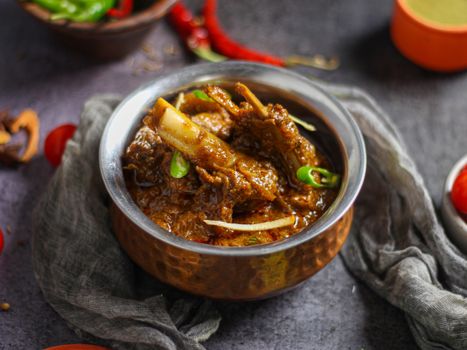
Photo: Prabal Pratap Singh / Pexels
The diets react (see scores below)
Common Ingredients
- goat meat
- onion
- tomatoes
- yogurt
- ginger
- garlic
- garam masala
- whole spices
Specific recipes may vary.
Incompatible with 5 of 11 diets
Diet Ratings
Mutton curry is built around goat meat, which is a high-protein, moderate-fat meat that is fundamentally keto-compatible. However, the dish includes onions and tomatoes (which add meaningful net carbs), yogurt (which contains lactose/carbs), and a blend of spices. In a standard serving, the cumulative carbs from onions, tomatoes, and yogurt can push a portion toward 10-15g net carbs, which is manageable within a strict daily 20g budget but leaves little room for other carb sources. The dish is free of grains, added sugars, and starchy vegetables, which is a positive. Portion control and awareness of sauce-to-meat ratio are key — a meat-heavy serving with moderate sauce is workable, while a gravy-heavy portion with large amounts of onion and tomato base could approach the limit quickly.
Some lazy keto and moderate keto practitioners consider mutton curry a straightforward approve, arguing that the carbs from aromatics and tomatoes in a typical serving are minimal and well within daily limits for most active keto dieters. Strict therapeutic keto protocols, however, flag the yogurt and high-onion base as carb sources that require precise tracking and may caution against restaurant portions where ingredient ratios are unknown.
Mutton Curry contains two clear animal-derived ingredients: goat meat (the primary protein) and yogurt (a dairy product). Both are explicitly excluded under vegan dietary rules. The spices, onion, tomatoes, ginger, and garlic are plant-based, but the dish as defined cannot be made vegan without fundamentally replacing its core components.
Mutton Curry is largely paleo-friendly — goat meat, onion, tomatoes, ginger, garlic, and whole spices are all clearly approved paleo ingredients. However, yogurt is a dairy product, which is explicitly excluded under standard paleo rules. Yogurt is the single disqualifying ingredient that prevents a full approval. Garam masala is a spice blend and is generally acceptable, though store-bought versions occasionally contain trace additives or salt. The dish earns a caution rating rather than avoid because the core of the dish is sound paleo food; a simple substitution (replacing yogurt with coconut milk or omitting it) would make it fully compliant.
Mutton curry's primary protein is goat meat, which is red meat. The Mediterranean diet strictly limits red meat to a few times per month. While the supporting ingredients — onions, tomatoes, yogurt, garlic, ginger, and whole spices — are largely compatible with Mediterranean principles, the central ingredient disqualifies this dish from regular consumption. The lack of olive oil (replaced by other cooking fats typical in Indian cuisine) and the red meat foundation place this firmly in the 'avoid' category for routine eating.
Some Mediterranean diet researchers note that goat is actually leaner than beef or lamb and is the traditional red meat of choice in parts of Greece, southern Italy, and the Middle East. A small portion of lean goat consumed occasionally (once or twice a month) could be considered marginally acceptable, and the vegetable-rich sauce partially offsets concerns.
Mutton Curry is fundamentally incompatible with the carnivore diet despite containing goat meat as its primary protein. The dish is heavily plant-laden: onions, tomatoes, ginger, garlic, garam masala, and whole spices are all plant-derived ingredients that are categorically excluded on a carnivore diet. Yogurt, while animal-derived, is a minor component in a dish dominated by plant ingredients. The overall composition is that of a plant-spice sauce with meat — not a carnivore-compatible preparation. The goat meat itself would score highly in isolation, but the dish as prepared cannot be approved or even cautioned; it must be avoided in this form.
Mutton Curry as traditionally prepared contains yogurt, which is a dairy product explicitly excluded on the Whole30 program. While all other ingredients — goat meat, onion, tomatoes, ginger, garlic, garam masala, and whole spices — are fully compliant, the inclusion of yogurt makes this dish non-compliant as written. The dish could be made Whole30-compatible by omitting the yogurt or substituting it with a compliant alternative such as full-fat coconut milk or coconut cream, which would replicate the tenderizing and sauce-thickening effect yogurt provides.
Mutton Curry as traditionally prepared contains multiple high-FODMAP ingredients that make it unsuitable during the elimination phase. Onion is one of the highest-FODMAP foods tested by Monash University, being very high in fructans even at small quantities. Garlic is similarly one of the most concentrated sources of fructans and must be strictly avoided during elimination. Yogurt contains lactose and is high-FODMAP at typical curry quantities (more than 2 tablespoons). Together, these three ingredients alone — onion, garlic, and yogurt — make this dish clearly high-FODMAP at any standard serving. The goat meat itself is FODMAP-free, tomatoes are low-FODMAP in moderate amounts, ginger is low-FODMAP, and most whole spices and garam masala are used in small enough quantities to be low-FODMAP. However, the dish cannot be considered safe during elimination due to the foundational high-FODMAP ingredients.
Mutton (goat) curry sits in a moderate zone for DASH compliance. Goat meat is actually one of the leaner red meats — lower in saturated fat than beef or lamb — and the dish includes DASH-positive ingredients like tomatoes, onion, ginger, garlic, and yogurt (a low-fat dairy source if standard). The spices (garam masala, whole spices) add flavor without sodium, which aligns well with DASH's goal of reducing reliance on salt for taste. However, goat is still red meat, which DASH limits in favor of poultry, fish, and plant proteins. The saturated fat content, while lower than other red meats, still contributes meaningfully. Sodium content depends heavily on preparation — restaurant versions often include added salt that can push sodium well above DASH targets. Portion size is critical; a small serving (2–3 oz) is more compatible than a large portion. If prepared at home with low-fat yogurt, minimal added salt, and lean goat cuts, the dish can fit within DASH guidelines in moderation.
NIH DASH guidelines categorically limit red meat and emphasize lean poultry and fish as preferred animal proteins; goat curry, even lean, fits only as an occasional choice. However, updated clinical interpretations note that goat meat's favorable fat profile (lower saturated fat than beef or lamb) and the dish's vegetable-rich base with potassium-rich tomatoes and anti-inflammatory spices make it more DASH-compatible than many other red meat dishes, particularly when home-prepared with sodium control.
Mutton (goat) curry sits in Zone 'caution' territory primarily due to the protein source. Goat meat is actually leaner than lamb or beef, with a reasonable protein-to-fat ratio, but it contains more saturated fat than ideal Zone proteins like skinless chicken or fish. The curry's supporting ingredients are largely Zone-friendly: onions and tomatoes provide low-glycemic carbohydrates, yogurt adds a small protein and carb contribution, and anti-inflammatory spices (ginger, garlic, garam masala, whole spices) align well with Sears' polyphenol and anti-inflammatory emphasis. The main Zone concerns are: (1) saturated fat content from the goat meat, which early Zone literature cautioned against; (2) portion control is critical — a Zone-compliant serving would be roughly 3 oz of meat (providing ~21g protein), which is smaller than typical Indian restaurant portions; (3) the dish may be cooked with additional fat (ghee or oil) that could tip fat macros and saturated fat load upward. With careful portioning, served alongside additional non-starchy vegetables to complete the carb blocks, and accounting for fat blocks from the curry, this can fit into a Zone meal. The spice profile and lean nature of goat meat relative to lamb give it an edge over heavier meat curries.
Some Zone practitioners and Sears' later writings (particularly his anti-inflammatory framework) are more permissive about saturated fat when it comes packaged with protein in whole-food contexts. Goat meat is one of the leanest red meats globally — lower in saturated fat than beef or lamb — and some Zone-aligned nutritionists would rate this more favorably, especially given the polyphenol-rich spices (ginger, garlic, turmeric often present in garam masala) that actively support the anti-inflammatory Zone goals. Under this view, a score of 6-7 would be defensible.
Mutton curry (using goat meat) presents a mixed anti-inflammatory profile. On the positive side, the dish is rich in anti-inflammatory aromatics and spices: ginger, garlic, and garam masala (typically containing turmeric, cumin, coriander, cloves, cinnamon, and black pepper) all carry meaningful anti-inflammatory compounds including gingerols, allicin, curcumin, and eugenol. Onions and tomatoes contribute quercetin, lycopene, and other polyphenols. Yogurt provides probiotics that can support gut health and reduce systemic inflammation. The primary concern is the protein source: goat meat, often labeled 'mutton' in South Asian cuisine, is red meat. While goat is actually leaner than most other red meats (lower in saturated fat than beef, lamb, or pork), it still falls into the 'limit' category under anti-inflammatory frameworks due to its red meat classification and potential to raise arachidonic acid levels. Goat has a more favorable fatty acid profile than conventional red meats — lower in total and saturated fat — which distinguishes it somewhat from beef or lamb curry. The overall dish is not pro-inflammatory in the way a heavily processed or high-fat red meat preparation would be, but the red meat base prevents an approval rating. Prepared occasionally, with the anti-inflammatory spice base and modest portions, this dish sits in the 'caution' zone.
Some anti-inflammatory nutrition practitioners, including those influenced by Dr. Weil's pyramid, would rate goat more favorably than other red meats due to its lower saturated fat content and argue the spice-heavy preparation tips the balance toward acceptable or even beneficial. Conversely, stricter anti-inflammatory and autoimmune protocols (such as AIP) would flag both yogurt (dairy) and nightshade-adjacent tomatoes as potentially problematic for sensitive individuals, possibly pushing this dish toward avoidance in those contexts.
Mutton (goat) curry offers meaningful protein from goat meat, which is actually one of the leaner red meats — lower in saturated fat than beef or lamb — making it a better red meat choice for GLP-1 patients. The yogurt adds a small protein and probiotic benefit, and the onion, tomatoes, and spices contribute fiber, antioxidants, and micronutrients, supporting nutrient density. However, several factors pull the score down: traditional Indian curries are often cooked with notable amounts of oil or ghee, and the fat rendered from goat meat during braising raises the overall fat content per serving. The whole spices and garam masala are generally well-tolerated but the warming, aromatic intensity of the dish may trigger nausea or reflux in sensitive GLP-1 patients, particularly early in treatment. Gastric emptying is slowed by GLP-1 medications, and a rich, heavily spiced braised dish sits heavier than simpler preparations. Portion size is also critical — a small serving over cauliflower rice or with a modest amount of whole grain is manageable, but a large portion could cause significant GI discomfort. This dish can work for GLP-1 patients who are past the initial adjustment phase and tolerate spiced foods, prepared with minimal added oil and served in a controlled portion.
Some GLP-1-focused dietitians are willing to approve lean goat curry as a protein-forward culturally relevant meal when prepared with minimal oil, noting that goat is nutritionally superior to beef or lamb for this population. Others remain cautious about any richly spiced, slow-cooked meat dish early in GLP-1 therapy due to high individual variability in GI tolerance, particularly around nausea and delayed gastric emptying, and would recommend a more conservative introduction.
*See how scores were generated at our methodology page.
Nutritional profile
Six traits that cut across every diet.
Fiber & Plants
How much whole-plant food and fiber it delivers.
Healthy Fats
The quality of its fats (unsaturated, omega-3).
Whole / Unprocessed
How close it is to its natural, unprocessed form.
Gut Gentle
How easy it is on digestion (low FODMAP, few irritants).
Low Glycemic
How little it spikes your blood sugar.
Protein Density
How much protein it packs per calorie.
Controversy Index
Higher controversy = more disagreement between diets.
Diet-Specific Tips
 Keto — 6/10
View tips
- Goat meat is keto-friendly — high protein, moderate fat, zero carbs
- Onions and tomatoes add 8-12g net carbs per standard serving depending on quantity
- Yogurt contributes additional lactose-based carbs (~3-5g per serving)
- No grains, added sugars, or starchy vegetables — structurally keto-aligned
- Cumulative carbs are manageable with portion control but require tracking
- Homemade versions allow carb reduction; restaurant versions may use more onion/tomato base
 Paleo — 5/10
View tips
- Goat meat is an unprocessed, paleo-approved protein
- Onion, tomatoes, ginger, garlic, and whole spices are all paleo-compliant
- Yogurt is a dairy product — explicitly excluded under paleo rules
- Garam masala blends are generally acceptable but may contain added salt in commercial preparations
- Dish is easily made paleo-compliant by substituting yogurt with coconut milk
 DASH — 5/10
View tips
- Goat is a lean red meat — lower saturated fat than beef or lamb, but still classified as red meat which DASH limits
- DASH-friendly supporting ingredients: tomatoes, onion, garlic, ginger (potassium, antioxidants, flavor without sodium)
- Yogurt adds low-fat dairy calcium if standard/low-fat variety is used
- Spice-forward seasoning (garam masala, whole spices) allows sodium reduction — a key DASH advantage
- Sodium risk is high in restaurant preparations; home cooking allows meaningful sodium control
- Portion control essential — DASH limits red meat to ≤6 oz/day, with preference for smaller servings
- No high-saturated-fat additions (no coconut milk, minimal oil) as listed improves DASH compatibility
 Zone — 5/10
View tips
- Goat meat is relatively lean for red meat but still higher in saturated fat than ideal Zone proteins (chicken, fish)
- Tomatoes and onions are favorable low-glycemic Zone carbohydrates
- Yogurt contributes balanced protein and carbs in small amounts
- Anti-inflammatory spices (ginger, garlic, garam masala) align with Sears' polyphenol emphasis
- Portion control critical — typical restaurant servings likely exceed Zone protein blocks
- Potential added cooking fat (ghee, oil) must be counted toward fat blocks and may increase saturated fat
- No high-glycemic carbs present; carb profile is Zone-compatible
 Anti-Inflammatory — 5/10
View tips
- Goat is red meat — classified as 'limit' under anti-inflammatory guidelines, but leaner and lower in saturated fat than beef or lamb
- Ginger and garlic are potent anti-inflammatory ingredients with strong research support
- Garam masala contains turmeric, cinnamon, cloves, and black pepper — all anti-inflammatory spices
- Onions and tomatoes contribute quercetin, lycopene, and antioxidant polyphenols
- Yogurt provides probiotics beneficial for gut health and inflammation modulation
- No processed ingredients, trans fats, refined sugars, or seed oils identified
- Preparation method (curry vs. grilled/fried) does not add pro-inflammatory oils if cooked with olive or minimal fat
 GLP-1 Friendly — 5/10
View tips
- Goat is a lean red meat — lower saturated fat than beef or lamb, reasonable protein density
- Traditional preparation often includes added oil or ghee, raising total fat per serving
- Yogurt contributes protein and probiotics, a positive addition
- Garam masala and whole spices are generally tolerated but may worsen nausea or reflux in early GLP-1 treatment
- Slowed gastric emptying makes heavy braised dishes sit longer, increasing GI discomfort risk
- Portion control is essential — small serving is manageable, large serving is problematic
- Better suited for patients past the initial GLP-1 adjustment phase
- Onion and tomatoes add modest fiber and micronutrient value