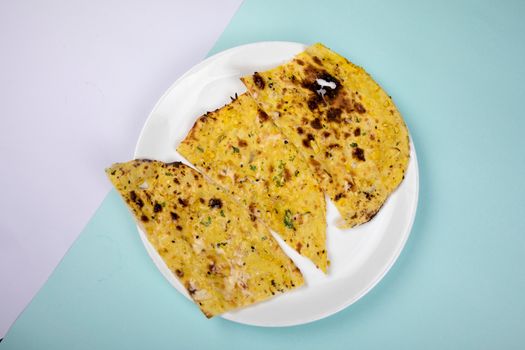
Photo: Milton Das / Pexels
The diets react (see scores below)
Common Ingredients
- all-purpose flour
- yogurt
- yeast
- sugar
- milk
- baking powder
- salt
- ghee
Specific recipes may vary.
Incompatible with 7 of 11 diets
Diet Ratings
Plain naan is made primarily from all-purpose flour (refined wheat), which is a grain-based, high-carbohydrate food. A single piece of naan contains approximately 45-50g of net carbs, which alone exceeds or meets the entire daily carb limit for ketosis. Additional ingredients like sugar and milk add further carbohydrates. The presence of ghee is the only keto-friendly component, but it cannot offset the massive carb load from the flour base. This food is fundamentally incompatible with a ketogenic diet in any reasonable serving size.
Plain naan as traditionally prepared contains multiple animal-derived ingredients that are clearly non-vegan. Yogurt is a dairy product (fermented milk), milk is an animal secretion, and ghee is clarified butter — all derived from cows. These are not trace contaminants or processing aids; they are core recipe ingredients that define the texture and flavor of traditional naan. There is no ambiguity here within vegan ethics. Vegan versions of naan do exist (substituting plant-based yogurt, non-dairy milk, and oil or vegan butter for ghee), but the dish as described is not vegan-compatible.
Plain Naan is fundamentally incompatible with the Paleo diet. The primary ingredient, all-purpose flour (refined wheat), is a grain product explicitly excluded from Paleo. Beyond the flour, multiple other ingredients also violate Paleo principles: yogurt and milk are dairy products, sugar is a refined sweetener, baking powder is a processed additive, and salt is excluded. Yeast, while naturally occurring, is used here in the context of a grain-based bread. Even ghee — the one debated ingredient — cannot redeem a dish that is built almost entirely on non-Paleo foundations. This is one of the clearest possible avoid verdicts.
Plain naan is made primarily from all-purpose flour (refined white flour), which is a refined grain that Mediterranean diet principles discourage. It also contains ghee (clarified butter), a saturated animal fat that directly contradicts the Mediterranean diet's emphasis on extra virgin olive oil as the primary fat source. Added sugar and milk contribute additional concerns. The Mediterranean diet strongly emphasizes whole grains over refined grains, and this bread offers no redeeming whole-grain, legume, or plant-forward qualities. It is not traditional to Mediterranean cuisine and conflicts with core dietary principles on multiple fronts.
Plain Naan is fundamentally incompatible with the carnivore diet. Its primary ingredient is all-purpose flour, a grain-based product, which is strictly excluded on any version of the carnivore diet. It also contains yeast, sugar, and baking powder — all non-animal-derived ingredients. While it does include some animal-derived components (yogurt, milk, ghee), these are incidental and do not redeem a dish that is essentially a grain-based bread. No tier of the carnivore diet — from the strictest Lion Diet to the more permissive animal-based approach — includes grains or bread products.
Plain Naan contains multiple Whole30-excluded ingredients: all-purpose flour (a grain product), yogurt (dairy), sugar (added sugar), and milk (dairy). Even if these ingredients were somehow substituted with compliant alternatives, naan is explicitly listed as a bread/wrap-style item that falls under the 'no recreating baked goods' rule — the program specifically prohibits wraps and similar bread products even when made with compliant ingredients. This dish fails on multiple fronts.
Plain naan is made primarily from all-purpose flour (wheat), which is high in fructans — one of the most significant FODMAPs. A standard serving of naan (typically one piece, ~90-100g) contains a substantial amount of wheat flour, far exceeding the low-FODMAP threshold for fructans. Additionally, yogurt and milk contribute lactose, adding further FODMAP load. While small amounts of sugar, ghee, yeast, baking powder, and salt are low-FODMAP, the foundational wheat base makes naan clearly high-FODMAP at any standard serving size during the elimination phase. Unlike sourdough bread (where long fermentation can degrade fructans), traditional naan uses a relatively short leavening process with yeast and baking powder, which does not meaningfully reduce fructan content. Naan is not comparable to spelt sourdough in terms of fructan reduction through fermentation.
Plain naan is made from refined all-purpose flour rather than whole grain flour, which is a key distinction from DASH-preferred whole grains. DASH explicitly emphasizes whole grains (whole wheat, brown rice, oats) over refined grains due to their higher fiber, potassium, and magnesium content. Additionally, naan contains ghee (clarified butter, high in saturated fat), added sugar, and salt — all ingredients DASH recommends limiting. The yogurt and milk provide some calcium benefit, but overall the nutritional profile is not well-aligned with DASH priorities. It is not categorically off-limits, but it should be consumed in moderation and ideally replaced with whole wheat alternatives. A whole wheat naan with reduced ghee and salt would score meaningfully higher.
Plain naan is made primarily from refined all-purpose flour, making it a high-glycemic carbohydrate source that Dr. Sears explicitly classifies as 'unfavorable' in Zone terminology. It is essentially white bread in flatbread form — rapidly digested, triggering a significant insulin response. The ghee adds saturated fat rather than the preferred monounsaturated fat. That said, the Zone is ratio-based, not exclusionary: a very small portion of naan (roughly 1/4 of a standard piece) could technically count as a carbohydrate block within a Zone meal, but the glycemic load and lack of fiber make it extremely difficult to incorporate without disrupting the hormonal balance the Zone seeks to maintain. Sugar is also a listed ingredient, adding further glycemic burden. It sits at the bottom of the 'caution' range rather than 'avoid' only because it is not pure sugar and does contain small amounts of protein from yogurt and milk — but in practical Zone meal planning, it is strongly discouraged.
Plain naan is made primarily from refined all-purpose flour, which is a refined carbohydrate with a high glycemic index that can spike blood sugar and promote inflammatory markers like CRP and IL-6. The addition of sugar further contributes to glycemic load. Ghee is a saturated fat that anti-inflammatory guidelines recommend limiting, though it lacks trans fats and is considered less problematic than margarine or partially hydrogenated oils. Yogurt and milk provide modest anti-inflammatory benefits via probiotics and nutrients, but these are minor contributors. Yeast and baking powder are neutral. Overall, naan's nutritional profile — refined flour dominant, added sugar, saturated fat — places it squarely in the 'limit' category of anti-inflammatory eating. It is not aggressively pro-inflammatory in small amounts (no trans fats, no processed additives, no seed oils), but it lacks meaningful anti-inflammatory properties and should be consumed only occasionally. A whole wheat or almond flour version would score significantly higher.
Plain naan is a refined-grain side bread with limited nutritional value for GLP-1 patients. Made primarily from all-purpose flour, it is low in protein, low in fiber, and relatively high in refined carbohydrates that cause rapid blood sugar spikes — problematic when every calorie needs to count. The ghee and milk add modest saturated fat. A standard piece of naan (~100g) delivers roughly 3g protein, 1-2g fiber, and 5-7g fat, with ~270 calories — a poor nutrient-density-per-calorie profile. Slowed gastric emptying on GLP-1s means refined starchy foods can sit heavily and contribute to bloating or discomfort. It is not fried, not spicy, and not high-sugar outright, which keeps it out of the avoid category. In small portions as an occasional accompaniment to a high-protein, high-fiber main dish (e.g., dal, grilled chicken, lentil curry), it is acceptable, but it should not be a dietary staple and offers little positive contribution to GLP-1 dietary goals.
*See how scores were generated at our methodology page.
Nutritional profile
Six traits that cut across every diet.
Fiber & Plants
How much whole-plant food and fiber it delivers.
Healthy Fats
The quality of its fats (unsaturated, omega-3).
Whole / Unprocessed
How close it is to its natural, unprocessed form.
Gut Gentle
How easy it is on digestion (low FODMAP, few irritants).
Low Glycemic
How little it spikes your blood sugar.
Protein Density
How much protein it packs per calorie.
Controversy Index
Higher controversy = more disagreement between diets.
Diet-Specific Tips
 DASH — 4/10
View tips
- Refined all-purpose flour — not a whole grain, lacks fiber and key DASH minerals
- Contains ghee (saturated fat) — DASH limits saturated fat intake
- Added salt increases sodium load — concern for both standard and low-sodium DASH
- Added sugar, though minor, is an ingredient DASH recommends minimizing
- Yogurt and milk contribute some calcium, a DASH-positive nutrient
- No significant source of potassium, magnesium, or dietary fiber
- Whole wheat naan would be a more DASH-compatible alternative
 Zone — 5/10
View tips
- Refined all-purpose flour is a high-glycemic 'unfavorable' carbohydrate per Dr. Sears' Zone framework
- Added sugar increases glycemic load further
- Ghee provides saturated fat rather than preferred monounsaturated fat
- No meaningful fiber to slow glucose absorption
- Small protein contribution from yogurt and milk prevents it from being a pure starch but is negligible
- Very small portions could technically fit as a carb block but are impractical
- Sears explicitly lists white bread and refined grains as foods to minimize or avoid
 Anti-Inflammatory — 4/10
View tips
- Refined all-purpose flour is a high-glycemic refined carbohydrate linked to elevated CRP
- Added sugar increases glycemic load and promotes inflammatory response
- Ghee provides saturated fat, which anti-inflammatory guidelines recommend limiting
- No trans fats or processed additives — less harmful than commercial bread products
- Yogurt contributes minor probiotic benefit but insufficient to offset inflammatory profile
- Lacks fiber, omega-3s, antioxidants, or polyphenols that define anti-inflammatory foods
 GLP-1 Friendly — 4/10
View tips
- Refined flour — low fiber, low nutrient density per calorie
- Minimal protein (~3g per piece) — does not contribute meaningfully to the 100-120g daily protein target
- Ghee adds saturated fat, though modest at typical serving size
- Refined carbohydrates may worsen blood sugar stability and contribute to bloating given slowed gastric emptying
- Not fried, not heavily spiced, not carbonated — avoids the worst GLP-1 triggers
- Acceptable in very small portions as a side, but nutritionally displaces better food choices