Photo: Allan González / Pexels
American
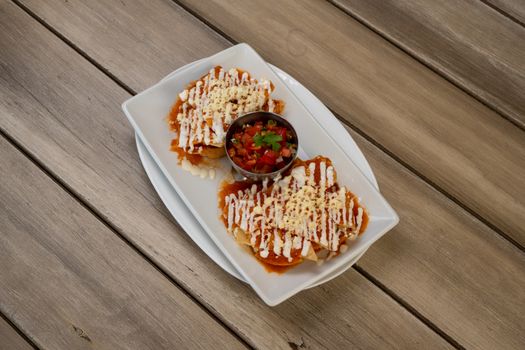
New Mexico Enchiladas
The diets react (see scores below)
Common Ingredients
- corn tortillas
- cheddar cheese
- red chile sauce
- yellow onion
- fried egg
- ground beef
- sour cream
Specific recipes may vary.
Incompatible with 8 of 11 diets
Diet Ratings
New Mexico Enchiladas are fundamentally incompatible with a ketogenic diet. The primary issue is corn tortillas, which are a grain-based, high-carb food — a standard serving of 3 corn tortillas contains roughly 36-45g of net carbs on their own, nearly or entirely consuming the entire daily keto carb budget. Red chile sauce, while made from dried chiles, typically contains additional starch or thickeners and adds further net carbs. The dish as traditionally prepared is carb-dense by design. While several individual components (cheddar cheese, ground beef, sour cream, fried egg, onion in small amounts) are keto-friendly, the foundational structure of the dish — built around corn tortillas — makes it impossible to consume in any standard portion without breaking ketosis.
New Mexico Enchiladas as described contain multiple animal products that are clearly excluded from a vegan diet. Cheddar cheese (dairy), fried egg (egg), sour cream (dairy), and ground beef (meat) are all direct animal-derived ingredients. Even the base version without beef still includes cheddar cheese, fried egg, and sour cream — all firmly non-vegan. The only vegan-compatible components are the corn tortillas, red chile sauce, and yellow onion. This dish is not vegan in any of its described configurations.
New Mexico Enchiladas are fundamentally incompatible with the Paleo diet. Corn tortillas are a grain product — corn is explicitly excluded from Paleo. Cheddar cheese and sour cream are dairy, both excluded. Red chile sauce often contains added salt, thickeners, or preservatives. Even the optional ground beef and the fried egg and yellow onion cannot redeem a dish whose structural foundation (tortillas) and primary flavor components (cheese, sour cream) are all non-Paleo. Multiple core ingredients independently trigger an 'avoid' verdict.
New Mexico Enchiladas as described conflict significantly with Mediterranean diet principles on multiple fronts. Ground beef is a red meat that Mediterranean guidelines restrict to a few times per month. Cheddar cheese is a high-saturated-fat dairy product not aligned with the moderate, lower-fat dairy (like feta or yogurt) typical of the Mediterranean pattern. Sour cream adds further saturated fat with little nutritional benefit relative to Mediterranean staples. Corn tortillas, while a whole grain product, are not part of the Mediterranean culinary tradition. The dish lacks olive oil, vegetables, legumes, or fish, and is built around a combination of red meat and high-fat dairy. Even in the cheese-only version, the heavy reliance on cheddar and sour cream makes this a poor fit. The fried egg adds modest protein value but doesn't offset the overall profile.
New Mexico Enchiladas are fundamentally incompatible with the carnivore diet. The dish is built on corn tortillas, which are a grain-based plant food and a core exclusion on any tier of carnivore eating. The red chile sauce is plant-derived, and yellow onion is a vegetable — both strictly excluded. While the dish does contain some animal products (ground beef, fried egg, cheddar cheese, sour cream), these are incidental to a dish whose structural foundation is entirely plant-based. Even the most lenient carnivore practitioners who include dairy and eggs would have no framework for accommodating corn tortillas or chile sauce. This dish cannot be modified into a carnivore meal without being entirely reconstructed — it would cease to be enchiladas.
New Mexico Enchiladas contain multiple Whole30-excluded ingredients. Corn tortillas are made from corn, which is a grain explicitly excluded from the Whole30 program. Cheddar cheese is dairy, which is excluded (only ghee and clarified butter are permitted dairy exceptions). Sour cream is also dairy and excluded. Additionally, corn tortillas fall under the 'no recreating baked goods/junk food' rule as tortillas are explicitly listed as a prohibited food form, even if made with compliant ingredients. The red chile sauce may also contain added sugar or other excluded ingredients. Ground beef and fried egg are compliant, but the foundational structure of this dish relies on excluded foods.
New Mexico Enchiladas contain multiple high-FODMAP ingredients that make this dish problematic during the elimination phase. Yellow onion is one of the highest-FODMAP foods tested by Monash University, rich in fructans, and is typically used in significant quantities in both the dish itself and the red chile sauce. Traditional red chile sauce (New Mexico style) almost universally contains onion and often garlic, both major fructan sources. Sour cream is high in lactose at standard serving sizes (low-FODMAP only at 2 tablespoons/40g). The corn tortillas themselves are low-FODMAP, cheddar cheese is low-FODMAP (aged, low lactose), ground beef is low-FODMAP, and the fried egg is low-FODMAP — but the onion in the sauce and as a topping, combined with lactose from sour cream, creates a cumulative FODMAP load that would be unsafe during elimination. Even with modifications, the red chile sauce as traditionally prepared is the central element of this dish and is likely high-FODMAP.
Monash University has not specifically tested New Mexico red chile sauce, and homemade versions could theoretically be made without onion or garlic using garlic-infused oil and scallion greens. Some FODMAP practitioners note that if sour cream is limited to 2 tablespoons and onion is fully omitted from both the sauce and the dish, a modified version might reach 'caution' territory — but this would represent a substantially altered dish, not the traditional preparation.
New Mexico Enchiladas as traditionally prepared present multiple DASH diet concerns. The combination of full-fat cheddar cheese, sour cream, and optional ground beef delivers high saturated fat and cholesterol well above DASH limits. Cheddar cheese is also sodium-dense, and red chile sauce (especially commercial versions) can add significant sodium. The fried egg adds additional saturated fat and cholesterol. Ground beef, particularly at standard fat ratios (80/20), is a red meat high in saturated fat — a category DASH explicitly limits. Sour cream is full-fat dairy, directly contradicting DASH's emphasis on fat-free or low-fat dairy. The corn tortillas are a modest positive (whole grain-adjacent, fiber-containing), and the onion adds a small vegetable contribution, but these do not offset the cumulative saturated fat, sodium, and full-fat dairy load of the dish as a whole. A single serving could easily deliver 800–1,200mg sodium and 15–25g saturated fat, far exceeding DASH daily targets.
New Mexico Enchiladas present a mixed Zone profile that lands firmly in 'caution' territory. The dish's primary carbohydrate source — corn tortillas — is a moderate-glycemic grain carb that Zone classifies as 'unfavorable' but usable in limited quantities (roughly 1 small corn tortilla = ~1 carb block). The red chile sauce adds polyphenols and anti-inflammatory capsaicin, which aligns well with Sears' anti-inflammatory emphasis and is a genuine Zone positive. The yellow onion contributes minimal favorable carbs. The protein side is problematic: the dominant protein is cheddar cheese, which carries significant saturated fat, and ground beef (depending on fat content) adds more. Sour cream is nearly pure saturated fat with minimal protein value. The fried egg is a reasonable Zone protein but adds more saturated fat from yolk and frying oil. The macro ratio as traditionally prepared skews toward saturated fat and starchy carbs, with little monounsaturated fat present. A Zone-adapted version could work — using lean ground beef, limiting tortillas to 1-2, eliminating sour cream, reducing cheese, and adding a side salad to shift the carb profile toward low-GI vegetables — but the dish as traditionally constructed requires substantial modification to approach the 40/30/30 ratio. The dish is not categorically excluded but is difficult to balance without meaningful changes.
Some Zone practitioners following Sears' later work (notably 'The Mediterranean Zone') might view this more favorably if the chile sauce is polyphenol-rich and the beef is lean, arguing that the anti-inflammatory chile compounds partially offset the unfavorable carb and saturated fat profile. Additionally, traditional New Mexico red chile sauce is a whole-food, minimally processed ingredient — closer to a vegetable-based sauce than a refined condiment — which Sears would likely view positively. The classification hinges on portion size of tortillas and fat content of the beef and cheese used.
New Mexico Enchiladas present a mixed inflammatory profile. On the positive side, corn tortillas are a whole grain with moderate fiber and lower glycemic impact than refined wheat. The red chile sauce is arguably the dish's strongest anti-inflammatory element — dried red New Mexico chiles are rich in capsaicin and carotenoids (capsanthin, beta-carotene) with documented anti-inflammatory properties, and yellow onion contributes quercetin, a well-studied polyphenol. The fried egg adds choline and selenium. However, the dish's inflammatory liabilities are meaningful: full-fat cheddar cheese is a source of saturated fat, and sour cream adds more. Ground beef (especially regular fat %) is in the 'limit' category due to saturated fat and arachidonic acid content. The combination of cheese + sour cream + beef creates a substantial saturated fat load in a typical serving. The dish lacks omega-3 sources, is low in leafy greens or antioxidant-dense vegetables beyond the chile, and the dairy-heavy profile is a net negative for anti-inflammatory purposes. Scoring at 4: the chile sauce and corn base provide real benefits, but the full-fat dairy and optional red meat pull this firmly into 'caution' territory. A modified version with less cheese, no sour cream, lean beef or no beef, and added vegetables would rate higher.
Some anti-inflammatory practitioners (aligned with the Autoimmune Protocol or leaky gut frameworks) would rate this more harshly, flagging corn as a lectin-containing grain and nightshade-family chiles as potential gut irritants in sensitive individuals — pushing toward 'avoid' for those populations. Conversely, more permissive interpretations of the anti-inflammatory framework (closer to Dr. Weil's Mediterranean-influenced approach) would note that occasional full-fat dairy and moderate red meat are not categorically off-limits, and the potent anti-inflammatory properties of New Mexico red chile could partially offset the saturated fat concerns.
New Mexico Enchiladas present a mixed nutritional profile for GLP-1 patients. The dish can deliver moderate protein (especially with ground beef and a fried egg), but the primary protein source is cheddar cheese, which is calorie-dense and high in saturated fat — problematic for GLP-1 side effects like nausea and reflux. Sour cream adds additional saturated fat with minimal nutritional payoff. Corn tortillas are a modest positive — lower fat than flour tortillas and provide some fiber — but refined carbohydrates still dominate the calorie structure. Red chile sauce can be GI-irritating for patients already experiencing nausea or reflux, which is common on GLP-1s. The fried egg adds protein but also fat. Ground beef (if included) improves protein density but contributes saturated fat depending on the fat percentage used. Portion size is a significant issue: traditional enchilada plates are large and heavy, sitting poorly in a slowed-gastric-emptying stomach. A modified, smaller version with reduced cheese, leaner ground beef, no sour cream, and mild chile sauce could be tolerated, but the standard preparation is likely to cause GI discomfort and does not efficiently meet protein or fiber targets per calorie consumed.
Some GLP-1-focused dietitians consider a modest enchilada portion acceptable as a culturally relevant meal when built around lean beef and eggs for protein, arguing that rigid fat restriction is less important than overall calorie and protein targets. Others flag the combination of high saturated fat, spice, and slow gastric emptying as a consistent trigger for nausea and reflux complaints in clinical practice, recommending patients avoid this dish especially in early dose-escalation phases.
*See how scores were generated at our methodology page.
Nutritional profile
Six traits that cut across every diet.
Fiber & Plants
How much whole-plant food and fiber it delivers.
Healthy Fats
The quality of its fats (unsaturated, omega-3).
Whole / Unprocessed
How close it is to its natural, unprocessed form.
Gut Gentle
How easy it is on digestion (low FODMAP, few irritants).
Low Glycemic
How little it spikes your blood sugar.
Protein Density
How much protein it packs per calorie.
Controversy Index
Higher controversy = more disagreement between diets.
Diet-Specific Tips
 Zone — 4/10
View tips
- Corn tortillas are moderate-glycemic 'unfavorable' Zone carbs — usable but limited to 1-2 per meal
- Cheddar cheese and sour cream are high in saturated fat, not Zone-preferred fat sources
- Ground beef protein is acceptable if lean (>90%), but fatty ground beef adds excess saturated fat
- Red chile sauce provides anti-inflammatory polyphenols and capsaicin — a Zone positive
- Fried egg adds protein but also saturated fat from yolk and frying method
- No monounsaturated fat sources present (no olive oil, avocado, or almonds)
- As traditionally prepared, macro ratio skews fat-heavy and carb-unfavorable — significant portioning discipline required
 Anti-Inflammatory — 4/10
View tips
- Red chile sauce: anti-inflammatory (capsaicin, carotenoids, quercetin)
- Full-fat cheddar cheese: pro-inflammatory (saturated fat load)
- Sour cream: pro-inflammatory (full-fat dairy, saturated fat)
- Ground beef (optional): 'limit' category — saturated fat, arachidonic acid
- Corn tortillas: neutral to mildly positive (whole grain, fiber, no refined flour)
- Yellow onion: anti-inflammatory (quercetin, flavonoids)
- Fried egg: moderately positive (choline, selenium) — moderate category
- No omega-3 sources present
- No leafy greens or antioxidant-dense vegetables beyond chile
 GLP-1 Friendly — 4/10
View tips
- High saturated fat from cheddar cheese and sour cream may worsen nausea, reflux, and bloating
- Red chile sauce may irritate GI tract in patients already experiencing GLP-1 side effects
- Corn tortillas provide modest fiber but dish is carbohydrate-heavy relative to protein density
- Ground beef and fried egg improve protein content but also raise fat load
- Traditional portion sizes are too large for slowed gastric emptying
- Sour cream contributes saturated fat and calories with negligible protein or fiber value
- Dish can be modified toward acceptable with lean beef, reduced cheese, no sour cream, and smaller portions