Photo: Zehra Yılmaz / Pexels
Japanese
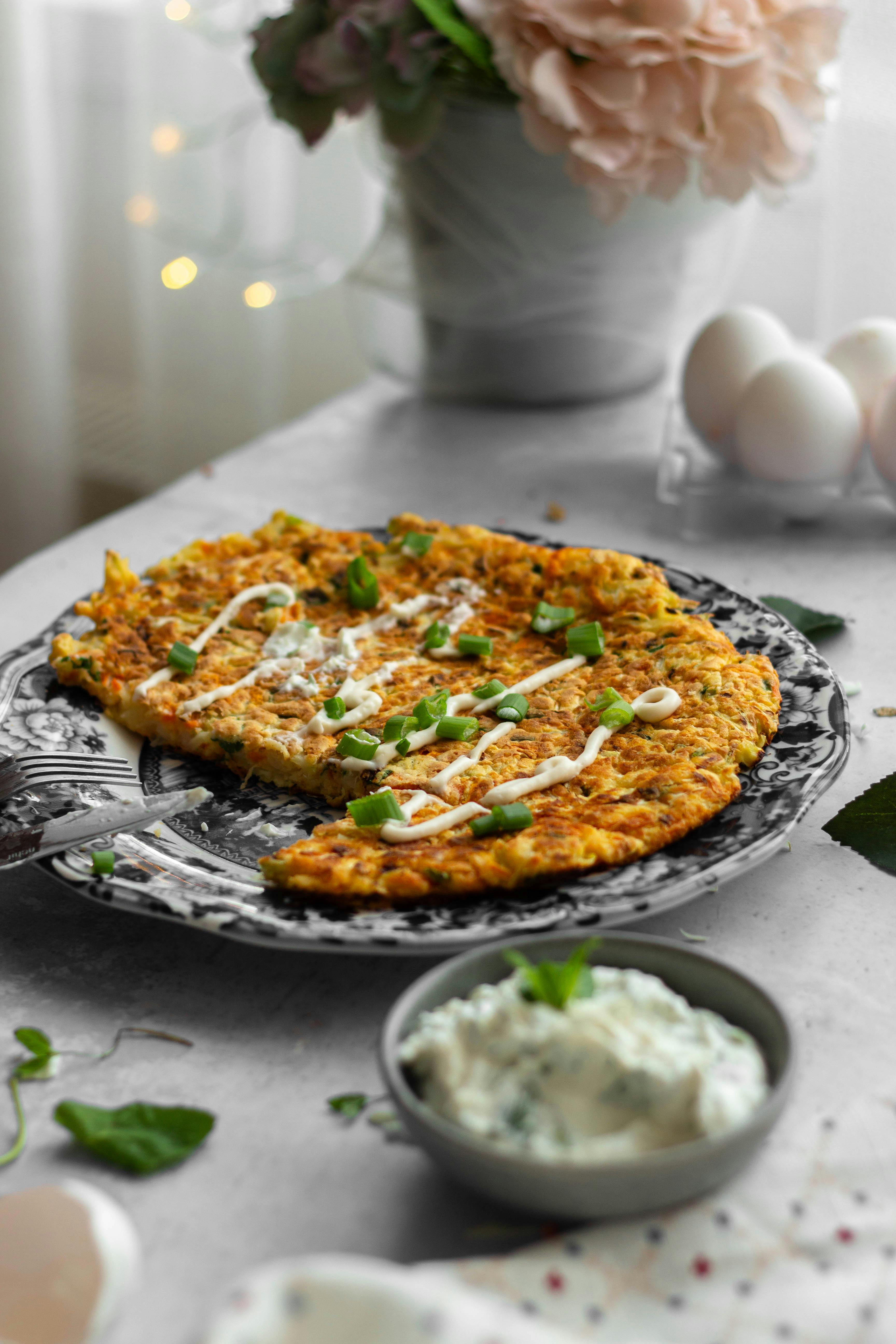
Okonomiyaki
The diets react (see scores below)
Common Ingredients
- cabbage
- flour
- eggs
- pork belly
- okonomiyaki sauce
- Japanese mayo
- bonito flakes
- aonori
Specific recipes may vary.
Incompatible with 8 of 11 diets
Diet Ratings
Okonomiyaki is fundamentally incompatible with a ketogenic diet. The dish is built around wheat flour as a primary binder, which alone contributes a substantial amount of high-glycemic carbohydrates. The okonomiyaki sauce is essentially a sweet, starchy condiment similar to Worcestershire or BBQ sauce, adding significant sugars. A standard serving of okonomiyaki can easily contain 40-60g of net carbs, far exceeding the daily keto limit in a single dish. While some ingredients are keto-friendly — pork belly (high fat, zero carbs), eggs (excellent keto protein and fat), cabbage (low net carbs in moderate amounts), bonito flakes (zero carbs), and Japanese mayo (high fat, low carb) — the flour and sweet sauce are non-negotiable disqualifiers. A keto-adapted version using almond or coconut flour and a sugar-free sauce is possible but would no longer be traditional okonomiyaki.
This okonomiyaki contains multiple animal products, making it completely incompatible with a vegan diet. The dish includes eggs (batter binding agent), pork belly (primary protein), Japanese mayonnaise (egg-based), and bonito flakes (dried fermented fish) — four distinct animal-derived ingredients spanning meat, fish, and eggs. There is no plant-based substitution pathway that would make this specific preparation vegan without fundamentally redesigning the recipe.
Okonomiyaki is fundamentally incompatible with the paleo diet. The dish is built on wheat flour as its structural base — a grain explicitly excluded from paleo. The okonomiyaki sauce is a processed condiment containing sugar, Worcestershire-style ingredients, and additives. Japanese mayonnaise is made with canola or soybean oil, both seed oils banned on paleo. Aonori (dried seaweed) and bonito flakes are paleo-friendly, cabbage and eggs are approved, and pork belly is acceptable in its unprocessed form — but these compliant ingredients are overwhelmed by multiple core violations. There is no meaningful way to call this dish paleo without reconstructing it entirely.
Okonomiyaki significantly conflicts with Mediterranean diet principles on multiple fronts. The primary protein is pork belly, a fatty red/processed meat that should be limited to a few times per month. The batter is made from refined white flour, a refined grain discouraged in the Mediterranean framework. The dish is topped with okonomiyaki sauce (high in sugar and processed ingredients) and Japanese mayo (processed, likely made with refined oils rather than olive oil), both of which are processed condiments with added sugars and unhealthy fats. While some ingredients are more compatible — cabbage is a beneficial vegetable, eggs are acceptable in moderation, and bonito flakes (dried fish) provide a nod toward seafood — these positives are outweighed by the overall profile. The dish has no olive oil, relies on refined grains, features fatty pork belly as the centerpiece, and is laden with processed sauces high in sugar and refined oils.
Okonomiyaki is fundamentally incompatible with the carnivore diet. The dish is built around a wheat flour and cabbage batter, making plant-based ingredients the structural foundation rather than incidental additives. While it does contain carnivore-friendly components — pork belly, eggs, and bonito flakes — these are minor ingredients within a predominantly plant and grain-based dish. The okonomiyaki sauce contains sugar, soy, and other plant-derived ingredients. Japanese mayo, while egg-based, typically contains plant oils and additives. Aonori is dried seaweed (plant). The flour-cabbage batter alone disqualifies this dish entirely under all tiers of carnivore eating.
Okonomiyaki is fundamentally non-compliant on multiple fronts. First, the dish is made with wheat flour, which is a grain and explicitly excluded on Whole30. Second, even if the flour were substituted, okonomiyaki is a savory pancake — exactly the type of 'recreated baked good/pancake' that Rule 4 prohibits by name (pancakes are explicitly listed). Third, okonomiyaki sauce typically contains sugar, soy, and other excluded ingredients. Fourth, Japanese mayo (Kewpie) typically contains sugar and MSG (though MSG is now allowed per 2024 rules, the sugar issue remains). The dish cannot be made compliant without fundamentally changing its identity, and even a flour-free version would still violate the 'no pancakes' spirit rule.
Okonomiyaki is fundamentally high-FODMAP due to its core ingredients. The primary batter is made with wheat flour, which is high in fructans — a major FODMAP trigger. Okonomiyaki sauce is typically made with Worcestershire sauce, ketchup, and oyster sauce, all of which contain high-fructose corn syrup, onion, and garlic, making it high-FODMAP. Japanese mayo (Kewpie) is generally low-FODMAP on its own, but the overall dish remains problematic. Cabbage in moderate portions is low-FODMAP, eggs and pork belly are low-FODMAP, and bonito flakes and aonori (dried seaweed) are also low-FODMAP. However, the wheat flour batter and okonomiyaki sauce together make this dish clearly high-FODMAP at any standard serving size. There is no realistic low-FODMAP version of this dish without substituting the wheat flour with a gluten-free alternative and replacing the okonomiyaki sauce entirely.
Okonomiyaki as traditionally prepared conflicts with DASH diet principles on multiple fronts. Pork belly is a fatty red/processed meat high in saturated fat, which DASH explicitly limits. Okonomiyaki sauce is a high-sodium, high-sugar condiment (similar to a thick Worcestershire-style sauce), and Japanese mayo (Kewpie-style) is a full-fat, calorie-dense topping. Together, these condiments can push sodium well above DASH targets for a single dish. The refined wheat flour batter offers little fiber value compared to whole grains DASH emphasizes. Bonito flakes add additional sodium. While cabbage and aonori are DASH-friendly vegetables, they are insufficient to offset the dish's overall nutritional profile. The combination of high saturated fat from pork belly, high sodium from the sauce and bonito flakes, and refined carbohydrates makes this dish poorly aligned with DASH guidelines.
Okonomiyaki presents a mixed Zone profile. On the positive side, cabbage is an excellent low-glycemic Zone-favorable vegetable, eggs provide quality lean protein, and bonito flakes add beneficial omega-3s and polyphenols. However, the dish has several Zone challenges: the wheat flour batter is a high-glycemic carbohydrate that Sears classifies as 'unfavorable,' pork belly is a fatty protein with significant saturated fat (far from the lean protein ideal of ~25g per meal), okonomiyaki sauce is sugar-laden and high-glycemic, and Japanese mayo adds omega-6-heavy fat rather than preferred monounsaturated sources. The macronutrient ratio likely skews toward carbs and fat with insufficient lean protein relative to Zone targets. Traditional preparation makes it very difficult to hit the 40/30/30 ratio — the flour-heavy batter and sweet sauce push carb glycemic load high, while pork belly adds the wrong kind of fat. It can be eaten in a Zone context only with significant modification (e.g., substituting leaner protein, reducing sauce, using less flour) or very small portions alongside Zone-favorable foods.
Some Zone practitioners note that cabbage-dominant versions with reduced flour and sauce, substituting shrimp or chicken for pork belly, can approximate a Zone-friendly meal. Sears' later anti-inflammatory writings also slightly softened the strict stance on saturated fat, meaning occasional pork belly in controlled portions is not categorically excluded. The dish's vegetable base and seafood topping (bonito) have genuine Zone merit.
Okonomiyaki presents a mixed anti-inflammatory profile. On the positive side, cabbage is a cruciferous vegetable rich in antioxidants and glucosinolates with documented anti-inflammatory properties. Eggs provide choline and some beneficial nutrients. Bonito flakes (katsuobushi) are dried fermented tuna, providing a modest omega-3 contribution and umami compounds. Aonori (dried seaweed) adds trace minerals and antioxidants. However, several components pull in a pro-inflammatory direction. Pork belly is a fatty cut of red/processed-adjacent meat, high in saturated fat — a food category the anti-inflammatory framework recommends limiting. The batter uses refined wheat flour, a refined carbohydrate with minimal fiber or nutrients. Okonomiyaki sauce is a sweet-savory condiment typically high in sugar and sodium, contributing added sugars. Japanese mayonnaise (Kewpie-style) is made predominantly with canola or soybean oil, which many anti-inflammatory protocols flag for high omega-6 content and oxidation potential. The overall dish is a moderate-to-high calorie, refined-carbohydrate-based preparation with a fatty pork protein and condiments that add sugar and omega-6-rich oils. It is not a dish built on anti-inflammatory principles, but the cabbage base and bonito flakes prevent it from being fully pro-inflammatory. Best treated as an occasional indulgence rather than a regular staple.
Mainstream Japanese dietary patterns — which include dishes like okonomiyaki — are associated with longevity and low chronic disease rates in population studies, suggesting context and overall dietary pattern matter more than individual dish analysis. Some anti-inflammatory nutritionists would also argue that the omega-6 concern around Japanese mayo is overstated when consumed in small condiment quantities, and that the fermented bonito and seaweed components offer meaningful anti-inflammatory bioactives.
Okonomiyaki has a mixed nutritional profile for GLP-1 patients. On the positive side, it contains cabbage (fiber, water content, easy to digest when cooked), eggs (high-quality protein), and bonito flakes (lean protein, omega-3s). However, the primary protein is pork belly — a fatty cut high in saturated fat that can worsen GLP-1 side effects like nausea, bloating, and reflux. The flour-based batter adds refined carbohydrates with low nutritional density. Okonomiyaki sauce and Japanese mayo both contribute sugar and fat respectively, adding empty or low-nutrient calories in a dish where every bite needs to count. The overall fat load per serving is moderate-to-high, and the combination of fatty pork, mayo, and a dense batter is harder to digest given GLP-1-slowed gastric emptying. It is not a fried dish, which helps, and the cabbage and egg base provide some redeeming nutritional value. A modified version substituting pork belly with shrimp or chicken breast and reducing mayo would score significantly higher.
Some GLP-1 nutrition practitioners would note that the egg and cabbage base makes okonomiyaki more nutrient-dense than many comfort foods, and that a modest portion may be tolerable for patients who have moved past early GI side effects. Others would rate it lower due to the pork belly fat content and sugary sauce being particularly problematic for patients with active nausea or reflux.
*See how scores were generated at our methodology page.
Nutritional profile
Six traits that cut across every diet.
Fiber & Plants
How much whole-plant food and fiber it delivers.
Healthy Fats
The quality of its fats (unsaturated, omega-3).
Whole / Unprocessed
How close it is to its natural, unprocessed form.
Gut Gentle
How easy it is on digestion (low FODMAP, few irritants).
Low Glycemic
How little it spikes your blood sugar.
Protein Density
How much protein it packs per calorie.
Controversy Index
Higher controversy = more disagreement between diets.
Diet-Specific Tips
 Zone — 4/10
View tips
- Wheat flour batter is a high-glycemic 'unfavorable' Zone carbohydrate
- Pork belly is high in saturated fat, not the lean protein Zone recommends
- Okonomiyaki sauce is high in sugar, spiking glycemic load
- Japanese mayo adds omega-6-heavy fat, not preferred monounsaturated fat
- Cabbage is a Zone-favorable low-glycemic vegetable and a positive component
- Eggs contribute quality protein and fit Zone protein blocks
- Bonito flakes provide beneficial omega-3s and polyphenols
- Overall macro ratio likely skews toward unfavorable fat and glycemic carbs
 Anti-Inflammatory — 4/10
View tips
- Cabbage: cruciferous vegetable, anti-inflammatory glucosinolates and antioxidants
- Pork belly: high saturated fat, fatty cut — anti-inflammatory framework recommends limiting red/fatty meats
- Refined wheat flour batter: refined carbohydrate, low fiber, modest pro-inflammatory contribution
- Okonomiyaki sauce: added sugars and sodium
- Japanese mayo (Kewpie): soybean/canola oil base — high omega-6, contested in anti-inflammatory protocols
- Bonito flakes: dried fermented tuna, modest omega-3 and umami compounds — mildly positive
- Aonori (dried seaweed): trace minerals, antioxidants — mild positive
 GLP-1 Friendly — 4/10
View tips
- Pork belly is a high-saturated-fat cut that worsens GLP-1 GI side effects
- Flour batter adds refined carbohydrates with low fiber and nutrient density
- Japanese mayo adds significant fat with minimal nutritional benefit
- Okonomiyaki sauce is high in sugar, contributing empty calories
- Eggs provide good-quality protein and support the dish's redeeming value
- Cabbage contributes fiber and water content, supporting digestion and hydration
- Bonito flakes add lean protein and omega-3s in small amounts
- Overall fat load makes gastric emptying slower and side effects more likely
- Not fried — pan-cooked, which is a relative positive
- Portion-sensitive: a small serving is more manageable than a full portion