Photo: Matheus Bertelli / Pexels
Japanese
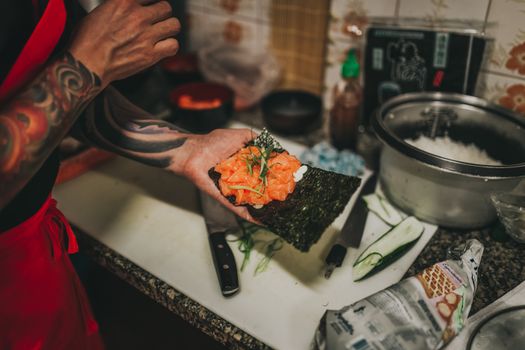
Salmon Onigiri
The diets react (see scores below)
Common Ingredients
- short-grain rice
- grilled salmon
- nori
- salt
- sesame seeds
Specific recipes may vary.
Incompatible with 5 of 11 diets
Diet Ratings
Salmon Onigiri is fundamentally incompatible with a ketogenic diet due to its primary ingredient: short-grain white rice. A single standard onigiri contains approximately 30-40g of net carbs from the rice alone, which can single-handedly consume or exceed an entire day's keto carb allowance. While the grilled salmon, nori, and sesame seeds are all keto-friendly ingredients, the rice base makes this dish a clear avoid. There is no meaningful way to portion-control this dish into keto compatibility — removing the rice would fundamentally change the dish into something else entirely.
Salmon Onigiri contains grilled salmon, which is a fish and therefore an animal product. This makes the dish incompatible with a vegan diet. The remaining ingredients — short-grain rice, nori, salt, and sesame seeds — are all plant-based, but the inclusion of salmon disqualifies the dish entirely. There is no meaningful debate within the vegan community about whether fish is acceptable; it is unambiguously excluded.
Salmon Onigiri is fundamentally incompatible with the paleo diet. The primary ingredient is short-grain rice, a grain that is explicitly excluded from paleo eating. Rice contains anti-nutrients and was not a staple of Paleolithic human diets. Additionally, salt is listed as an ingredient, which is also discouraged under strict paleo guidelines. The grilled salmon and nori (seaweed) are fully paleo-approved, and sesame seeds are generally accepted, but these compliant ingredients cannot offset the core grain-based structure of the dish. The dish cannot be made paleo-compatible without fundamentally changing what it is.
Salmon Onigiri has genuine Mediterranean-friendly elements — grilled salmon is an excellent omega-3-rich fish strongly encouraged by Mediterranean diet principles, and nori and sesame seeds add beneficial micronutrients and healthy fats. However, the base is short-grain white rice, a refined grain that Mediterranean guidelines generally discourage in favor of whole grains like farro, bulgur, or brown rice. The dish is also not part of any Mediterranean culinary tradition, lacks olive oil or legumes, and is low in vegetables. The salmon earns significant credit, but the refined rice anchor holds it back from a full approval.
Some Mediterranean diet interpretations — particularly those drawing on traditional coastal cuisines where plain white rice appears (e.g., Spanish arroz dishes, Greek pilafi) — treat white rice consumed in modest portions as an acceptable carbohydrate. Under this more permissive reading, the salmon's nutritional value could tip this dish toward a low-end approve, especially as a snack-sized portion.
Salmon Onigiri is fundamentally incompatible with the carnivore diet. While grilled salmon is an approved carnivore food, it is completely overshadowed by the dominant plant-based ingredients. Short-grain rice is a grain — entirely excluded on carnivore. Nori is a seaweed/plant food — excluded. Sesame seeds are seeds — excluded. This dish is essentially a rice-based snack with salmon as a minor filling. The majority of its calories and volume come from prohibited plant foods. There is no version of this dish that could be made carnivore-compliant without fundamentally deconstructing it into something unrecognizable as onigiri.
Salmon Onigiri contains short-grain rice, which is a grain and explicitly excluded on the Whole30 program. Rice in all forms — white, brown, short-grain, long-grain — is prohibited. Beyond the rice disqualification, onigiri itself is a formed rice ball, which falls squarely into the 'no recreating' category of grain-based snack foods. The remaining ingredients (grilled salmon, nori, salt, sesame seeds) are individually Whole30-compliant, but the foundational ingredient — rice — makes this dish incompatible with the program.
Salmon Onigiri is composed almost entirely of low-FODMAP ingredients. Short-grain white rice is one of the safest low-FODMAP staples with no FODMAP concerns at standard servings. Grilled salmon is a plain protein with zero FODMAPs. Nori (dried seaweed) is low-FODMAP at standard serving sizes used in onigiri. Salt and sesame seeds are both low-FODMAP — sesame seeds are safe at typical garnish quantities (1–2 teaspoons). There are no high-FODMAP ingredients such as onion, garlic, wheat, or high-fructose additives in this recipe. This dish is well-suited for the elimination phase of the low-FODMAP diet.
Salmon Onigiri contains several DASH-friendly components — grilled salmon provides lean protein, omega-3 fatty acids, and potassium; sesame seeds contribute magnesium and healthy fats; and nori offers trace minerals. Short-grain white rice is acceptable within DASH but is a refined grain rather than the whole grain DASH emphasizes. The primary concern is sodium: traditional onigiri preparation involves salting the rice and hands during shaping, and the salt ingredient listed adds meaningful sodium. A single onigiri can contain 300–500mg of sodium depending on preparation, making portion control important within the 2,300mg/day DASH limit. Nori also contains modest natural sodium. The dish is not inherently problematic but requires attention to salt quantity to remain DASH-compatible.
NIH DASH guidelines favor whole grains over refined white rice and emphasize limiting sodium additives, which would keep this in 'caution' territory. However, some updated DASH-oriented clinicians note that salmon's cardiovascular benefits (omega-3s, potassium) and the modest overall saturated fat profile of this snack may justify inclusion as part of a varied DASH plan, particularly if salt is reduced during preparation or low-sodium versions are made.
Salmon Onigiri presents a mixed Zone profile. The grilled salmon is an excellent Zone protein — lean, rich in omega-3 fatty acids, and anti-inflammatory, making it one of Dr. Sears' most recommended proteins. Nori and sesame seeds add polyphenols and minimal healthy fats. However, the foundation of this dish is short-grain white rice, which is a high-glycemic, 'unfavorable' carbohydrate in Zone terminology. Short-grain sushi rice has a notably high glycemic index (~70+), lacks fiber to offset blood sugar impact, and offers little nutritional value beyond calories. A typical onigiri contains roughly 40-50g of rice, representing a significant carbohydrate load (approximately 35-40g net carbs) with poor glycemic quality. The macro ratio is also structurally imbalanced for a Zone snack: carbohydrates dominate (likely 60-70% of calories), protein is moderate, and fat is low — the opposite of Zone's 40/30/30 target. While the salmon component is ideal, the rice volume makes it difficult to achieve Zone balance without dramatically reducing portion size. As a snack, a half-onigiri with additional protein or fat on the side could work, but as consumed traditionally, it skews heavily toward unfavorable carbs.
Salmon onigiri is a well-balanced anti-inflammatory snack. Grilled salmon is one of the most potent anti-inflammatory foods available, rich in EPA and DHA omega-3 fatty acids that directly suppress inflammatory pathways and reduce markers like CRP and IL-6. Nori (dried seaweed) contributes iodine, minerals, and modest amounts of additional omega-3s along with antioxidant compounds. Sesame seeds provide lignans, vitamin E, and a favorable fatty acid profile including some anti-inflammatory properties. Short-grain white rice is the least impressive component — it is a refined carbohydrate that lacks the fiber of whole grains and is nutritionally neutral at best — but the portion in a typical onigiri is moderate and does not meaningfully undermine the dish. The minimal salt used for seasoning is standard and not a concern at these levels. Overall, the dish's anti-inflammatory value is anchored strongly by the salmon, and the remaining ingredients are benign to mildly beneficial. White rice keeps the score from reaching 9–10, but this remains a clearly approvable anti-inflammatory snack, especially compared to most processed snack alternatives.
Salmon onigiri offers meaningful nutritional value for GLP-1 patients but has important limitations. Grilled salmon provides high-quality omega-3 fatty acids and roughly 10-15g of protein per standard onigiri, which supports the protein priority but falls short of the 15-30g per meal target on its own. Nori contributes trace minerals and a small fiber boost. The primary concern is the short-grain white rice, which is a refined carbohydrate with low fiber content and moderate glycemic impact — not ideal for blood sugar stability or nutrient density per calorie. The rice also dominates the volume of the serving, meaning the protein-to-calorie ratio is lower than ideal. On the positive side, the dish is small-portioned, easy to digest, low in saturated fat, and relatively low in total fat — all of which align well with GLP-1 tolerability. It is not fried, not spicy, not carbonated, and not high in sugar. As a snack category item paired with additional protein (e.g., edamame or miso soup with tofu), it works reasonably well. Standalone as a meal, it falls short on protein and fiber.
Some GLP-1-focused dietitians consider white rice a poor carbohydrate choice given reduced meal volume and the need for every calorie to deliver nutritional value, and would recommend substituting brown rice or cauliflower rice to improve fiber content. Others accept white rice in small portions because its digestibility is actually advantageous on GLP-1 medications when GI side effects are active, viewing tolerability as temporarily more important than fiber optimization.
*See how scores were generated at our methodology page.
Nutritional profile
Six traits that cut across every diet.
Fiber & Plants
How much whole-plant food and fiber it delivers.
Healthy Fats
The quality of its fats (unsaturated, omega-3).
Whole / Unprocessed
How close it is to its natural, unprocessed form.
Gut Gentle
How easy it is on digestion (low FODMAP, few irritants).
Low Glycemic
How little it spikes your blood sugar.
Protein Density
How much protein it packs per calorie.
Controversy Index
Higher controversy = more disagreement between diets.
Diet-Specific Tips
 Mediterranean — 5/10
View tips
- Grilled salmon is a top-tier Mediterranean protein source, fulfilling the 2-3x weekly seafood guideline
- Short-grain white rice is a refined grain, not aligned with Mediterranean whole-grain emphasis
- Nori and sesame seeds contribute beneficial micronutrients and healthy fats
- No olive oil, legumes, or significant vegetables present
- Small portion size as a snack somewhat mitigates the refined grain concern
- Not a Mediterranean dish — cultural context is Japanese, but ingredient quality still applies
 Low-FODMAP — 9/10
View tips
- Short-grain white rice is a cornerstone low-FODMAP grain with no serving-size concerns
- Grilled salmon is a pure protein — zero FODMAPs
- Nori is low-FODMAP at quantities used in onigiri (1–2 sheets)
- Sesame seeds are low-FODMAP at garnish-level amounts (up to 1 tablespoon)
- No onion, garlic, wheat, lactose, or polyols present
- No high-FODMAP sauces or seasonings in the listed ingredients
 DASH — 5/10
View tips
- Grilled salmon is a DASH-approved lean protein rich in omega-3 fatty acids and potassium
- White short-grain rice is a refined grain, not the whole grain DASH prefers
- Salt added during preparation is the primary sodium concern, potentially 300–500mg per piece
- Nori contributes additional modest natural sodium
- Sesame seeds provide magnesium and healthy unsaturated fats, both DASH-positive
- Portion control is important — one onigiri as a snack is more compatible than multiple
- Low-sodium preparation (reducing added salt) would improve the score significantly
 Zone — 5/10
View tips
- Salmon is a top-tier Zone protein: lean, omega-3 rich, and anti-inflammatory
- Short-grain white rice is a high-glycemic 'unfavorable' carbohydrate in Zone methodology
- Typical macro ratio is carb-heavy (~60-70% calories from carbs), misaligned with 40/30/30 Zone target
- A standard onigiri contains ~35-40g net carbs, far exceeding a 1-2 block Zone snack carb allowance
- Nori and sesame seeds contribute beneficial polyphenols and trace monounsaturated fats
- Portioning down to a half-onigiri with added fat source could bring it closer to Zone balance
 Anti-Inflammatory — 8/10
View tips
- Grilled salmon is an excellent source of EPA and DHA omega-3 fatty acids — among the most evidence-backed anti-inflammatory nutrients
- Nori provides antioxidants, minerals, and trace omega-3s
- Sesame seeds contribute lignans and vitamin E with mild anti-inflammatory properties
- Short-grain white rice is a refined carbohydrate with minimal fiber — nutritionally neutral but not inflammatory at moderate portions
- No processed ingredients, trans fats, added sugars, or problematic seed oils
- Moderate salt usage is not a concern at typical onigiri serving size
 GLP-1 Friendly — 6/10
View tips
- Salmon provides omega-3 fats and moderate protein — a GLP-1-friendly protein source
- White short-grain rice is low in fiber and nutrient-sparse relative to calorie contribution
- Protein per serving (~10-15g) is below the 15-30g per meal target — best paired with additional protein
- Small portion format aligns well with reduced appetite on GLP-1 medications
- Easy to digest — beneficial when gastric emptying is slowed
- No fried, spicy, high-sugar, or carbonated components — good tolerability profile
- Sesame seeds add minimal but beneficial unsaturated fat and micronutrients