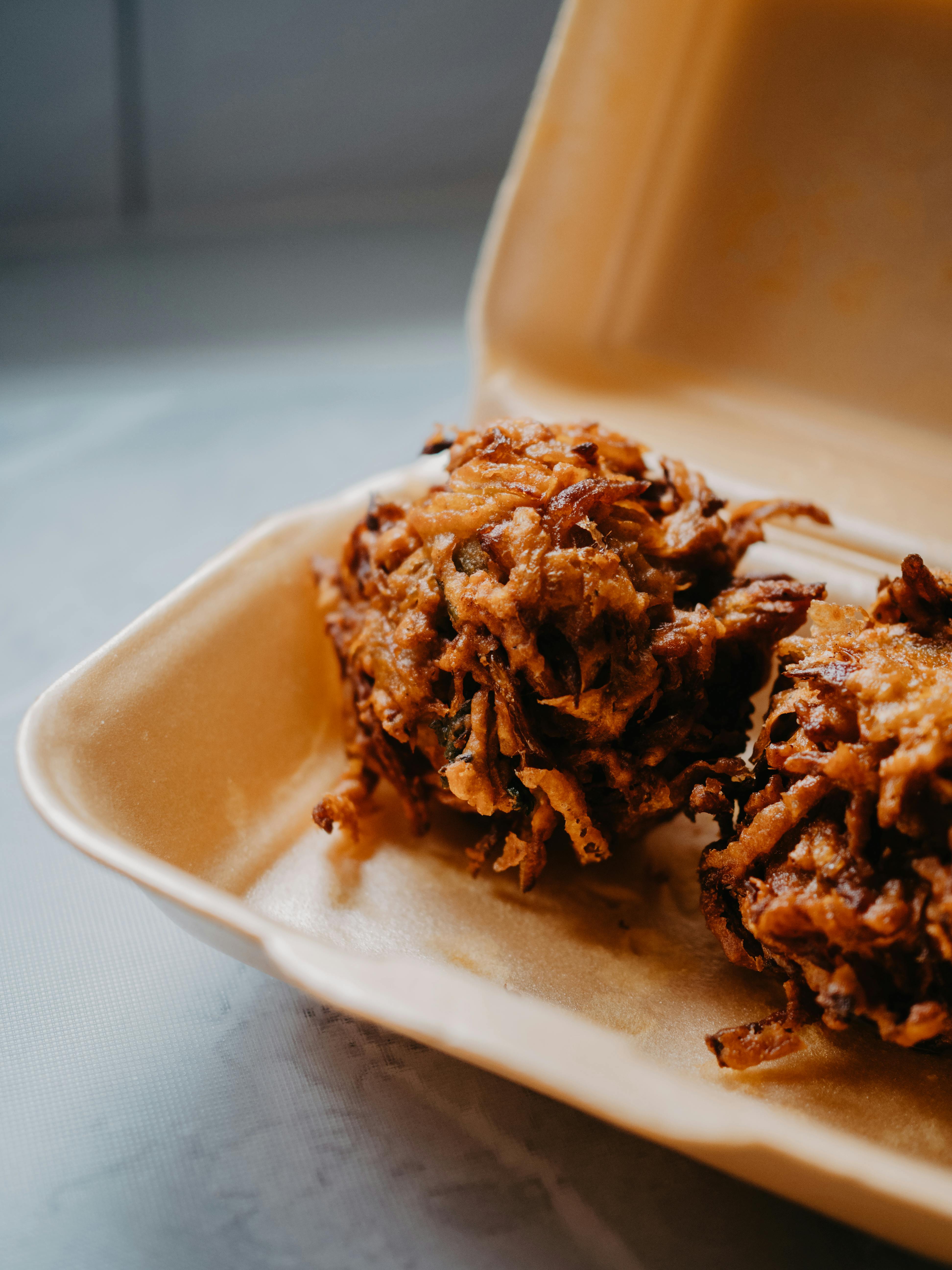
Photo: Lisa from Pexels / Pexels
The diets react (see scores below)
Common Ingredients
- onion
- chickpea flour
- cumin seeds
- ajwain
- green chilies
- cilantro
- baking soda
- turmeric
Specific recipes may vary.
Incompatible with 6 of 11 diets
Diet Ratings
Onion bhaji is fundamentally incompatible with keto due to two high-carb ingredients working in combination. Chickpea flour (besan) is the primary batter ingredient and is extremely high in carbs — roughly 44g net carbs per 100g — making it a grain-like flour that has no place in a standard keto diet. Onions, while usable in small amounts on keto, are used in significant quantities here and contribute additional net carbs (around 7-8g per 100g). A typical serving of 3-4 bhajis could easily deliver 20-30g net carbs, potentially consuming an entire day's keto carb budget in one snack. The spices (cumin, ajwain, turmeric, chilies, cilantro) are keto-friendly, but they cannot redeem the dish given the flour base. Additionally, bhajis are deep-fried, which adds fat, but the carb load from chickpea flour makes this a clear avoid.
Onion bhaji as listed contains exclusively plant-based whole food ingredients: onion, chickpea flour (besan), cumin seeds, ajwain (carom seeds), green chilies, cilantro, baking soda, and turmeric. There are no animal products or animal-derived ingredients present. Chickpea flour serves as the binding agent and protein source, replacing any need for eggs. The dish is traditionally fried in oil, which is plant-based. All spices and aromatics are fully vegan. This is a strong whole-food-leaning preparation with minimal processing, earning a high score within the approve range.
Onion Bhaji is not paleo-compatible. The primary structural ingredient — chickpea flour — is derived from chickpeas, a legume that is explicitly excluded from the paleo diet due to its lectin and phytate content. Legumes are among the most clearly disqualified food groups in all mainstream paleo frameworks. Baking soda is a processed/refined additive not available to Paleolithic humans. The remaining ingredients (onion, cumin seeds, ajwain, green chilies, cilantro, turmeric) are all paleo-approved, but they cannot redeem a dish whose foundation is a non-paleo ingredient.
Onion bhaji contains several Mediterranean-friendly ingredients: onions, chickpea flour (a legume-based flour), and anti-inflammatory spices. However, the traditional preparation involves deep-frying in oil, which is the primary concern. If deep-fried in a non-olive oil (e.g., vegetable or seed oils), it contradicts Mediterranean fat principles. Even if fried in olive oil, the high fat absorption from deep-frying makes this a calorie-dense, occasional food rather than a staple. The chickpea flour base is a positive element — legumes are core to the Mediterranean diet — and the spices and vegetables are wholesome. As a snack, it could be acceptable if baked or pan-fried in olive oil, but the typical deep-fried version warrants moderation.
Some Mediterranean diet interpreters might view chickpea-flour-based preparations more favorably as a legume-forward snack, especially if prepared with olive oil rather than deep-fried. The dish's plant-based profile (onion, legume flour, herbs, spices) aligns well with Mediterranean principles, and some modern practitioners would score it higher if cooking method is modified.
Onion Bhaji is entirely plant-derived with zero animal products. Every single ingredient — onion, chickpea flour, cumin seeds, ajwain, green chilies, cilantro, baking soda, and turmeric — is excluded on a carnivore diet. Chickpea flour is a legume-based product, onions are vegetables, and the remaining ingredients are plant-based spices and herbs. There is no animal protein, animal fat, or any animal-derived component whatsoever. This dish is fundamentally incompatible with carnivore eating principles.
Onion Bhaji contains chickpea flour, which is made from ground chickpeas — a legume. Legumes are explicitly excluded on the Whole30 program. There are no exceptions for chickpea-derived flours or products. This single ingredient makes the dish non-compliant regardless of all other ingredients being acceptable.
Onion Bhaji contains two significant high-FODMAP ingredients that make it unsuitable during the elimination phase. Onions are one of the highest-fructan foods tested by Monash University and are a primary trigger for IBS symptoms — there is no safe serving size of onion during elimination. Chickpea flour (besan) is made from ground chickpeas, which are high in GOS (galacto-oligosaccharides), and chickpea flour retains these FODMAPs in concentrated form. Even a small bhaji would contain meaningful amounts of both fructans (from onion) and GOS (from chickpea flour), making this dish firmly in the avoid category. The remaining ingredients — cumin seeds, ajwain, green chilies, cilantro, turmeric, and baking soda — are all low-FODMAP and pose no concern, but they cannot offset the two major high-FODMAP components.
Onion bhaji contains several DASH-friendly ingredients — onions, chickpea flour (a legume-based flour rich in fiber and plant protein), and anti-inflammatory spices. However, the critical concern is preparation method: onion bhaji is almost universally deep-fried, which significantly increases total fat content and caloric density. The deep-frying oil (commonly vegetable oil) adds substantial fat, and depending on oil reuse or type, may introduce concerns about oxidized fats. The base ingredients themselves are DASH-compatible — chickpea flour provides fiber, potassium, and plant protein; onions provide flavonoids and potassium; spices like turmeric and cumin are encouraged. Sodium content from baking soda is relatively modest. The primary DASH concern is the deep-frying method rather than the ingredients themselves. A baked or air-fried version would score considerably higher (7-8). As commonly consumed (deep-fried street food or restaurant snack), this warrants caution due to high fat load and caloric density, though it lacks the high sodium, saturated fat from animal sources, or added sugar that would push it into 'avoid' territory.
NIH DASH guidelines do not specifically address fried snacks from legume flours, creating interpretive room. Some DASH-oriented dietitians note that if prepared with heart-healthy vegetable oils (not tropical oils) and consumed in small portions, the legume base and vegetable content may make this acceptable within a balanced DASH pattern — particularly compared to processed snack alternatives.
Onion bhaji presents a mixed Zone profile. The ingredient list itself is not terrible — onions are a moderately favorable carb, chickpea flour (besan) is a legume-based flour with more fiber and protein than refined wheat flour, and the spices (cumin, turmeric, cilantro) are anti-inflammatory polyphenol sources that Sears would actually applaud. However, the critical missing information is the cooking method: traditional onion bhaji is deep-fried, typically in vegetable/seed oils high in omega-6 fatty acids, which directly conflicts with Zone's anti-inflammatory fat emphasis. The frying adds substantial unfavorable fat and caloric density, making the 40/30/30 ratio very hard to achieve. The dish also has no lean protein component, so it would need to be paired with a protein source to form any kind of Zone block. As a standalone snack, it's carb-and-fat heavy with minimal protein — the opposite of a Zone-balanced snack. Chickpea flour does contribute some protein (~5-6g per 30g), which softens the critique slightly. The glycemic load is moderate given the fiber in chickpea flour and onions, but portion control is essential.
If the bhaji is pan-fried or air-fried using a small amount of olive oil or avocado oil, the fat profile improves considerably. Some Zone practitioners would view chickpea flour favorably as a legume-based carb with meaningful protein content, making this more zone-compatible than a wheat-flour-based fritter. Dr. Sears' later polyphenol-focused work would highlight the turmeric and cumin as active anti-inflammatory components, lending partial approval in context.
Onion bhaji in its core ingredient form is built on a genuinely anti-inflammatory foundation. Onions are rich in quercetin and other flavonoids with well-documented anti-inflammatory properties. Chickpea flour is a legume-based, high-fiber, low-glycemic alternative to refined wheat flour — strongly aligned with anti-inflammatory principles. Turmeric (curcumin), cumin seeds, ajwain (thymol-rich), green chilies (capsaicin), and cilantro are all emphasized spices and herbs in anti-inflammatory frameworks. The dish as described contains no added sugar, no refined grains, and no processed ingredients. However, the critical unknown is the cooking method: onion bhaji is almost universally deep-fried, and the choice of frying oil is pivotal. If fried in refined sunflower, corn, or vegetable oil — the most common commercial choices — the dish gains a significant pro-inflammatory load from high omega-6 content and oxidation at frying temperatures. If prepared with a minimal amount of extra virgin olive oil or shallow-fried/air-fried, the profile improves substantially. Evaluating the ingredient list as given (no oil specified), the base is caution-leaning positive rather than avoid, but the realistic preparation context pulls it back to a cautious 'caution' rating.
Some anti-inflammatory practitioners would rate this more favorably by focusing on the ingredients as listed, noting that chickpea flour and the spice profile are exemplary. Others following strict anti-inflammatory or AIP protocols would rate this lower, flagging the near-certain use of high-omega-6 seed oils in deep-frying as a meaningful inflammatory concern that overrides the beneficial base ingredients.
Onion bhaji in its traditional form is a deep-fried snack. The ingredients listed — chickpea flour, onion, spices — are not inherently problematic, but the dish is defined by deep frying, which makes it a high-fat, greasy preparation that directly worsens the core GLP-1 side effects: nausea, bloating, reflux, and delayed gastric emptying. The green chilies add a further risk of aggravating reflux and nausea in GLP-1 patients who are already sensitive. The dish offers minimal protein (no primary protein source), low fiber relative to calorie load, and no meaningful nutrient density per calorie when fried. As a snack it delivers empty frying calories that a GLP-1 patient cannot afford given their reduced appetite. The chickpea flour base would score reasonably in a non-fried preparation, but as traditionally served this dish fails on the two most critical axes: fat content and GI tolerability.
*See how scores were generated at our methodology page.
Nutritional profile
Six traits that cut across every diet.
Fiber & Plants
How much whole-plant food and fiber it delivers.
Healthy Fats
The quality of its fats (unsaturated, omega-3).
Whole / Unprocessed
How close it is to its natural, unprocessed form.
Gut Gentle
How easy it is on digestion (low FODMAP, few irritants).
Low Glycemic
How little it spikes your blood sugar.
Protein Density
How much protein it packs per calorie.
Controversy Index
Higher controversy = more disagreement between diets.
Diet-Specific Tips
 Vegan — 9/10
View tips
- All eight listed ingredients are plant-derived
- Chickpea flour (besan) acts as a vegan binder — no eggs required
- No dairy, no animal-derived additives
- Whole spices and fresh aromatics elevate nutritional profile
- Traditionally deep-fried, but oil type is plant-based by default
- No cross-contamination concern raised by the ingredient list itself
 Mediterranean — 5/10
View tips
- Chickpea flour is a legume-based ingredient, strongly aligned with Mediterranean principles
- Deep-frying significantly increases unhealthy fat content and caloric density
- Onions, herbs, and anti-inflammatory spices (turmeric, cumin) are Mediterranean-positive
- No red meat, dairy, or added sugars present
- Cooking fat type and method are unspecified but critical to the final assessment
- Non-traditional to Mediterranean cuisine but ingredients are largely compatible
 DASH — 4/10
View tips
- Deep-frying adds significant fat and calories — primary DASH concern
- Chickpea flour is a DASH-friendly legume source with fiber, plant protein, and potassium
- Onions and spices are DASH-compatible vegetables and flavorings
- No added salt listed, but baking soda contributes modest sodium
- No saturated fat from animal sources or added sugars
- Baked or air-fried preparation would significantly improve DASH compatibility
- Portion control critical — commonly consumed as a snack in multiple pieces
 Zone — 4/10
View tips
- Likely deep-fried in omega-6-heavy vegetable oils — conflicts with Zone's anti-inflammatory fat guidelines
- No lean protein source — fails Zone's requirement for balanced macros at every meal/snack
- Chickpea flour provides moderate protein and fiber, giving a better carb profile than refined flour
- Onions are a moderately favorable Zone carbohydrate
- Spices (turmeric, cumin) are polyphenol-rich and align with Sears' anti-inflammatory focus
- Carb-and-fat heavy macro ratio with minimal protein — requires pairing with lean protein to approach Zone balance
- Portion size critical — even with favorable ingredients, caloric density from frying makes block balancing difficult
 Anti-Inflammatory — 6/10
View tips
- Turmeric (curcumin) is a top-tier anti-inflammatory spice
- Chickpea flour provides legume-based protein, fiber, and low glycemic index vs. refined flour
- Onions are high in quercetin and anti-inflammatory flavonoids
- Cumin, ajwain, green chilies, and cilantro all carry anti-inflammatory polyphenols and phytochemicals
- No refined carbohydrates, added sugar, or processed additives in the ingredient list
- Deep-frying in high-omega-6 seed oils (sunflower, vegetable) is the dominant preparation method and the primary inflammatory risk
- Oil type and frying method are absent from the ingredient list but critically determine the final inflammatory profile