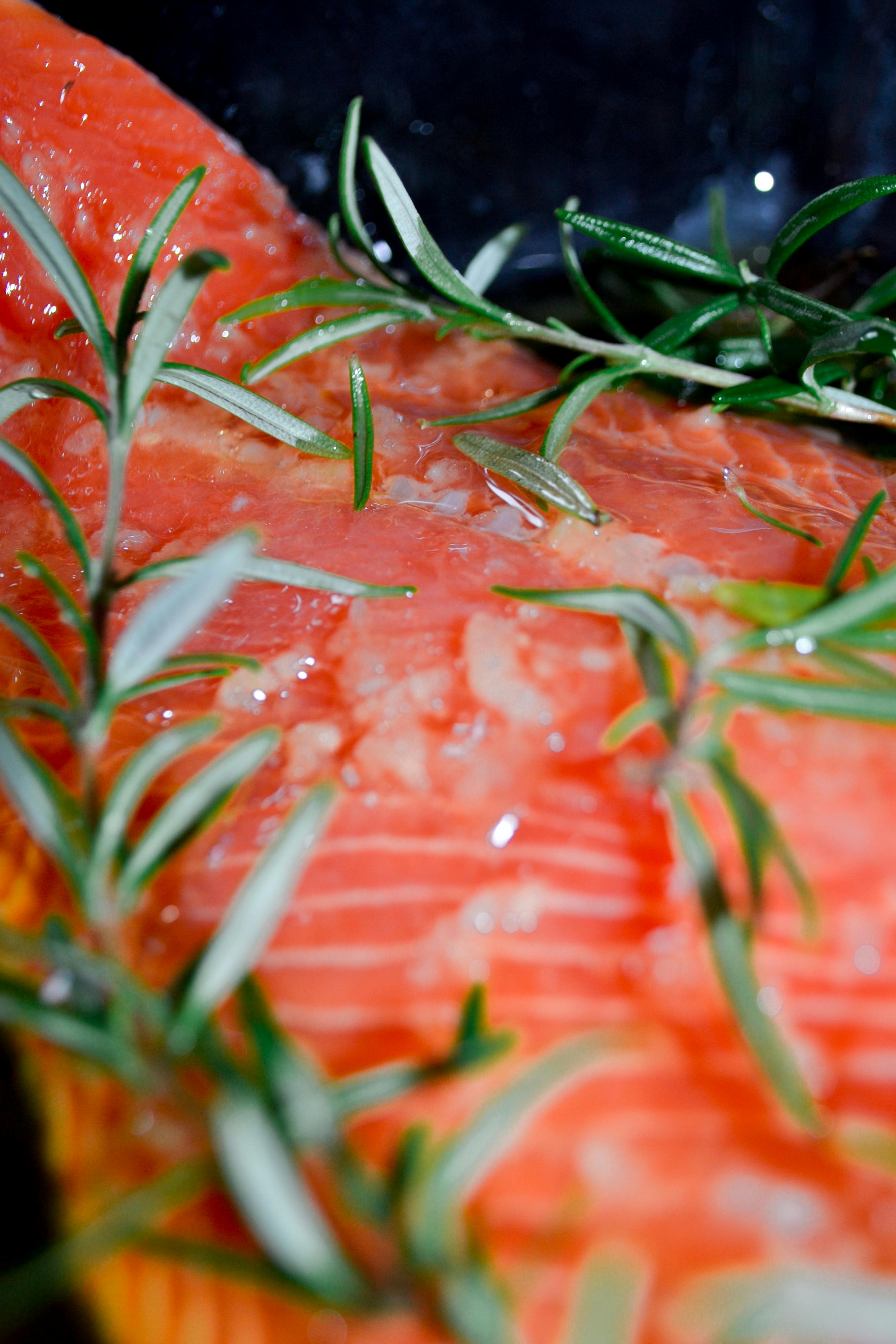
Photo: Andrea Kováčová / Pexels
American
Pacific Northwest Cedar Plank Salmon
The diets react (see scores below)
Common Ingredients
- salmon fillet
- cedar plank
- brown sugar
- Dijon mustard
- lemon
- dill
- olive oil
- black pepper
Specific recipes may vary.
Incompatible with 3 of 11 diets
Diet Ratings
Pacific Northwest Cedar Plank Salmon is built on a keto-excellent protein (salmon is rich in omega-3 fatty acids and high-quality fat), but the inclusion of brown sugar as a glaze ingredient is a direct keto violation. Brown sugar is pure sucrose with no fiber offset, adding meaningful net carbs and spiking insulin. The remaining ingredients — Dijon mustard (trace carbs), lemon (small amount, minimal carbs if used as a squeeze), dill, olive oil, and black pepper — are all keto-compatible. The cedar plank itself is a cooking vessel, not consumed. The dish is rescuable with a simple substitution: replace brown sugar with a keto-approved sweetener (erythritol, monk fruit) or omit entirely. As prepared per the listed recipe, however, the brown sugar glaze disqualifies it from a clean approve rating. Portion size of the glaze matters — a light brush versus a heavy coat significantly affects net carb load.
Pacific Northwest Cedar Plank Salmon contains salmon as its primary protein, which is a fish and therefore an animal product. This is an unambiguous violation of vegan dietary principles. All remaining ingredients (cedar plank, brown sugar, Dijon mustard, lemon, dill, olive oil, black pepper) are plant-based, but the presence of salmon alone is sufficient to categorically disqualify this dish from any vegan diet.
The salmon itself is an excellent paleo protein, and olive oil, lemon, dill, and black pepper are all paleo-approved. However, brown sugar is a refined sugar and is clearly non-paleo. Dijon mustard is a gray area — commercial versions typically contain white wine, vinegar, and sometimes additives, making it borderline. The cedar plank is a cooking vessel, not an ingredient, and poses no concern. The brown sugar is the primary disqualifying ingredient; without it this dish would score much higher. As written, the dish contains a clear paleo violation that could easily be substituted (e.g., raw honey or omitted entirely), landing it firmly in caution territory.
Cedar plank salmon is an excellent Mediterranean diet choice at its core. Salmon is a fatty fish rich in omega-3s, and the Mediterranean diet strongly encourages fish and seafood 2-3 times weekly. The base ingredients — salmon, olive oil, lemon, dill, and black pepper — are fully aligned with Mediterranean principles. The primary concern is the brown sugar glaze, which introduces added sugar. However, the quantity used as a glaze is small, and the dish's nutritional profile remains dominated by the health-promoting salmon and olive oil. The Dijon mustard adds negligible concern. This dish scores well despite being a Pacific Northwest American preparation rather than a traditional Mediterranean dish.
Some stricter Mediterranean diet interpretations would flag any added sugar as contrary to principles, potentially lowering the score to a high 'caution' range. However, most practitioners and researchers recognize that small amounts of added sugar used as a flavor accent in an otherwise exemplary fish preparation do not meaningfully undermine the diet's benefits.
While salmon itself is an approved carnivore food, this dish is disqualified by multiple non-carnivore ingredients. Brown sugar is a processed plant-derived sweetener explicitly excluded from carnivore. Dijon mustard is a plant-based condiment (mustard seeds, vinegar, plant additives). Lemon is a fruit. Dill is an herb/plant. Olive oil is a plant-derived oil. Black pepper is a plant spice. The cedar plank, while not consumed, imparts plant compounds into the fish during cooking. Only the salmon fillet itself would be carnivore-approved — the entire marinade and preparation method are incompatible with carnivore principles.
This dish contains brown sugar, which is an added sugar and explicitly excluded on the Whole30 program. All other ingredients — salmon fillet, cedar plank (cooking method), Dijon mustard (typically compliant, though label-reading advised), lemon, dill, olive oil, and black pepper — are Whole30-compatible. However, the presence of brown sugar alone disqualifies the dish as written. To make this compliant, simply omit the brown sugar; the remaining ingredients form a perfectly acceptable Whole30 preparation.
Pacific Northwest Cedar Plank Salmon is largely low-FODMAP friendly. Salmon is a plain protein with no FODMAPs. Olive oil, black pepper, lemon juice/zest, and fresh dill are all low-FODMAP. Dijon mustard is generally low-FODMAP at standard condiment servings (Monash rates plain mustard as low-FODMAP). The main concern is brown sugar: while sugar itself (sucrose) is low-FODMAP, the quantity used matters — a typical glaze uses a moderate amount, which should be fine as sucrose is not a FODMAP. Cedar plank is a cooking vessel, not consumed. No high-FODMAP ingredients like garlic, onion, or wheat are present in this recipe. At standard serving sizes and typical glaze quantities, this dish should be safe during the elimination phase.
Some commercial Dijon mustards contain small amounts of garlic or onion powder, which could introduce fructans. Clinical FODMAP practitioners often advise checking mustard ingredient labels carefully during elimination, as formulations vary by brand.
Pacific Northwest Cedar Plank Salmon is an excellent DASH diet choice. Salmon is explicitly recommended by NIH/NHLBI DASH guidelines as a lean protein rich in omega-3 fatty acids, which support cardiovascular health. The preparation uses olive oil (a DASH-approved vegetable oil), lemon, dill, and black pepper — all low-sodium, nutrient-supportive ingredients. The small amount of brown sugar in a glaze is a minor concern but is unlikely to contribute significant added sugar in a typical serving. Dijon mustard adds minimal sodium in the quantities typically used for a glaze. The dish is naturally low in saturated fat, provides high-quality protein, and contains heart-healthy unsaturated fats. This aligns strongly with DASH's emphasis on fish, lean proteins, and healthy fats while avoiding the high sodium, saturated fat, and processed ingredients that DASH limits.
Pacific Northwest Cedar Plank Salmon is a strong Zone Diet main course. Salmon is one of Dr. Sears' most recommended proteins — it's lean enough to fit Zone protein blocks while delivering exceptional omega-3 fatty acids (EPA and DHA), which are the cornerstone of his anti-inflammatory protocol. Olive oil adds ideal monounsaturated fat, and dill, lemon, and black pepper are essentially zero-block flavor enhancers. Dijon mustard contributes negligible macros. The one concern is brown sugar: even a modest glaze introduces a high-glycemic carbohydrate that is unfavorable in Zone terminology. However, the amount used in a cedar plank preparation is typically small (1-2 teaspoons distributed across a fillet), contributing only a few grams of sugar per serving — manageable within a Zone block count if accounted for. The dish as a whole is protein-forward, fat-balanced with excellent fat quality, and the carbohydrate load is minimal and adjustable. Paired with low-glycemic vegetables, this is a near-ideal Zone main.
Some Zone practitioners applying strict 'favorable carb only' rules would flag brown sugar as an unfavorable ingredient and lower the score to the caution range (6-7). Dr. Sears' earlier writings in Enter the Zone are quite firm about avoiding added sugars, while his later work focuses more on the overall anti-inflammatory profile of a meal — in which case salmon's omega-3 content arguably compensates. The verdict shifts based on which phase of Sears' methodology is applied.
Pacific Northwest Cedar Plank Salmon is an excellent anti-inflammatory dish anchored by its star ingredient: salmon, one of the richest dietary sources of long-chain omega-3 fatty acids (EPA and DHA), which directly suppress pro-inflammatory eicosanoids and reduce biomarkers like CRP and IL-6. Olive oil adds oleocanthal, a polyphenol with COX-inhibiting properties similar to ibuprofen. Dill contributes flavonoids and antioxidant compounds. Lemon provides vitamin C and limonene, both with antioxidant activity. Black pepper contains piperine, which has demonstrated anti-inflammatory effects and enhances bioavailability of other phytonutrients. Dijon mustard is largely neutral to mildly beneficial (contains turmeric in some varieties, glucosinolates from mustard seed). The only ingredient warranting attention is brown sugar, which is a refined added sugar and pro-inflammatory in excess; however, the quantity used in a glaze across a full fillet is modest per serving. Cedar plank smoking also imparts minimal risk at typical cooking temperatures. Overall, the omega-3 density of salmon combined with anti-inflammatory supporting ingredients makes this dish a strong example of anti-inflammatory eating.
Cedar plank salmon is an excellent GLP-1-friendly main dish. Salmon delivers 22-25g of high-quality protein per 4oz serving, directly supporting the priority protein target. The cooking method — slow, indirect cedar plank heat — produces a tender, moist fillet that is easy to digest, a meaningful advantage given GLP-1-slowed gastric emptying. Olive oil and salmon's own fat are predominantly unsaturated and omega-3 rich (EPA/DHA), which are specifically recommended for GLP-1 patients over saturated fats. Lemon and dill add flavor with negligible caloric cost. The one flag is the brown sugar in the glaze: in typical recipe quantities (1-2 teaspoons spread across a fillet), the added sugar is modest and unlikely to be clinically significant, but it represents an empty-calorie ingredient that could be reduced or substituted without loss of function. Dijon mustard adds negligible fat and some flavor complexity. The dish scores high on nutrient density per calorie, protein density, digestibility, and fat quality — the core GLP-1 approval criteria. Portion sensitivity is low: a standard 4-5oz serving delivers full protein benefit without requiring large volume.
Some GLP-1 dietitians flag salmon's moderate fat content (5-8g per 4oz) as a potential contributor to nausea or delayed gastric emptying in patients who are fat-sensitive on medication, particularly in the early titration phase — they may recommend starting with leaner white fish (cod, tilapia) before reintroducing fatty fish. The majority view holds that omega-3 fats from salmon are net beneficial and well-tolerated by most GLP-1 patients.
*See how scores were generated at our methodology page.
Nutritional profile
Six traits that cut across every diet.
Fiber & Plants
How much whole-plant food and fiber it delivers.
Healthy Fats
The quality of its fats (unsaturated, omega-3).
Whole / Unprocessed
How close it is to its natural, unprocessed form.
Gut Gentle
How easy it is on digestion (low FODMAP, few irritants).
Low Glycemic
How little it spikes your blood sugar.
Protein Density
How much protein it packs per calorie.
Controversy Index
Higher controversy = more disagreement between diets.
Diet-Specific Tips
 Keto — 5/10
View tips
- Brown sugar adds direct net carbs and sugar — incompatible with strict keto as written
- Salmon is an ideal keto protein: high-fat, zero-carb, rich in omega-3s
- Olive oil supports the high-fat macro requirement
- Dijon mustard contains trace carbs but is generally keto-acceptable in small amounts
- Lemon juice contributes minimal net carbs if used sparingly
- Dish is easily modified to be fully keto-compliant by substituting or omitting brown sugar
 Paleo — 5/10
View tips
- Salmon is a top-tier paleo protein — wild-caught fish is universally approved
- Brown sugar is a refined sugar and a clear paleo violation
- Olive oil, lemon, dill, and black pepper are all paleo-approved
- Dijon mustard is borderline — commercial versions may contain non-paleo additives
- Cedar plank is a cooking method, not an ingredient — no impact on rating
- Dish is easily made paleo-compliant by replacing brown sugar with raw honey or omitting it
 Mediterranean — 8/10
View tips
- Salmon is an omega-3-rich fatty fish, a Mediterranean diet cornerstone
- Olive oil as the fat source aligns perfectly with Mediterranean principles
- Lemon, dill, and black pepper are classic Mediterranean-compatible flavors
- Brown sugar adds a small amount of added sugar, the one negative element
- Overall nutritional profile is strongly positive despite non-Mediterranean culinary tradition
- Whole, minimally processed ingredients throughout
 Low-FODMAP — 8/10
View tips
- Salmon is a FODMAP-free protein — fully safe
- Olive oil and lemon are low-FODMAP
- Fresh dill is low-FODMAP at normal culinary amounts
- Brown sugar (sucrose) is not a FODMAP — safe in glaze quantities
- Dijon mustard is low-FODMAP at standard serving but check label for garlic/onion additives
- No onion, garlic, wheat, or other high-FODMAP ingredients present
- Cedar plank is a cooking tool, not an ingredient
 DASH — 8/10
View tips
- Salmon is a DASH-recommended lean protein rich in omega-3 fatty acids
- Olive oil is a DASH-approved healthy fat source
- Preparation is low in sodium — no added salt, minimal sodium from Dijon mustard
- Small amount of brown sugar is a minor caution but negligible in typical glaze portions
- Lemon, dill, and black pepper are DASH-compatible flavor enhancers with no sodium concern
- High in potassium and magnesium, supporting DASH nutrient targets
- Low in saturated fat, aligning with DASH cardiovascular goals
 Zone — 8/10
View tips
- Salmon is a top-tier Zone protein with exceptional omega-3 (EPA/DHA) content, central to Sears' anti-inflammatory protocol
- Olive oil provides ideal monounsaturated fat — a model Zone fat block
- Brown sugar is an unfavorable high-glycemic carbohydrate in Zone terminology, though quantity per serving is small
- Dijon mustard, lemon, dill, and black pepper are essentially macro-neutral flavor components
- Dish is naturally protein-forward and easy to portion into Zone blocks
- No processed ingredients, seed oils, or trans fats — aligns well with Zone's anti-inflammatory emphasis
- Pairs naturally with non-starchy vegetables to complete a balanced Zone meal
 Anti-Inflammatory — 9/10
View tips
- Salmon is one of the highest dietary sources of EPA and DHA omega-3 fatty acids, directly reducing inflammatory signaling
- Extra virgin olive oil provides oleocanthal, a natural COX-1/COX-2 inhibitor with established anti-inflammatory research
- Dill and black pepper contribute flavonoids, antioxidants, and piperine with anti-inflammatory properties
- Lemon adds vitamin C and antioxidant limonene
- Brown sugar is the sole pro-inflammatory ingredient, but quantity per serving in a glaze is minimal
- Cedar plank cooking method is low-risk and imparts no inflammatory compounds at typical grilling temperatures
 GLP-1 Friendly — 8/10
View tips
- High-quality complete protein: ~22-25g per 4oz serving
- Rich in omega-3 fatty acids (EPA/DHA) — specifically recommended fat type for GLP-1 patients
- Cedar plank cooking produces tender, moist texture that is easy to digest
- Olive oil contributes unsaturated fat — preferred fat category
- Brown sugar in glaze is a minor concern — small quantity limits clinical impact but represents avoidable empty calories
- Lemon and dill add micronutrients and flavor with negligible caloric cost
- No fiber contribution — should be paired with a high-fiber side (vegetables, legumes)
- Moderate fat content may require portion awareness for fat-sensitive patients early in titration