Italian
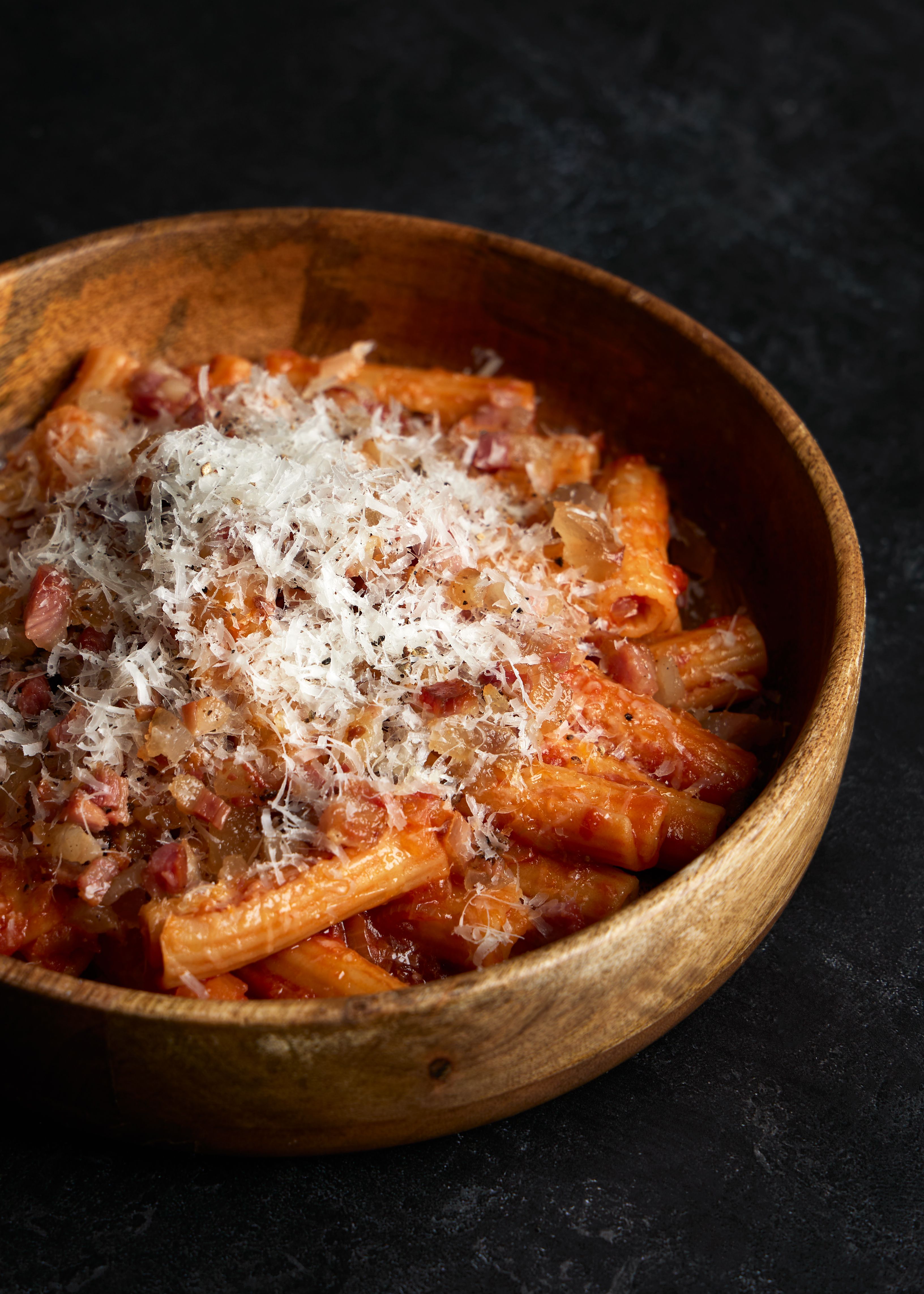
Pasta e Fagioli
The diets react (see scores below)
Common Ingredients
- cannellini beans
- ditalini pasta
- tomatoes
- carrots
- celery
- onion
- garlic
- pancetta
Specific recipes may vary.
Incompatible with 6 of 11 diets
Diet Ratings
Pasta e Fagioli is fundamentally incompatible with a ketogenic diet. The two primary ingredients — ditalini pasta and cannellini beans — are both extremely high in net carbs. A single serving of pasta easily contributes 30-40g of net carbs, while a half-cup of cannellini beans adds another 18-20g. Together, a standard bowl far exceeds the entire daily net carb budget of 20-50g for ketosis. Carrots and onions also contribute additional carbs, though minor by comparison. The dish has no meaningful fat content to offset these macros, and the pancetta's fat contribution is negligible relative to the carb load. There is no realistic portion size that makes this dish keto-compatible.
This Pasta e Fagioli contains pancetta, a cured Italian pork product, which is a clear animal-derived ingredient. Pancetta is a form of meat and is unambiguously excluded from a vegan diet. While the base of the dish — cannellini beans, pasta, tomatoes, carrots, celery, onion, and garlic — is entirely plant-based and would otherwise be an excellent whole-food vegan soup, the inclusion of pancetta disqualifies it. A vegan version of Pasta e Fagioli is easily achievable by simply omitting the pancetta or substituting it with smoked paprika or olive oil for a similar depth of flavor.
Pasta e Fagioli is fundamentally incompatible with the paleo diet, containing two major non-paleo food groups in its very name and core ingredients. Cannellini beans are legumes, explicitly excluded from paleo due to their lectin and phytate content. Ditalini pasta is a wheat-based grain product, one of the most clearly prohibited foods in all paleo frameworks. Pancetta, while pork-derived, is a cured processed meat with added salt and preservatives, also excluded. The vegetables (tomatoes, carrots, celery, onion, garlic) are paleo-compliant, but they are incidental to a dish whose identity and substance depend entirely on two non-paleo staples. There is no meaningful paleo adaptation of this dish without replacing the two ingredients that define it.
Pasta e Fagioli is a deeply traditional Italian dish with a strong Mediterranean foundation: cannellini beans provide excellent plant-based protein and fiber, and the vegetable base (tomatoes, carrots, celery, onion, garlic) is exemplary. However, two ingredients temper the rating. First, ditalini pasta is a refined white grain, which modern Mediterranean diet guidelines discourage in favor of whole grain alternatives. Second, pancetta is a cured pork product — effectively processed red meat — which the Mediterranean diet limits to occasional use. In this dish pancetta typically serves as a flavoring in small quantities rather than a primary protein, which mitigates the concern somewhat. The dominant nutritional profile remains legume- and vegetable-forward, making this a broadly acceptable dish when pancetta is used sparingly and whole grain pasta is substituted where possible.
Traditional southern Italian and Roman culinary practice treats Pasta e Fagioli as a quintessential cucina povera staple — a peasant dish built on legumes and vegetables where a small amount of cured pork is standard flavor background, not a health concern. Some Mediterranean diet authorities (e.g., Oldways) would approve this dish as culturally authentic, arguing that the small pancetta quantity is negligible and that swapping to whole grain pasta is an optional modern refinement rather than a strict requirement.
Pasta e Fagioli is almost entirely plant-based and directly contradicts every principle of the carnivore diet. The dish is dominated by cannellini beans (legumes — explicitly excluded), ditalini pasta (grain-based — explicitly excluded), and a full array of plant vegetables including tomatoes, carrots, celery, onion, and garlic. The only animal-derived ingredient is pancetta, which constitutes a minor flavoring component rather than the primary food. Legumes are among the most problematic foods from a carnivore perspective due to their antinutrients (lectins, phytates), and grains are equally excluded. This dish has virtually no redeeming carnivore-compatible qualities beyond a small amount of cured pork.
Pasta e Fagioli contains two clearly excluded ingredient categories: (1) ditalini pasta is a grain-based food (wheat), which is explicitly prohibited on Whole30, and (2) cannellini beans are legumes, which are also explicitly excluded from the program. Even if both offending ingredients were removed, pancetta may contain added sugar or sulfites (though sulfites are now permitted per 2024 rules, sugar is still excluded). The dish as traditionally prepared is fundamentally incompatible with Whole30 — its two defining components (pasta and beans) are both excluded.
Pasta e Fagioli contains multiple high-FODMAP ingredients that make it unsuitable during the elimination phase. Cannellini beans are high in GOS (galacto-oligosaccharides) and are high-FODMAP even at modest servings — a standard soup portion would far exceed any safe threshold. Onion and garlic are two of the most potent fructan sources in the Western diet and are high-FODMAP at any culinary quantity. Ditalini pasta is wheat-based, making it high in fructans. Celery becomes high-FODMAP above 1/4 stalk per serving. Tomatoes, carrots, and pancetta are generally low-FODMAP and not problematic. However, with four independently high-FODMAP ingredients (beans, onion, garlic, wheat pasta) present simultaneously, this dish would deliver a very high FODMAP load and is clearly incompatible with the elimination phase.
Pasta e Fagioli has a strong DASH-friendly foundation — cannellini beans provide excellent fiber, potassium, and plant-based protein; vegetables (tomatoes, carrots, celery, onion, garlic) are core DASH foods; and the dish is legume-centered, which DASH actively promotes. However, the inclusion of pancetta is a significant concern: pancetta is a cured pork product high in both sodium and saturated fat, two nutrients DASH explicitly limits. Traditional restaurant or home preparations of this soup can easily reach 800–1,200mg of sodium per serving from the pancetta, canned tomatoes, and added salt combined. The refined pasta (ditalini) is a minor negative — DASH prefers whole grains — and portion control of the pasta matters to avoid excess refined carbohydrates. Prepared without pancetta (or substituting a small amount of olive oil and herbs), this dish would score 8–9 and be a clear DASH approval. As traditionally made with pancetta, it falls into caution territory requiring modification.
NIH DASH guidelines explicitly limit cured/processed meats like pancetta due to high sodium and saturated fat content, making this a caution-level dish as traditionally prepared. Some DASH-oriented clinicians note that a small amount of pancetta used as a flavoring (rather than a primary protein) may be acceptable within an otherwise sodium-controlled daily intake, and updated interpretations suggest focusing on overall dietary pattern rather than excluding individual ingredients categorically.
Pasta e Fagioli is a nutrient-dense traditional Italian soup, but it presents Zone Diet challenges primarily due to its dual high-carbohydrate sources. Cannellini beans and ditalini pasta together create a carbohydrate-heavy profile that is difficult to balance into the 40/30/30 ratio without careful portioning. The beans do double duty as both carbohydrate and protein, which is a Zone complexity — Sears categorizes legumes as carbohydrate blocks (not protein blocks), meaning the dish's protein contribution is relatively low for its carb load. The pancetta adds saturated fat rather than preferred monounsaturated fat. On the positive side, the vegetable base (tomatoes, carrots, celery, onion, garlic) contributes favorable low-glycemic carbs and polyphenols, and beans themselves have a moderate glycemic index with significant fiber. A Zone-friendly adaptation would significantly reduce or eliminate the pasta, use beans sparingly as carb blocks, add a lean protein source (e.g., chicken or egg whites), and replace pancetta with olive oil. As served in traditional form, the pasta-plus-bean combination makes the carbohydrate balance challenging.
Some Zone practitioners, particularly those following Sears' later anti-inflammatory nutritional writings, view bean-based soups more favorably due to their high polyphenol content, fiber, and relatively low glycemic impact compared to refined carbs. In this view, a small portion of Pasta e Fagioli — especially with pasta reduced — could serve as a reasonable Zone meal if paired with additional lean protein. The soup format also naturally aids in portion control.
Pasta e Fagioli is a nutritionally dense traditional Italian soup with a mixed anti-inflammatory profile. On the positive side, cannellini beans are an excellent source of fiber, plant protein, and resistant starch — all associated with reduced inflammatory markers and a healthy gut microbiome. Tomatoes provide lycopene and other carotenoids. Aromatic vegetables (carrots, celery, onion) and garlic contribute polyphenols and organosulfur compounds with documented anti-inflammatory effects. The dish is fundamentally plant-forward and legume-based, which aligns strongly with anti-inflammatory principles. However, two ingredients temper the rating: ditalini pasta is a refined carbohydrate that contributes to glycemic load and lacks fiber, which can modestly promote inflammation at scale — though its impact is buffered significantly by the high-fiber beans in the same dish. Pancetta is a cured, processed pork product that is moderately high in saturated fat and sodium, placing it in the 'limit' category. It contributes flavor but adds a pro-inflammatory element. A whole-grain pasta substitute and omitting or minimizing pancetta would push this dish into the 'approve' range. As traditionally prepared, it sits at the better end of 'caution.'
Many Mediterranean diet and anti-inflammatory nutrition advocates (including Dr. Weil's framework) would consider Pasta e Fagioli broadly acceptable as a legume-forward, vegetable-rich dish where the pancetta is a minor flavoring agent rather than a primary ingredient — and might rate it 'approve' given its cultural and nutritional context. Stricter anti-inflammatory protocols, particularly those targeting autoimmune conditions or cardiovascular risk, would flag the refined pasta and processed pork more strongly and recommend modifications.
Pasta e Fagioli is a nutritionally solid Italian soup with meaningful protein and fiber from cannellini beans, and a high water content that supports hydration — both strong GLP-1 positives. The vegetable base (tomatoes, carrots, celery, onion, garlic) adds micronutrients and fiber with minimal caloric load. However, ditalini pasta is a refined carbohydrate with low protein density and moderate glycemic impact, diluting the overall nutrient density per calorie. The bigger concern is pancetta: a cured, fatty pork product high in saturated fat that can worsen GLP-1 side effects like nausea, bloating, and reflux. In a traditional recipe, pancetta is used in moderate amounts as a flavor base rather than a primary ingredient, which limits — but does not eliminate — the concern. The dish is portion-sensitive: a small bowl works well given the combined carbohydrate load from beans and pasta. With pancetta removed or replaced with a leaner protein, this dish would rate considerably higher.
Some GLP-1-focused dietitians would rate this more favorably, viewing the bean-pasta combination as an acceptable high-fiber, moderate-protein meal with the pancetta playing a minor role by volume. Others would flag the refined pasta and pancetta together as a reason to substitute whole-grain pasta and omit the cured meat entirely before recommending the dish to patients experiencing active GI side effects.
*See how scores were generated at our methodology page.
Nutritional profile
Six traits that cut across every diet.
Fiber & Plants
How much whole-plant food and fiber it delivers.
Healthy Fats
The quality of its fats (unsaturated, omega-3).
Whole / Unprocessed
How close it is to its natural, unprocessed form.
Gut Gentle
How easy it is on digestion (low FODMAP, few irritants).
Low Glycemic
How little it spikes your blood sugar.
Protein Density
How much protein it packs per calorie.
Controversy Index
Higher controversy = more disagreement between diets.
Diet-Specific Tips
 Mediterranean — 6/10
View tips
- Cannellini beans are an excellent plant-based protein and Mediterranean diet staple
- Rich vegetable base (tomatoes, carrots, celery, onion, garlic) is strongly aligned with Mediterranean principles
- Ditalini pasta is a refined grain; whole grain pasta would improve the dish's alignment
- Pancetta is a processed/cured red meat product, limited under Mediterranean guidelines
- Pancetta used in small quantities as flavoring rather than primary protein reduces the concern
- Dish is legume-forward overall, which is the dominant nutritional characteristic
 DASH — 5/10
View tips
- Cannellini beans are an excellent DASH food — high fiber, potassium, plant protein
- Pancetta is a cured pork product high in sodium and saturated fat, both limited on DASH
- Vegetable base (tomatoes, carrots, celery, onion, garlic) strongly aligns with DASH principles
- Ditalini is refined pasta — DASH prefers whole grain alternatives
- Total sodium per serving likely exceeds 800mg when pancetta and canned tomatoes are combined
- Omitting or minimizing pancetta and using low-sodium canned tomatoes would elevate this to an approved DASH dish
- Portion control of pasta component is important to maintain appropriate serving size
 Zone — 5/10
View tips
- Dual carb sources (pasta + beans) make 40/30/30 ratio difficult to achieve without modification
- Cannellini beans classified as carbohydrate blocks in Zone, not protein blocks, reducing effective protein contribution
- Ditalini pasta is a refined, higher-glycemic carbohydrate — classified as 'unfavorable' in Zone terminology
- Vegetable base (tomatoes, carrots, celery, onion, garlic) contributes favorable low-glycemic carbs and polyphenols
- Pancetta adds saturated fat rather than preferred monounsaturated fat
- High fiber content from beans moderates glycemic impact
- Dish is adaptable: reducing pasta and adding lean protein can bring it closer to Zone balance
 Anti-Inflammatory — 6/10
View tips
- Cannellini beans: excellent source of fiber and plant protein, associated with reduced CRP and improved gut health
- Garlic and aromatic vegetables: polyphenols and organosulfur compounds with anti-inflammatory properties
- Tomatoes: lycopene and carotenoids with antioxidant activity
- Ditalini pasta: refined carbohydrate with moderate glycemic impact; whole-grain substitution would improve profile significantly
- Pancetta: processed cured pork, moderate saturated fat and sodium content — pro-inflammatory element, though used in small quantities as flavoring
- Overall dish is legume-forward and plant-dense, which offsets the less favorable components
 GLP-1 Friendly — 6/10
View tips
- Cannellini beans provide meaningful plant protein (~7-8g per half cup) and high fiber — strong GLP-1 positives
- Pancetta is a cured fatty meat high in saturated fat, which can worsen nausea, bloating, and reflux on GLP-1 medications
- Ditalini pasta is a refined carbohydrate that reduces nutrient density per calorie and contributes to glycemic load
- High water content from broth and tomatoes supports hydration, which is critical on GLP-1s
- Portion-sensitive: the combined bean and pasta carbohydrate load can be heavy in larger servings
- Easy digestibility when well-cooked; soup format is generally gentle on a slowed GI tract
- Swapping pancetta for a lean protein and ditalini for whole-grain or legume-based pasta would significantly improve the rating