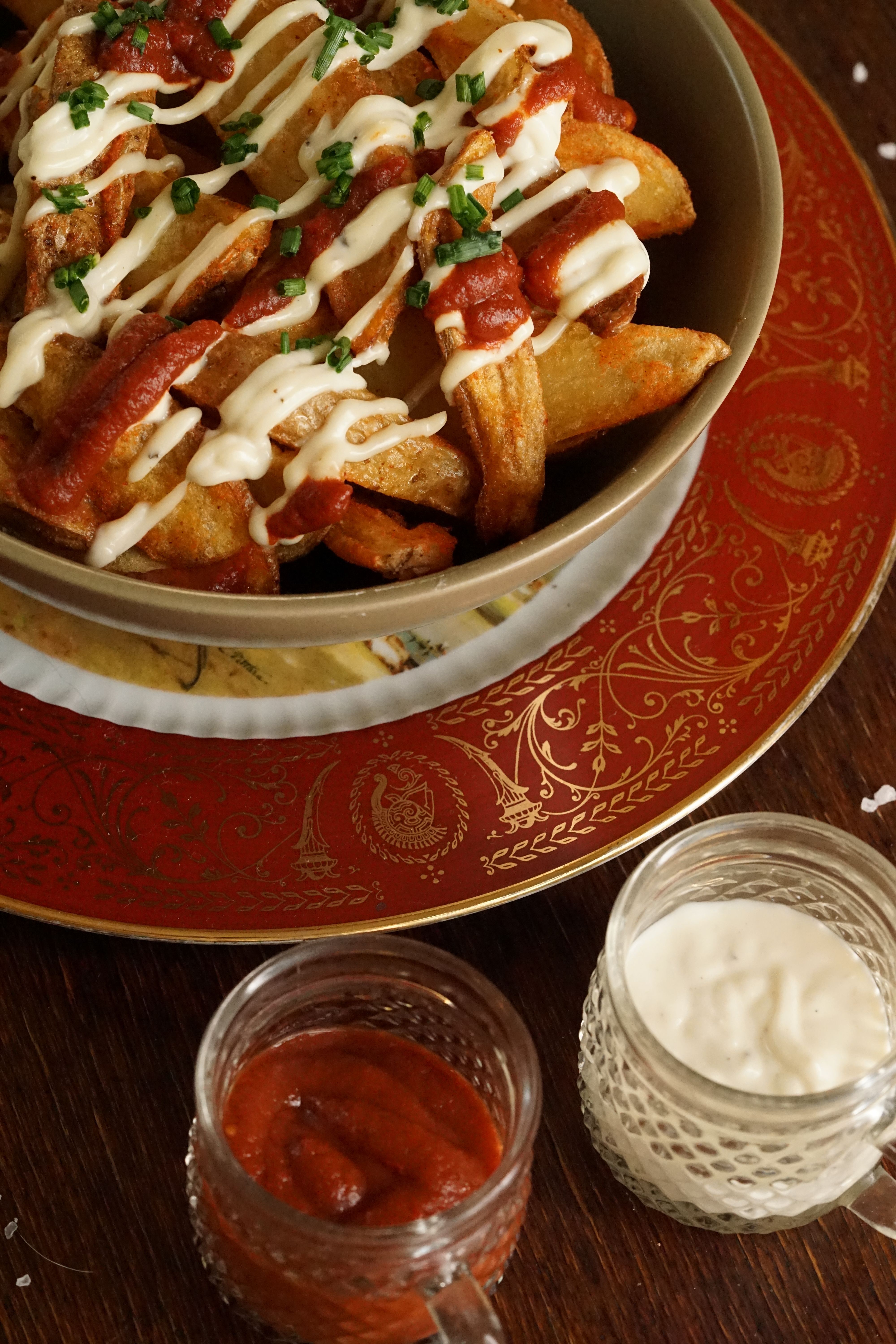
Photo: Agustin Muñiz / Pexels
Spanish
Patatas Bravas
The diets react (see scores below)
Common Ingredients
- potatoes
- tomato sauce
- smoked paprika
- garlic
- mayonnaise
- olive oil
- white wine vinegar
- cayenne
Specific recipes may vary.
Incompatible with 8 of 11 diets
Diet Ratings
Patatas Bravas is fundamentally built on potatoes, one of the highest net-carb vegetables available. A standard serving (150-200g of fried potatoes) delivers roughly 25-35g of net carbs on its own, easily blowing the entire daily keto carb budget in a single snack. Potatoes are starchy vegetables with no place in a ketogenic diet regardless of preparation method. The tomato sauce adds additional sugars and carbs. While the olive oil, mayonnaise, garlic, smoked paprika, and cayenne are all keto-friendly ingredients, they cannot redeem a dish whose primary component is categorically incompatible with ketosis. There is no portion size small enough to make this snack practical within a keto framework.
The dish as listed includes mayonnaise, which in its traditional and most common form is made with eggs — an animal product excluded from vegan diets. All other ingredients (potatoes, tomato sauce, smoked paprika, garlic, olive oil, white wine vinegar, cayenne) are fully plant-based. The mayonnaise is the sole disqualifying ingredient. Vegan versions of this dish are easily achievable by substituting with commercial egg-free mayonnaise (e.g., Hellmann's Vegan, Just Mayo), which would elevate this to an approve rating.
Patatas Bravas centers on white potatoes, which are actively debated in the paleo community — originally excluded by Cordain but increasingly accepted in modern paleo circles. However, the dish has additional concerns: commercial mayonnaise is almost universally made with soybean or canola oil (both excluded seed oils), making it a clear avoid unless homemade with compliant oil. The tomato sauce also likely contains added salt and possibly sugar or preservatives. White wine vinegar is a gray area — fermented but highly processed. Smoked paprika, garlic, cayenne, and olive oil are all paleo-approved. The combination of the debated white potato base plus the near-certain seed oil in standard mayo and processed tomato sauce tips this dish into avoid territory as typically prepared.
Mark Sisson, Whole30, and many modern paleo practitioners now accept white potatoes as a whole-food starch. If the mayo is homemade with avocado oil, the tomato sauce is made from scratch without additives, and white wine vinegar is used minimally, a strict paleo follower in the Sisson camp might rate this as caution rather than avoid.
Patatas Bravas sits in Mediterranean diet middle ground. Potatoes are a whole, plant-based food acceptable in the Mediterranean diet, and the dish uses excellent Mediterranean staples: extra virgin olive oil, garlic, tomato sauce, smoked paprika, and vinegar. However, the traditional aioli/mayonnaise component introduces either commercial processed mayo (high in refined oils and additives) or a significant amount of egg-based fat that shifts this from a straightforward vegetable dish toward a calorie-dense snack. The preparation method also typically involves frying the potatoes, which, even in olive oil, increases caloric density beyond what plant-forward guidelines emphasize. As an occasional tapas dish in the Spanish Mediterranean tradition, it is acceptable, but the mayo and frying method prevent a full approval.
Traditional Spanish Mediterranean cuisine regularly includes potato dishes cooked in olive oil as part of a varied tapas culture, and homemade aioli made with olive oil and garlic is itself a Mediterranean condiment rooted in Catalan and broader Iberian tradition. Some Mediterranean diet authorities would view this as a wholly acceptable occasional dish given its plant-based foundation and olive oil fat source.
Patatas Bravas is entirely plant-based with zero animal-derived ingredients. Potatoes are a starchy tuber, tomato sauce and garlic are vegetables, smoked paprika and cayenne are plant spices, olive oil is a plant fat, and white wine vinegar is plant-derived. Even the mayonnaise, which typically contains eggs, is listed alongside purely plant ingredients and likely vegan in this context — but even if egg-based, the dish as a whole is fundamentally incompatible with the carnivore diet. Every single core ingredient violates carnivore principles: no meat, no fish, no organ meat, no animal fat, no bone broth. This dish represents virtually everything the carnivore diet excludes.
Patatas Bravas is largely Whole30-compatible in its core components: potatoes, smoked paprika, garlic, olive oil, cayenne, and white wine vinegar are all explicitly allowed. The dish does raise a few practical concerns. First, commercial tomato sauce often contains added sugar, citric acid, or other non-compliant additives, so a homemade or carefully label-checked compliant version is required. Second, commercial mayonnaise almost universally contains soy (soybean oil, soy lecithin) or sugar, making store-bought mayo a likely avoid — a homemade version using compliant oil (avocado, olive, or light-tasting olive oil) and compliant ingredients would be needed. Additionally, Patatas Bravas is a classic fried potato snack dish, and Whole30 cautions against recreating comfort/junk food eating patterns, though fried potatoes are not explicitly on the banned 'junk food recreation' list (unlike chips, fries, or tots — wait, actually Whole30 does list french fries and tots as excluded under the SWYPO rule). Patatas Bravas are cubed/chunked fried or roasted potatoes, which sits in a gray area versus french fries. The spirit of the program may be tested here.
Melissa Urban and official Whole30 guidelines explicitly list 'french fries' and 'tots' as excluded under the SWYPO/junk food recreation rule; some practitioners argue that cubed fried potatoes in a classic dish like Patatas Bravas fall into this same category, while others maintain that the prohibition targets fry-shaped preparations rather than roasted or chunked potatoes used as a savory side in a traditional recipe context.
Patatas Bravas as traditionally prepared contains two significant high-FODMAP ingredients: garlic (a major fructan source, high-FODMAP at any meaningful amount) and tomato sauce (concentrated tomato products become high-FODMAP in typical serving quantities due to excess fructose). Garlic is one of the clearest 'avoid' ingredients in the Monash system — even small amounts of whole garlic or garlic powder introduce significant fructans. Standard tomato-based sauces, especially cooked/concentrated ones, are high-FODMAP at typical serving sizes (>100g). The potatoes themselves are low-FODMAP, as are smoked paprika, olive oil, white wine vinegar, cayenne, and mayonnaise (if made without high-FODMAP additives like HFCS). However, the garlic alone is sufficient to classify this dish as a high-FODMAP food during the elimination phase.
Patatas Bravas sits in a middle ground for DASH compliance. The core ingredients — potatoes, tomatoes, garlic, smoked paprika, olive oil, and vinegar — are individually DASH-friendly: potatoes are a good source of potassium, tomatoes provide lycopene and micronutrients, and olive oil is a heart-healthy unsaturated fat. However, the dish is typically deep-fried or roasted in substantial oil, which adds significant calories and fat, and the mayonnaise component (aioli-style sauce) introduces saturated fat and often considerable sodium depending on preparation. Commercial tomato sauces and mayonnaise can be high in sodium, pushing the dish toward or beyond DASH sodium targets in a typical serving. The dish is also a starchy snack with limited fiber relative to whole grains, and the frying method is not emphasized in DASH guidelines. It is acceptable in moderation if baked rather than fried, made with homemade low-sodium tomato sauce, and with mayonnaise minimized or replaced with a lighter alternative.
NIH DASH guidelines emphasize limiting sodium, saturated fat, and fried foods, which would flag this dish primarily due to frying and mayonnaise content. However, updated clinical interpretations increasingly recognize that olive oil-roasted preparations and small amounts of mayo within an otherwise vegetable-rich diet can fit DASH principles — particularly if sodium is controlled through homemade sauces and low-sodium condiments.
Patatas Bravas is built almost entirely around potatoes, which Dr. Sears explicitly lists as an 'unfavorable' high-glycemic carbohydrate to be avoided in Zone eating. Potatoes have a very high glycemic index and load, causing rapid insulin spikes that directly counteract the Zone's core goal of hormonal balance. The dish has no lean protein component whatsoever, making the 40/30/30 macro ratio completely unachievable without radical restructuring. The mayonnaise contributes predominantly omega-6-heavy fat (typically from soybean or canola oil), which conflicts with the Zone's anti-inflammatory emphasis on monounsaturated fats. While olive oil is present and favorable, it plays a minor supporting role. The tomato sauce, garlic, smoked paprika, and cayenne are Zone-friendly ingredients, but they cannot redeem a dish whose primary caloric base is one of the Zone's most explicitly flagged 'avoid' carbohydrates. Even with portion control, you cannot meaningfully balance this dish into a Zone snack — reducing the potato quantity enough to be Zone-compliant would leave almost no dish remaining. This is one of the rare cases where the primary ingredient is categorically problematic in Zone methodology.
Patatas Bravas presents a genuinely mixed anti-inflammatory profile. On the positive side, olive oil is a cornerstone anti-inflammatory fat rich in oleocanthal, and the spice blend — smoked paprika, garlic, and cayenne — delivers meaningful anti-inflammatory compounds (allicin, capsaicin, carotenoids). Tomato sauce contributes lycopene and polyphenols. White wine vinegar is essentially neutral. On the cautionary side, potatoes are a starchy, moderate-glycemic food that some anti-inflammatory frameworks flag, and the mayonnaise (typically made with soybean or canola oil) introduces omega-6 fatty acids that many anti-inflammatory protocols seek to minimize. The dish is also deep-fried or roasted in significant oil in traditional preparations — the cooking method and oil quantity matter considerably. If made with quality olive oil and a modest amount of mayo, this is a reasonable occasional snack; if deep-fried in seed oils with generous commercial mayo, it leans more inflammatory. Potatoes also carry the nightshade caveat relevant to autoimmune-sensitive individuals.
Mainstream anti-inflammatory nutrition (including Dr. Weil's framework) generally includes potatoes and tomatoes as acceptable vegetables due to their antioxidant content, and would view this dish positively when prepared with olive oil. However, Autoimmune Protocol (AIP) advocates like Dr. Tom O'Bryan argue that nightshades (potatoes, tomatoes, paprika, cayenne) trigger inflammation in susceptible individuals via solanine, lectins, and capsaicin — making this dish a near-complete avoid under AIP guidelines.
Patatas Bravas is a poor fit for GLP-1 patients on nearly every key criterion. The dish is built on fried or roasted potatoes — a starchy, low-protein, low-fiber base that offers little nutritional value per calorie. Mayonnaise adds a significant hit of saturated and refined fat per serving, worsening the risk of GLP-1 side effects like nausea, bloating, and reflux. The cayenne component raises additional concern, as spicy ingredients commonly aggravate GI discomfort and reflux in GLP-1 users. There is no meaningful protein source in this dish, making it a nutritional dead-end given how critical protein density is when appetite and calorie intake are severely reduced. The tomato sauce, smoked paprika, garlic, and olive oil are benign or mildly beneficial, but they cannot compensate for the overall profile. Even in a small portion, this dish delivers empty starch calories, high fat from mayo, and GI irritants — exactly the combination GLP-1 patients should avoid.
*See how scores were generated at our methodology page.
Nutritional profile
Six traits that cut across every diet.
Fiber & Plants
How much whole-plant food and fiber it delivers.
Healthy Fats
The quality of its fats (unsaturated, omega-3).
Whole / Unprocessed
How close it is to its natural, unprocessed form.
Gut Gentle
How easy it is on digestion (low FODMAP, few irritants).
Low Glycemic
How little it spikes your blood sugar.
Protein Density
How much protein it packs per calorie.
Controversy Index
Higher controversy = more disagreement between diets.
Diet-Specific Tips
 Mediterranean — 5/10
View tips
- Potatoes are a whole plant food, acceptable but not a core Mediterranean staple like vegetables or legumes
- Extra virgin olive oil used as cooking and sauce fat — strongly aligned with Mediterranean principles
- Mayonnaise component is typically commercially processed or calorie-dense, reducing diet alignment
- Frying method increases caloric density
- Tomato sauce, garlic, paprika, and vinegar are classically Mediterranean flavor profiles
- Suitable as an occasional dish within a broader Mediterranean dietary pattern
 DASH — 4/10
View tips
- Potatoes are a good potassium source, aligning with DASH mineral targets
- Olive oil is a DASH-approved unsaturated fat when used in moderation
- Mayonnaise adds saturated fat and sodium, a DASH concern
- Commercial tomato sauce often contains significant sodium — homemade or no-salt-added preferred
- Deep-frying (common preparation) is not DASH-aligned; baking or air-frying is preferable
- Garlic, paprika, and cayenne add flavor without sodium, supporting DASH salt-reduction strategies
- Dish is calorie-dense relative to its fiber and protein content
- Portion control is critical given fat and calorie load from oil and mayo
 Anti-Inflammatory — 5/10
View tips
- Olive oil is a strong anti-inflammatory fat (oleocanthal, monounsaturated)
- Garlic, smoked paprika, and cayenne provide meaningful anti-inflammatory phytochemicals
- Tomato sauce contributes lycopene and polyphenols
- Mayonnaise typically contains omega-6-rich seed oils, partially offsetting olive oil benefits
- Potatoes are a moderate-glycemic starch with limited anti-inflammatory value
- All main ingredients (potatoes, tomatoes, peppers/paprika, cayenne) are nightshades — a concern under AIP protocols
- Cooking method is critical: olive-oil-roasted is far preferable to deep-fried in seed oils
- No omega-3 sources, protein, or high-fiber whole grains present