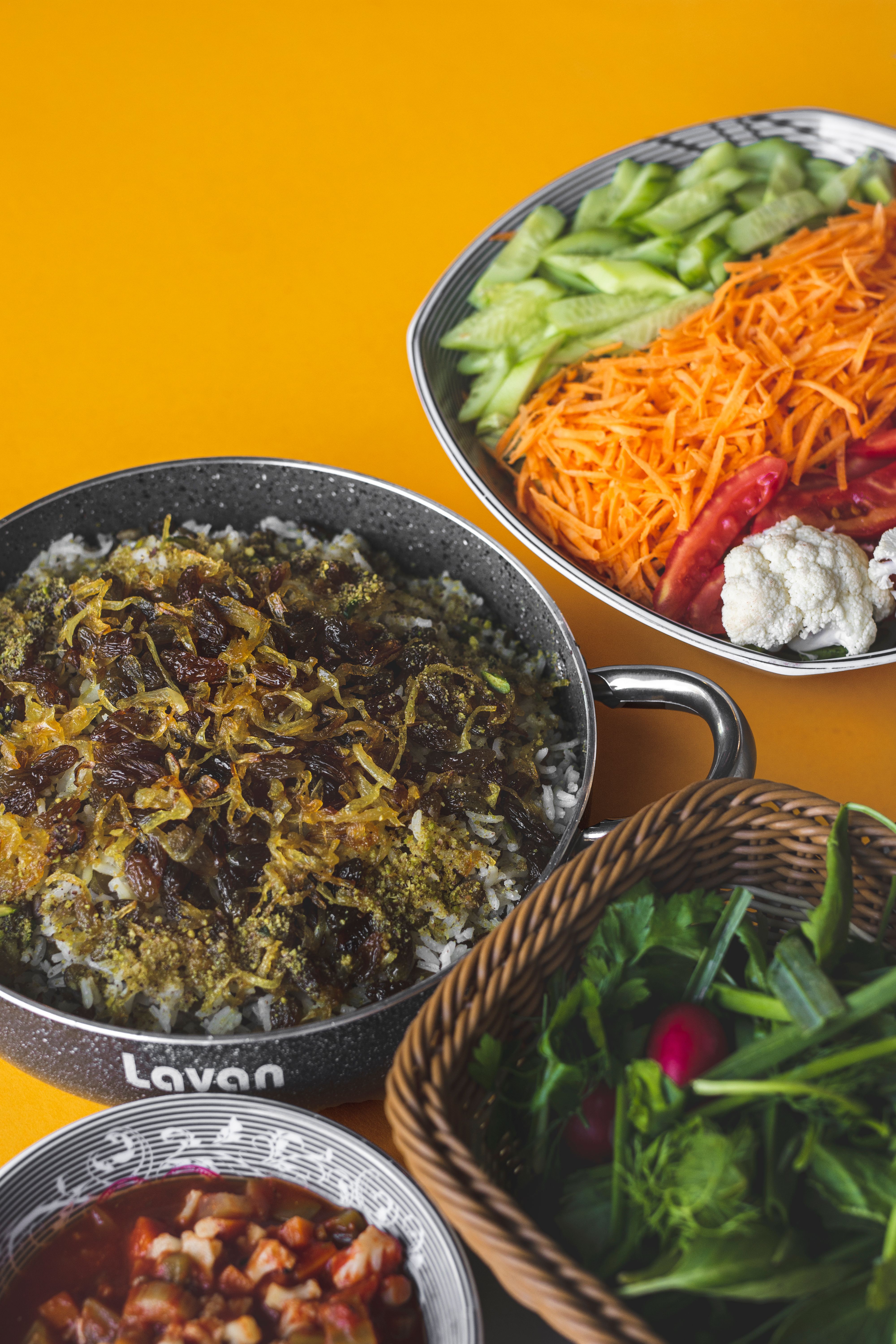
Photo: Amirho3in tavkoli / Pexels
Middle-Eastern
Ghormeh Sabzi
The diets react (see scores below)
Common Ingredients
- lamb
- parsley
- cilantro
- scallions
- fenugreek
- kidney beans
- dried lime
- turmeric
Specific recipes may vary.
Incompatible with 7 of 11 diets
Diet Ratings
Ghormeh Sabzi is incompatible with a ketogenic diet primarily due to kidney beans, which are a high-carb legume containing approximately 20g of net carbs per half-cup serving. A standard serving of this stew would easily push net carbs well beyond the daily keto limit on its own. While the lamb or beef protein base, fresh herbs (parsley, cilantro, scallions, fenugreek), and spices (turmeric, dried lime) are individually keto-friendly or low-carb, the kidney beans are a foundational, non-optional ingredient in authentic Ghormeh Sabzi and cannot be omitted without fundamentally changing the dish. The herb and meat components alone would otherwise be approvable, but the dish as traditionally prepared is a clear avoid.
Ghormeh Sabzi is a traditional Persian herb and bean stew whose primary protein is lamb or beef, both of which are animal flesh and strictly excluded under vegan dietary rules. While the dish contains several plant-based components — parsley, cilantro, scallions, fenugreek, kidney beans, dried lime, and turmeric — the presence of meat as a core, defining ingredient makes the dish incompatible with a vegan diet. There is no ambiguity here: lamb and beef are unambiguously animal products.
Ghormeh Sabzi is a traditional Persian herb stew that is fundamentally incompatible with the paleo diet due to the inclusion of kidney beans, a legume that is explicitly excluded from paleo eating. Kidney beans contain lectins, phytates, and other antinutrients that paleo philosophy specifically warns against. While the majority of the ingredients — lamb, parsley, cilantro, scallions, dried lime, turmeric, and fenugreek — are paleo-approved, the kidney beans are a non-negotiable disqualifier. There is no meaningful paleo debate around legumes like kidney beans; they are universally excluded by all major paleo authorities including Loren Cordain, Mark Sisson, and Robb Wolf. The dish cannot be considered paleo-compatible in its traditional form.
Ghormeh Sabzi is a herb-rich Persian stew with several Mediterranean-friendly elements — fresh herbs (parsley, cilantro, scallions), legumes (kidney beans), anti-inflammatory spices (turmeric, fenugreek), and dried lime. However, the primary protein is lamb or beef (red meat), which the Mediterranean diet limits to a few times per month. As a main course dish centered on red meat, it contradicts the diet's core principle of limiting red meat. The legumes and herb base partially redeem it, but the red meat foundation pushes it into the 'avoid' category for regular consumption.
Some Mediterranean diet interpreters, particularly those acknowledging Eastern Mediterranean and Middle Eastern culinary traditions (Lebanon, Turkey, Greece), recognize that lamb has historically been consumed in these regions and small amounts in a legume- and herb-heavy stew like this could qualify as moderate, occasional red meat use rather than a strict violation. The high legume and herb ratio meaningfully dilutes the meat content per serving.
Ghormeh Sabzi is fundamentally incompatible with the carnivore diet. While it does contain lamb or beef as the primary protein, the dish is overwhelmingly plant-based in composition. Kidney beans are a legume — one of the most explicitly excluded food categories on carnivore due to high carbohydrate content, lectins, and antinutrients. The herbs (parsley, cilantro, scallions, fenugreek) and spices (turmeric) are all plant-derived and excluded. Dried lime is a fruit derivative, also excluded. The defining character of this dish — its herb-heavy, bean-laden stew base — is entirely carnivore-incompatible. The animal protein present cannot redeem the dish; it would need to be completely deconstructed, with only the lamb or beef salvaged.
Ghormeh Sabzi contains kidney beans, which are legumes — a category explicitly excluded on the Whole30 program. Unlike green beans, sugar snap peas, and snow peas (which are specifically excepted), kidney beans are standard legumes with no exception granted. All other ingredients — lamb, parsley, cilantro, scallions, fenugreek, dried lime, and turmeric — are fully Whole30-compliant. However, the kidney beans alone disqualify this dish as written. To make a Whole30-compatible version, the kidney beans would need to be omitted or replaced with a compliant vegetable.
Ghormeh Sabzi contains multiple high-FODMAP ingredients that make it unsuitable during the elimination phase. Kidney beans are very high in GOS (galacto-oligosaccharides) and remain high-FODMAP even when canned and rinsed — a standard serving (around 1/2 cup) far exceeds safe thresholds. Scallions (green onions) are high-FODMAP in their white bulb portions due to fructans, and as a key flavor base in this dish they are typically used in quantities that push it into high-FODMAP territory. Fenugreek leaves and seeds also contain GOS and fructans. The combination of kidney beans, scallion bulbs, and fenugreek creates a triple FODMAP load that cannot be remediated by portion reduction alone, as the dish's identity depends on these ingredients. Lamb, parsley, cilantro, dried lime, and turmeric are all low-FODMAP, but they cannot offset the high-FODMAP components.
Ghormeh Sabzi contains several DASH-positive ingredients — kidney beans (excellent source of fiber, potassium, and plant protein), a rich array of herbs (parsley, cilantro, scallions, fenugreek) packed with micronutrients, and dried lime adding flavor without sodium. However, the primary protein is lamb or beef, both of which are red meats that DASH guidelines explicitly limit due to saturated fat content. Lamb in particular tends to be higher in saturated fat than poultry or fish. The dish as traditionally prepared is moderately DASH-compatible due to the legume-herb base, but the red meat component is a concern. Sodium content depends heavily on preparation — added salt and any processed broth can push sodium up significantly. The overall dish sits in 'caution' territory: acceptable occasionally and improvable (by substituting lean beef or using a smaller portion of meat), but not a core DASH-recommended meal due to the red meat base.
NIH DASH guidelines recommend limiting red meat to small, infrequent portions, which conflicts with lamb as the primary protein here. However, updated clinical interpretations note that when red meat is combined with substantial legumes and herbs — as in Ghormeh Sabzi — the overall glycemic and nutrient profile improves considerably, and some DASH-oriented dietitians consider legume-forward stews with modest red meat portions acceptable within weekly limits.
Ghormeh Sabzi is a nutrient-dense Persian stew with a mixed Zone profile. On the positive side, it features an abundance of polyphenol-rich herbs (parsley, cilantro, scallions, fenugreek) that align well with Sears' anti-inflammatory emphasis, and dried lime adds flavor without glycemic load. Kidney beans contribute both protein and carbohydrates, making them a reasonable Zone carb block source with moderate glycemic impact. The main Zone challenge is the lamb or beef protein — traditional Ghormeh Sabzi uses fatty cuts of lamb (shoulder or shank), which introduce saturated fat beyond the Zone's preferred lean protein profile. This makes portion control critical: a smaller serving (~2-3 oz lean trimmed meat) with beans counted as the carb block could approximate Zone ratios, but the dish as traditionally prepared likely delivers excess saturated fat and an unbalanced protein-to-carb ratio. The kidney beans also add carbohydrate blocks that need accounting alongside any starchy sides. With mindful portioning — lean trimmed beef substituted for fatty lamb, beans measured as carb blocks, herbs counted as favorable low-glycemic carbs — this dish can fit Zone parameters reasonably well.
Sears' earlier Zone writings (Enter the Zone) strictly emphasized lean proteins and actively discouraged fatty red meats like lamb, which would push this dish toward a lower score. However, his later anti-inflammatory work (The Anti-Inflammation Zone) softened the stance on some saturated fat sources and placed greater emphasis on polyphenols and omega-3s — the herb-heavy base of Ghormeh Sabzi actually aligns well with this later framework. Zone practitioners who use lean beef rather than fatty lamb may rate this dish more favorably (score 6-7), while strict early-Zone adherents would penalize it more heavily for the saturated fat content.
Ghormeh Sabzi is a nutrient-rich Persian herb stew with a genuinely mixed anti-inflammatory profile. On the positive side, it is loaded with anti-inflammatory superstars: turmeric (curcumin), fenugreek (anti-inflammatory saponins and antioxidants), a large volume of fresh herbs (parsley, cilantro, scallions — rich in vitamin K, quercetin, and polyphenols), kidney beans (fiber, plant protein, polyphenols), and dried lime (flavonoids, vitamin C). This herb-forward, legume-inclusive base is strongly aligned with anti-inflammatory principles. However, the primary protein — lamb or beef — is red meat, which the anti-inflammatory framework places in the 'limit' category due to saturated fat content and arachidonic acid, both associated with upregulation of inflammatory pathways (COX-2, prostaglandins). The dish as traditionally prepared uses a meaningful amount of lamb or beef, not a token quantity. If portions of red meat are modest and the dish is herb- and bean-heavy (as it often is in traditional preparation), the overall profile improves. Substituting with a leaner cut or reducing red meat quantity pushes this toward approve territory. As prepared with standard lamb portions, caution is appropriate for regular consumption.
Some anti-inflammatory practitioners (aligned with Mediterranean and Dr. Weil's framework) would argue that the extraordinary herb load, legumes, turmeric, and fenugreek so dominate this dish's nutritional character that moderate red meat is offset — particularly if grass-fed lamb is used, which has a more favorable omega-3 to omega-6 ratio. Conversely, strict anti-inflammatory protocols that heavily restrict all red meat (e.g., Ornish-adjacent or AIP-inspired approaches) would rate this lower given the lamb/beef base regardless of the herb content.
Ghormeh Sabzi is a nutrient-dense Persian herb stew with meaningful strengths and notable drawbacks for GLP-1 patients. On the positive side, kidney beans contribute plant-based protein and substantial fiber (roughly 7-8g per half cup), supporting both the protein and fiber priorities. The herb base (parsley, cilantro, scallions, fenugreek) adds micronutrients and anti-inflammatory compounds in a low-calorie package. Dried lime and turmeric are gentle on digestion and may have modest anti-nausea properties. The main concern is the protein source: traditional lamb or beef cuts used in Ghormeh Sabzi (shoulder, shank) are fatty, slow to digest, and high in saturated fat — all of which worsen GLP-1 side effects including nausea, bloating, and prolonged gastric fullness. The dish is also typically slow-cooked in rendered fat. A GLP-1 patient could improve this dish significantly by substituting lean beef (eye of round, 93% lean ground) or chicken thigh/breast, skimming fat before serving, and keeping the portion moderate. As prepared traditionally, it lands in caution rather than avoid because the bean and herb components provide real nutritional value, but the fatty meat and cooking fat are meaningful drawbacks.
Some GLP-1-focused dietitians would rate this dish more favorably, arguing that the slow-cooked format makes the protein highly digestible and that the bean-to-meat ratio in a moderate portion keeps fat per serving manageable. Others would rate it lower, noting that fatty braised meats are among the most reliably reported triggers for GLP-1 nausea and reflux, and that no preparation method fully eliminates the saturated fat concern from lamb shoulder.
*See how scores were generated at our methodology page.
Nutritional profile
Six traits that cut across every diet.
Fiber & Plants
How much whole-plant food and fiber it delivers.
Healthy Fats
The quality of its fats (unsaturated, omega-3).
Whole / Unprocessed
How close it is to its natural, unprocessed form.
Gut Gentle
How easy it is on digestion (low FODMAP, few irritants).
Low Glycemic
How little it spikes your blood sugar.
Protein Density
How much protein it packs per calorie.
Controversy Index
Higher controversy = more disagreement between diets.
Diet-Specific Tips
 DASH — 5/10
View tips
- Lamb/beef is a red meat limited by DASH guidelines due to saturated fat
- Kidney beans are a DASH-approved legume rich in fiber, potassium, and plant protein
- Abundant herbs (parsley, cilantro, scallions, fenugreek) contribute micronutrients aligned with DASH
- Dried lime adds flavor without sodium — a DASH-positive substitution for salt
- Sodium level is preparation-dependent; added salt or salted broth can significantly raise sodium content
- Dish can be improved for DASH by reducing meat portion, using lean cuts, or substituting with fish or poultry
 Zone — 5/10
View tips
- Lamb is a fatty red meat with significant saturated fat — conflicts with Zone lean protein guidelines; substituting lean beef improves Zone compatibility
- Kidney beans serve dual role as both protein and carb blocks — must be carefully measured to maintain 40/30/30 ratio
- Herb base (parsley, cilantro, fenugreek, scallions) is polyphenol-rich and strongly aligned with Sears' anti-inflammatory focus
- Dried lime adds flavor without glycemic impact — Zone-neutral positive
- No added oils or high-glycemic carbs in base recipe — fat content comes primarily from the meat
- Traditional portions are often large and bean-heavy, requiring deliberate downsizing to hit Zone block targets
- Dish lacks monounsaturated fat — a small drizzle of olive oil at serving would improve Zone fat profile
 Anti-Inflammatory — 5/10
View tips
- Red meat (lamb/beef) is the primary protein — categorized as 'limit' in anti-inflammatory guidelines due to saturated fat and arachidonic acid
- Turmeric provides curcumin, one of the most researched natural anti-inflammatory compounds
- Large volume of fresh herbs (parsley, cilantro, scallions) delivers quercetin, vitamin K, and polyphenols
- Fenugreek contains anti-inflammatory saponins and antioxidants
- Kidney beans contribute fiber, plant protein, and polyphenols — strongly anti-inflammatory
- Dried lime adds flavonoids and vitamin C
- Overall dish is herb- and legume-forward, which partially offsets the red meat
- Grass-fed vs. grain-fed lamb matters: grass-fed has a better omega-3 profile
 GLP-1 Friendly — 5/10
View tips
- Kidney beans provide meaningful fiber (~7-8g per half cup) and plant protein — strong positives
- Traditional lamb or beef cuts are high in saturated fat and slow to digest, worsening GLP-1 nausea and bloating
- Slow-braised cooking renders fat into the stew, increasing total fat per serving
- Herb base (parsley, cilantro, fenugreek, scallions) is nutrient-dense and low-calorie — a clear positive
- Protein content per serving is moderate but fat-to-protein ratio is unfavorable compared to lean proteins
- Dish can be modified (lean beef swap, fat skimmed) to score significantly higher
- Small-portion friendly due to the stew format and fiber/protein satiety
- No high-sugar, fried, carbonated, or spicy components — no major red flags beyond fat content