Photo: Andres Alaniz / Pexels
Latin-American
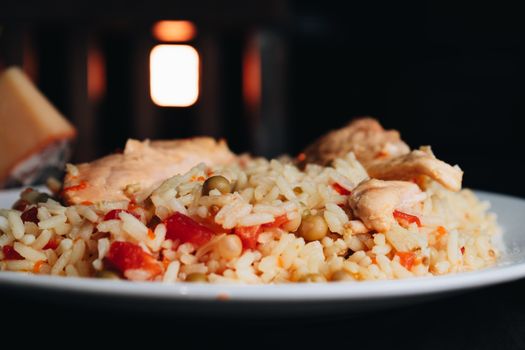
Arroz con Pollo (Peruvian)
The diets react (see scores below)
Common Ingredients
- chicken
- rice
- cilantro
- peas
- ají amarillo
- onion
- garlic
- beer
Specific recipes may vary.
Incompatible with 6 of 11 diets
Diet Ratings
Arroz con Pollo is fundamentally built around white rice, which is one of the most keto-incompatible staple foods. A standard serving contains approximately 40-50g of net carbs from rice alone, instantly exceeding or maxing out the daily keto carb limit in a single dish. The addition of peas adds further carbs (roughly 10-15g per serving), and the beer used in cooking contributes maltose and residual carbohydrates. While chicken, garlic, onion, cilantro, and ají amarillo are individually low-carb or used in small enough quantities, the rice is the irredeemable core of this dish. There is no version of traditional Arroz con Pollo that is keto-compatible without a fundamental ingredient substitution (e.g., cauliflower rice), which would make it a different dish entirely.
Arroz con Pollo is a classic Latin American chicken and rice dish. Chicken is an animal product and is entirely incompatible with a vegan diet. There is no ambiguity here — poultry is explicitly excluded under all vegan frameworks. The remaining ingredients (rice, cilantro, peas, ají amarillo, onion, garlic, beer) are plant-based, but the dish's primary protein and defining ingredient disqualifies it entirely.
Arroz con Pollo is fundamentally incompatible with the paleo diet. The dish's two defining ingredients — rice (a grain) and peas (a legume) — are both explicitly excluded from the paleo framework. Beer, also a grain-derived product (fermented barley/wheat), adds a third non-paleo ingredient. These three components are not peripheral garnishes but structural to the dish itself. The remaining ingredients — chicken, cilantro, ají amarillo, onion, and garlic — are all paleo-approved, but they cannot redeem a dish whose core identity is built around prohibited foods. There is no meaningful paleo adaptation possible while keeping the dish recognizable as Arroz con Pollo.
Arroz con Pollo is a moderately Mediterranean-compatible dish. Chicken is an acceptable moderate protein in the Mediterranean diet, and the vegetable components (onion, garlic, peas, cilantro, ají amarillo) are strongly positive. However, white rice is a refined grain that modern Mediterranean guidelines discourage in favor of whole grains, and it forms a substantial base of this dish. Beer adds minimal concern as a small cooking ingredient. The dish lacks olive oil as a primary fat and does not emphasize plant-forward composition in the Mediterranean sense, though it is far from a red meat or heavily processed meal.
Some Mediterranean diet interpretations, particularly those drawing from traditional Spanish and Southern European cuisines, allow white rice in moderation as part of culturally appropriate mixed dishes (e.g., Spanish arroz dishes). In this view, the vegetable-rich profile and lean poultry protein could push the rating closer to approval, especially if prepared with olive oil.
Arroz con Pollo is fundamentally incompatible with the carnivore diet. While chicken is an acceptable animal protein, it is massively outnumbered by plant-based ingredients. Rice is a grain — a core excluded food group. Cilantro, peas, ají amarillo, onion, and garlic are all plant-derived and strictly prohibited. Beer is a fermented grain beverage, equally off-limits. The dish is defined by its rice and vegetable components; removing them would leave only plain chicken, which is not this dish. There is nothing ambiguous or debatable here — this is a plant-heavy Latin stew with a token animal protein.
Arroz con Pollo contains two clearly excluded ingredients: rice (a grain, explicitly banned on Whole30) and beer (alcohol, explicitly banned on Whole30). Either of these alone would disqualify the dish. Chicken, cilantro, peas, ají amarillo, onion, and garlic are all compliant, but the foundational grain component (rice) and the beer used in the braising liquid make this dish incompatible with the Whole30 program in its traditional form.
Peruvian Arroz con Pollo contains multiple high-FODMAP ingredients that make it unsuitable during the elimination phase. Onion and garlic are among the highest-FODMAP foods tested by Monash University, both rich in fructans, and they are structural flavor bases in this dish — not incidental additions. Peas are high in GOS and fructans at typical serving sizes (Monash rates them as high-FODMAP above 1/4 cup). Beer contains gluten-derived fructans from barley malt and is rated high-FODMAP by Monash. Chicken and rice are low-FODMAP safe anchors, and cilantro and ají amarillo are low-FODMAP in normal culinary amounts, but the combination of onion, garlic, peas, and beer creates an unavoidable high-FODMAP load that cannot be mitigated by portion control when these are cooked into the dish.
Peruvian Arroz con Pollo combines several DASH-friendly ingredients — lean chicken, vegetables (onion, garlic, peas, cilantro), and ají amarillo pepper — with white rice and beer. The lean chicken and vegetable components align well with DASH principles, providing lean protein, fiber, potassium, and phytonutrients. However, the dish uses white rice rather than a whole grain, which is less optimal for DASH. Beer adds empty calories and modest carbohydrates but contributes little sodium in cooking. The primary DASH concern is sodium: traditional Peruvian preparation often includes added salt, soy sauce, or bouillon, which can push sodium levels into the moderate-to-high range. Without those high-sodium additions, the base ingredients are largely DASH-compatible. The dish is not inherently high in saturated fat, which is a positive. Overall, this is acceptable in DASH with portion control and sodium-conscious preparation (avoiding soy sauce, bouillon, or excess salt), but the white rice and variable sodium content prevent a full approval.
NIH DASH guidelines would flag white rice as a suboptimal grain choice and raise concern about preparation-dependent sodium from common additions like soy sauce or seasoned bouillon. However, updated DASH-aligned clinical interpretations note that when prepared with sodium-controlled seasoning and paired with abundant vegetables and lean chicken, this dish can fit comfortably within DASH targets — some practitioners consider the vegetable and lean protein density sufficient to rate it more favorably.
Arroz con Pollo is a Zone-compatible dish in concept — lean chicken provides good protein, and the vegetables (onion, garlic, peas, cilantro) and ají amarillo contribute favorable low-glycemic carbs with polyphenols. However, the dish is carb-heavy by design, with white rice as the dominant ingredient. White rice is a high-glycemic, 'unfavorable' carb in Zone terminology — it spikes insulin rapidly and offers little fiber. The beer adds additional fermentable carbohydrates with negligible nutritional benefit. The macro ratio of a traditional Arroz con Pollo will skew heavily carbohydrate-dominant (likely 60-70% carbs by calories), making it difficult to achieve the 40/30/30 Zone balance without significant modification. To Zone-adapt this dish, you would need to dramatically reduce the rice portion, increase the chicken portion, add a fat source (olive oil drizzle, avocado on the side), and possibly substitute cauliflower rice for part of the white rice. The chicken, cilantro, peas, ají amarillo, onion, and garlic are all Zone-favorable components — the dish's core problem is the rice-to-protein ratio typical of the traditional preparation.
Peruvian Arroz con Pollo is a mixed dish from an anti-inflammatory standpoint. On the positive side, it features lean chicken (a 'moderate' protein), garlic and onion (both with meaningful anti-inflammatory and prebiotic properties), cilantro (rich in antioxidants and phytonutrients), peas (a legume with fiber and plant protein), and ají amarillo (a Peruvian yellow chili pepper containing capsaicin and carotenoids — both well-documented anti-inflammatory compounds). These ingredients collectively contribute polyphenols, antioxidants, and beneficial phytochemicals. The main concerns are: (1) white rice, the base of the dish, is a refined carbohydrate that raises glycemic load and lacks the fiber of whole grains — anti-inflammatory frameworks consistently prefer brown or whole-grain rice; (2) beer, used in cooking, introduces alcohol and refined grain-derived sugars. While much of the alcohol cooks off, beer is not red wine and does not carry the resveratrol benefit; it's categorized under 'limit/avoid' in anti-inflammatory frameworks. The dish is not deeply inflammatory — there are no trans fats, no high-fructose corn syrup, no processed additives, and lean poultry keeps saturated fat low — but the white rice base and beer prevent an 'approve' rating. Prepared with brown rice and the beer omitted or minimized, this dish could approach approval territory.
Most anti-inflammatory frameworks treat white rice as a neutral refined starch to limit rather than avoid outright, and some researchers note that white rice has a relatively low inflammatory index compared to wheat-based refined carbs. Additionally, the anti-inflammatory literature on alcohol is split: Dr. Weil's pyramid permits moderate alcohol and notes potential benefits from moderate beer consumption for some individuals, while updated anti-inflammatory guidelines increasingly recommend avoiding all alcohol given newer research on systemic inflammatory effects at any dose.
Peruvian arroz con pollo offers a genuinely mixed nutritional profile for GLP-1 patients. On the positive side, chicken is a lean, high-quality protein source that supports muscle preservation during weight loss. The dish includes fiber-contributing vegetables (peas, onion, garlic) and fresh herbs (cilantro), and ají amarillo adds flavor with minimal fat. However, white rice is the dominant ingredient — a refined carbohydrate with low fiber content and low nutrient density per calorie, which is a meaningful concern when every bite must count. The beer used in cooking is the most significant flag: while most alcohol cooks off, residual content and the metabolic signaling around alcohol in the dish remain a concern in clinical guidance. Portion size matters greatly here — a small serving with a protein-forward ratio (more chicken, less rice) can be acceptable, but a standard restaurant or home portion is typically rice-heavy. Spice level from ají amarillo is generally mild to moderate and unlikely to worsen GI side effects in most patients, but individual sensitivity varies. Overall, this dish can work in moderation with intentional portioning, but it is not an ideal GLP-1 meal as typically prepared.
Some GLP-1-focused dietitians would rate this more favorably, noting that the chicken provides adequate protein and the dish is generally easy to digest and low in fat — qualities that matter significantly during the side-effect-prone early weeks of GLP-1 therapy. Others would flag the refined rice and alcohol-based cooking liquid more strongly, particularly for patients with GI sensitivity or those on higher doses where gastric emptying is more severely slowed.
*See how scores were generated at our methodology page.
Nutritional profile
Six traits that cut across every diet.
Fiber & Plants
How much whole-plant food and fiber it delivers.
Healthy Fats
The quality of its fats (unsaturated, omega-3).
Whole / Unprocessed
How close it is to its natural, unprocessed form.
Gut Gentle
How easy it is on digestion (low FODMAP, few irritants).
Low Glycemic
How little it spikes your blood sugar.
Protein Density
How much protein it packs per calorie.
Controversy Index
Higher controversy = more disagreement between diets.
Diet-Specific Tips
 Mediterranean — 5/10
View tips
- Chicken is an acceptable moderate protein (poultry category)
- White rice is a refined grain, not aligned with Mediterranean whole grain preference
- Vegetables and aromatics (onion, garlic, peas, cilantro) are positive Mediterranean components
- Ají amarillo is a non-traditional ingredient but does not detract from compatibility
- Beer as a cooking ingredient is negligible in impact
- No olive oil explicitly listed as primary fat
- Not a heavily processed or high-sugar dish
 DASH — 6/10
View tips
- Lean chicken is a DASH-approved protein source
- Peas, onion, garlic, cilantro, and ají amarillo contribute vegetables, fiber, potassium, and phytonutrients
- White rice is less optimal than brown rice or other whole grains for DASH
- Beer adds minimal sodium but contributes empty calories
- Sodium content highly variable — traditional recipes using soy sauce, bouillon, or excess salt significantly increase sodium load
- No significant saturated fat concern from core ingredients
- Portion control important given caloric density of rice-based dish
- Low-sodium preparation with brown rice substitution would improve DASH compatibility
 Zone — 5/10
View tips
- White rice is a high-glycemic 'unfavorable' carbohydrate in Zone — dominates the dish's carb load
- Lean chicken is an ideal Zone protein source
- Peas, onion, garlic, ají amarillo, and cilantro are favorable low-glycemic, polyphenol-rich carbs
- Beer adds extra high-glycemic carbs with no nutritional benefit in Zone terms
- Traditional preparation skews heavily carb-dominant (~60-70% carbs), violating 40/30/30 ratio
- Easily Zone-adapted by reducing rice, increasing chicken portion, and adding monounsaturated fat
 Anti-Inflammatory — 5/10
View tips
- Lean chicken is an approved moderate protein with low saturated fat
- Ají amarillo provides capsaicin and carotenoids with anti-inflammatory activity
- Garlic and onion offer sulfur compounds and flavonoids that reduce inflammatory markers
- Cilantro contributes antioxidants and phytonutrients
- Peas add fiber and plant protein (legume benefit)
- White rice is a refined carbohydrate that raises glycemic load — whole grain preferred
- Beer adds alcohol and refined grain sugars; not categorized as anti-inflammatory (unlike red wine)
- No trans fats, seed oils, processed additives, or high-fructose corn syrup present
 GLP-1 Friendly — 5/10
View tips
- Chicken provides lean protein but rice-heavy portions may dilute protein density per serving
- White rice is a refined carbohydrate — low fiber, low nutrient density, caution for GLP-1 patients
- Beer in preparation raises an alcohol flag even after cooking; residual content is a clinical concern
- Peas and onion add modest fiber but not enough to meet GLP-1 fiber targets in one serving
- Ají amarillo is generally mild-moderate spice — low GI irritation risk for most patients
- Dish is low in fat and easy to digest, which supports tolerability on GLP-1 medications
- Portion sensitivity is high — protein-to-rice ratio is critical to whether this meal is acceptable