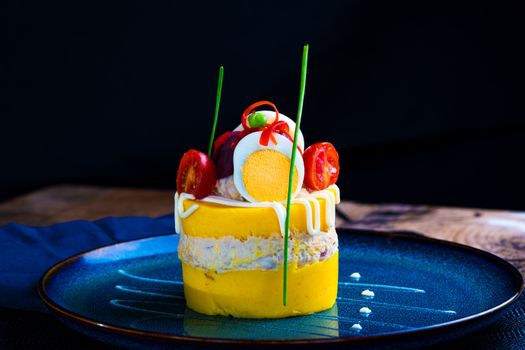
Photo: Nano Erdozain / Pexels
Latin-American
Causa
The diets react (see scores below)
Common Ingredients
- yellow potatoes
- ají amarillo
- lime juice
- chicken
- avocado
- mayonnaise
- onion
- hard-boiled egg
Specific recipes may vary.
Incompatible with 5 of 11 diets
Diet Ratings
Causa is a traditional Peruvian dish built on a base of yellow potatoes, which are a starchy vegetable with very high net carbs. A standard serving of causa contains a substantial potato layer — roughly 150-200g of potato — delivering approximately 25-35g of net carbs from the potato alone, easily exceeding or maxing out an entire day's keto carb budget in a single dish. While several ingredients are keto-friendly (avocado, mayonnaise, chicken/tuna, egg, lime juice), the potato base is the structural and defining component of the dish and cannot be removed without the dish ceasing to be causa. The ají amarillo paste adds minimal additional carbs. There is no practical portion size at which causa becomes keto-compatible because the potato is integral to the recipe's form and function.
Causa contains multiple animal products that make it entirely incompatible with a vegan diet. The dish includes chicken (animal flesh), hard-boiled egg (animal product), and mayonnaise (typically made with eggs). Any one of these ingredients alone would disqualify it; together they represent a clear and unambiguous violation of vegan principles. There is no meaningful debate within the vegan community about any of these ingredients.
Causa is a traditional Peruvian dish built on a foundation of yellow potatoes, which are white/yellow-fleshed potatoes — a food discouraged by strict paleo authorities (Cordain and The Paleo Diet guidelines) due to their high glycemic index and saponin content. Beyond the potato base, mayonnaise is a significant concern: commercial mayo is almost universally made with soybean or canola oil (both excluded seed oils), making this a clear paleo violation unless homemade with compliant oil. The remaining ingredients — chicken, avocado, hard-boiled egg, onion, lime juice, and ají amarillo — are paleo-approved. However, the two core structural components (yellow potatoes as the dominant base, and commercial mayonnaise as the binding agent) place this dish firmly in avoid territory as traditionally prepared.
Mark Sisson, Whole30, and much of the modern paleo community have rehabilitated white/yellow potatoes as an acceptable whole food, arguing their exclusion was overly strict. If homemade mayo with avocado oil is substituted, some paleo practitioners would rate this dish as caution rather than avoid, given that all remaining ingredients are compliant.
Causa is a Peruvian dish built around yellow potatoes (starchy but whole and unrefined), lean protein (chicken or tuna, both acceptable), avocado (healthy monounsaturated fat aligned with Mediterranean principles), lime juice, onion, and ají amarillo — all relatively whole ingredients. However, mayonnaise is a notable concern: it is typically made with refined vegetable oils and is not a Mediterranean staple; it adds saturated or omega-6-heavy fat rather than the preferred olive oil. The hard-boiled egg is moderate and acceptable. Potatoes are a whole food but are a refined-starch-adjacent carbohydrate with a high glycemic index, not a whole grain. With tuna as the protein, this dish aligns better with Mediterranean principles (fish is encouraged 2-3x/week); with chicken it remains acceptable in moderation. Overall, the dish is not deeply problematic but is held back by the mayonnaise and the absence of olive oil as the fat base.
Some Mediterranean diet practitioners, particularly those following traditional Southern European coastal patterns, would view a tuna-based causa more favorably — tuna with vegetables, egg, and avocado is nutritionally consonant with Mediterranean eating, and small amounts of mayonnaise could be substituted with or supplemented by olive oil-based aioli in a modern interpretation. Conversely, stricter clinical guidelines (e.g., PREDIMED-based protocols) would flag mayonnaise as a processed condiment to minimize.
Causa is fundamentally incompatible with the carnivore diet. The dish is built on a base of yellow potatoes — a starchy plant food that is strictly excluded. Additional plant-derived ingredients include ají amarillo (a pepper/chili), lime juice (fruit), avocado (fruit), and onion (vegetable). While the dish does contain some carnivore-approved components (chicken or tuna, hard-boiled egg, and mayonnaise if made with animal-based ingredients), these are minor supporting elements in a dish that is overwhelmingly plant-based. The potato base alone disqualifies it entirely, as starchy carbohydrates are among the most clearly excluded foods on any tier of the carnivore diet.
Causa is a Peruvian layered potato dish with most ingredients being Whole30-compliant: yellow potatoes, ají amarillo pepper, lime juice, chicken, avocado, onion, and hard-boiled eggs are all fully allowed. The critical issue is mayonnaise — commercial mayonnaise almost universally contains non-compliant ingredients such as soy (soy lecithin or soybean oil per 2024 rules still requires checking), sugar, or other additives. However, compliant homemade or store-bought Whole30-approved mayo (made with avocado oil or olive oil, no sugar, no soy) does exist and is explicitly permitted. If made with compliant mayo, this dish is otherwise fully Whole30-compatible. The dish does not fall into the 'recreating baked goods/junk food' prohibition. Score reflects that the dish is technically achievable as compliant but requires careful attention to the mayo ingredient.
Official Whole30 guidelines permit homemade or compliant-label mayonnaise (e.g., Primal Kitchen), so causa can be fully compliant with the right ingredients. However, some community members note that causa is a rich, comfort-food-style dish and encourage mindfulness about whether it honors the program's spirit of resetting food relationships — though Whole30 does not officially restrict this type of dish.
Causa contains two significant FODMAP concerns at standard serving sizes. First, onion is one of the highest-fructan foods tested by Monash University and is high-FODMAP at any meaningful quantity — even small amounts cooked into a dish can trigger symptoms. Second, avocado is low-FODMAP only at 1/8 of a fruit (30g) per Monash; causa typically contains a substantial avocado layer, pushing well into high-FODMAP territory via sorbitol and mannitol. The remaining ingredients are more favorable: yellow potatoes are low-FODMAP at a standard serve (1 medium, ~150g), lime juice is low-FODMAP, chicken is FODMAP-free, hard-boiled eggs are FODMAP-free, and mayonnaise (plain) is generally low-FODMAP. Ají amarillo chili paste is not directly tested by Monash, but fresh chili peppers are generally considered low-FODMAP in small amounts. The dish could theoretically be modified (omit onion, use minimal avocado) but as traditionally prepared, onion alone makes this a dish to avoid during the elimination phase.
Some FODMAP practitioners may allow small portions of causa if onion is omitted entirely and avocado is limited to a garnish-level amount (≤30g); however, since traditional recipes incorporate both ingredients at high-FODMAP quantities, the elimination-phase default should be avoidance unless ingredients are explicitly controlled.
Causa is a Peruvian layered dish with a base of yellow potatoes mashed with ají amarillo and lime juice, filled with chicken or tuna mixed with mayonnaise, and topped with avocado. Several components align well with DASH principles: potatoes provide potassium and fiber, lean chicken or tuna offers quality protein, avocado contributes heart-healthy monounsaturated fats and potassium, lime juice adds flavor without sodium, and ají amarillo is a whole food ingredient. However, the dish has notable DASH concerns. Mayonnaise is high in fat and, depending on quantity used, contributes saturated fat and sodium — a typical causa filling uses a significant amount. The hard-boiled egg is moderately acceptable under updated dietary guidance but adds some cholesterol. Portion size is also a concern, as causa is often served in generous portions with substantial potato content. The dish is not heavily processed and contains no added sugars or cured meats, which is a positive. Overall, causa can fit into a DASH eating plan in moderate portions with reduced or light mayonnaise, but as typically prepared it warrants caution due to mayonnaise content and caloric density.
NIH DASH guidelines emphasize limiting total and saturated fat, which places mayonnaise-heavy preparations in the caution zone. However, updated clinical interpretations note that when made with olive-oil-based or light mayonnaise and consumed in appropriate portions, causa's nutrient profile (potassium-rich potatoes, healthy fats from avocado, lean protein) could be considered compatible with DASH goals — some dietitians practicing DASH would allow it as an occasional meal with modifications.
Causa is a traditional Peruvian dish built primarily on a yellow potato base, which is the central Zone Diet challenge. Potatoes are explicitly listed as 'unfavorable' high-glycemic carbohydrates in Dr. Sears' Zone framework, alongside corn and bananas. The dish's structural foundation — mashed yellow potatoes seasoned with ají amarillo and lime — means carbohydrates in a typical serving will be dominated by high-GI starch, making it very difficult to achieve a Zone-favorable 40/30/30 block ratio without severely restricting portion size. On the positive side, several ingredients are Zone-friendly: chicken or tuna provides lean protein (excellent Zone protein block sources), avocado supplies monounsaturated fat (ideal Zone fat), and hard-boiled egg adds protein and healthy fat. Onion is a favorable low-glycemic carb, and lime juice and ají amarillo are polyphenol-rich and anti-inflammatory. Mayonnaise is a concern as it typically contains omega-6-heavy soybean or canola oil, conflicting with Sears' anti-inflammatory emphasis — though the quantity used is usually modest. A small, carefully portioned serving of causa (reducing the potato layer significantly) could theoretically be worked into a Zone meal if balanced with extra lean protein and favorable fat, but this departs significantly from how the dish is traditionally prepared and served. The potato-dominant carbohydrate base is the primary disqualifier from a higher score.
Some Zone practitioners and later Sears writings acknowledge that colored/waxy potatoes like yellow Peruvian varieties have a somewhat lower glycemic index than russet or white potatoes, and that the fat content from avocado and mayonnaise can blunt the glycemic response. In this view, a small portion of causa as part of a larger Zone-balanced meal is workable rather than categorically unfavorable. The presence of anti-inflammatory polyphenols (ají amarillo, lime, avocado) aligns with Sears' later OmegaRx Zone emphasis on food as an anti-inflammatory tool.
Causa is a traditional Peruvian layered dish with a mixed anti-inflammatory profile. On the positive side, yellow potatoes provide resistant starch, potassium, and vitamin C; ají amarillo (yellow chili pepper) is rich in capsaicin and carotenoids with documented anti-inflammatory properties; lime juice adds vitamin C and flavonoids; avocado contributes heart-healthy monounsaturated fats and anti-inflammatory oleic acid; and lean chicken or tuna (especially tuna) provides quality protein — tuna in particular adds beneficial omega-3s. Onion supplies quercetin, a potent anti-inflammatory flavonoid. The main concerns are the mayonnaise, which is typically made with refined soybean or canola oil (high omega-6 content and often containing additives), and the hard-boiled egg, which has a mixed but generally moderate inflammatory profile. Potatoes, while nutritious, are a refined starch in terms of glycemic impact when mashed as in causa. The dish is not inherently processed or sugar-laden, but the mayo is a meaningful detractor. If made with avocado-based or olive oil mayonnaise, the score would improve. The tuna version scores slightly better than the chicken version due to omega-3 content.
Most anti-inflammatory frameworks accept mayonnaise in moderation and consider eggs neutral-to-beneficial (choline, selenium), which could nudge this toward a borderline approve — Dr. Weil's pyramid doesn't explicitly prohibit mayo in small amounts. However, practitioners following stricter omega-6-reduction protocols (e.g., those aligned with the Wahls Protocol or AIP) would flag the refined seed oil in standard mayo as a meaningful pro-inflammatory input and might rate this dish lower.
Causa is a traditional Peruvian layered dish built on a mashed yellow potato base seasoned with ají amarillo, lime juice, and oil, filled with chicken or tuna mixed with mayonnaise and avocado, and topped with hard-boiled egg. The protein component (chicken or tuna plus egg) is a genuine strength, potentially delivering 20-30g protein per serving depending on portion ratios, which aligns well with GLP-1 priorities. However, the dish has several notable drawbacks for GLP-1 patients. First, the potato base is a refined-starch-heavy, low-fiber foundation — yellow potatoes have modest fiber and a relatively high glycemic load, offering limited nutrient density per calorie. Second, mayonnaise is a high-fat, calorie-dense binder; traditional causa recipes use it liberally in both the filling and sometimes the potato layer, significantly elevating saturated and total fat content. Third, avocado adds healthy unsaturated fat but also increases caloric density in a dish where portions are already hard to control given the layered format. Fourth, gastric emptying is slowed on GLP-1 medications, and a dense starchy-plus-fat layered dish can sit heavily and worsen nausea or fullness discomfort. The dish is not fried, not carbonated, not high in added sugar, and ají amarillo is typically mild-to-moderate in heat — so it avoids the hardest disqualifiers. A modified version with reduced mayo, generous chicken or tuna filling, and a smaller potato portion could push this toward approve territory, but the standard preparation lands firmly in caution.
Some GLP-1-focused dietitians would rate this more favorably, noting that whole potatoes provide resistant starch and potassium, that avocado fat is cardioprotective and supports satiety in small portions, and that the dish is home-cooked and portion-controllable — preferable to processed alternatives. Others would rate it more harshly, flagging that the mayo-heavy filling and starchy base deliver disproportionate calories relative to protein and fiber, making it a poor fit for patients with significantly reduced caloric budgets on GLP-1 therapy.
*See how scores were generated at our methodology page.
Nutritional profile
Six traits that cut across every diet.
Fiber & Plants
How much whole-plant food and fiber it delivers.
Healthy Fats
The quality of its fats (unsaturated, omega-3).
Whole / Unprocessed
How close it is to its natural, unprocessed form.
Gut Gentle
How easy it is on digestion (low FODMAP, few irritants).
Low Glycemic
How little it spikes your blood sugar.
Protein Density
How much protein it packs per calorie.
Controversy Index
Higher controversy = more disagreement between diets.
Diet-Specific Tips
 Mediterranean — 5/10
View tips
- Mayonnaise introduces refined oils inconsistent with Mediterranean fat principles
- Avocado provides Mediterranean-compatible healthy monounsaturated fats
- Tuna version aligns with encouraged 2-3x/week seafood intake; chicken version is acceptable in moderation
- Yellow potatoes are whole but high-glycemic, not equivalent to whole grains
- Hard-boiled egg is acceptable in moderate Mediterranean consumption
- No added sugars or highly processed ingredients beyond mayonnaise
- Dish lacks olive oil as primary fat source
 Whole30 — 5/10
View tips
- Yellow potatoes are Whole30-compliant
- Ají amarillo (yellow chili pepper) is a compliant spice/vegetable
- Lime juice, chicken, avocado, onion, hard-boiled egg are all fully compliant
- Mayonnaise is the key variable — commercial mayo often contains non-compliant oils, sugar, or additives; must use compliant version
- Compliant mayo options (homemade with compliant oil, or Whole30-approved brands) exist and are explicitly allowed
- Dish does not violate the 'no recreating baked goods/junk food' rule
 DASH — 5/10
View tips
- Potatoes provide potassium and fiber, supporting DASH nutrient targets
- Lean chicken or tuna is an appropriate DASH protein source
- Avocado contributes heart-healthy monounsaturated fats and potassium
- Mayonnaise adds significant fat and sodium — quantity is critical; light or olive-oil mayo preferred
- Hard-boiled egg is acceptable in moderation under current dietary guidance
- No added sugars, processed meats, or tropical oils
- Portion control important due to starch-dense potato base
- Low-sodium preparation possible since no inherently high-sodium ingredients required
 Zone — 4/10
View tips
- Yellow potatoes are high-glycemic 'unfavorable' carbohydrates explicitly flagged in Zone Diet as foods to limit or avoid
- Chicken and tuna are ideal Zone lean protein sources — strongly favorable
- Avocado provides excellent monounsaturated fat, a preferred Zone fat block
- Mayonnaise likely contains omega-6 seed oils, conflicting with Zone anti-inflammatory principles
- Ají amarillo and lime juice provide polyphenols consistent with Sears' anti-inflammatory Zone goals
- Dish is structurally potato-dominant, making Zone block balancing very difficult at normal serving sizes
- Hard-boiled egg adds additional protein and fat blocks favorably
 Anti-Inflammatory — 5/10
View tips
- Ají amarillo provides capsaicin and carotenoids with anti-inflammatory activity
- Avocado adds monounsaturated fats and oleic acid
- Tuna option contributes omega-3 fatty acids (EPA/DHA)
- Onion supplies quercetin, an anti-inflammatory flavonoid
- Mayonnaise typically uses refined seed oils high in omega-6
- Mashed yellow potatoes have moderate-to-high glycemic impact
- Hard-boiled egg: mixed but generally neutral-to-moderate inflammatory profile
- Lime juice adds vitamin C and flavonoids
 GLP-1 Friendly — 5/10
View tips
- Moderate-to-good protein from chicken/tuna and hard-boiled egg (20-30g per serving if filling-generous)
- High-starch potato base with limited fiber — low nutrient density per calorie
- Mayonnaise adds significant fat and calories; amount is recipe-dependent and often liberal
- Avocado contributes healthy unsaturated fat but increases caloric density
- Dense layered texture may worsen GLP-1 side effects (nausea, early fullness, slow gastric emptying)
- Not fried; ají amarillo is mild-to-moderate heat — avoids hardest disqualifiers
- Portion control is difficult given the structured layered format
- Modifiable: reducing mayo and increasing protein filling improves GLP-1 compatibility significantly