Photo: Nano Erdozain / Pexels
Latin-American
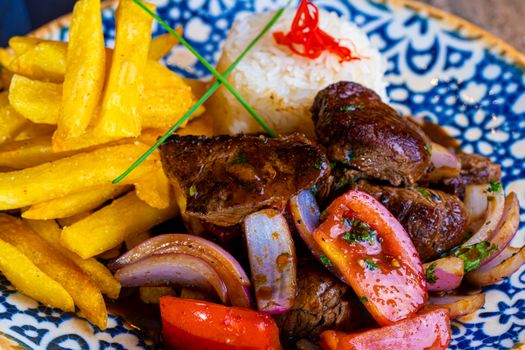
Lomo Saltado
The diets react (see scores below)
Common Ingredients
- beef tenderloin
- red onion
- tomatoes
- French fries
- soy sauce
- red wine vinegar
- cilantro
- rice
Specific recipes may vary.
Incompatible with 7 of 11 diets
Diet Ratings
Lomo Saltado is fundamentally incompatible with a ketogenic diet in its traditional form. The dish contains two major high-carb components: French fries and white rice, both of which are starchy carbohydrate sources that alone could easily exceed the entire daily net carb allowance of 20-50g. A standard serving of French fries contains roughly 30-40g net carbs, and a serving of rice adds another 40-50g, making this dish a ketosis-breaking meal by a large margin. The beef tenderloin and the vegetable components (onion, tomatoes, cilantro) would otherwise be manageable in moderation, and the soy sauce adds minimal carbs. However, the structural role of fries and rice in this dish means it cannot be adapted without fundamentally changing the recipe into something entirely different.
Lomo Saltado contains beef tenderloin as its primary protein, which is a direct animal product and categorically incompatible with a vegan diet. All remaining ingredients (red onion, tomatoes, French fries, soy sauce, red wine vinegar, cilantro, rice) are plant-based, but the presence of beef makes the dish entirely off-limits for vegans. There is no ambiguity here.
Lomo Saltado is a Peruvian stir-fry that combines several paleo-incompatible ingredients. Rice is a grain and clearly excluded under strict paleo rules. Soy sauce is a legume-derived, heavily processed condiment containing both soy and wheat — a double violation. French fries, while made from potatoes (a debated food), are typically deep-fried in seed oils (canola or vegetable oil), making them non-compliant. The dish's core identity depends on these non-paleo staples. The beef tenderloin, red onion, tomatoes, red wine vinegar, and cilantro are paleo-friendly, but they represent a minority of the dish's structure and cannot redeem it. This is not a gray-area case — the combination of a grain, a legume-based processed sauce, and seed-oil-fried potatoes makes this dish a clear avoid.
Lomo Saltado is fundamentally at odds with Mediterranean diet principles. The primary protein is beef tenderloin, which falls into the red meat category that the Mediterranean diet limits to only a few times per month. Beyond the red meat issue, the dish includes French fries (deep-fried refined starch), white rice (refined grain), and soy sauce (a highly processed, high-sodium condiment not part of the Mediterranean tradition). The combination of red meat, fried potatoes, and refined white rice in a single dish stacks multiple Mediterranean diet violations simultaneously. While tomatoes, red onion, and red wine vinegar are Mediterranean-friendly ingredients, they are minor components that cannot offset the core incompatibilities. The dish's cooking method (stir-frying, likely in neutral oils rather than olive oil) and its Latin American fusion identity place it well outside the Mediterranean dietary pattern.
Lomo Saltado is almost entirely incompatible with the carnivore diet. While it does contain beef tenderloin as the primary protein, the dish is loaded with plant-based ingredients and non-carnivore condiments. Red onion, tomatoes, French fries (potatoes), cilantro, and rice are all plant-derived foods explicitly excluded from the carnivore diet. Soy sauce is a fermented grain-and-legume product (wheat and soybeans), and red wine vinegar is plant-derived. The beef tenderloin itself is carnivore-approved, but it represents only a fraction of this dish's composition. As traditionally prepared, this Peruvian stir-fry is fundamentally a plant-heavy dish with meat as one component among many disqualifying ingredients.
Lomo Saltado as traditionally prepared contains multiple Whole30-excluded ingredients. Rice is a grain and is explicitly excluded from the Whole30 program. Soy sauce contains soy (a legume) and often wheat (a grain), both of which are excluded — coconut aminos would be a compliant substitute. French fries, while made from potatoes (which are Whole30 compliant), fall into the excluded 'tots/fries' category under the no-junk-food recreation rule. The combination of rice and soy sauce alone makes this dish non-compliant in its traditional form, requiring significant modifications to be Whole30 compatible.
Lomo Saltado contains two significant high-FODMAP ingredients that make it unsuitable during the elimination phase. Red onion is one of the highest-fructan foods tested by Monash University and is high-FODMAP at any reasonable serving size. Traditional soy sauce contains wheat (a fructan source), adding a second FODMAP hit. The remaining ingredients are generally low-FODMAP: beef tenderloin is protein with no FODMAPs, tomatoes are low-FODMAP at standard servings, French fries (plain potato) are low-FODMAP, red wine vinegar is low-FODMAP, cilantro is low-FODMAP, and white rice is a safe low-FODMAP staple. However, the red onion alone is a dealbreaker for elimination phase compliance — it cannot be used in even small amounts without triggering high-FODMAP status. The dish as traditionally prepared must be avoided.
Lomo Saltado presents a mixed DASH profile. On the positive side, it includes DASH-friendly vegetables (red onion, tomatoes), cilantro, and lean beef tenderloin as the protein source. However, several components raise concerns. Soy sauce is the primary red flag — a standard serving (1-2 tablespoons) contains 900-1,100mg of sodium, which alone represents 40-70% of the standard DASH daily sodium limit. French fries add saturated fat and calories from frying, and the combination of rice plus fries creates a high-carbohydrate, calorie-dense dish. Red meat (beef), while lean tenderloin is one of the better cuts, is still categorized as a food DASH recommends limiting in favor of poultry, fish, or plant proteins. The overall sodium burden from soy sauce makes this dish difficult to fit within DASH guidelines as traditionally prepared. Modifications (low-sodium soy sauce, baked potato strips instead of fries, brown rice) would substantially improve the DASH compatibility.
NIH DASH guidelines emphasize limiting sodium and red meat, which would categorize this dish as problematic given soy sauce's sodium load. However, some updated DASH-oriented clinicians note that lean beef tenderloin is among the lowest-fat red meat cuts and acceptable occasionally, and that low-sodium soy sauce (reduced by ~40%) combined with the vegetable-rich preparation could make a modified version fit within DASH principles — particularly for non-hypertensive individuals on the standard 2,300mg threshold.
Lomo Saltado is a Peruvian stir-fry that presents a mixed Zone picture. On the positive side, beef tenderloin is a relatively lean cut providing quality protein, and the dish includes favorable Zone vegetables (tomatoes, red onions) plus anti-inflammatory ingredients like red wine vinegar and cilantro. However, the dish contains two simultaneous high-glycemic carbohydrate sources — French fries and white rice — which are both explicitly 'unfavorable' in Zone terminology. French fries combine a high-glycemic carb with likely pro-inflammatory omega-6-heavy frying oil, and white rice is a starchy, high-glycemic grain with minimal fiber. Together, these two starches would massively skew the carbohydrate load well beyond Zone proportions, flooding the carb blocks without providing the low-glycemic, fiber-rich carbs the Zone prioritizes. Additionally, the fat profile from fried potatoes is likely from seed oils, which Sears explicitly discourages. While a Zone practitioner could theoretically order or prepare this dish while eliminating the fries and rice and replacing them with additional vegetables, the dish as traditionally prepared is difficult to balance without significant modification. The 40/30/30 ratio is achievable only with substantial restructuring.
Lomo Saltado is a Peruvian stir-fry that presents a genuinely mixed anti-inflammatory profile. On the positive side, it contains tomatoes and red onion (quercetin, lycopene, and polyphenols), cilantro (antioxidants), and red wine vinegar (acetic acid has some anti-inflammatory properties). Beef tenderloin is a leaner cut of red meat, which partially mitigates concerns, but red meat in general is still categorized as 'limit' in anti-inflammatory frameworks due to saturated fat and arachidonic acid content, and its association with elevated inflammatory markers like CRP and IL-6 in epidemiological research. The French fries are a significant concern: deep-fried in oil (often omega-6-rich seed oils), high in refined starch, and potentially containing acrylamide from high-heat cooking — all pro-inflammatory factors. White rice adds a refined carbohydrate load with minimal fiber or micronutrient benefit. Soy sauce contributes high sodium (which can worsen systemic inflammation in salt-sensitive individuals) but is a fermented food with minimal amounts of beneficial compounds. The dish is not without redeeming ingredients, but the combination of red meat + fried starch + white rice creates a notably pro-inflammatory structural foundation. Prepared at home with higher-quality ingredients, smaller portions of fries, and brown rice substitution, the score could shift upward.
Some anti-inflammatory practitioners would rate this dish more favorably, noting that beef tenderloin is a lean, whole-food protein and that tomatoes and onions provide meaningful polyphenols and antioxidants. Dr. Weil's framework does allow occasional lean red meat and considers the vegetable and spice components here as genuine positives. However, mainstream anti-inflammatory consensus (IF Rating system, Mediterranean-aligned researchers) would flag the French fries and white rice as key inflammatory drivers that tip the dish into 'limit or modify' territory.
Lomo Saltado presents a mixed nutritional profile for GLP-1 patients. On the positive side, beef tenderloin is a leaner cut with meaningful protein content (~25-30g per serving), and the dish includes fiber-contributing vegetables (tomatoes, red onion). However, the inclusion of French fries introduces high fat, fried content that directly conflicts with GLP-1 dietary guidance — fried foods worsen nausea, bloating, and reflux by slowing gastric emptying further. The double starch load (fries + white rice) adds refined carbohydrates with low fiber and nutrient density per calorie. Soy sauce is high in sodium, which can contribute to water retention and bloating. Red wine vinegar is benign and may even aid glycemic response. The dish can be made GLP-1-friendlier by substituting fries with roasted sweet potato or eliminating them, choosing brown rice over white, and reducing portion size of starch components — but as traditionally prepared, the fried element and dual starch load make this a caution rating, not an outright avoid, because the protein and vegetable components have real nutritional value.
Some GLP-1-focused RDs would rate this closer to avoid, arguing that the fried component alone warrants a low score regardless of other ingredients, particularly in the early weeks of GLP-1 therapy when GI sensitivity is highest. Others note that beef tenderloin's relatively lower saturated fat compared to other beef cuts makes this more acceptable than dishes using fattier cuts, and that patient-controlled preparation (air-frying or omitting fries) can rehabilitate the dish meaningfully.
*See how scores were generated at our methodology page.
Nutritional profile
Six traits that cut across every diet.
Fiber & Plants
How much whole-plant food and fiber it delivers.
Healthy Fats
The quality of its fats (unsaturated, omega-3).
Whole / Unprocessed
How close it is to its natural, unprocessed form.
Gut Gentle
How easy it is on digestion (low FODMAP, few irritants).
Low Glycemic
How little it spikes your blood sugar.
Protein Density
How much protein it packs per calorie.
Controversy Index
Higher controversy = more disagreement between diets.
Diet-Specific Tips
 DASH — 4/10
View tips
- High sodium from soy sauce (900-1,100mg per 1-2 tbsp serving)
- Red meat (beef) is limited on DASH; tenderloin is a leaner cut but still red meat
- French fries add saturated fat and excess calories from frying
- DASH-positive vegetables present: tomatoes and red onion
- Double starch (rice + fries) increases caloric density beyond DASH portion guidance
- Low-sodium soy sauce substitution would significantly improve DASH compatibility
- Baked or air-fried potato strips would reduce saturated fat concern
 Zone — 4/10
View tips
- French fries are explicitly unfavorable in Zone — high glycemic index and likely cooked in pro-inflammatory seed oils
- White rice is a high-glycemic, low-fiber starch that Sears classifies as unfavorable
- Double starch (fries + rice) creates a carbohydrate excess far beyond Zone block targets
- Beef tenderloin is a moderately lean protein source, acceptable in Zone portions (~3 oz)
- Tomatoes and red onions are favorable low-glycemic Zone vegetables
- Red wine vinegar supports glycemic control and fits Zone philosophy
- Dish would require eliminating both fries and rice to be Zone-compliant, fundamentally altering the dish
- Soy sauce is high in sodium but negligible in macronutrient impact for Zone purposes
 Anti-Inflammatory — 4/10
View tips
- Red meat (beef tenderloin) is a lean cut but still classified as 'limit' in anti-inflammatory diets due to saturated fat and arachidonic acid
- French fries are deep-fried in likely omega-6-rich oil and high in refined starch — pro-inflammatory
- White rice adds refined carbohydrate load with minimal fiber
- Tomatoes and red onion provide beneficial polyphenols, quercetin, and lycopene
- Cilantro contributes antioxidants
- High sodium from soy sauce may exacerbate inflammatory pathways in sensitive individuals
- Red wine vinegar is mildly beneficial but not a significant anti-inflammatory contributor at typical amounts
 GLP-1 Friendly — 4/10
View tips
- French fries are fried and high in fat — a direct GLP-1 side effect trigger for nausea and reflux
- Dual starch load (fries + white rice) is low-fiber and calorie-dense with poor nutrient density per calorie
- Beef tenderloin is a leaner beef cut providing ~25-30g protein per serving — a genuine positive
- Tomatoes and red onion contribute modest fiber and micronutrients
- High sodium from soy sauce may cause bloating
- Portion sensitivity is critical — traditional serving sizes are large and not small-meal-friendly
- Dish is highly modifiable: removing or swapping fries and using brown rice would significantly improve the rating