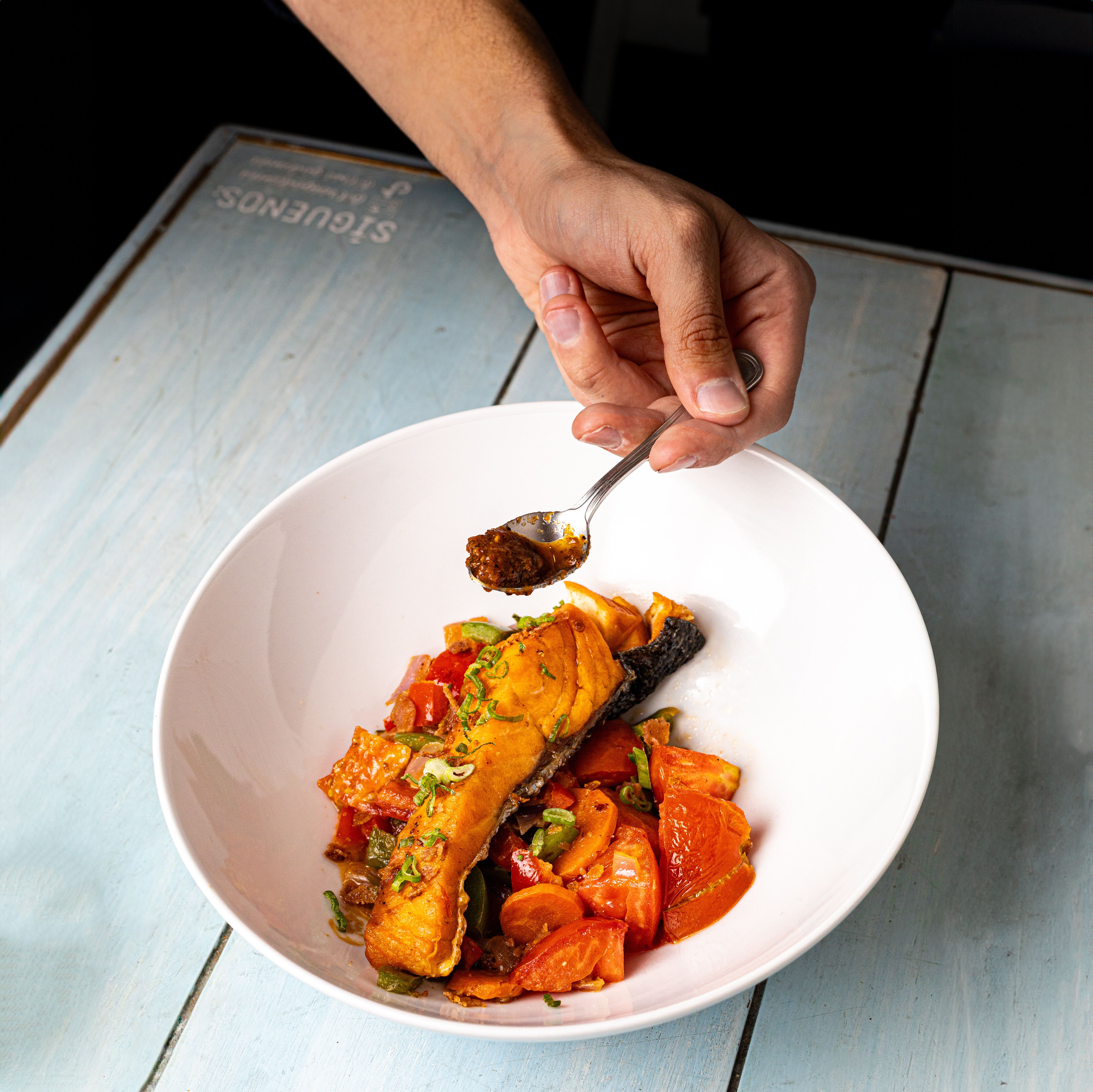
Photo: Leonardo Aquino / Pexels
Mexican
Pescado a la Veracruzana
The diets react (see scores below)
Common Ingredients
- red snapper
- tomatoes
- green olives
- capers
- pickled jalapeños
- onion
- garlic
- oregano
Specific recipes may vary.
Incompatible with 3 of 11 diets
Diet Ratings
Pescado a la Veracruzana is largely keto-compatible but requires portion awareness due to the tomatoes and onion contributing moderate net carbs. Red snapper is an excellent lean protein with negligible carbs. Green olives and capers are keto-friendly, providing healthy fats and negligible carbs. Pickled jalapeños add minimal carbs. The main concern is tomatoes and onion: a generous serving of this sauce could push net carbs to 8–12g per portion, which is manageable within a daily keto budget but not trivially low. The dish lacks added sugars or grains, and the overall macro profile is solid. A standard restaurant portion is likely fine for most keto practitioners, but those with strict carb limits should moderate the sauce quantity.
Strict keto practitioners following clinical or therapeutic protocols may flag tomatoes as too carb-dense and fructose-rich to include regularly, and would note that onion combined with tomatoes can accumulate carbs quickly if portions are not carefully controlled.
Pescado a la Veracruzana is a traditional Mexican fish dish with red snapper as its primary protein. Fish is unambiguously an animal product and is excluded from all vegan diets. The sauce components — tomatoes, green olives, capers, pickled jalapeños, onion, garlic, and oregano — are entirely plant-based, but the presence of red snapper makes the dish incompatible with veganism regardless of those ingredients.
Red snapper, tomatoes, onion, garlic, and oregano are all straightforwardly paleo-approved ingredients. The complications arise from three ingredients: green olives and capers are minimally processed and generally accepted in the paleo community, but they are typically packed in brine (added salt), which strict paleo excludes. The bigger issue is the pickled jalapeños — pickling typically involves vinegar and added salt, and the jalapeños are almost certainly from a jar with preservatives or additives, making them a processed food. If the dish were prepared with fresh jalapeños and salt-free or low-sodium olives and capers, it would score higher. As commonly prepared using store-bought pickled jalapeños and brined olives and capers, the dish falls into caution territory due to processing and added salt across multiple ingredients.
Strict Cordain-school paleo would push this closer to avoid due to the added salt in brined olives, capers, and pickled jalapeños, treating any commercially processed or salted ingredient as non-compliant. Conversely, more pragmatic paleo practitioners (Mark Sisson, Practical Paleo) would likely approve a home-prepared version using fresh jalapeños and rinsed olives/capers, arguing the fish and vegetable base is ancestrally sound.
Pescado a la Veracruzana is an excellent Mediterranean diet-aligned dish despite its Mexican origin. Red snapper is a lean white fish, fulfilling the 2-3 times weekly seafood recommendation. The sauce is built entirely on Mediterranean-compatible ingredients: tomatoes, onion, and garlic form a classic sofrito-style base rich in antioxidants and phytonutrients. Green olives and capers are staple Mediterranean pantry items, contributing healthy monounsaturated fats and flavor depth. Oregano is a canonical Mediterranean herb. The pickled jalapeños introduce a mild preservation element, but in small quantities as a seasoning they are not a nutritional concern. The dish is whole-food, plant-forward in its sauce components, centered on lean fish protein, and contains no refined grains, added sugars, or red meat. This is a textbook Mediterranean-pattern meal.
Pescado a la Veracruzana is fundamentally incompatible with the carnivore diet. While red snapper is a fully approved animal protein, the dish is defined by its plant-based sauce and accompaniments: tomatoes, onion, garlic, oregano, capers, green olives, and pickled jalapeños are all plant-derived ingredients that are strictly excluded on carnivore. The majority of the dish by ingredient count is plant material, making this a plant-forward preparation that merely uses fish as its protein base. The snapper itself would score a 9 in isolation, but the dish as prepared cannot be approved or even cautioned — it must be avoided entirely.
Pescado a la Veracruzana is largely Whole30-compatible in its core ingredients: red snapper, tomatoes, onion, garlic, and oregano are all clearly allowed. Green olives and capers are generally compliant but require label-checking — some commercial olives and capers are packed with additives, sulfites (now allowed per 2024 rule change), or preservatives that could be problematic. The main concern is the pickled jalapeños: commercially pickled jalapeños frequently contain added sugar and sometimes sodium benzoate or other additives. A home-pickled version using compliant vinegar (e.g., apple cider or white wine vinegar) and no sugar would be fine, but the common store-bought version likely contains added sugar, making it non-compliant. This dish earns a 'caution' rating because it is easily made compliant with careful ingredient sourcing, but as commonly prepared with store-bought pickled jalapeños, it likely contains an excluded ingredient.
Some Whole30 practitioners would rate this higher, arguing that the dish is straightforwardly compliant when using fresh jalapeños instead of pickled ones, and that compliant pickled versions exist. Others note that traditional Veracruzana sauce sometimes includes a splash of white wine or olives marinated in wine, which would require additional scrutiny.
Pescado a la Veracruzana contains two high-FODMAP ingredients that are foundational to the dish and cannot be reduced to safe portions: onion and garlic. Both are high in fructans and are rated 'avoid' by Monash University at any standard culinary quantity. Onion is one of the highest-FODMAP foods tested, and garlic is similarly problematic — even a small clove provides enough fructans to trigger symptoms in sensitive individuals. The red snapper itself is low-FODMAP (plain fish is always safe), and tomatoes are low-FODMAP at a standard serving (~65g). Green olives are low-FODMAP at around 15g (approx. 4-5 olives). Capers are low-FODMAP in small amounts (~1 tablespoon). Pickled jalapeños are generally low-FODMAP in small servings. Oregano as a dried herb is fine. However, the dish is structurally built around onion and garlic as core aromatics — they are not incidental garnishes that can be omitted or substituted at the quantities used in traditional Veracruzana sauce. The dish as described is not suitable during the FODMAP elimination phase.
Pescado a la Veracruzana features red snapper, an excellent lean white fish strongly endorsed by DASH guidelines as a core protein source. The base of tomatoes, onion, garlic, and oregano aligns well with DASH's emphasis on vegetables and anti-inflammatory ingredients. However, the dish's sodium profile is a significant concern: green olives, capers, and pickled jalapeños are all high-sodium, brined ingredients that can collectively push the dish well above DASH's 600mg per-meal sodium target. These three ingredients together can easily contribute 500–900mg of sodium before accounting for any added salt. The fish and vegetable components are DASH-ideal, but the traditional preparation's reliance on multiple brined/pickled ingredients creates a meaningful sodium burden. Portion control and requesting reduced or rinsed capers/olives would improve compatibility. The dish contains no saturated fat concerns, no added sugars, and is rich in potassium and lean protein — making it a borderline case that lands in 'caution' rather than 'avoid.'
NIH DASH guidelines would flag this dish primarily due to its high-sodium brined ingredients (olives, capers, pickled jalapeños). However, some DASH-oriented clinicians argue that when consumed in modest portions and prepared with low-sodium or rinsed capers and olives, this dish's overall nutritional profile — lean fish, lycopene-rich tomatoes, healthy fats from olives — aligns closely enough with DASH principles to merit approval, particularly for individuals not on the stricter 1,500mg sodium target.
Pescado a la Veracruzana is an exceptionally Zone-friendly dish. Red snapper is a lean white fish providing clean protein blocks with minimal fat, making it ideal for hitting the 30% protein target. The sauce is built almost entirely from favorable Zone carbohydrates: tomatoes are low-glycemic and rich in polyphenols (lycopene), onion and garlic add micronutrients with minimal glycemic impact, and oregano contributes anti-inflammatory polyphenols Sears specifically champions. Green olives and capers introduce monounsaturated fats (the preferred Zone fat source) in modest, naturally portioned amounts, elegantly supplying the 30% fat target without resorting to seed oils or saturated fat. Pickled jalapeños are essentially free from a macro standpoint and add polyphenol value. The dish requires no substitutions or careful workarounds — it aligns with Zone block ratios almost organically. The only minor consideration is ensuring the serving size of fish (~3-4 oz cooked) hits the ~25g protein target, and that the tomato-based sauce volume is tracked for carb blocks, but neither presents a practical challenge. This is a textbook Zone main course.
Pescado a la Veracruzana is a strong anti-inflammatory dish. Red snapper is a lean white fish providing quality protein with modest omega-3 content. Tomatoes are rich in lycopene and other antioxidants, with carotenoid bioavailability enhanced by cooking. Garlic and oregano are well-established anti-inflammatory herbs containing allicin and polyphenols respectively. Onions contribute quercetin, a potent flavonoid. Capers are actually one of the highest dietary sources of quercetin and rutin, making them a notable anti-inflammatory ingredient. Green olives provide monounsaturated fats and polyphenols consistent with Mediterranean dietary principles endorsed by anti-inflammatory frameworks. Pickled jalapeños contribute capsaicin, which has documented anti-inflammatory properties, though the pickling process (vinegar, possible sodium) adds a minor concern around sodium load. The overall ingredient profile is overwhelmingly plant-forward and polyphenol-rich, with lean fish as the protein base — precisely the pattern anti-inflammatory diets emphasize. The dish is traditionally prepared with olive oil, further reinforcing its anti-inflammatory credentials. The only modest limitations are that red snapper has lower omega-3 content than fatty fish like salmon, and the sodium from olives, capers, and pickled jalapeños warrants attention for those monitoring salt intake.
Pescado a la Veracruzana is a strong GLP-1-friendly dish. Red snapper is a lean white fish delivering high-quality protein (approximately 22-25g per 4oz serving) with very low fat, making it ideal for patients needing to hit protein targets without triggering nausea or reflux. The tomato-based sauce provides fiber, vitamins, and high water content supporting hydration and digestion. Onion, garlic, and oregano add micronutrients with negligible caloric cost. Green olives and capers contribute small amounts of heart-healthy unsaturated fats and sodium, which can aid electrolyte balance — a real concern on GLP-1s. The dish is braised rather than fried, keeping fat content low and digestibility high. The primary concern is the pickled jalapeños: spicy or acidic ingredients can worsen reflux and nausea in GLP-1 patients, particularly those in early weeks of treatment or dose escalation. The overall dish remains approvable, but spice-sensitive patients should request reduced or omitted jalapeños.
Some GLP-1-focused dietitians flag any dish containing pickled or spicy ingredients as a caution-tier choice due to the elevated risk of acid reflux and nausea from slowed gastric emptying; individual tolerance varies considerably and some clinicians recommend avoiding all acidic or spicy components entirely during dose escalation phases rather than simply moderating them.
*See how scores were generated at our methodology page.
Nutritional profile
Six traits that cut across every diet.
Fiber & Plants
How much whole-plant food and fiber it delivers.
Healthy Fats
The quality of its fats (unsaturated, omega-3).
Whole / Unprocessed
How close it is to its natural, unprocessed form.
Gut Gentle
How easy it is on digestion (low FODMAP, few irritants).
Low Glycemic
How little it spikes your blood sugar.
Protein Density
How much protein it packs per calorie.
Controversy Index
Higher controversy = more disagreement between diets.
Diet-Specific Tips
 Keto — 6/10
View tips
- Red snapper is a clean, zero-carb protein source
- Tomatoes and onion are the primary sources of net carbs (~8–12g per serving depending on sauce quantity)
- Green olives provide healthy monounsaturated fats with near-zero net carbs
- Capers and pickled jalapeños contribute negligible carbs
- No grains, added sugars, or starchy ingredients present
- Dish is naturally low in fat — may benefit from added healthy fat (e.g., olive oil drizzle) to better hit keto macros
- Portion control of the tomato-based sauce is key to staying within daily carb limits
 Paleo — 5/10
View tips
- Red snapper is an excellent paleo protein — wild-caught fish is strongly approved
- Tomatoes, onion, garlic, and oregano are all paleo-compliant
- Green olives and capers are minimally processed but packed in salt brine — added salt is excluded in strict paleo
- Pickled jalapeños are a processed food typically containing vinegar, salt, and sometimes preservatives
- Dish could be made more paleo-compliant by substituting fresh jalapeños and rinsing or avoiding brined ingredients
- No grains, legumes, dairy, or seed oils present
 Mediterranean — 9/10
View tips
- Lean white fish (red snapper) satisfies Mediterranean seafood frequency guidelines
- Tomatoes, onion, and garlic provide a nutrient-dense, antioxidant-rich base
- Green olives contribute monounsaturated fats consistent with Mediterranean fat profile
- Capers are a traditional Mediterranean ingredient adding flavor without nutritional drawbacks
- Oregano is a core Mediterranean herb
- Pickled jalapeños are a minor, low-volume ingredient that does not significantly impact overall healthfulness
- No red meat, refined grains, added sugars, or highly processed ingredients
 Whole30 — 6/10
View tips
- Red snapper and all core vegetables (tomatoes, onion, garlic, oregano) are fully Whole30-compliant
- Pickled jalapeños commonly contain added sugar in commercial preparations — must verify label or make at home
- Green olives require label-checking for compliant versions (no added sugar or non-compliant additives)
- Capers are generally compliant but verify brine ingredients on commercial jars
- Dish is easily made fully compliant with careful sourcing or home preparation
 DASH — 6/10
View tips
- Red snapper is a DASH-approved lean white fish, excellent protein source
- Tomatoes, onion, garlic, oregano are core DASH-compatible vegetables and aromatics
- Green olives are high in sodium and fat (mostly monounsaturated — acceptable fat type, but sodium is a concern)
- Capers are very high in sodium (~200–300mg per tablespoon)
- Pickled jalapeños add additional sodium from brine
- Combined brined ingredients may contribute 500–900mg+ sodium per serving
- No saturated fat concerns, no added sugar, no processed meat
- Low-sodium preparation (rinsed or reduced capers/olives) would shift verdict toward approve
 Zone — 9/10
View tips
- Red snapper is a lean, low-fat white fish — ideal Zone protein source
- Tomatoes are low-glycemic, polyphenol-rich favorable Zone carbohydrates
- Green olives supply monounsaturated fat — the preferred Zone fat source
- Capers, jalapeños, onion, and garlic are negligible-glycemic vegetables with anti-inflammatory properties
- Oregano provides polyphenols consistent with Sears' anti-inflammatory dietary focus
- No high-glycemic carbohydrates, refined grains, added sugars, or omega-6 seed oils present
- Naturally achieves approximate 40/30/30 macro ratio without modification
- Omega-3 content of red snapper supports Sears' anti-inflammatory protocol
 Anti-Inflammatory — 8/10
View tips
- Red snapper is a lean, clean protein with moderate omega-3 fatty acids
- Tomatoes provide lycopene and antioxidants, enhanced by cooking
- Capers are among the richest dietary sources of quercetin and rutin
- Green olives contribute heart-healthy monounsaturated fats and polyphenols
- Garlic has well-documented anti-inflammatory and immunomodulatory effects
- Oregano and jalapeños add anti-inflammatory phytochemicals (rosmarinic acid, capsaicin)
- Onions supply quercetin, a key anti-inflammatory flavonoid
- Higher sodium load from olives, capers, and pickled jalapeños is a minor concern
 GLP-1 Friendly — 8/10
View tips
- Lean white fish provides ~22-25g high-quality protein per serving with minimal fat
- Braised preparation avoids frying — supports easy digestibility
- Tomato-based sauce adds fiber, hydration, and micronutrient density
- Olives and capers provide unsaturated fats and electrolyte-supporting sodium in small amounts
- Pickled jalapeños are a GI risk factor — may worsen reflux or nausea, especially during dose escalation
- No refined grains, added sugars, or empty calories
- Small-portion friendly — satisfying in moderate servings