This dish contains raw or undercooked ingredients. Consume at your discretion.
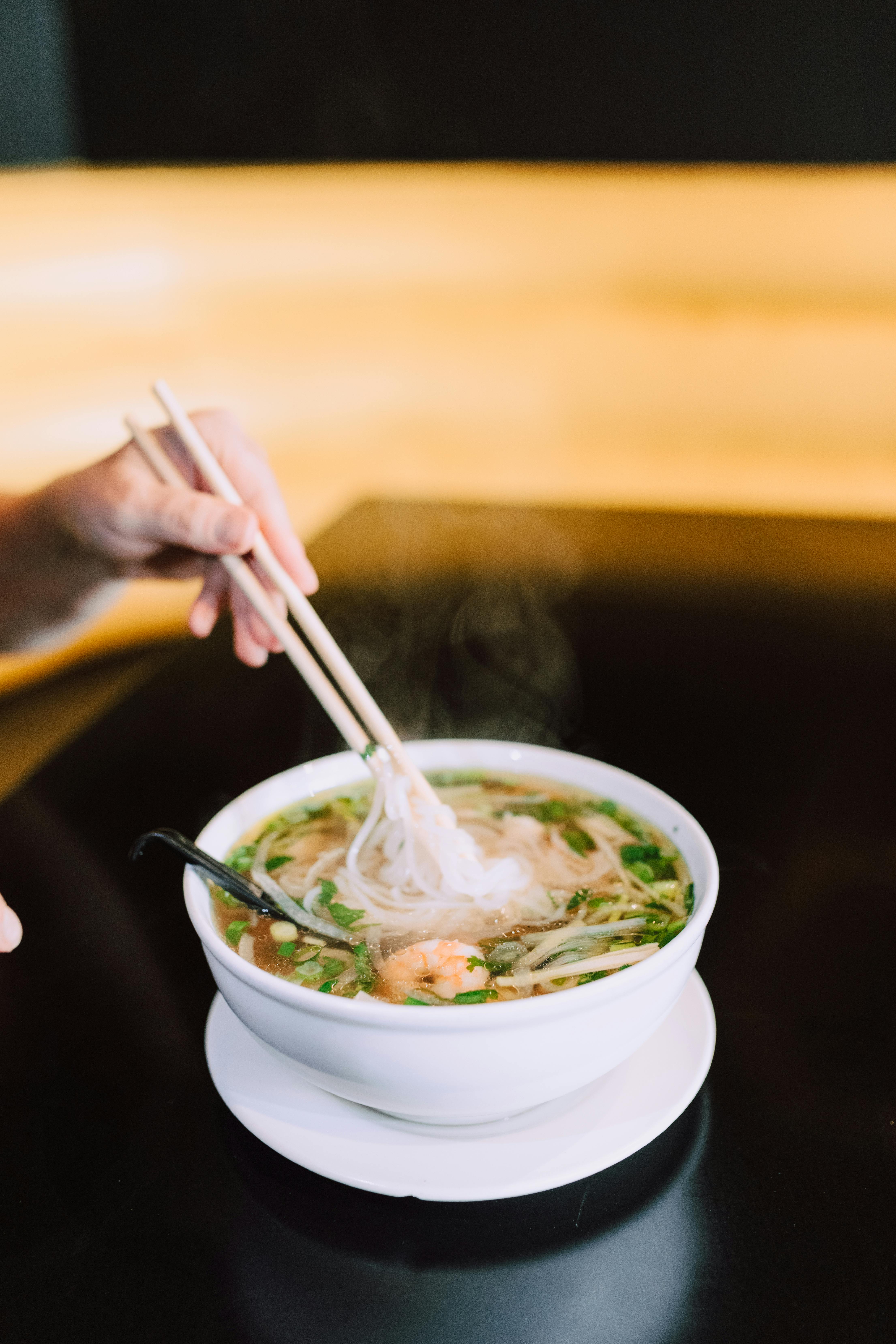
Photo: RDNE Stock project / Pexels
Vietnamese
Rare Beef Pho (Pho Tai)
The diets react (see scores below)
Common Ingredients
- rice noodles
- raw eye round
- beef bones
- star anise
- cinnamon
- ginger
- Thai basil
- fish sauce
Specific recipes may vary.
Incompatible with 6 of 11 diets
Diet Ratings
Pho Tai is fundamentally incompatible with ketogenic eating due to its rice noodle base. A standard serving of pho contains approximately 40-60g of net carbs, almost entirely from rice noodles, which are a refined starch with no fiber offset. This single ingredient blows through or exceeds the entire daily keto carb budget. The broth itself (beef bones, fish sauce, star anise, cinnamon, ginger) is keto-friendly and quite nutritious, and the raw eye round is an excellent protein source. However, the dish cannot be evaluated without its defining component — the noodles — which make it structurally incompatible with ketosis. A 'keto pho' adaptation using shirataki or zucchini noodles would be a different dish entirely.
Rare Beef Pho (Pho Tai) contains multiple animal products that are strictly excluded from a vegan diet. The dish includes raw eye round (beef), beef bones used to make the broth, and fish sauce — all of which are direct animal-derived ingredients. There is no ambiguity here; this dish is fundamentally built on animal products and is entirely incompatible with veganism.
Rare Beef Pho is disqualified primarily by its rice noodles, which are a grain-based product. Rice is a grain, and whether in whole or noodle form, it falls squarely in the 'avoid' category under strict paleo rules. The remaining ingredients are largely paleo-compliant: raw eye round (beef) and beef bones are excellent paleo proteins, star anise, cinnamon, and ginger are approved spices, and Thai basil is a paleo herb. Fish sauce is a gray area — traditionally just fermented fish and salt, but the added salt and sometimes preservatives make it a caution item. However, the rice noodles are the decisive factor. Without them, this dish (essentially a bone broth with beef and aromatics) would be largely paleo-approved. As served in its traditional form, it cannot be recommended.
Rare Beef Pho centers on beef as its primary protein, which the Mediterranean diet restricts to only a few times per month. While many individual components have redeeming qualities — rice noodles are relatively neutral refined grains, the aromatic broth uses whole spices and ginger, Thai basil adds fresh herbaceous value, and fish sauce provides umami in small amounts — the dish is fundamentally built around red meat. The bone broth base, though nutrient-rich, is derived from beef and accompanies a substantial serving of raw eye round. The refined rice noodles also offer little nutritional benefit compared to whole grains. Overall, this dish conflicts with core Mediterranean dietary principles due to its red meat centerpiece and refined grain base.
Some Mediterranean diet interpreters note that a small portion of lean red meat (such as eye round, which is quite lean) occasionally prepared in a broth-heavy, vegetable-and-herb-rich context could fit within the 'few times per month' allowance; the large volume of water-based broth, fresh herbs, and spices partially offset the red meat concern in a way that differs from, say, a grilled steak.
Rare Beef Pho contains multiple plant-derived ingredients that make it incompatible with the carnivore diet. The most disqualifying element is rice noodles, a grain-based carbohydrate that is strictly excluded. Beyond the noodles, the broth is heavily spiced with star anise and cinnamon (plant spices), and the dish is garnished with Thai basil (a leafy herb) and ginger (a root). While the beef bones and raw eye round are carnivore-approved, and fish sauce is generally accepted, the overall dish is fundamentally a plant-inclusive preparation. The broth itself, if stripped of all spices and served as pure bone broth, would be approvable — but as presented, Pho Tai cannot be considered carnivore-compatible. The beef component could theoretically be extracted and consumed separately, but the dish as a whole scores very low.
Rare Beef Pho contains rice noodles, which are a grain-based product (rice is an excluded grain on Whole30). All other ingredients — raw eye round, beef bones, star anise, cinnamon, ginger, Thai basil, and fish sauce — are individually Whole30-compliant. However, the rice noodles are a core, non-optional component of pho tai, making this dish non-compliant as traditionally prepared. Additionally, even if rice noodles were substituted, recreating pho with compliant noodle alternatives (like zucchini noodles) would be a different dish entirely. The dish as described cannot be approved.
Pho Tai is largely low-FODMAP in its core components — rice noodles, beef (eye round), fish sauce, ginger, Thai basil, and plain beef broth are all low-FODMAP. However, the broth presents the main complication: star anise and cinnamon are used as aromatics during the long bone-simmering process. Star anise is high in anethole and while it is not itself a FODMAP, Monash has not comprehensively tested concentrated pho broth for FODMAP leaching from spices or bone marrow. More critically, traditional pho broth is typically made with charred onion and sometimes shallots — common restaurant ingredients not listed here but frequently present. Even if this recipe is onion-free as listed, the long simmering of bones can release fructans from any allium residue. The dish as described (without onion/shallot) is likely low-FODMAP at a standard serving, but the ambiguity of restaurant broth preparation and the possibility of hidden alliums warrants caution.
Monash University rates rice noodles and plain beef as low-FODMAP, and lists fish sauce as low-FODMAP at standard amounts, but has not specifically tested traditional pho broth. Clinical FODMAP practitioners frequently flag Vietnamese pho as a caution food during elimination phase because restaurant versions almost universally include charred onion and shallot in the broth base, which can leach fructans into the liquid even if the solids are removed before serving.
Rare Beef Pho presents a mixed DASH profile. On the positive side, it contains lean eye round beef (a relatively low-fat cut), rice noodles (low-fat carbohydrate), aromatic spices with no sodium, fresh herbs like Thai basil, and a bone broth rich in minerals. However, the dish has significant DASH concerns: restaurant and home pho broth is notoriously high in sodium, typically ranging from 1,000–1,800mg per serving, largely driven by fish sauce and prolonged bone extraction with added salt — this alone can approach or exceed the standard DASH daily sodium limit of 2,300mg in a single bowl. Eye round is a leaner cut of red meat, which DASH recommends limiting (≤6 oz/day of lean meat, preferably poultry or fish). Beef bones used for broth contribute saturated fat. The dish is not inherently 'bad' but requires significant modification — reduced fish sauce, no added salt, portion-controlled beef — to fit comfortably within DASH parameters.
NIH DASH guidelines explicitly limit sodium and red meat, making standard pho a marginal choice. However, some DASH-oriented clinicians note that eye round is among the leanest cuts of beef and, when prepared with reduced fish sauce and homemade low-sodium broth, the dish can align reasonably well with DASH's lean protein and vegetable goals — particularly when loaded with fresh herbs and bean sprouts.
Pho Tai is a mixed Zone picture. Eye round is one of the leaner cuts of beef and serves as a reasonable Zone protein source, similar to other lean red meats Sears permits in moderation. The bone broth base is anti-inflammatory and polyphenol-supporting aromatics (ginger, star anise, cinnamon) align well with Sears' later emphasis on anti-inflammatory eating. Thai basil adds polyphenols. However, the rice noodles are the central Zone problem: they are a high-glycemic refined carbohydrate that Sears classifies as 'unfavorable,' and a standard restaurant serving (typically 200-250g cooked noodles) would deliver 40-50g of net carbs — far exceeding the 9-18g target for a 1-2 carb block Zone meal. Fish sauce adds negligible sodium-related concerns but no macro issues. The dish as traditionally served is heavily carb-skewed with insufficient protein to balance the noodle load, and the fat content from bone broth alone is minimal, leaving fat blocks unmet. A Zone-adapted version with a greatly reduced noodle portion (or zucchini noodle substitution), a larger portion of eye round, and added monounsaturated fat (e.g., a side of avocado or olive oil drizzle) could be made workable, but standard restaurant pho falls short of the 40/30/30 target.
Some Zone practitioners note that in Sears' later anti-inflammatory framework (The OmegaRx Zone, The Anti-Inflammation Zone), the quality of the overall meal pattern matters more than any single food. The bone broth provides collagen and supports gut health; ginger and cinnamon are potent polyphenol sources Sears actively recommends. A practitioner following the later Sears approach might rate this more favorably if noodle portions are halved and lean beef is doubled, arguing the anti-inflammatory spice profile and lean protein source partially offset the glycemic load of a modest noodle serving.
Pho Tai presents a genuinely mixed anti-inflammatory profile. On the positive side, the broth is built around powerful anti-inflammatory spices — star anise and cinnamon both contain polyphenols and have demonstrated anti-inflammatory activity, and ginger is a well-established anti-inflammatory ingredient (inhibits NF-κB and COX-2 pathways). Thai basil adds additional flavonoids and eugenol. Rice noodles are gluten-free and relatively neutral, though they are a refined carbohydrate with limited fiber. Fish sauce, while high in sodium, is minimally processed and adds no inflammatory fats or additives. The broth itself — long-simmered bones — provides collagen precursors (glycine, proline) that some research associates with reduced gut inflammation. The problematic element is the beef: raw eye round is a lean cut of red meat, which places it in the 'limit' category under anti-inflammatory guidelines due to saturated fat content and arachidonic acid, even though eye round is one of the leanest beef cuts available. The portion size is moderate in a typical pho bowl, which mitigates concerns somewhat. Overall, this dish is a nuanced case: the broth and spices are genuinely anti-inflammatory, the noodles are neutral, and the beef is the limiting factor. For a general healthy population, occasional consumption is reasonable — this is not a highly processed or trans-fat-laden dish.
Some anti-inflammatory practitioners, particularly those following Dr. Weil's broader framework, would argue that lean red meat in a broth rich with anti-inflammatory spices like ginger and cinnamon is an acceptable occasional food, and might rate this dish more favorably. Conversely, stricter anti-inflammatory and AIP protocols flag red meat's arachidonic acid and heme iron content as consistently pro-inflammatory regardless of cut leanness, and would recommend substituting chicken or fish.
Pho Tai is a nutrient-dense, broth-based soup that offers several GLP-1-friendly qualities but carries meaningful caveats. Eye round is one of the leanest cuts of beef, providing solid protein (roughly 20-25g per standard serving) with relatively low saturated fat compared to fattier beef cuts. The bone broth base is hydrating and easy to digest. Spices like star anise, cinnamon, and ginger are gentle on the GI tract and ginger may actually help with nausea, a common GLP-1 side effect. Thai basil adds micronutrients. However, rice noodles are refined carbohydrates with low fiber and low protein density per calorie, diluting the overall nutritional quality of the dish. A restaurant-sized bowl typically contains a large volume of noodles, meaning the protein-to-carbohydrate ratio is less favorable unless the patient consciously portions down the noodles and loads up on the beef. Bone broth can also be high in sodium, which may contribute to water retention. The dish is not fried, not spicy, and not high in fat, making it generally well-tolerated from a GI standpoint. Scored 6: approved in modified form — reduce noodle portion, increase beef portion, and it moves closer to ideal.
Some GLP-1-focused dietitians accept pho as a reasonable meal choice given its broth base, lean protein, and easy digestibility, particularly for patients struggling with appetite or nausea. Others flag the refined rice noodle load and high sodium content as meaningful concerns, recommending patients substitute shirataki noodles or reduce noodle volume significantly to make it a genuinely GLP-1-supportive meal.
*See how scores were generated at our methodology page.
Nutritional profile
Six traits that cut across every diet.
Fiber & Plants
How much whole-plant food and fiber it delivers.
Healthy Fats
The quality of its fats (unsaturated, omega-3).
Whole / Unprocessed
How close it is to its natural, unprocessed form.
Gut Gentle
How easy it is on digestion (low FODMAP, few irritants).
Low Glycemic
How little it spikes your blood sugar.
Protein Density
How much protein it packs per calorie.
Controversy Index
Higher controversy = more disagreement between diets.
Diet-Specific Tips
 Low-FODMAP — 6/10
View tips
- Rice noodles are low-FODMAP — a safe grain-based noodle
- Raw eye round beef is low-FODMAP (plain protein)
- Fish sauce is low-FODMAP at standard serving sizes (Monash tested)
- Ginger is low-FODMAP at up to 5g per serve
- Thai basil is low-FODMAP in typical garnish quantities
- Star anise and cinnamon are not FODMAP sources but broth concentration is uncertain
- Traditional pho broth nearly always contains charred onion/shallot — major fructan risk
- Homemade onion-free version would likely be low-FODMAP; restaurant versions are high-risk
 DASH — 4/10
View tips
- High sodium content from fish sauce and bone broth (typically 1,000–1,800mg per serving)
- Red meat (beef) which DASH recommends limiting in favor of poultry and fish
- Eye round is a lean cut, partially mitigating saturated fat concerns
- Rice noodles are low-fat but refined carbohydrate (not a whole grain)
- Spices (star anise, cinnamon, ginger) are DASH-positive and sodium-free
- Low-sodium preparation with reduced fish sauce would significantly improve DASH compatibility
- Single bowl can approach entire daily sodium allowance on standard DASH
 Zone — 5/10
View tips
- Rice noodles are high-glycemic 'unfavorable' carbohydrates per Zone classification
- Standard serving noodle volume creates excessive carb blocks, disrupting 40/30/30 ratio
- Eye round is a lean beef cut — acceptable Zone protein source in moderation
- Bone broth is anti-inflammatory and supports Sears' later nutritional philosophy
- Aromatics (ginger, cinnamon, star anise) are polyphenol-rich and Zone-favorable
- Fat blocks are essentially absent — monounsaturated fat must be added separately
- Dish is Zone-adaptable by reducing noodles significantly and increasing beef portion
 Anti-Inflammatory — 5/10
View tips
- Lean beef cut (eye round) is red meat — in the 'limit' category — but lower in saturated fat than most beef options
- Star anise, cinnamon, and ginger in the broth are well-documented anti-inflammatory spices
- Thai basil contributes flavonoids and eugenol with anti-inflammatory properties
- Rice noodles are gluten-free but refined carbohydrates with minimal fiber
- Long-simmered bone broth provides glycine and collagen precursors with potential gut-supportive benefits
- Fish sauce is high in sodium but introduces no inflammatory fats or artificial additives
- Dish is minimally processed — no seed oils, trans fats, refined sugars, or artificial additives
 GLP-1 Friendly — 6/10
View tips
- Eye round is a lean beef cut with good protein content (~20-25g per serving) and relatively low saturated fat
- Broth base is hydrating and supports the increased fluid needs of GLP-1 patients
- Ginger in the broth may help mitigate GLP-1-related nausea
- Rice noodles are refined carbohydrates with low fiber and low protein density, reducing overall nutritional quality
- Restaurant portions typically contain a large volume of noodles relative to protein — portion control is essential
- Bone broth can be high in sodium
- No frying, minimal fat, and gentle spices make this easy to digest and unlikely to worsen GLP-1 GI side effects
- Red meat classification means some clinicians will advise limiting frequency even for lean cuts