This dish contains raw or undercooked ingredients. Consume at your discretion.
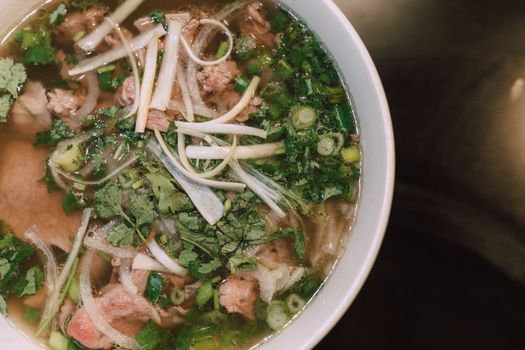
Photo: RDNE Stock project / Pexels
Vietnamese
Pho Tai Chin (Rare and Well-Done Beef)
The diets react (see scores below)
Common Ingredients
- rice noodles
- raw eye round
- beef brisket
- star anise
- cinnamon
- ginger
- Thai basil
- fish sauce
Specific recipes may vary.
Incompatible with 6 of 11 diets
Diet Ratings
Pho Tai Chin is fundamentally incompatible with ketogenic eating due to its primary ingredient: rice noodles. A standard bowl of pho contains approximately 40-60g of net carbs from rice noodles alone, immediately blowing past or maxing out the daily keto carb limit in a single meal. While the beef components (eye round, brisket), broth, fish sauce, and aromatics (star anise, cinnamon, ginger, Thai basil) are generally keto-friendly, the rice noodles are non-negotiable in a traditional Pho Tai Chin and make this dish incompatible with ketosis. The dish cannot be meaningfully adapted without eliminating its defining characteristic.
Pho Tai Chin contains multiple animal products that are strictly excluded from a vegan diet. The dish includes two forms of beef (raw eye round and beef brisket), which are direct animal flesh, and fish sauce, which is an animal-derived condiment made from fermented fish. These ingredients are fundamental to the dish's identity, not optional additions. No version of Pho Tai Chin can be considered vegan without a complete reformulation.
Pho Tai Chin is fundamentally disqualifying due to its base ingredient: rice noodles. Rice is a grain, and all grains are excluded from the paleo diet regardless of their anti-nutrient profile in most standard paleo frameworks. The remaining ingredients are largely paleo-compliant — grass-fed beef cuts (eye round and brisket) are approved proteins, star anise, cinnamon, and ginger are approved spices, and Thai basil is an approved herb. Fish sauce is a gray area due to added salt and potential additives, but traditional fish sauce (fermented fish) is often accepted in the paleo community. Despite these positives, the rice noodles are a non-negotiable disqualifier under standard paleo rules. The dish cannot be considered paleo-compatible in its traditional form.
Pho Tai Chin is centered on beef as its primary protein, which Mediterranean diet guidelines restrict to a few times per month. The dish contains two cuts of beef (eye round and brisket), making it a red meat-forward meal. The rice noodles are refined and not whole grain. On the positive side, the broth is aromatic and herb-based (star anise, cinnamon, ginger, Thai basil), fish sauce adds umami without heavy processing, and the dish is relatively low in saturated fat compared to fatty red meat preparations. However, the core issue remains: beef is the dominant protein and refined noodles are the base carb, both of which conflict with Mediterranean diet principles when eaten regularly.
Some Mediterranean diet practitioners would rate this more leniently if consumed occasionally (a few times per month), noting that lean cuts like eye round and brisket in a broth-based soup are relatively low in saturated fat, and that the anti-inflammatory spices and herb garnishes align with the diet's flavor principles. The lean broth-cooking method is also preferable to frying or grilling red meat.
Pho Tai Chin is fundamentally incompatible with the carnivore diet. The dish is built on rice noodles, a grain-based plant food that is entirely excluded from carnivore. Beyond the noodles, it contains multiple plant-derived aromatics and spices: star anise, cinnamon, ginger, and Thai basil — all disqualifying plant compounds. While the beef components (eye round and brisket) and fish sauce are carnivore-compatible, the dish as a whole cannot be adapted without stripping away the defining characteristics that make it pho. The rice noodles alone are an automatic disqualifier, and the spice profile adds further violations.
Pho Tai Chin contains rice noodles, which are made from rice — a grain explicitly excluded on the Whole30 program. All other ingredients (beef cuts, star anise, cinnamon, ginger, Thai basil, fish sauce) are individually compliant, but the rice noodles alone disqualify this dish as prepared. This is a clear-cut exclusion with no exceptions for rice-based products.
Pho Tai Chin contains several low-FODMAP components — rice noodles (low-FODMAP), plain beef cuts (low-FODMAP), fish sauce (low-FODMAP at typical serving), Thai basil (low-FODMAP), and ginger (low-FODMAP at small amounts). However, the traditional pho broth is the primary concern. Authentic pho broth is typically made with charred onion and garlic as foundational aromatics, which are high in fructans. Even if this ingredient list omits onion and garlic explicitly, restaurant pho broths almost universally contain them. Star anise is low-FODMAP at small amounts (1 star per serving), and cinnamon is low-FODMAP at typical quantities. The listed ingredients as written are mostly safe, but the practical reality of how pho broth is prepared — with onion and garlic — makes this a caution-level dish when ordering at a restaurant. If preparing at home using a homemade broth specifically without onion or garlic (using green onion tops only), this dish could approach approved status.
Monash University rates rice noodles, plain beef, ginger, and fish sauce as low-FODMAP, and the listed spices are generally safe at typical doses. However, clinical FODMAP practitioners caution that restaurant pho broth is nearly always prepared with onion and garlic — FODMAPs that leach into water-based broths — making it high-FODMAP in practice even if not listed as explicit ingredients.
Pho Tai Chin contains a mix of DASH-friendly and DASH-problematic elements. On the positive side, rice noodles provide carbohydrate energy (though they are refined, not whole grain), the broth is rich in aromatic spices (star anise, cinnamon, ginger) with no added fat, and Thai basil contributes micronutrients. Eye round is a relatively lean cut of beef, aligning reasonably with DASH lean protein guidance. However, several concerns arise: (1) Fish sauce is very high in sodium — a single tablespoon contains ~1,400mg — and pho broth typically uses a significant quantity, making the total dish sodium load likely 1,500–2,500mg or more per bowl, potentially exceeding the standard DASH daily limit in one meal. (2) Beef brisket is a fattier cut with higher saturated fat content, which DASH discourages. (3) Beef overall is a red meat, which DASH limits in favor of poultry, fish, and plant proteins. (4) Rice noodles are refined carbohydrates rather than whole grains. The dish can be made more DASH-compatible by requesting low-sodium broth, limiting fish sauce, choosing leaner cuts, and controlling portion size, but as commonly prepared in restaurants, the sodium content is the primary disqualifier for full approval.
NIH DASH guidelines specifically limit red meat and high-sodium condiments like fish sauce, making restaurant pho a sodium concern. However, updated clinical interpretations note that pho broth is not fully consumed (reducing actual sodium intake), eye round is among the leanest beef cuts, and the overall nutrient profile — lean protein, minimal added fat, anti-inflammatory spices — is closer to DASH principles than many Western dishes of comparable sodium levels; some DASH-oriented dietitians allow it occasionally with portion awareness.
Pho Tai Chin is a nutritionally rich Vietnamese soup that has several Zone-friendly elements but also a notable Zone challenge. On the positive side, the proteins (eye round and beef brisket) are relatively lean cuts of beef that provide quality protein blocks, and the aromatic spices (star anise, cinnamon, ginger) and Thai basil contribute anti-inflammatory polyphenols that Sears increasingly emphasized in his later work. Fish sauce adds sodium but negligible macros. The core problem for Zone compliance is the rice noodles: they are a high-glycemic, refined carbohydrate that Sears classifies as an 'unfavorable' carb, similar to white rice. A standard pho serving contains a substantial noodle portion (roughly 40-50g net carbs) that would dramatically skew the carb block ratio and spike insulin. The broth itself is essentially free in Zone terms. To fit Zone protocols, a practitioner would need to significantly reduce noodle portions (perhaps to a small handful, ~1-2 carb blocks) and add low-glycemic vegetables like bean sprouts or extra basil to rebalance. The fat profile is moderate — brisket has some saturated fat, which early Zone discouraged, though Sears' later writings are more permissive. With careful portioning, this dish can be adapted, but as traditionally served, the noodle load makes it a cautious choice.
Some Zone practitioners following Sears' later anti-inflammatory framework (Zone Diet, Toxic Fat) may be more lenient here, noting that the overall anti-inflammatory spice profile, omega-3 potential from lean beef, and the meal's high protein content partially offset the noodle glycemic burden. Others argue that reducing noodles by half and loading up on bean sprouts and herbs makes restaurant pho a workable Zone meal, bumping it toward a soft approve with modifications.
Pho Tai Chin presents a genuinely mixed anti-inflammatory profile. On the positive side, the broth is built around powerhouse anti-inflammatory spices — star anise (anethole), cinnamon (cinnamaldehyde), and ginger (gingerols, shogaols) — all with well-documented anti-inflammatory properties. Thai basil adds polyphenols and eugenol. Fish sauce, while high in sodium, is a fermented condiment used in small amounts and doesn't carry meaningful inflammatory burden. Rice noodles are gluten-free and relatively neutral — refined, but not as problematic as wheat-based refined carbs. The broth itself, made by simmering beef bones, can be rich in glycine and gelatin, which some research associates with anti-inflammatory gut support. The significant downside is the beef: both eye round (lean, but still red meat) and brisket (fattier, higher in saturated fat) place this dish in the 'limit' category. Red meat consumed regularly is associated with elevated inflammatory markers including CRP and IL-6. The brisket in particular has meaningful saturated fat content. That said, the portion of beef in a typical bowl of pho is moderate — the dish is predominantly broth and noodles — and the spice profile genuinely offsets some concern. As an occasional dish, the anti-inflammatory spice base and moderate protein portion make this acceptable. As a regular staple, the red meat load becomes a meaningful concern.
Most anti-inflammatory frameworks (including Dr. Weil's) categorize red meat as 'limit rather than avoid,' and some functional medicine practitioners argue that the glycine-rich bone broth base and potent spice blend (ginger, cinnamon, star anise) actively counteract the pro-inflammatory effects of modest red meat portions. Stricter anti-inflammatory and AIP-aligned practitioners, however, would flag regular red meat consumption — especially brisket — as a consistent source of arachidonic acid precursors and saturated fat that undermines the diet's core goals.
Pho Tai Chin is a nutrient-dense, broth-based soup that offers meaningful protein from lean beef cuts (eye round and brisket), high water content from the broth, and anti-inflammatory spices. The broth-heavy format is gentle on a slowed GI tract, easy to digest, and naturally supports hydration — a real advantage for GLP-1 patients. However, beef brisket carries moderate-to-high saturated fat depending on how it is prepared and trimmed, which can worsen nausea, bloating, and reflux. Rice noodles are refined carbohydrates with low fiber and modest nutrient density, meaning a standard restaurant portion is carbohydrate-heavy relative to its protein and fiber contribution. Fish sauce adds sodium, which is worth monitoring. A typical restaurant bowl is also a large-volume serving, making portion control necessary. The dish earns a caution rather than an avoid because the protein is real and meaningful, the broth is hydrating and easy to digest, and it can be modified (extra lean beef, smaller noodle portion, extra basil) to improve its profile substantially.
Some GLP-1-focused dietitians view pho favorably as one of the more GI-friendly restaurant options available — warm broth soups are among the easiest formats for patients experiencing nausea or gastroparesis-like slowing. Others flag the brisket fat content and refined rice noodle load as meaningful drawbacks, particularly for patients sensitive to fat-triggered nausea or managing blood sugar, and recommend requesting leaner cuts and a reduced noodle portion.
*See how scores were generated at our methodology page.
Nutritional profile
Six traits that cut across every diet.
Fiber & Plants
How much whole-plant food and fiber it delivers.
Healthy Fats
The quality of its fats (unsaturated, omega-3).
Whole / Unprocessed
How close it is to its natural, unprocessed form.
Gut Gentle
How easy it is on digestion (low FODMAP, few irritants).
Low Glycemic
How little it spikes your blood sugar.
Protein Density
How much protein it packs per calorie.
Controversy Index
Higher controversy = more disagreement between diets.
Diet-Specific Tips
 Low-FODMAP — 5/10
View tips
- Rice noodles are low-FODMAP and a safe base
- Plain beef (eye round, brisket) is low-FODMAP
- Traditional pho broth contains charred onion and garlic — major fructan sources — even if not explicitly listed here
- Fish sauce is low-FODMAP at standard serving sizes
- Star anise is low-FODMAP at 1 star per serve but high-FODMAP in larger quantities
- Ginger is low-FODMAP at small amounts (1 tsp or less)
- Thai basil is low-FODMAP
- Restaurant preparation almost certainly includes onion and garlic in broth, making this high-risk when dining out
 DASH — 5/10
View tips
- Very high sodium from fish sauce and broth — likely 1,500–2,500mg+ per serving
- Beef brisket is a high-saturated-fat cut, discouraged by DASH
- Eye round is a lean beef cut, more compatible with DASH lean protein guidelines
- Red meat overall is limited on DASH in favor of poultry, fish, and plant proteins
- Rice noodles are refined grains, not whole grains as DASH emphasizes
- Thai basil, ginger, star anise, and cinnamon are micronutrient-positive additions
- Sodium load can be reduced by not drinking full broth or requesting low-sodium preparation
- Low-sodium fish sauce or reduced fish sauce quantity would significantly improve DASH compatibility
 Zone — 5/10
View tips
- Rice noodles are a high-glycemic 'unfavorable' carb in Zone terminology, creating a carb block imbalance in standard servings
- Eye round is a lean protein cut that fits well as Zone protein blocks
- Brisket adds moderate saturated fat, which early Zone discouraged but later Sears writings tolerate more
- Anti-inflammatory spices (ginger, cinnamon, star anise) and Thai basil align with Sears' polyphenol emphasis
- Broth is essentially calorie-neutral in Zone block counting
- Dish requires significant noodle reduction and vegetable additions to achieve 40/30/30 ratio
- Fish sauce contributes sodium but does not meaningfully affect macronutrient blocks
 Anti-Inflammatory — 5/10
View tips
- Red meat (eye round + brisket) is in the 'limit' category — associated with elevated CRP and IL-6 at regular consumption
- Brisket contains meaningful saturated fat, a pro-inflammatory dietary component
- Star anise, cinnamon, and ginger are high-confidence anti-inflammatory spices with documented bioactive compounds (anethole, cinnamaldehyde, gingerols)
- Thai basil contributes polyphenols and eugenol with anti-inflammatory activity
- Rice noodles are gluten-free but refined — neutral to mildly negative
- Fish sauce is a fermented condiment used in small quantity — minimal inflammatory impact
- Bone broth base may contribute glycine and collagen, associated with gut and anti-inflammatory benefits in some research
- Dish is broth-forward — beef portions are moderate in context, which mitigates red meat concern somewhat
 GLP-1 Friendly — 6/10
View tips
- Lean eye round provides good protein per calorie; brisket adds protein but with higher saturated fat
- Rice noodles are refined carbohydrates — low fiber, moderate glycemic impact, calorie-dense relative to nutrient value
- Large broth volume supports hydration, a key GLP-1 benefit
- Broth-based format is gentle on delayed gastric emptying
- Standard restaurant bowl is large — portion control required
- High sodium from fish sauce and broth warrants awareness
- Spices (star anise, cinnamon, ginger) are GI-tolerable and mildly anti-inflammatory
- Easily modified: request lean beef only, reduce noodle portion, add vegetables