Spanish
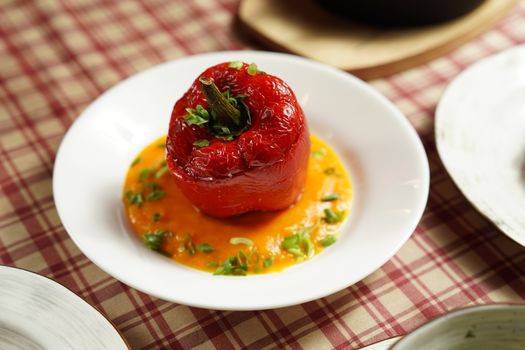
Stuffed Piquillo Peppers
The diets react (see scores below)

That’s a heavy plate — want to see the leaner version?
Common Ingredients
- piquillo peppers
- salt cod
- onion
- milk
- flourWhole wheat flour
Whole-wheat flour adds fiber and lowers the refined-grain load versus flour.
- butterExtra virgin olive oil
Extra-virgin olive oil swaps saturated fat for monounsaturated fat in place of butter.
- garlic
- parsley
Specific recipes may vary.
Incompatible with 7 of 11 diets
Diet Ratings
Stuffed Piquillo Peppers as traditionally prepared are incompatible with keto due to multiple high-carb ingredients. The filling is essentially a bechamel sauce made with flour, milk, and butter — flour is a grain-based thickener that alone can easily exceed a daily keto carb limit in a standard serving. Milk adds additional lactose-based carbs. Piquillo peppers themselves are moderate in carbs (~6-8g net carbs per 100g), and while manageable in very small quantities, the combined carb load of the dish as a whole is prohibitive. Salt cod and butter are keto-friendly, but they cannot redeem the dish given the flour-based sauce.
This dish contains multiple animal-derived ingredients that disqualify it from a vegan diet. Salt cod is a fish product, milk is a dairy product, and butter is also dairy-derived. These are unambiguous animal products with no debate within the vegan community. The dish is fundamentally incompatible with veganism in its current form.
Stuffed Piquillo Peppers as traditionally prepared contain multiple non-paleo ingredients that disqualify the dish. Flour (wheat) is a grain and explicitly excluded from the paleo diet. Milk and butter are dairy products, also excluded. Salt cod introduces added salt, which is discouraged. The classic filling for this Spanish dish is a béchamel sauce built on flour, milk, and butter — meaning three of the core components are paleo violations. While the base ingredients of piquillo peppers, cod, onion, garlic, and parsley are all paleo-approved, the dish as described cannot be considered paleo-compatible.
Stuffed Piquillo Peppers is a traditional Spanish dish with genuine Mediterranean credentials, but the filling preparation introduces some tension with strict Mediterranean diet principles. The base is excellent: piquillo peppers are a nutrient-rich vegetable, salt cod (bacalao) is a traditional Mediterranean fish protein, and aromatics like garlic, onion, and parsley are dietary staples. However, the filling is bound with a béchamel-style sauce made from butter, flour, and milk. Butter is not the canonical Mediterranean fat (olive oil is), refined flour is a processed grain, and while dairy milk is acceptable in moderation, this combination shifts the dish away from core Mediterranean principles. The dish is not outright problematic — fish and vegetables remain central — but the béchamel element is a notable deviation. A more Mediterranean version would use olive oil in place of butter and possibly skip the flour-thickened sauce.
In traditional Spanish and Basque culinary practice, bacalao al pil-pil and similar cod preparations sometimes incorporate butter or cream-based sauces as regional adaptations, and some Mediterranean diet practitioners accept these as culturally authentic expressions of the diet's diversity. Modern clinical Mediterranean diet guidelines, however, consistently identify butter and refined flour as foods to minimize, favoring olive oil as the sole primary fat.
Stuffed Piquillo Peppers is fundamentally incompatible with the carnivore diet. While salt cod is an acceptable animal protein, the dish is overwhelmingly plant-based and grain-based. Piquillo peppers are a plant food and entirely excluded from carnivore. Onion and garlic are vegetables, also excluded. Parsley is a plant herb, excluded. Flour is a grain-based ingredient, strictly prohibited. Even the milk and butter (dairy) and the cod itself cannot redeem this dish given the volume and centrality of excluded ingredients. This is essentially a Spanish tapas dish built around peppers with a béchamel-style filling — the structure of the dish itself is plant and grain dependent.
This classic Spanish dish contains multiple Whole30-excluded ingredients. Milk (dairy) is explicitly excluded from the Whole30 program. Flour (a grain product, typically wheat) is also explicitly excluded. Butter (regular dairy butter, not ghee) is excluded — only ghee and clarified butter are permitted as dairy exceptions. The combination of milk, flour, and butter strongly suggests a béchamel-style sauce, which relies on all three excluded ingredients. Salt cod itself, onion, garlic, parsley, and piquillo peppers are all Whole30-compliant, but the excluded ingredients in this recipe make the dish incompatible with the program as described.
This dish contains multiple high-FODMAP ingredients that make it unsuitable for the elimination phase. Onion is one of the highest-FODMAP foods (fructans) and is problematic at virtually any culinary quantity. Garlic is similarly high in fructans and a major FODMAP offender. Milk used in what appears to be a béchamel-style sauce is high in lactose, especially at the quantities needed to make a binding sauce. Wheat flour (assumed standard) is high in fructans. While piquillo peppers, salt cod, butter, and parsley are low-FODMAP, the combination of onion, garlic, milk, and wheat flour creates an unavoidably high-FODMAP dish. Even substituting lactose-free milk and gluten-free flour would not resolve the onion and garlic problem.
The primary concern with Stuffed Piquillo Peppers is the use of salt cod (bacalao), which is heavily salt-cured and one of the highest-sodium foods commonly used in cooking. Even after soaking and desalting, salt cod retains very high sodium levels — a single serving can easily contribute 800–1,500mg of sodium, threatening or exceeding the entire daily DASH sodium budget (1,500–2,300mg/day). The béchamel-style filling made with butter, flour, and milk adds saturated fat from the butter, which DASH limits. While piquillo peppers are DASH-friendly vegetables, garlic, onion, and parsley are positive DASH ingredients, and cod itself is an excellent lean protein — the salt cod preparation method fundamentally undermines the dish's DASH compatibility. Fresh cod stuffed peppers without added salt would score much higher (7–8), but salt cod as the primary ingredient is a significant DASH violation.
Stuffed Piquillo Peppers present a mixed Zone profile. The core protein (salt cod/bacalao) is an excellent lean protein source, fitting well into Zone protein blocks. Piquillo peppers are low-glycemic, polyphenol-rich vegetables — a Zone-favorable carbohydrate. Garlic, parsley, and onion are also favorable low-GI carb contributors. However, the traditional preparation uses a béchamel-style filling made with butter, flour, and whole milk. Flour is a moderate-glycemic carbohydrate that counts as an 'unfavorable' Zone carb block, and butter adds saturated fat rather than the preferred monounsaturated fat. The milk adds additional carbs and some saturated fat. The combination tilts the fat profile away from Zone ideals (olive oil, avocado) toward saturated fat, and the flour-based binder pushes the carb quality down. The dish can still be portioned into a Zone-compatible snack — perhaps 2-3 peppers — but the macronutrient ratios and fat quality require attention. A Zone-modified version substituting olive oil for butter and reducing or eliminating flour would score much higher.
Some Zone practitioners would argue this dish scores higher (6-7) because the flour and butter quantities used in béchamel per serving are relatively small, and the overall dish remains protein-forward with excellent low-GI vegetable base. Dr. Sears' later writings in 'The Zone Diet' acknowledge that small amounts of less-favorable ingredients are acceptable within a balanced meal context, and salt cod's high protein density makes hitting the 40/30/30 ratio feasible with careful portioning.
Stuffed Piquillo Peppers present a mixed anti-inflammatory profile. On the positive side, piquillo peppers are rich in antioxidants, vitamin C, and carotenoids — hallmarks of an anti-inflammatory food. Cod is a lean white fish providing quality protein and modest omega-3 fatty acids (notably less than fatty fish like salmon, but still beneficial). Garlic and parsley are well-regarded anti-inflammatory herbs. Onion contributes quercetin and other flavonoids. However, the bechamel-style filling binder — butter, flour, and milk — introduces saturated fat (butter), refined carbohydrate (white flour), and dairy, all of which are in the 'moderate' to 'limit' categories under anti-inflammatory frameworks. Butter is specifically flagged as a saturated fat to limit. The salt cod base is nutritionally sound but the high sodium from salt-curing is a peripheral concern. Overall, the dish blends genuinely anti-inflammatory ingredients (peppers, cod, garlic, parsley) with a moderately pro-inflammatory béchamel binding component, landing it squarely in the 'caution' zone.
Some anti-inflammatory practitioners, including Dr. Weil's broader Mediterranean-influenced framework, would view this dish more favorably given its foundation in vegetables, lean fish, garlic, and herbs — staples of the Mediterranean diet, which is itself a leading anti-inflammatory dietary pattern. In that context, small amounts of butter and flour in a traditional preparation might be considered acceptable in moderation rather than disqualifying. Stricter anti-inflammatory protocols would flag the butter and refined flour more seriously.
Stuffed Piquillo Peppers are a classic Spanish tapa featuring salt cod (bacalao) in a béchamel-style filling inside sweet roasted piquillo peppers. The cod provides a solid lean protein base — salt cod is very high in protein and extremely low in fat, which is ideal for GLP-1 patients. The piquillo peppers themselves are nutrient-dense, rich in vitamin C and antioxidants, easy to digest, and portion-friendly as a snack format. However, the traditional filling relies on a butter-and-flour béchamel (milk, butter, flour), which introduces saturated fat, refined starch, and moderate caloric density with limited nutritional payoff. The béchamel slows digestion further on top of already slowed gastric emptying from GLP-1 medication, and the fat content may worsen nausea or reflux in sensitive patients. Sodium is also a concern — salt cod requires soaking to reduce sodium, but residual sodium can still be high, which matters for hydration and cardiovascular health. As a small snack portion with a modest béchamel, this dish lands in caution territory: the protein and pepper components are genuinely GLP-1 friendly, but the buttery sauce prevents a full approve.
Some GLP-1-focused dietitians would approve a lightened version of this dish — replacing béchamel with a small amount of olive oil, garlic, and parsley — as the cod-pepper combination is otherwise excellent. Others flag the traditional béchamel version more strongly, noting that even moderate saturated fat in a small portion can trigger nausea in patients during dose escalation phases when GI sensitivity is highest.
*See how scores were generated at our methodology page.
Nutritional profile
Six traits that cut across every diet.
Fiber & Plants
How much whole-plant food and fiber it delivers.
Healthy Fats
The quality of its fats (unsaturated, omega-3).
Whole / Unprocessed
How close it is to its natural, unprocessed form.
Gut Gentle
How easy it is on digestion (low FODMAP, few irritants).
Low Glycemic
How little it spikes your blood sugar.
Protein Density
How much protein it packs per calorie.
Controversy Index
Higher controversy = more disagreement between diets.
Diet-Specific Tips
 Mediterranean — 5/10
View tips
- Salt cod is an excellent, traditional Mediterranean fish protein
- Piquillo peppers are a nutrient-dense, plant-based vegetable staple
- Butter used instead of olive oil contradicts primary fat principle
- Refined flour in béchamel represents a processed grain component
- Garlic, onion, and parsley are strongly approved Mediterranean aromatics
- Dish is culturally authentic to Spanish Mediterranean tradition
- Overall fish-and-vegetable orientation is positive despite béchamel
 Zone — 5/10
View tips
- Salt cod is an excellent lean protein — Zone-favorable protein block
- Piquillo peppers are low-glycemic, anti-inflammatory, polyphenol-rich — highly Zone-favorable carb
- Flour in béchamel is an 'unfavorable' Zone carbohydrate with moderate glycemic load
- Butter contributes saturated fat rather than preferred monounsaturated fat
- Whole milk adds both carbohydrate and saturated fat
- Onion, garlic, and parsley are favorable low-GI carb contributors
- Dish is portionable as a snack (2-3 peppers) to fit Zone block targets
- Traditional preparation can be modified (olive oil for butter, omit flour) to improve Zone compliance
 Anti-Inflammatory — 5/10
View tips
- Piquillo peppers are rich in carotenoids, vitamin C, and polyphenols — strongly anti-inflammatory
- Cod provides lean protein and modest omega-3 fatty acids
- Garlic and parsley contribute anti-inflammatory phytonutrients (allicin, flavonoids)
- Butter in the béchamel adds saturated fat, which is in the 'limit' category
- White flour is a refined carbohydrate, a moderate inflammatory concern
- Milk (low-fat dairy) is in the 'moderate' category — acceptable but not emphasized
- High sodium content from salt cod is a secondary concern
- Overall Mediterranean flavor profile is aligned with anti-inflammatory principles despite the béchamel
 GLP-1 Friendly — 5/10
View tips
- Salt cod is an exceptionally lean, high-protein fish — strong positive for GLP-1 patients
- Piquillo peppers are nutrient-dense, antioxidant-rich, and easy to digest
- Béchamel (butter, flour, milk) adds saturated fat and refined starch — moderate GI side effect risk
- Small tapa-sized portions align well with GLP-1 small meal recommendations
- Residual sodium from salt cod may be high even after soaking — hydration consideration
- Slowed gastric emptying means the fat in béchamel lingers longer, increasing nausea risk
- Fiber content is low — peppers contribute some, but overall this snack is not fiber-forward