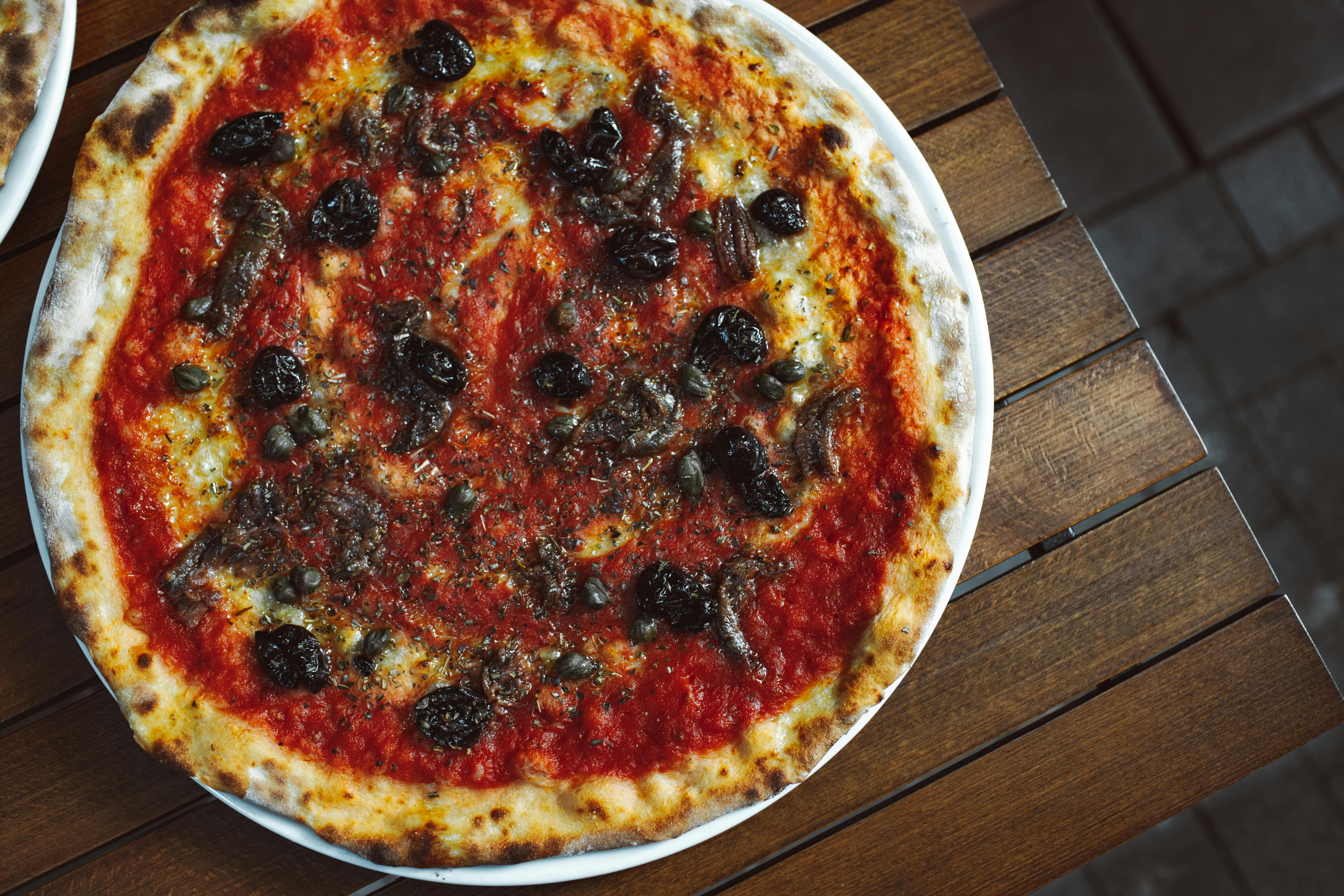
Photo: ROMAN ODINTSOV / Pexels
The diets react (see scores below)
Common Ingredients
- bread dough
- yellow onions
- anchovies
- olives
- thyme
- olive oil
- garlic
- black pepper
Specific recipes may vary.
Incompatible with 7 of 11 diets
Diet Ratings
Pissaladière is a Provençal flatbread tart built on a bread dough base, making it fundamentally incompatible with ketogenic eating. The bread dough alone delivers a very high net carb load — a single slice can easily exceed an entire day's keto carb budget. While several individual components (anchovies, olives, olive oil, garlic, thyme) are keto-friendly, they are entirely overshadowed by the grain-based crust. The caramelized yellow onions also add meaningful sugar content. There is no practical portion size that makes this dish compatible with ketosis.
Pissaladière contains anchovies as a primary ingredient, which are fish — a clear animal product excluded under all vegan definitions. The remaining ingredients (bread dough, onions, olives, thyme, olive oil, garlic, black pepper) are plant-based, but the presence of anchovies makes this dish entirely incompatible with a vegan diet. No meaningful debate exists within the vegan community on this point: fish are animals, and consuming them violates the foundational principle of veganism.
Pissaladière is fundamentally built on bread dough, a wheat-based grain product that is categorically excluded from the paleo diet. Wheat and all grain-based doughs are among the clearest 'avoid' items in every mainstream paleo framework, including Cordain, Sisson, and Wolf. While several other ingredients — anchovies, yellow onions, olives, thyme, olive oil, garlic, and black pepper — are fully paleo-approved, the bread dough base is a dealbreaker that cannot be moderated or worked around. The dish cannot be considered paleo in any interpretation of the diet.
Pissaladière is a traditional Provençal dish that aligns well with several Mediterranean diet principles: extra virgin olive oil as the primary fat, anchovies as a Mediterranean seafood staple, olives, aromatic herbs, garlic, and caramelized onions are all core Mediterranean ingredients. However, the base is a refined white bread dough, which falls under refined grains — a category the Mediterranean diet recommends limiting in favor of whole grains. The overall dish is plant-forward with beneficial seafood, but the refined flour base prevents a full approval.
Traditional Provençal and broader Mediterranean culinary practice has long included flatbreads and dough-based preparations made from refined flour as culturally authentic vehicles for vegetables, fish, and olive oil; some Mediterranean diet scholars argue that when refined grains appear in modest portions alongside nutrient-dense toppings, the overall dietary pattern remains sound and the dish should be approved.
Pissaladière is a French flatbread-based dish that is fundamentally incompatible with the carnivore diet. The foundation is bread dough — a grain-based, plant-derived food that is entirely excluded. Beyond the dough, virtually every other ingredient is also plant-based: yellow onions, olives, thyme, olive oil, garlic, and black pepper are all forbidden on carnivore. While anchovies are the only animal-derived ingredient and would otherwise be approved on carnivore, they are a minor topping on an otherwise fully plant-based dish. The dish cannot be adapted to carnivore principles without being fundamentally reconstructed into something else entirely.
Pissaladière is a French flatbread/pizza-style dish built on bread dough, which contains grains (wheat flour) — an excluded ingredient on Whole30. Beyond the grain violation, bread dough itself falls squarely into the 'no recreating baked goods' rule, as Whole30 explicitly prohibits pizza crust, flatbreads, and similar items even when made with compliant toppings. The toppings themselves (anchovies, olives, onions, thyme, olive oil, garlic, black pepper) are entirely Whole30-compliant, but the foundation of the dish disqualifies it entirely. This is a clear, unambiguous violation on two counts: excluded ingredient (wheat/grain) and prohibited food form (pizza/flatbread crust).
Pissaladière contains multiple high-FODMAP ingredients that make it unsuitable during the elimination phase. The bread dough is wheat-based, which is high in fructans at any standard serving size. Yellow onions are one of the highest-FODMAP foods tested by Monash University, extremely high in fructans even in small quantities. Garlic is similarly very high in fructans and must be avoided entirely during elimination. While anchovies, olives, thyme, olive oil, and black pepper are all low-FODMAP, the combination of wheat bread dough, onions, and garlic creates an unavoidably high-FODMAP dish. There is no realistic modification that preserves the character of a pissaladière while making it low-FODMAP, as onions and wheat dough are foundational to the dish.
Pissaladière is a Provençal flatbread topped with anchovies, olives, and caramelized onions — a combination that is extremely high in sodium. Anchovies are one of the saltiest foods commonly eaten, with a single small tin providing well over 1,000mg of sodium, and olives add further significant sodium. Together, a typical serving of Pissaladière can easily deliver 800–1,500mg of sodium, approaching or exceeding the entire daily sodium budget for the low-sodium DASH target (1,500mg) or a substantial fraction of the standard DASH limit (2,300mg). The bread dough base also contributes refined carbohydrates with minimal fiber unless whole grain flour is used. While olive oil and onions are DASH-friendly ingredients, and anchovies do provide lean protein and omega-3 fatty acids, the overwhelming sodium burden from the anchovies and olives makes this dish incompatible with DASH principles regardless of portion size. This is not a borderline case — NIH/NHLBI DASH guidelines explicitly restrict high-sodium processed and cured fish and high-sodium condiments/pickled items, both of which are core components of this dish.
Pissaladière is a Provençal flatbread topped with caramelized onions, anchovies, olives, and olive oil. From a Zone perspective, it has several favorable elements — anchovies provide lean protein with excellent omega-3 fatty acids, olive oil is an ideal monounsaturated fat, olives add more monounsaturated fat and polyphenols, caramelized onions offer modest vegetable-based carbs and polyphenols, and thyme/garlic are anti-inflammatory. However, the primary carbohydrate base is bread dough (refined wheat), which is a high-glycemic, 'unfavorable' carb in Zone terminology. This dominates the dish's carb block and creates a macro imbalance — carbs are too high-GI relative to protein, and the protein contribution from anchovies alone is relatively modest. The dish lacks sufficient lean protein to balance the carb load unless significant anchovy portions are used. As a snack, the portion could be controlled to a small slice, which would help, but the bread base makes it difficult to achieve a proper 40/30/30 ratio. It's not impossible to incorporate — a small portion alongside a protein source — but as served it skews toward a carb-heavy profile typical of Zone 'unfavorable' foods.
Some Zone-aligned Mediterranean diet practitioners would note that this dish, consumed in small portions as a traditional French appetizer, aligns well with Sears' later anti-inflammatory writings which emphasize Mediterranean polyphenol-rich foods. The anchovy-olive-oil combination is exemplary for omega-3 and monounsaturated fat content, and if the bread portion is minimal (thin crust, small slice), the overall macro ratio may not be as problematic as a thick-crust version. Sears' post-Zone work on polyphenols would view this as a culturally appropriate way to consume Zone-friendly fats and protein.
Pissaladière is a Provençal flatbread tart that presents a genuinely mixed anti-inflammatory profile. On the positive side, it contains several strongly anti-inflammatory ingredients: anchovies are one of the richest sources of omega-3 fatty acids (EPA/DHA) and feature prominently in the dish; extra virgin olive oil provides oleocanthal with ibuprofen-like anti-inflammatory effects; caramelized yellow onions offer quercetin and other flavonoids; olives contribute monounsaturated fats and polyphenols; thyme is a potent anti-inflammatory herb; and garlic contains allicin and organosulfur compounds that suppress NF-κB inflammatory pathways. Together, these toppings read almost like a Mediterranean anti-inflammatory showcase. The limiting factor is the bread dough base, which is typically made from refined white flour — a refined carbohydrate that can spike blood glucose, elevate insulin, and promote inflammatory cytokines. Depending on portion size, the dough component may dominate the glycemic impact. If made with whole grain dough, the dish would score considerably higher (7-8). As typically prepared with white bread dough, the refined carb base tempers an otherwise excellent anti-inflammatory topping combination, landing this in moderate 'caution' territory — acceptable and even beneficial in moderation, especially given the anchor of omega-3-rich anchovies and EVOO.
Some anti-inflammatory practitioners following stricter protocols (such as grain-free or AIP frameworks) would flag even whole grain bread dough as inflammatory due to gluten and lectin content, potentially rating this lower. Conversely, Mediterranean diet researchers like Dr. Walter Willett would likely consider Pissaladière with traditional white dough quite acceptable within a broader Mediterranean eating pattern, where the cumulative effect of olive oil, fish, garlic, and herbs outweighs concerns about refined flour in moderate portions.
Pissaladière is a Provençal flatbread topped with slow-cooked onions, anchovies, olives, and olive oil. While it contains some GLP-1-friendly elements — anchovies provide omega-3 fatty acids and a modest protein hit, olive oil is an unsaturated fat, and caramelized onions offer some fiber — the dish is fundamentally anchored by a refined bread dough base, which is low in protein, low in fiber, and a source of empty carbohydrate calories. Protein per serving is low (anchovies are used sparingly as a topping, not a primary protein source), which fails the #1 GLP-1 priority. The refined dough also digests quickly, offering little satiety. Olive oil used generously in caramelizing the onions and finishing the tart adds fat that may contribute to nausea or reflux in GLP-1 patients. The high sodium content from anchovies and olives is worth noting for patients with blood pressure concerns. A small portion as an occasional snack is acceptable, but it should not be a regular choice, and it should be paired with a higher-protein food to compensate for its nutritional shortcomings.
Some GLP-1-focused dietitians may view small portions of Mediterranean-style foods like pissaladière more favorably due to the anti-inflammatory profile of olive oil, omega-3s from anchovies, and the overall dietary pattern context — particularly for patients who are eating very little and need calorie-dense, palatable foods to maintain adherence. Others flag refined-dough-based dishes categorically as poor choices given limited appetite capacity and the need for maximal nutrient density per bite.
*See how scores were generated at our methodology page.
Nutritional profile
Six traits that cut across every diet.
Fiber & Plants
How much whole-plant food and fiber it delivers.
Healthy Fats
The quality of its fats (unsaturated, omega-3).
Whole / Unprocessed
How close it is to its natural, unprocessed form.
Gut Gentle
How easy it is on digestion (low FODMAP, few irritants).
Low Glycemic
How little it spikes your blood sugar.
Protein Density
How much protein it packs per calorie.
Controversy Index
Higher controversy = more disagreement between diets.
Diet-Specific Tips
 Mediterranean — 6/10
View tips
- Anchovies are an excellent Mediterranean seafood source, rich in omega-3 fatty acids
- Extra virgin olive oil is the primary fat, consistent with Mediterranean diet principles
- Olives, garlic, and herbs are core Mediterranean pantry staples
- Bread dough is made from refined white flour, a refined grain not favored by modern Mediterranean diet guidelines
- No red meat, added sugars, or highly processed ingredients
- Traditional dish from the Provence region, geographically within the Mediterranean basin
 Zone — 4/10
View tips
- Bread dough base is a high-glycemic, unfavorable carb in Zone methodology — primary concern
- Anchovies are excellent lean protein with high omega-3 content — favorable
- Olive oil and olives provide ideal monounsaturated fats and polyphenols — favorable
- Caramelized onions add vegetable carbs and anti-inflammatory compounds but also concentrated sugars
- Protein-to-carb ratio is imbalanced unless very small portions are consumed
- Can function as a Zone snack only with strict portion control (small slice) paired with additional protein
- Mediterranean ingredient profile aligns with Sears' anti-inflammatory focus despite the bread issue
 Anti-Inflammatory — 5/10
View tips
- Anchovies: excellent source of omega-3 fatty acids (EPA/DHA), among the most anti-inflammatory proteins available
- Extra virgin olive oil: high in oleocanthal and monounsaturated fats, strongly anti-inflammatory
- Olives: polyphenol-rich, contribute additional monounsaturated fats
- Caramelized onions: rich in quercetin and flavonoids with anti-inflammatory properties
- Garlic: organosulfur compounds (allicin) suppress inflammatory signaling pathways
- Thyme: anti-inflammatory herb with rosmarinic acid and other phenolic compounds
- Bread dough (refined white flour): refined carbohydrate, raises blood glucose and insulin, pro-inflammatory in excess — the primary limiting factor
- Overall: strongly anti-inflammatory toppings partially offset by refined carb base; whole grain substitution would significantly improve profile
 GLP-1 Friendly — 4/10
View tips
- Refined bread dough base is low in protein and fiber, wasting limited appetite capacity
- Protein per serving is low — anchovies used as a condiment topping, not a primary protein source
- Olive oil is a preferred unsaturated fat but quantity used may worsen nausea or reflux
- Anchovies and olives provide omega-3s and micronutrients but also high sodium
- No significant fiber contribution from the dough; onions add minor fiber
- Easy to overeat as a snack given its palatable, savory flavor profile
- Portion sensitivity is high — a small slice is more acceptable than a full serving