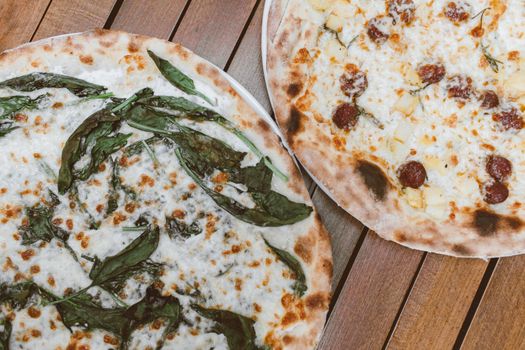
Photo: ROMAN ODINTSOV / Pexels
Italian
Pizza Bianca
The diets react (see scores below)
Common Ingredients
- pizza dough
- mozzarella
- ricotta
- Parmesan
- olive oil
- garlic
- rosemary
- sea salt
Specific recipes may vary.
Incompatible with 6 of 11 diets
Diet Ratings
Pizza Bianca is built on traditional pizza dough made from wheat flour, which is a grain-based, high-carb foundation entirely incompatible with ketosis. A single slice of pizza dough alone can contain 25-35g of net carbs, easily exceeding the entire daily keto limit in one or two slices. The remaining ingredients — mozzarella, ricotta, Parmesan, olive oil, garlic, rosemary, and sea salt — are keto-friendly, but they cannot offset the disqualifying carb load from the dough. The dish is essentially a flatbread and cannot be consumed in any meaningful portion without breaking ketosis.
Pizza Bianca contains three distinct dairy products — mozzarella, ricotta, and Parmesan — all of which are animal-derived cheeses made from cow's or buffalo's milk. Dairy is unambiguously excluded from a vegan diet under all major vegan frameworks. The remaining ingredients (pizza dough, olive oil, garlic, rosemary, sea salt) are plant-based, but the dish is fundamentally defined by its cheese topping and cannot be considered vegan in its standard form. A vegan version could be made by substituting all three cheeses with plant-based alternatives.
Pizza Bianca is fundamentally incompatible with the paleo diet. The dish is built on pizza dough, which is a grain-based product (wheat flour), making it a direct violation of one of the core paleo exclusions. Beyond the dough, all three cheeses — mozzarella, ricotta, and Parmesan — are dairy products, which are excluded under paleo principles. Sea salt is also technically excluded under strict paleo rules. The only paleo-compliant ingredients in this dish are olive oil, garlic, and rosemary. With multiple core violations across both the grain and dairy categories, this dish scores at the very bottom of the scale.
Pizza Bianca contains several Mediterranean-aligned ingredients—extra virgin olive oil, garlic, rosemary—but is built on a refined white flour dough and loaded with three forms of dairy (mozzarella, ricotta, Parmesan). The Mediterranean diet does permit dairy in moderate amounts and does not strictly exclude pizza, which is a traditional Italian food. However, refined grain dough is not preferred over whole grains, and three cheeses together represent a substantial concentration of saturated fat and dairy that exceeds the 'moderate' threshold. The dish has no vegetables, legumes, or lean protein to offset the dairy-and-refined-carb heaviness. Enjoyed occasionally as part of a broader plant-forward diet it is acceptable, but it should not be a dietary staple.
Traditional Italian and broader Mediterranean culinary practice has always included pizza and flatbreads made with white flour as legitimate, culturally embedded foods. Some Mediterranean diet authorities, particularly those rooted in Italian regional tradition, would view Pizza Bianca as perfectly compatible when made with quality ingredients and consumed in reasonable portions, arguing that food culture and enjoyment are themselves pillars of the Mediterranean lifestyle.
Pizza Bianca is fundamentally incompatible with the carnivore diet. The base is pizza dough — a grain-based processed carbohydrate that is entirely plant-derived and explicitly excluded. Beyond the dough, olive oil is a plant-based oil, garlic and rosemary are plant foods, and while the cheeses (mozzarella, ricotta, Parmesan) are animal-derived dairy products debated within the carnivore community, they are wholly overshadowed by the multiple prohibited plant ingredients. This dish has no animal protein as its primary component and is essentially a plant-forward carbohydrate dish with dairy accents. There is unanimous consensus across all carnivore tiers — from the strictest Lion Diet to the most permissive animal-based approach — that grain-based foods like pizza dough are completely off the table.
Pizza Bianca contains multiple Whole30-excluded ingredients and violates the program's rules on two separate grounds. First, pizza dough is made from grains (wheat flour), which are explicitly excluded from the Whole30 program. Second, mozzarella, ricotta, and Parmesan are all dairy products, which are also excluded (only ghee and clarified butter are excepted). Third, even if somehow made with compliant ingredients, pizza is explicitly listed by the Whole30 program as one of the 'junk food' or 'baked good' recreations that violate the spirit of the program — pizza crust is specifically named in the prohibited recreation list. This dish fails on ingredients, category, and spirit simultaneously.
Pizza Bianca as traditionally prepared contains multiple high-FODMAP ingredients that make it unsuitable during the elimination phase. The most significant offenders are: (1) conventional pizza dough made from wheat flour, which is high in fructans — this is the primary FODMAP problem; (2) garlic, which is one of the highest-fructan foods tested by Monash and must be avoided entirely in elimination (even small amounts are problematic); (3) ricotta cheese, which is high in lactose and rated high-FODMAP by Monash at standard serving sizes. Mozzarella is low-FODMAP in small amounts (as it is a hard/semi-hard cheese with low lactose), Parmesan is low-FODMAP, olive oil is low-FODMAP, rosemary is low-FODMAP, and sea salt is fine. However, the combination of wheat-based dough, garlic, and ricotta creates three independent high-FODMAP triggers that cannot be mitigated by portion control at any realistic serving size. To make this dish low-FODMAP, it would require a gluten-free pizza base, complete removal of garlic (or substitution with garlic-infused oil), and replacement or omission of ricotta.
Pizza Bianca combines several ingredients that are problematic from a DASH perspective. The triple-cheese combination of mozzarella, ricotta, and Parmesan significantly elevates saturated fat content — DASH explicitly limits saturated fat and specifies low-fat or fat-free dairy. Parmesan is also notably high in sodium, and sea salt added to the dough further increases sodium load, making this dish difficult to fit within DASH's 2,300mg/day (or especially 1,500mg/day) sodium ceiling. The pizza dough, unless made with whole wheat flour, is a refined carbohydrate offering little fiber. On the positive side, olive oil is a DASH-endorsed healthy fat, and garlic and rosemary are sodium-free flavor enhancers. Occasional consumption in a modest portion could fit within DASH as part of a balanced day, but the full-fat cheese combination and sodium burden prevent a higher rating.
Pizza Bianca presents significant Zone Diet challenges. The dish is essentially carbohydrate and fat-dominant with no lean protein source — the primary macronutrient from pizza dough (refined white flour, high-glycemic) will spike blood sugar and insulin, directly opposing Zone principles. The cheese trio (mozzarella, ricotta, Parmesan) provides some protein but it comes bundled with substantial saturated fat, making it difficult to achieve the lean 30% protein target without overshooting saturated fat. Olive oil is a Zone-favorable fat, but it adds to an already fat-heavy profile. The 40/30/30 ratio is nearly impossible to achieve with this dish as constructed: carbs will over-represent from the dough, fat will over-represent from the cheeses and oil, and lean protein is essentially absent. While most foods can technically fit the Zone with portioning, Pizza Bianca as a main dish would require such a small portion of the dough component and such large supplementary lean protein additions that it would no longer resemble the dish. Scored at the low end of caution (3) because the olive oil, garlic, and rosemary are Zone-favorable, and small portions could theoretically be incorporated as a side carb block, but as a main dish it fundamentally misaligns with Zone architecture.
Pizza Bianca has a mixed anti-inflammatory profile. On the positive side, extra virgin olive oil is a cornerstone anti-inflammatory food rich in oleocanthal; garlic and rosemary are both recognized anti-inflammatory herbs with polyphenol content; and the dish is free from processed meats, added sugars, or seed oils. However, the cheese load is substantial — mozzarella, ricotta, and Parmesan together contribute significant saturated fat and full-fat dairy, which anti-inflammatory frameworks generally recommend limiting. The pizza dough is likely made from refined white flour, a refined carbohydrate that can spike blood sugar and promote inflammatory pathways. Taken together, the dish is neither strongly pro-inflammatory nor particularly anti-inflammatory — the beneficial herbs and EVOO partially offset the refined carb base and dairy-heavy topping. Portion size matters considerably here: a modest slice alongside a vegetable-rich meal is a very different inflammatory load than pizza as a standalone meal.
Some anti-inflammatory practitioners (notably those following stricter protocols like AIP or grain-free approaches) would rate this lower due to the refined wheat dough and full-fat dairy combination. Conversely, traditional Mediterranean diet researchers would note that moderate cheese consumption, especially in the context of olive oil, garlic, and herbs on a whole-grain or sourdough base, fits within a broadly anti-inflammatory Mediterranean eating pattern — Dr. Weil's pyramid does allow full-fat dairy in moderation.
Pizza Bianca is a white pizza made primarily of refined-flour dough, mozzarella, ricotta, and Parmesan with olive oil. It provides some protein from the three cheeses (ricotta and Parmesan are reasonably protein-dense; mozzarella contributes moderately), but the dish is dominated by refined carbohydrates and saturated fat with virtually no fiber. For GLP-1 patients, the refined dough offers empty calories with a high glycemic load, the multi-cheese topping adds significant saturated fat that can worsen nausea and slow already-delayed gastric emptying, and there is no meaningful fiber source. Olive oil is a preferred unsaturated fat and is a minor positive. Garlic and rosemary are fine. In a small portion (one or two thin slices), the cheese protein is useful and the meal is manageable, but it is easy to overconsume and nutritionally unbalanced for patients eating reduced calorie volumes. It does not meet the protein-first, fiber-second priorities for GLP-1 patients as a main dish without significant modification (e.g., adding a lean protein side, choosing a thin whole-wheat crust, or using part-skim cheeses).
Some GLP-1-focused dietitians accept cheese-based dishes in moderation because dairy cheese delivers a meaningful protein-to-calorie ratio and high palatability supports adherence in patients with suppressed appetite; they would rate this higher if consumed as a small portion alongside a fiber-rich salad. Others flag the saturated fat load and refined carbohydrate base as particularly problematic on GLP-1s given slowed gastric emptying and the risk of reflux and bloating, which would push the score lower.
*See how scores were generated at our methodology page.
Nutritional profile
Six traits that cut across every diet.
Fiber & Plants
How much whole-plant food and fiber it delivers.
Healthy Fats
The quality of its fats (unsaturated, omega-3).
Whole / Unprocessed
How close it is to its natural, unprocessed form.
Gut Gentle
How easy it is on digestion (low FODMAP, few irritants).
Low Glycemic
How little it spikes your blood sugar.
Protein Density
How much protein it packs per calorie.
Controversy Index
Higher controversy = more disagreement between diets.
Diet-Specific Tips
 Mediterranean — 5/10
View tips
- Refined white flour dough preferred over whole grain
- Three dairy components (mozzarella, ricotta, Parmesan) exceed moderate dairy guidance
- Extra virgin olive oil is a positive, Mediterranean-core ingredient
- Garlic and rosemary align well with Mediterranean flavor principles
- No vegetables, legumes, or lean protein present
- Culturally authentic Italian dish with traditional standing
- Acceptable occasionally but not as a dietary staple
 DASH — 4/10
View tips
- Triple full-fat cheese (mozzarella, ricotta, Parmesan) high in saturated fat — conflicts with DASH low-fat dairy requirement
- Parmesan is one of the highest-sodium cheeses; combined with added sea salt, total sodium per serving is likely substantial
- Pizza dough typically made from refined white flour — low fiber, not a whole grain
- Olive oil is DASH-approved and replaces saturated fat sources as the primary fat vehicle
- No vegetables or lean protein — misses opportunity to add DASH-friendly nutrients like potassium, magnesium, and fiber
- Portion size is critical — a small slice can be managed within a DASH day; typical servings are problematic
- Whole wheat dough and reduced-fat cheeses would meaningfully improve DASH compatibility
 Zone — 5/10
View tips
- Refined pizza dough is a high-glycemic carbohydrate unfavorable in Zone methodology
- No lean protein source — cheese proteins come packaged with significant saturated fat
- Triple cheese blend (mozzarella, ricotta, Parmesan) skews fat macro heavily toward saturated fat
- Olive oil is Zone-favorable monounsaturated fat — a positive element
- 40/30/30 ratio essentially unachievable with this dish as a main course
- Could serve as a very small carb/fat block component in a larger Zone meal with added lean protein
 Anti-Inflammatory — 5/10
View tips
- Extra virgin olive oil is a core anti-inflammatory fat (oleocanthal, polyphenols)
- Garlic and rosemary provide meaningful anti-inflammatory polyphenols and flavonoids
- Triple-cheese topping (mozzarella, ricotta, Parmesan) is high in saturated fat — classified as 'limit' in anti-inflammatory frameworks
- Pizza dough is typically refined white flour — a refined carbohydrate linked to increased inflammatory markers
- No added sugars, processed meats, or seed oils — avoids several key pro-inflammatory ingredients
- Dish is acceptable in moderation; a whole-grain or sourdough base would improve the anti-inflammatory profile significantly
 GLP-1 Friendly — 4/10
View tips
- Refined white flour dough provides minimal fiber and high glycemic load — poor fit for GLP-1 nutrient density requirements
- Three-cheese topping (mozzarella, ricotta, Parmesan) contributes useful protein but also significant saturated fat
- No fiber source in any ingredient — falls well short of the 25-30g daily fiber target
- Olive oil is a preferred unsaturated fat and is a minor positive
- High saturated fat content risks worsening GLP-1 GI side effects: nausea, bloating, reflux
- Small portion may be tolerable but the dish does not anchor a protein-first meal on its own
- Portion-sensitive: easy to overconsume given the palatable cheese and carb combination