Photo: Aliaksei Smalenski / Pexels
Italian
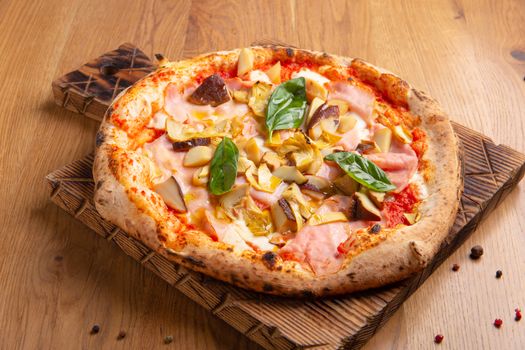
Pizza Capricciosa
The diets react (see scores below)
Common Ingredients
- pizza dough
- tomato sauce
- mozzarella
- cooked ham
- mushrooms
- artichoke hearts
- olives
- oregano
Specific recipes may vary.
Incompatible with 7 of 11 diets
Diet Ratings
Pizza Capricciosa is fundamentally incompatible with a ketogenic diet. The foundation is pizza dough, a wheat-based grain product that alone delivers 30-40g of net carbs per standard serving — already at or exceeding the entire daily keto carb limit. On top of that, tomato sauce adds additional sugars and carbs. While individual toppings like mozzarella, ham, mushrooms, artichoke hearts, and olives are keto-friendly or borderline acceptable, they cannot redeem a dish built on a high-carb grain base. There is no realistic portion size of traditional pizza that fits within ketogenic macros.
Pizza Capricciosa contains multiple animal-derived ingredients that disqualify it from any vegan diet. Mozzarella is a dairy cheese made from cow's or buffalo's milk, and cooked ham is a processed pork product. Both are clear animal products with no ambiguity in vegan standards. The remaining ingredients — pizza dough, tomato sauce, mushrooms, artichoke hearts, olives, and oregano — are plant-based, but the presence of mozzarella and ham makes this dish entirely incompatible with vegan eating. A vegan version could theoretically be constructed by substituting dairy-free cheese and omitting the ham (or replacing it with a plant-based alternative), but the traditional recipe as listed cannot be considered vegan in any form.
Pizza Capricciosa is fundamentally incompatible with the Paleo diet. The foundation of the dish — pizza dough — is made from wheat flour, a grain that is strictly excluded from all interpretations of the Paleo diet. Mozzarella is a dairy product, also excluded. Cooked ham is a processed meat, typically cured with added salt, nitrates, and preservatives, placing it firmly in the avoid category. While some individual ingredients (mushrooms, artichoke hearts, olives, oregano, tomato sauce) are Paleo-compatible, the core components — grain-based dough, dairy cheese, and processed meat — make this dish entirely non-compliant. There is no meaningful way to salvage this dish within Paleo guidelines without replacing virtually every defining ingredient.
Pizza Capricciosa contains several Mediterranean-friendly ingredients — artichoke hearts, mushrooms, olives, tomato sauce, and oregano are all plant-based staples of the Mediterranean diet. Mozzarella is a moderate dairy product acceptable in small amounts. However, the pizza dough is typically made from refined white flour, which contradicts the preference for whole grains, and cooked ham is a processed meat that should be limited. The combination of refined dough, processed meat, and moderate amounts of cheese places this dish in the caution zone rather than an outright avoid, because the vegetable toppings and Mediterranean herbs provide genuine nutritional value. Enjoyed occasionally and in reasonable portions, it can fit within a Mediterranean dietary pattern.
In traditional Southern Italian and Neapolitan culinary culture, pizza with vegetable-rich toppings is considered a normal and even wholesome part of the regional diet, and some Mediterranean diet researchers (notably those drawing on real-world Italian adherence patterns) argue that occasional pizza with quality ingredients fits comfortably within the framework. On the stricter end, modern clinical Mediterranean diet guidelines would flag the refined dough and processed ham and recommend limiting this dish significantly.
Pizza Capricciosa is entirely incompatible with the carnivore diet. The dish is built on a foundation of plant-based and processed ingredients: pizza dough (grain-based), tomato sauce (plant-derived), mushrooms (fungi), artichoke hearts (vegetable), olives (plant fruit), and oregano (plant spice). Even the animal-derived components — mozzarella (dairy, debated) and cooked ham (processed meat, likely contains additives) — are secondary and would not redeem the dish. There is virtually no carnivore-compatible version of this meal without a complete reconstruction. The only animal-derived ingredients present are minor and themselves imperfect carnivore choices.
Pizza Capricciosa violates multiple core Whole30 rules simultaneously. First, pizza dough is a grain-based product (wheat flour), which is explicitly excluded. Second, mozzarella is dairy, which is excluded. Third, even if all ingredients were somehow compliant, making pizza is explicitly prohibited under the 'no recreating baked goods/junk food' rule — pizza crust is named verbatim as a disallowed recreation. The dish is fundamentally incompatible with Whole30 on at least three independent grounds.
Pizza Capricciosa contains multiple high-FODMAP ingredients that make it unsuitable during the elimination phase. The pizza dough is almost certainly wheat-based, which is high in fructans — a major FODMAP concern. Mozzarella in standard pizza quantities (typically 60-80g) exceeds the low-FODMAP threshold for lactose. Mushrooms are high in polyols (mannitol) at typical serving sizes. Artichoke hearts are one of the highest-FODMAP vegetables tested by Monash, containing very high levels of fructans and GOS. The combination of these ingredients stacks multiple FODMAP categories simultaneously, making this dish a clear avoid regardless of portion size. The tomato sauce may also contain onion or garlic. Cooked ham and olives are generally low-FODMAP, but the problematic ingredients overwhelmingly dominate this dish.
Pizza Capricciosa presents multiple DASH diet concerns. The combination of cooked ham (processed meat, high sodium ~700-900mg per serving), full-fat mozzarella (saturated fat, contrary to DASH low-fat dairy emphasis), olives (high sodium, ~500-700mg per serving), and tomato sauce (often high sodium) creates a dish that easily exceeds 1,500-2,000mg of sodium in a single serving — approaching or surpassing the entire daily DASH sodium budget. The refined white flour pizza dough lacks the fiber of whole grains. Processed/cured ham is explicitly the type of red/processed meat DASH guidelines discourage. While mushrooms and artichoke hearts are DASH-positive ingredients, they cannot offset the high sodium load, processed meat, and full-fat dairy. This dish is structurally incompatible with DASH principles in its standard form.
Pizza Capricciosa presents the classic Zone challenge of a refined-carb-heavy base undermining otherwise reasonable ingredients. The pizza dough is high-glycemic refined white flour, which Sears explicitly lists as an 'unfavorable' carbohydrate that spikes insulin. The crust alone likely dominates the carbohydrate block count and is nutritionally poor compared to vegetable-based carb sources. However, the toppings are genuinely Zone-friendly: cooked ham provides lean protein, mushrooms and artichoke hearts are excellent low-glycemic Zone vegetables (polyphenol-rich, fiber-dense, favorable carbs), olives contribute monounsaturated fat (a Zone-preferred fat source), and tomato sauce offers lycopene-rich polyphenols. Mozzarella adds some saturated fat and protein. The macro ratio is problematic as typically served — the crust skews the balance heavily toward carbohydrates, with fat from cheese likely exceeding monounsaturated ideals, and protein from ham being modest relative to total calories. A Zone practitioner could technically consume a small slice (1-2 blocks worth) as part of a carefully controlled meal, but the overall dish as a standard serving is difficult to balance. The toppings alone would score an 8; the dough pulls it down significantly.
Pizza Capricciosa presents a mixed anti-inflammatory profile. On the positive side, artichoke hearts are rich in cynarin and polyphenols with documented anti-inflammatory effects; mushrooms (likely button or cremini in this context) provide beta-glucans and some anti-inflammatory compounds; olives contribute oleic acid and polyphenols similar to olive oil; tomato sauce delivers lycopene (a potent carotenoid antioxidant); and oregano is a beneficial anti-inflammatory herb. These ingredients give the dish a meaningful anti-inflammatory foundation. However, several factors work against it: the pizza dough is a refined carbohydrate that can spike blood glucose and promote inflammatory signaling; mozzarella is a full-fat dairy product that contributes saturated fat; cooked ham is processed meat associated with pro-inflammatory compounds (advanced glycation end products, nitrates, sodium); and standard restaurant-style pizza is typically high in sodium and may use lower-quality oils. The combination of refined dough, processed meat, and full-fat cheese places this dish in the 'caution' category — acceptable occasionally and not as harmful as, say, pepperoni pizza, but far from anti-inflammatory by design. Homemade versions using whole-grain dough, fresh mozzarella in moderation, and quality olive oil would shift the profile more favorably.
Some anti-inflammatory practitioners following a Mediterranean-aligned approach (consistent with Dr. Weil's overall philosophy of dietary patterns over individual foods) might view traditional Pizza Capricciosa as acceptable within a balanced diet, given its vegetable-forward toppings and Mediterranean origins. Stricter anti-inflammatory protocols, however, would flag processed ham and refined dough as meaningful concerns that push this dish toward avoidance rather than occasional inclusion.
Pizza Capricciosa presents a mixed nutritional profile for GLP-1 patients. On the positive side, it contains meaningful vegetables (mushrooms, artichoke hearts) that contribute fiber, and cooked ham provides some protein. However, the overall dish is problematic: the refined flour dough offers low nutrient density per calorie, mozzarella adds moderate-to-high saturated fat, olives contribute additional fat (albeit unsaturated), and the overall protein-to-calorie ratio is poor compared to GLP-1-ideal foods. Gastric emptying is already slowed on GLP-1 medications, and a cheese-and-dough-heavy meal can worsen bloating, reflux, and nausea. A standard slice also tends to be calorically dense with limited satiety value per calorie, making portion control difficult. The artichoke hearts are a genuine bright spot for fiber, but they cannot offset the refined carbohydrate base and fat load. If consumed, 1–2 small slices paired with a side salad could make it more acceptable, but the standard serving as a main dish scores poorly for GLP-1 compatibility.
Some GLP-1-focused dietitians take a flexible approach to pizza in moderate portions, noting that the psychological value of including familiar foods supports long-term adherence, and that the protein and fiber from toppings like ham, mushrooms, and artichokes partially offset the refined dough base. Others are more restrictive, citing the high fat and refined carbohydrate combination as a consistent trigger for GI side effects and post-meal discomfort in GLP-1 patients, particularly early in treatment.
*See how scores were generated at our methodology page.
Nutritional profile
Six traits that cut across every diet.
Fiber & Plants
How much whole-plant food and fiber it delivers.
Healthy Fats
The quality of its fats (unsaturated, omega-3).
Whole / Unprocessed
How close it is to its natural, unprocessed form.
Gut Gentle
How easy it is on digestion (low FODMAP, few irritants).
Low Glycemic
How little it spikes your blood sugar.
Protein Density
How much protein it packs per calorie.
Controversy Index
Higher controversy = more disagreement between diets.
Diet-Specific Tips
 Mediterranean — 5/10
View tips
- Refined white flour pizza dough — not aligned with whole grain preference
- Cooked ham is a processed meat — should be limited in Mediterranean diet
- Artichoke hearts, mushrooms, and olives are excellent Mediterranean staples
- Mozzarella is moderate dairy — acceptable in small amounts
- Tomato sauce and oregano are core Mediterranean ingredients
- Overall dish is acceptable occasionally but not a dietary staple
 Zone — 4/10
View tips
- Pizza dough is high-glycemic refined carbohydrate — a Zone 'unfavorable' carb that dominates the block structure
- Artichoke hearts and mushrooms are excellent Zone-favorable vegetables with low glycemic impact and high polyphenol content
- Olives provide monounsaturated fat — a preferred Zone fat source
- Cooked ham is a lean protein source, Zone-acceptable though not ideal compared to chicken or fish
- Mozzarella adds saturated fat, acceptable in moderation but less ideal than monounsaturated sources
- Standard serving size makes macro balancing very difficult — carb blocks far exceed protein and fat blocks
- Tomato sauce provides lycopene and polyphenols, consistent with Sears' anti-inflammatory emphasis
- Could be incorporated in very small portions as part of a Zone meal, but not as a standalone Zone-balanced dish
 Anti-Inflammatory — 4/10
View tips
- Refined white flour dough raises blood glucose and promotes inflammatory signaling
- Cooked ham is processed meat with nitrates, AGEs, and high sodium — a pro-inflammatory concern
- Full-fat mozzarella contributes saturated fat
- Artichoke hearts are rich in polyphenols and cynarin — strongly anti-inflammatory
- Olives provide oleic acid and polyphenols with anti-inflammatory benefit
- Tomato sauce delivers lycopene, a potent carotenoid antioxidant
- Mushrooms contribute beta-glucans with immune-modulating properties
- Oregano is an anti-inflammatory herb with antioxidant compounds
- Overall dish is high in sodium, a concern for systemic inflammation at excess levels
 GLP-1 Friendly — 4/10
View tips
- Refined flour dough: low nutrient density, high glycemic load, poor fit for GLP-1 dietary priorities
- Mozzarella: adds saturated fat, may worsen nausea and reflux given slowed gastric emptying
- Cooked ham: moderate protein contribution but processed meat with sodium and some saturated fat
- Artichoke hearts and mushrooms: positive fiber and micronutrient contributors
- Olives: unsaturated fat source, acceptable in small amounts but adds to overall fat load
- High calorie density relative to protein and fiber delivered — poor nutrient density per calorie
- Portion sensitivity: 1–2 small slices is very different from a standard main-course serving
- Bloating and reflux risk elevated due to cheese, refined dough, and fat combination on GLP-1 medications