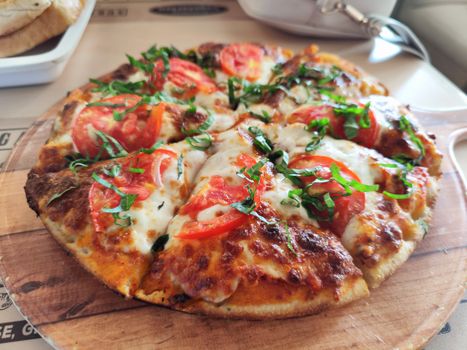
Photo: Sonali Mehta / Pexels
Italian
Pizza Margherita
The diets react (see scores below)
Common Ingredients
- pizza dough
- San Marzano tomatoes
- fresh mozzarella
- fresh basil
- olive oil
- sea salt
Specific recipes may vary.
Incompatible with 6 of 11 diets
Diet Ratings
Pizza Margherita is fundamentally incompatible with a ketogenic diet. The primary ingredient — pizza dough — is made from refined wheat flour, a high-glycemic grain that is completely off-limits on keto. A standard slice of Margherita pizza contains approximately 25-35g of net carbs, meaning even one or two slices could exceed the entire daily carb allowance. The San Marzano tomatoes add a modest amount of additional carbs. While fresh mozzarella and olive oil are individually keto-friendly, they cannot offset the massive carbohydrate load from the dough. This is a grain-based food with no practical modification that would make the traditional dish keto-compatible.
Pizza Margherita contains fresh mozzarella, which is a dairy product made from animal milk. Dairy is unambiguously excluded from a vegan diet. All other ingredients — pizza dough, San Marzano tomatoes, fresh basil, olive oil, and sea salt — are fully plant-based, but the presence of mozzarella makes this dish non-vegan. A vegan version is achievable by substituting mozzarella with a plant-based cheese alternative.
Pizza Margherita is fundamentally incompatible with the paleo diet. The pizza dough is made from wheat flour, a grain that is explicitly excluded from paleo. Fresh mozzarella is dairy, also excluded. Sea salt, while a minor concern, is an added salt. The only paleo-compliant ingredients in this dish are the San Marzano tomatoes, fresh basil, and olive oil. With two of the four primary components being hard disqualifiers (grain-based dough and dairy cheese), this dish cannot be adapted into paleo compliance without being entirely reconstructed into a different dish altogether.
Pizza Margherita is a traditional Italian dish with Mediterranean roots. It features olive oil and fresh tomatoes (both core Mediterranean staples) along with fresh basil. However, the base is made from refined white flour dough, which falls into the 'refined grains' category that modern Mediterranean diet guidelines discourage. Fresh mozzarella is a moderate dairy component, acceptable in the Mediterranean pattern but not a daily staple. Overall, this is a culturally authentic dish that fits as an occasional meal but is not a dietary cornerstone due to the refined grain crust.
Traditional southern Italian (Neapolitan) cuisine has included white-flour pizza for centuries, and some Mediterranean diet authorities — particularly those rooted in traditional dietary patterns rather than modern clinical guidelines — consider it an acceptable part of the diet when made with quality ingredients and eaten in reasonable portions. The Oldways Mediterranean diet pyramid, for instance, acknowledges traditional preparations even when they include refined grains.
Pizza Margherita is fundamentally incompatible with the carnivore diet. Every single ingredient except sea salt is plant-derived or grain-based: pizza dough is a grain product (wheat flour), San Marzano tomatoes are a plant food, fresh basil is an herb (plant), and olive oil is a plant-derived oil. The only animal-derived ingredient is fresh mozzarella (dairy), which itself is debated on carnivore. This dish is the archetype of a plant- and grain-heavy meal that carnivore explicitly eliminates. There is no meaningful animal protein present, and the dish is built entirely around disallowed food categories.
Pizza Margherita contains two major Whole30-excluded ingredients: pizza dough (a grain-based product, typically made from wheat flour) and fresh mozzarella (dairy). Either of these alone would make the dish non-compliant. Beyond the excluded ingredients, Whole30 Rule 4 explicitly prohibits recreating pizza even with compliant ingredients — pizza is named directly on the banned 'junk food recreation' list. This dish fails on multiple levels simultaneously.
Pizza Margherita contains two significant FODMAP concerns that make it unsuitable during the elimination phase. First, standard pizza dough is made with wheat flour, which is high in fructans — a major FODMAP — at any typical serving size (1-2 slices). This alone would disqualify the dish during elimination. Second, fresh mozzarella (fior di latte) is a soft, high-moisture cheese with notable lactose content, unlike aged hard mozzarella which is low-FODMAP. A standard pizza topping of fresh mozzarella (typically 60-100g) exceeds the low-FODMAP threshold for lactose. San Marzano tomatoes, olive oil, fresh basil, and sea salt are all low-FODMAP and unproblematic. However, the wheat-based dough is the dominant issue and is unavoidable in a traditional Pizza Margherita. A low-FODMAP adaptation would require a gluten-free/rice-flour crust and lactose-free or hard aged mozzarella substitution.
Some clinical FODMAP practitioners note that long-fermented sourdough pizza bases (made with wheat) may significantly reduce fructan content through yeast and bacterial fermentation, and Monash University has shown certain sourdough breads can be low-FODMAP in small serves. However, standard pizza dough does not undergo this extended fermentation, and most practitioners advise avoiding all standard wheat-based pizza crusts entirely during the elimination phase. Additionally, while low-lactose buffalo mozzarella (in small amounts) is sometimes considered borderline, fresh cow's milk mozzarella in typical pizza portions is generally considered a lactose risk.
Pizza Margherita contains several DASH-compatible ingredients — San Marzano tomatoes provide lycopene and potassium, olive oil is a heart-healthy unsaturated fat, and fresh basil adds flavor without sodium. However, the dish presents notable DASH concerns. Fresh mozzarella, while lower in sodium than processed cheeses, is a full-fat dairy product, which DASH specifically de-emphasizes in favor of low-fat or fat-free dairy. The pizza dough (refined white flour, typically) lacks the fiber benefits of whole grains that DASH prioritizes. Sodium accumulates meaningfully from the dough, sea salt, and mozzarella combined — a typical slice can contribute 400–600mg sodium, and two slices can approach or exceed half the daily DASH sodium allowance. The dish is not inherently incompatible with DASH but requires strict portion control and ideally modifications (whole-wheat crust, part-skim mozzarella, reduced salt) to better align.
NIH DASH guidelines specify low-fat dairy and whole grains, which traditional Pizza Margherita does not meet. However, some updated clinical interpretations note that fresh mozzarella's relatively modest sodium content compared to processed cheeses, combined with the tomato and olive oil components, may make occasional moderate portions acceptable within a broader DASH-compliant dietary pattern — particularly if the rest of the day's meals are low in sodium and saturated fat.
Pizza Margherita presents a mixed Zone profile. The base — pizza dough — is a high-glycemic refined carbohydrate that Dr. Sears classifies as 'unfavorable,' causing rapid insulin spikes that work against Zone balance. Fresh mozzarella provides protein but is relatively high in saturated fat, and the protein-to-carb ratio in a typical slice is imbalanced (carb-heavy). On the positive side, San Marzano tomatoes offer polyphenols and low-glycemic carbs, fresh basil contributes antioxidants, and olive oil is an ideal Zone monounsaturated fat. The core problem is structural: the dough dominates the macro profile, making the 40/30/30 ratio very difficult to achieve with a standard serving. A small, thin-crust portion (1 slice) paired with a large side salad and additional lean protein could theoretically be integrated into a Zone meal, but the pizza itself as a standalone dish does not deliver Zone-balanced ratios. The Zone does not categorically exclude pizza, but treats white-flour dough as an 'unfavorable' carb requiring strict portion control.
Some Zone practitioners and Sears' later writings (particularly around the Mediterranean Zone) are more accommodating of traditional Italian foods in moderation, noting that the Mediterranean diet pattern — of which pizza margherita is a part — aligns with anti-inflammatory principles when made with quality ingredients. Thin-crust versions with minimal dough and generous vegetable toppings can be argued as a reasonable 'unfavorable but manageable' carb choice if portions are disciplined and the meal is balanced with additional protein sources.
Pizza Margherita is a mixed picture from an anti-inflammatory standpoint. On the positive side, it contains several genuinely beneficial ingredients: olive oil provides oleocanthal with well-documented anti-inflammatory effects; San Marzano tomatoes are rich in lycopene (a potent carotenoid antioxidant, and notably bioavailability increases with cooking); fresh basil contributes polyphenols and volatile anti-inflammatory compounds; and sea salt is neutral. The problem lies primarily in the pizza dough — refined white flour is a refined carbohydrate that can spike blood glucose and insulin, driving low-grade inflammation, and it contributes little fiber or micronutrient value. Fresh mozzarella is a full-fat dairy product; while it lacks the heavily processed profile of many cheeses and contributes some protein, it contains saturated fat that the anti-inflammatory framework recommends limiting. The overall dish is carbohydrate-dominant with a significant refined flour base, meaning it occupies a genuinely mixed nutritional profile: some strong anti-inflammatory ingredients paired with a structurally inflammatory base. Frequency and portion size matter considerably — an occasional Margherita pizza made with quality ingredients is far from the worst offender, but it cannot be considered an anti-inflammatory dish in the strict sense. A whole-grain or cauliflower crust version with the same toppings would score meaningfully higher.
Some anti-inflammatory practitioners, including those influenced by the Mediterranean dietary pattern, would view a traditional Margherita pizza made with quality ingredients (extra virgin olive oil, San Marzano tomatoes, fresh basil) as broadly compatible with an anti-inflammatory lifestyle when consumed in moderation — its Mediterranean origins and whole-food toppings are meaningful. However, stricter anti-inflammatory protocols emphasizing glycemic control and minimizing refined grains (such as those aligned with Dr. David Ludwig's work on refined carbohydrates and insulin) would flag the white flour dough as a significant pro-inflammatory element that outweighs the benefits of the toppings.
Pizza Margherita is a refined-grain, moderate-fat dish with low protein density per serving — a poor fit for GLP-1 patients whose every calorie needs to count nutritionally. A typical 2-slice serving (~250-300 calories) delivers only 10-12g of protein, well below the 15-30g per meal target, while contributing 35-40g of refined carbohydrates that offer little fiber and drive blood sugar spikes. Fresh mozzarella adds saturated fat, and the dough-heavy base is calorie-dense relative to its nutritional return. On the positive side, the ingredients are whole and minimally processed — San Marzano tomatoes provide lycopene and some micronutrients, olive oil is an unsaturated fat, and fresh basil adds anti-inflammatory compounds. This is meaningfully better than a pepperoni or deep-dish pizza. Slowed gastric emptying on GLP-1 medications also means the dense dough base may sit heavily and worsen bloating or fullness discomfort. It is not a food to avoid entirely, but it occupies a low-value slot in a calorie-restricted eating pattern unless protein is added (grilled chicken, tuna) and portions are tightly managed to 1-2 small slices.
Some GLP-1-focused RDs allow traditional Margherita pizza occasionally as a whole-food, lower-processed option compared to fast-food pizza, arguing that the Mediterranean ingredient profile and moderate fat from mozzarella and olive oil are preferable to ultra-processed alternatives. Others rate refined-grain, low-protein dishes more harshly given the strict protein-per-meal targets on GLP-1 therapy, and the risk that pizza portions are difficult for patients to self-limit given reduced but unpredictable satiety cues.
*See how scores were generated at our methodology page.
Nutritional profile
Six traits that cut across every diet.
Fiber & Plants
How much whole-plant food and fiber it delivers.
Healthy Fats
The quality of its fats (unsaturated, omega-3).
Whole / Unprocessed
How close it is to its natural, unprocessed form.
Gut Gentle
How easy it is on digestion (low FODMAP, few irritants).
Low Glycemic
How little it spikes your blood sugar.
Protein Density
How much protein it packs per calorie.
Controversy Index
Higher controversy = more disagreement between diets.
Diet-Specific Tips
 Mediterranean — 5/10
View tips
- Refined white flour dough reduces nutritional quality compared to whole grain alternatives
- Olive oil is a core Mediterranean fat and used here appropriately
- San Marzano tomatoes and fresh basil are excellent plant-based Mediterranean ingredients
- Fresh mozzarella is an acceptable moderate dairy inclusion
- No processed meats or added sugars
- Culturally authentic to southern Italian Mediterranean tradition
- Portion size and frequency of consumption are key to compatibility
 DASH — 5/10
View tips
- Full-fat fresh mozzarella conflicts with DASH low-fat dairy recommendation
- Refined white flour pizza dough lacks whole-grain fiber emphasized by DASH
- Sodium accumulation from dough, sea salt, and cheese can be significant per serving
- Olive oil is a DASH-approved heart-healthy fat
- San Marzano tomatoes contribute potassium and beneficial phytonutrients
- Modifications (whole-wheat crust, part-skim mozzarella, reduced salt) would improve DASH compatibility
- Portion control is critical — 1 slice is more manageable than typical serving sizes
 Zone — 4/10
View tips
- Pizza dough is a refined, high-glycemic carbohydrate classified as 'unfavorable' in Zone terminology
- Carbohydrate load per slice is high relative to protein content, disrupting 40/30/30 balance
- Fresh mozzarella provides protein but also saturated fat; protein quantity per slice is insufficient for a Zone block
- Olive oil is an ideal Zone monounsaturated fat — a positive element
- San Marzano tomatoes and fresh basil contribute polyphenols and low-glycemic carbs
- Dish can be incorporated into a Zone meal only with strict portion control and supplemental lean protein
- No lean protein source listed — meal is protein-deficient as described
 Anti-Inflammatory — 5/10
View tips
- Refined white flour dough raises blood glucose and promotes low-grade inflammation — the primary concern
- Extra virgin olive oil is a well-established anti-inflammatory fat (oleocanthal)
- San Marzano tomatoes provide lycopene and antioxidants; cooking enhances lycopene bioavailability
- Fresh basil contributes polyphenols with anti-inflammatory activity
- Fresh mozzarella is full-fat dairy — contains saturated fat, recommended to limit
- No omega-3 sources, no legumes, no whole grains — limited anti-inflammatory building blocks
- Overall profile is carbohydrate-heavy with minimal fiber
- Quality of ingredients (whole-food toppings, EVOO) meaningfully distinguishes this from processed pizza
 GLP-1 Friendly — 4/10
View tips
- Low protein density — approximately 10-12g per 2-slice serving, below the 15-30g per meal target
- Refined grain dough provides minimal fiber and drives blood sugar elevation
- Moderate saturated fat from fresh mozzarella
- Dense dough base may worsen bloating and fullness discomfort due to slowed gastric emptying
- Whole, minimally processed ingredients are a relative positive versus fast-food pizza
- Olive oil contributes beneficial unsaturated fat in small amounts
- Poor nutrient density per calorie — empty carbohydrate load in a calorie-restricted context
- Portion control is difficult; 1-2 small slices only if consumed