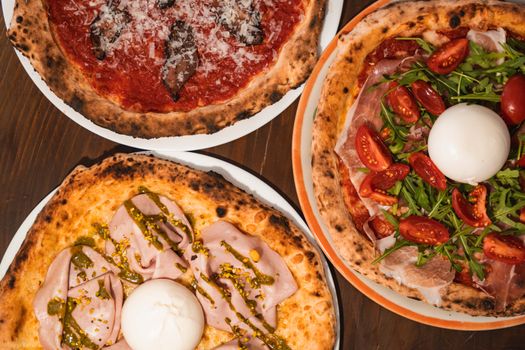
Photo: Giona Mason / Pexels
Italian
Pizza Prosciutto e Funghi
The diets react (see scores below)
Common Ingredients
- pizza dough
- tomato sauce
- mozzarella
- prosciutto cotto
- mushrooms
- olive oil
- oregano
Specific recipes may vary.
Incompatible with 7 of 11 diets
Diet Ratings
Pizza Prosciutto e Funghi is fundamentally incompatible with a ketogenic diet. The primary disqualifier is the pizza dough, which is made from wheat flour and delivers an extremely high net carb load — a single standard slice can contain 25-35g of net carbs, and a full pizza can easily exceed 100-150g. This alone blows the entire daily keto carb budget multiple times over. The tomato sauce adds additional sugars and carbs. The remaining ingredients — mozzarella, prosciutto cotto, mushrooms, olive oil, and oregano — are keto-friendly in isolation, but they cannot redeem a dish built on a grain-based crust. There is no meaningful portion size that would make this compatible with ketosis.
Pizza Prosciutto e Funghi contains two clear animal-derived ingredients: mozzarella (dairy) and prosciutto cotto (cooked ham, a pork product). Both are unambiguously non-vegan. There is no debate within the vegan community about either of these ingredients — dairy cheese and cured/cooked meat are excluded under all vegan definitions. The remaining ingredients (pizza dough, tomato sauce, mushrooms, olive oil, oregano) are plant-based, but the presence of mozzarella and prosciutto cotto makes this dish entirely incompatible with a vegan diet.
Pizza Prosciutto e Funghi is fundamentally incompatible with the paleo diet. The dish is built on pizza dough, which is made from wheat flour — a grain that is strictly excluded from paleo under any interpretation. Mozzarella is dairy, also universally excluded. Prosciutto cotto (cooked ham) is a processed meat product typically containing added salt, nitrates, and preservatives, making it non-compliant. Tomato sauce in commercial or restaurant form usually contains added salt and sugar. Only mushrooms, olive oil, and oregano are clearly paleo-approved ingredients. The foundational components of this dish — grain-based dough and dairy cheese — make it an unambiguous avoid with no meaningful gray area.
Pizza Prosciutto e Funghi sits in acceptable-but-not-ideal territory for the Mediterranean diet. The dish contains several genuinely Mediterranean elements — olive oil, tomato sauce, mushrooms, and oregano are all staples. However, the refined white flour pizza dough is a processed/refined grain, and mozzarella adds saturated dairy fat. Prosciutto cotto (cooked ham) is a processed pork product, which falls between poultry and red meat in Mediterranean terms — it is not a core protein and should be limited. Occasional pizza is consistent with traditional Italian Mediterranean eating patterns, but the combination of refined dough, processed meat, and moderate saturated fat from cheese means it is not a dish to eat frequently. As an occasional meal, especially with vegetable toppings, it is acceptable in moderation.
Traditional Italian Mediterranean cuisine does include pizza as a cultural staple, and some practitioners argue that homemade or artisanal pizza with quality ingredients — particularly when topped with vegetables and used sparingly — fits within the broader spirit of the diet. However, modern clinical Mediterranean diet guidelines (e.g., PREDIMED protocol) emphasize whole grains and discourage processed meats, which would push this dish toward the lower end of caution.
Pizza Prosciutto e Funghi is fundamentally incompatible with the carnivore diet. The dish is built almost entirely on plant-based and processed ingredients: pizza dough (wheat/grain), tomato sauce (plant-derived), mushrooms (fungi), olive oil (plant oil), and oregano (plant spice). Mozzarella is dairy and debated, but it is a minor concern here. The prosciutto cotto is the only animal-derived protein, but it is surrounded by a foundation of strictly excluded foods. No carnivore practitioner of any tier — from the most permissive 'animal-based' approach to the strictest Lion Diet — would consider this dish acceptable. The grain-based crust alone is an absolute disqualifier.
Pizza Prosciutto e Funghi contains multiple Whole30-excluded ingredients. Pizza dough is a grain-based product (typically wheat flour), which is explicitly excluded. Mozzarella is a dairy product, also excluded. Furthermore, even if compliant ingredient substitutes were used, the Whole30 program explicitly prohibits recreating pizza — it is listed by name as a prohibited junk food recreation ('pizza crust'). This dish fails on at least three independent grounds: grains, dairy, and the no-junk-food-recreation rule.
This pizza contains multiple high-FODMAP ingredients that make it unsuitable during the elimination phase. The primary concern is the pizza dough, which is almost certainly made from wheat flour — a significant source of fructans, one of the most problematic FODMAP groups. Standard wheat-based pizza dough is high-FODMAP at any normal serving size. Mushrooms are also high-FODMAP due to polyols (mannitol), and even a small amount (over ~65g) triggers symptoms in sensitive individuals — a standard pizza topping portion easily exceeds this. Mozzarella is borderline: fresh mozzarella contains moderate lactose and is considered low-FODMAP only at small serves (~40g), while larger or processed mozzarella used on pizza may be higher in lactose. Tomato sauce is generally low-FODMAP in small amounts, and prosciutto cotto (cooked ham) is low-FODMAP as a plain cured meat. Olive oil and oregano are safe. However, the combination of wheat dough and mushrooms alone makes this dish clearly high-FODMAP and inappropriate during elimination.
Pizza Prosciutto e Funghi is problematic for the DASH diet on multiple fronts. The combination of refined white pizza dough (low fiber, high glycemic), full-fat mozzarella (saturated fat, sodium), and prosciutto cotto (processed/cured meat with significant sodium content) creates a high-sodium, high-saturated-fat dish that conflicts directly with core DASH principles. A typical slice of this pizza can deliver 600–900mg of sodium, meaning 2–3 slices could approach or exceed the daily DASH sodium limit of 1,500–2,300mg. Prosciutto cotto, while one of the leaner Italian cured meats, is still a processed meat with added sodium. The mozzarella adds saturated fat and sodium. Tomato sauce may contribute additional sodium depending on preparation. The only DASH-friendly elements are the mushrooms (potassium, fiber), olive oil (heart-healthy fat), oregano, and the tomato base if low-sodium. However, these positives are overwhelmed by the structural issues of a standard pizza. Modifications like whole-wheat dough, reduced-sodium sauce, part-skim mozzarella used sparingly, and limiting prosciutto could improve the score to 'caution,' but as commonly prepared, this dish does not align with DASH guidelines.
Pizza Prosciutto e Funghi is a classic Italian dish that poses significant challenges for Zone compliance but is not categorically excluded. The primary issue is the pizza dough: refined white flour is a high-glycemic carbohydrate that Sears explicitly classifies as 'unfavorable,' spiking insulin and disrupting the hormonal balance the Zone targets. A typical pizza slice delivers a heavy carbohydrate load dominated by this unfavorable source, making the 40/30/30 ratio very difficult to achieve per slice. However, the dish has genuine Zone-friendly elements: prosciutto cotto is a relatively lean cured protein, mushrooms are an excellent low-glycemic Zone vegetable, tomato sauce contributes polyphenols (lycopene), and olive oil provides ideal monounsaturated fat. Mozzarella adds some saturated fat and protein. With strict portion control — treating a single thin-crust slice as a carb block component within a carefully constructed meal, or substituting a cauliflower/whole-grain crust — this dish can be navigated in Zone methodology. The Zone is ratio-based, not exclusion-based, so pizza is not 'off limits,' but its standard form makes ratio balancing genuinely difficult. A realistic Zone approach would limit to 1 slice, add a large vegetable salad with olive oil to rebalance the macro profile, and avoid extra cheese.
Some Zone practitioners and Sears' later writings (particularly his anti-inflammatory work) place more emphasis on polyphenol-rich tomato sauce and olive oil as beneficial components, and acknowledge that thin-crust pizza in controlled portions can serve as an 'unfavorable carb' that is still workable within Zone blocks — similar to how Sears treats pasta: not ideal, but not categorically forbidden if portioned correctly. A thin-crust version with extra mushrooms and moderate cheese is more defensible than a thick-crust or deep-dish variant.
Pizza Prosciutto e Funghi is a mixed dish from an anti-inflammatory perspective. On the positive side, mushrooms (a key ingredient) are valued in anti-inflammatory nutrition for their beta-glucans, polyphenols, and immune-modulating properties. Olive oil contributes oleocanthal and monounsaturated fats with well-documented anti-inflammatory benefits. Tomato sauce provides lycopene, a potent carotenoid antioxidant. Oregano is a polyphenol-rich herb with antimicrobial and anti-inflammatory properties. Prosciutto cotto (cooked ham) is a lean cured meat — leaner than processed meats like salami or pepperoni — and falls closer to the 'lean poultry/moderate' category than red meat, though it does carry sodium and nitrate concerns typical of cured meats. The main inflammatory concerns are the refined white flour pizza dough (raises blood sugar, low fiber, linked to increased inflammatory markers) and full-fat mozzarella (saturated fat, though moderate amounts are not strictly prohibited). The dish overall sits in a neutral-to-cautious zone: some genuinely anti-inflammatory ingredients are present, but the refined carbohydrate base and processed meat element prevent an approval. Portions and preparation matter significantly — a thin crust with less cheese and generous vegetable toppings would improve the profile.
Some anti-inflammatory practitioners, including those following Mediterranean-style protocols (which Dr. Weil's pyramid draws from), would view a traditional Italian pizza with olive oil, tomatoes, and mushrooms as broadly compatible with the diet in moderate portions, especially if made with whole grain or sourdough dough. Conversely, stricter anti-inflammatory protocols would flag the refined flour base and processed cured meat as meaningful inflammatory triggers regardless of other ingredients.
Pizza Prosciutto e Funghi presents a mixed nutritional profile for GLP-1 patients. The refined white dough is low in fiber and protein density per calorie, and a standard pizza slice delivers a significant carbohydrate load with moderate fat from mozzarella. Prosciutto cotto provides some lean protein but in relatively small quantities per slice — not enough to anchor the meal as a high-protein option. Mushrooms add some fiber and micronutrients but in modest amounts. Olive oil is a positive (unsaturated fat), and tomato sauce adds lycopene and minimal calories. The main concerns are: (1) refined carb-heavy base with poor protein-to-calorie ratio; (2) mozzarella contributes saturated fat that may worsen GLP-1 GI side effects like nausea or reflux; (3) portion control is critical — even one or two slices can feel heavy given slowed gastric emptying; (4) low fiber content increases constipation risk. In a typical restaurant or takeaway version, this dish is portion-sensitive and nutritionally diluted. A smaller portion (1-2 thin-crust slices) alongside a high-protein starter or salad could make it acceptable occasionally, but it is not a GLP-1-friendly staple.
Some GLP-1-focused dietitians accept occasional pizza in small portions as part of a sustainable, non-restrictive eating pattern, arguing that rigid avoidance increases psychological burden and diet fatigue — particularly relevant given that GLP-1 patients are often on these medications long-term. Others, however, flag refined grain bases and moderate saturated fat as reliably problematic for GI tolerance and blood sugar stability in this population, recommending substitution with a whole-grain or cauliflower crust and reduced-fat cheese to meaningfully improve the profile.
*See how scores were generated at our methodology page.
Nutritional profile
Six traits that cut across every diet.
Fiber & Plants
How much whole-plant food and fiber it delivers.
Healthy Fats
The quality of its fats (unsaturated, omega-3).
Whole / Unprocessed
How close it is to its natural, unprocessed form.
Gut Gentle
How easy it is on digestion (low FODMAP, few irritants).
Low Glycemic
How little it spikes your blood sugar.
Protein Density
How much protein it packs per calorie.
Controversy Index
Higher controversy = more disagreement between diets.
Diet-Specific Tips
 Mediterranean — 5/10
View tips
- Refined white flour pizza dough contradicts whole grain emphasis
- Prosciutto cotto is a processed pork product, not a core Mediterranean protein
- Mozzarella adds saturated fat from dairy, acceptable in moderation
- Mushrooms, tomato sauce, olive oil, and oregano are strong Mediterranean positives
- Pizza is a traditional Italian dish, culturally consistent with Mediterranean eating patterns
- Frequency matters — occasional consumption is acceptable, regular is not
 Zone — 4/10
View tips
- Refined white flour pizza dough is a high-glycemic 'unfavorable' carbohydrate per Zone classification
- Heavy carbohydrate dominance per slice makes 40/30/30 ratio difficult to achieve without careful portioning
- Prosciutto cotto is a relatively lean protein — Zone-compatible in appropriate block amounts
- Mushrooms are an ideal Zone vegetable: low-glycemic, high fiber, minimal carb blocks
- Olive oil provides preferred monounsaturated fat
- Mozzarella adds saturated fat — acceptable in moderation but not Zone-ideal
- Tomato sauce contributes lycopene and polyphenols, supporting anti-inflammatory goals
- Dish is salvageable with 1-slice portions paired with large vegetable salad; whole-grain or cauliflower crust would improve Zone score significantly
 Anti-Inflammatory — 5/10
View tips
- Refined white flour pizza dough raises glycemic load and is low in fiber — a notable pro-inflammatory concern
- Mushrooms provide beta-glucans and polyphenols with anti-inflammatory and immune-supportive properties
- Extra virgin olive oil contributes oleocanthal with well-documented anti-inflammatory effects
- Tomato sauce delivers lycopene, a beneficial carotenoid antioxidant
- Prosciutto cotto is relatively lean but is a processed/cured meat with added sodium and nitrates
- Full-fat mozzarella adds saturated fat — acceptable in moderation but not anti-inflammatory
- Oregano is a polyphenol-rich herb that supports the dish's anti-inflammatory profile
 GLP-1 Friendly — 4/10
View tips
- Refined dough base is low in fiber and has poor protein-to-calorie ratio
- Prosciutto cotto provides lean protein but in insufficient quantity per typical serving to meet GLP-1 protein targets
- Mozzarella adds saturated fat that may worsen nausea, bloating, or reflux
- Slowed gastric emptying makes this dish feel heavy and potentially uncomfortable
- Olive oil is a positive — unsaturated fat source
- Mushrooms contribute modest fiber and micronutrients
- Highly portion-sensitive — 1-2 thin-crust slices is the outer limit for GLP-1 tolerability
- Not recommended as a regular meal; acceptable occasionally in small portions if paired with a protein-rich side