Photo: ROMAN ODINTSOV / Pexels
Italian
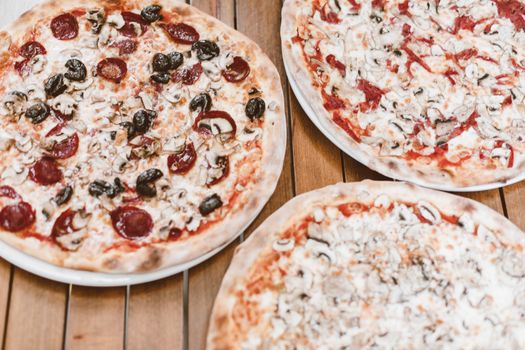
Pizza Quattro Stagioni
The diets react (see scores below)
Common Ingredients
- pizza dough
- tomato sauce
- mozzarella
- artichoke hearts
- ham
- mushrooms
- black olives
- oregano
Specific recipes may vary.
Incompatible with 6 of 11 diets
Diet Ratings
Pizza Quattro Stagioni is fundamentally incompatible with a ketogenic diet. The primary disqualifier is the pizza dough, which is made from wheat flour — a grain-based, high-carbohydrate ingredient that alone can contain 30–50g of net carbs per serving, instantly exceeding or maxing out the entire daily keto carb budget. The tomato sauce adds additional sugars and carbs. While several toppings (mozzarella, mushrooms, ham, black olives, artichoke hearts) are individually keto-friendly or manageable in small portions, they are entirely overshadowed by the dough base. This dish in its traditional form has no viable path to keto compatibility without a complete structural overhaul (e.g., cauliflower or almond flour crust substitution), which would make it a different dish entirely.
Pizza Quattro Stagioni contains two clear animal-derived ingredients: mozzarella (dairy) and ham (pork meat). Both are explicitly excluded under vegan dietary rules. There is no meaningful debate within the vegan community about either ingredient — dairy and meat are unambiguously non-vegan. The remaining ingredients (pizza dough, tomato sauce, artichoke hearts, mushrooms, black olives, oregano) are plant-based, but the presence of mozzarella and ham makes this dish entirely incompatible with a vegan diet.
Pizza Quattro Stagioni is fundamentally incompatible with the paleo diet. The pizza dough is made from wheat flour, a grain that is strictly excluded from paleo eating. Mozzarella is a dairy product, also excluded. Ham is typically a processed meat containing added salt, preservatives, and often sugar. Tomato sauce, while tomatoes are paleo-friendly, commercial versions frequently contain added salt and sugar. The only clearly paleo-compliant ingredients in this dish are artichoke hearts, mushrooms, black olives, and oregano — but these are peripheral toppings on a foundation of multiple non-paleo staples. This dish represents a quintessential example of foods that emerged with agricultural civilization, the very dietary shift the paleo framework opposes.
Pizza Quattro Stagioni contains several Mediterranean-friendly ingredients — tomato sauce, artichoke hearts, mushrooms, black olives, and oregano are all plant-based staples of the Mediterranean pantry. However, the dish also presents concerns: the pizza dough is typically made from refined white flour (a refined grain), mozzarella adds moderate saturated fat from dairy, and ham is a processed red meat product that Mediterranean diet guidelines discourage. The combination pushes this beyond a simple 'approve' despite its vegetable richness. Eaten occasionally and in reasonable portions, it fits the moderate 'caution' category — it is culturally rooted in Italian Mediterranean tradition but deviates from optimal guidelines due to refined grains and processed meat.
Traditional Italian cuisine, including Neapolitan pizza, is considered part of the broader Mediterranean culinary heritage, and some Mediterranean diet authorities (such as those referencing the original Ancel Keys studies in southern Italy) view occasional pizza with vegetables and modest cheese as culturally acceptable. Conversely, modern clinical Mediterranean diet protocols (e.g., PREDIMED guidelines) would flag refined flour dough and processed ham as components to minimize, suggesting whole-grain crust and replacing ham with additional vegetables.
Pizza Quattro Stagioni is almost entirely incompatible with the carnivore diet. The foundation is pizza dough (wheat flour — a grain), topped with tomato sauce (plant-derived), mozzarella (dairy, debated but not the primary issue here), artichoke hearts (vegetable), mushrooms (fungi), black olives (plant), and oregano (plant spice). The only remotely carnivore-compatible ingredient is the ham, which itself may contain additives or sugar. Every core structural component of this dish — the dough, sauce, and vegetable toppings — is strictly excluded on any version of the carnivore diet. This is a quintessentially plant-heavy processed dish with virtually no salvageable carnivore elements beyond a single topping.
Pizza Quattro Stagioni contains multiple Whole30-excluded ingredients. First and most fundamentally, pizza dough is a grain-based product (wheat flour), which is explicitly excluded from the Whole30 program. Second, mozzarella is a dairy product, also explicitly excluded. Third, even if the individual toppings (artichoke hearts, mushrooms, black olives, oregano) were compliant, and even if ham could be sourced in a compliant form (sugar-free, no prohibited additives), the dish is disqualified by the pizza dough and cheese alone. Furthermore, Rule 4 explicitly prohibits recreating baked goods and junk food — pizza crust is listed by name as a prohibited item even when made with compliant ingredients. This dish fails on multiple counts simultaneously.
Pizza Quattro Stagioni contains multiple high-FODMAP ingredients that make it unsuitable during the elimination phase. Standard pizza dough is wheat-based, making it high in fructans — a major FODMAP trigger. Mozzarella is borderline (low-FODMAP at small portions like 40g but pizza typically uses more). Artichoke hearts are extremely high in fructans and GOS, among the highest-FODMAP vegetables tested by Monash. Mushrooms (typically button or mixed) are high in polyols (mannitol), with even small servings being problematic. The combination of wheat dough, artichokes, and mushrooms alone makes this dish clearly high-FODMAP. Ham and black olives are generally low-FODMAP, and tomato sauce and oregano are typically safe at standard servings, but the problematic ingredients dominate.
Pizza Quattro Stagioni presents several conflicts with DASH diet principles despite containing some DASH-friendly ingredients. The pizza contains full-fat mozzarella (DASH specifies low-fat dairy), processed ham (high in sodium and classified as a processed/cured meat DASH discourages), and black olives (high in sodium). The refined white pizza dough lacks the fiber of whole grains that DASH emphasizes. Artichoke hearts and mushrooms are positive DASH elements, offering potassium, fiber, and magnesium. Tomato sauce provides lycopene and potassium but often adds sodium. The cumulative sodium load from mozzarella, ham, olives, and tomato sauce in a single dish likely approaches or exceeds 1,000–1,500mg per serving, which is problematic for both standard (<2,300mg/day) and especially low-sodium (<1,500mg/day) DASH targets. Saturated fat from mozzarella also works against DASH principles. The dish could be improved by using low-fat mozzarella, whole-wheat dough, replacing ham with grilled chicken or turkey, reducing olives, and using low-sodium tomato sauce — but as commonly prepared, it falls firmly in the caution category.
Pizza Quattro Stagioni presents the classic Zone challenge: a carbohydrate-dominant dish built on high-glycemic refined white flour dough, which is categorically 'unfavorable' in Zone terminology. The dish does contain several Zone-friendly elements — artichoke hearts and mushrooms are excellent low-glycemic vegetables, black olives provide monounsaturated fat, ham offers lean protein, and tomato sauce contains beneficial polyphenols (lycopene). However, the structural problem is the pizza dough itself: refined white flour is high-glycemic, nutritionally thin, and would constitute the overwhelming majority of carbohydrate blocks in the meal, making the 40/30/30 ratio extremely difficult to achieve in a typical serving. The mozzarella adds saturated fat and additional protein, but whole-milk mozzarella tips the fat profile away from monounsaturated ideal. A Zone practitioner could theoretically eat a very small slice (one-quarter of the pizza) paired with a large side salad to dilute the glycemic load and rebalance ratios, but the dish as ordinarily consumed is carb-heavy and ratio-imbalanced. The Zone does not prohibit this dish outright — it is not nutritionally empty like candy — but it requires significant discipline and portion control to incorporate.
Some later-generation Zone practitioners and Sears' anti-inflammatory framework writings suggest that the polyphenol load from tomato sauce, oregano, artichokes, mushrooms, and olives partially offsets the glycemic penalty of the dough. Additionally, if a thin-crust version is used and portion is limited to one or two small slices supplemented with protein and vegetables, the meal can be nudged closer to Zone ratios. A minority view holds that occasional moderate pizza consumption is compatible with Zone living if the rest of the day's meals are tightly balanced.
Pizza Quattro Stagioni presents a mixed anti-inflammatory profile. On the positive side, artichoke hearts are rich in polyphenols, fiber, and antioxidants (cynarin, luteolin) with documented anti-inflammatory effects. Mushrooms (though not specified as Asian varieties) provide beta-glucans and ergothioneine. Black olives contribute monounsaturated fats and polyphenols. Oregano is a potent anti-inflammatory herb. Tomato sauce provides lycopene. However, several components pull in the opposite direction: the pizza dough is a refined carbohydrate that raises blood sugar and can drive inflammatory pathways, especially at typical pizza portion sizes. Mozzarella is full-fat dairy, flagged as moderate on anti-inflammatory frameworks. Ham is processed red meat (cured/preserved), which is pro-inflammatory due to nitrates, sodium, and saturated fat — a meaningful concern. The overall dish is also calorie-dense and likely high in sodium. The dish is not dramatically pro-inflammatory, but the combination of refined dough, processed ham, and full-fat cheese tips it toward caution rather than approval. Occasional consumption is acceptable within an anti-inflammatory lifestyle; it should not be a dietary staple.
Some anti-inflammatory practitioners would rate this more favorably if the dough were made with whole-grain or sourdough flour (which lowers glycemic impact and adds beneficial bacteria), noting that the olive oil, tomato, herbs, and vegetables provide meaningful phytonutrients. Dr. Weil's framework is not strictly grain-free and allows moderate cheese and lean cured meats occasionally. Conversely, stricter anti-inflammatory protocols (e.g., AIP-adjacent approaches) would flag refined grain dough, dairy, and processed pork more harshly, potentially pushing this toward 'avoid.'
Pizza Quattro Stagioni presents a mixed nutritional profile for GLP-1 patients. On the positive side, it contains meaningful fiber contributors (artichoke hearts, mushrooms, black olives) and some protein from ham and mozzarella. However, the refined white flour dough is low in fiber and nutrient-dense calories, the mozzarella adds moderate saturated fat, and the overall protein density per serving is relatively low for GLP-1 needs — a typical slice delivers roughly 8-12g protein, meaning a patient would need 2-3 slices to approach the 15-30g per meal target, which conflicts with small-portion eating. The tomato sauce is a positive element (lycopene, low fat), and the vegetable toppings (artichoke, mushroom, olive) add some fiber and micronutrients. The main concerns are refined carbohydrate base, moderate saturated fat from cheese, and low protein density per calorie. Ham adds sodium. This is not a food that actively worsens GLP-1 side effects the way fried or very high-fat foods would, but it is far from optimized for the nutritional priorities of GLP-1 patients. Acceptable as an occasional meal in a small portion (1-2 slices) if paired with a side salad or protein source, but not a staple.
Some GLP-1-focused dietitians consider thin-crust pizza with vegetable toppings an acceptable social eating option, arguing that the psychological sustainability of allowing familiar foods outweighs the suboptimal macros — particularly for patients who tolerate it well GI-wise. Others more strictly flag any refined grain base as counterproductive given the limited caloric budget GLP-1 patients are working with, preferring patients reserve those calories for higher-protein, higher-fiber options.
*See how scores were generated at our methodology page.
Nutritional profile
Six traits that cut across every diet.
Fiber & Plants
How much whole-plant food and fiber it delivers.
Healthy Fats
The quality of its fats (unsaturated, omega-3).
Whole / Unprocessed
How close it is to its natural, unprocessed form.
Gut Gentle
How easy it is on digestion (low FODMAP, few irritants).
Low Glycemic
How little it spikes your blood sugar.
Protein Density
How much protein it packs per calorie.
Controversy Index
Higher controversy = more disagreement between diets.
Diet-Specific Tips
 Mediterranean — 5/10
View tips
- Ham is a processed red meat — discouraged in Mediterranean diet guidelines
- Refined white flour pizza dough is a refined grain, not a whole grain
- Artichoke hearts, mushrooms, black olives, and oregano are excellent Mediterranean staples
- Tomato sauce contributes lycopene and plant-based nutrition
- Mozzarella is moderate dairy — acceptable in small amounts but adds saturated fat
- Culturally rooted in Italian Mediterranean tradition, lending some legitimacy
- Portion size and frequency of consumption are critical modifiers
 DASH — 4/10
View tips
- Processed ham is high in sodium and is a cured/processed meat discouraged by DASH
- Full-fat mozzarella conflicts with DASH low-fat dairy requirement
- Black olives contribute significant sodium
- Refined white pizza dough lacks whole-grain fiber emphasized by DASH
- High cumulative sodium load per serving from multiple ingredients
- Artichoke hearts and mushrooms are DASH-positive vegetables providing fiber and potassium
- Tomato sauce offers lycopene and potassium but adds sodium
- Saturated fat content from cheese exceeds DASH preferences
 Zone — 4/10
View tips
- Refined white flour pizza dough is a high-glycemic 'unfavorable' carbohydrate — the dominant macro in the dish
- Artichoke hearts and mushrooms are Zone-favorable low-glycemic vegetables that partially redeem the dish
- Black olives provide Zone-ideal monounsaturated fat
- Ham is a lean protein source acceptable in Zone, though processed meats are not emphasized
- Whole-milk mozzarella adds saturated fat, shifting fat profile away from monounsaturated ideal
- Tomato sauce and oregano contribute polyphenols valued in Sears' anti-inflammatory Zone evolution
- Overall macronutrient ratio heavily skewed toward carbohydrates as typically served — hard to balance without radical portion reduction
 Anti-Inflammatory — 4/10
View tips
- Refined white flour pizza dough is a refined carbohydrate that promotes blood sugar spikes and inflammatory signaling
- Ham is processed red meat containing nitrates, high sodium, and saturated fat — a pro-inflammatory ingredient
- Full-fat mozzarella contributes saturated fat; moderate at best under anti-inflammatory guidelines
- Artichoke hearts are a strong anti-inflammatory ingredient rich in polyphenols, fiber, and cynarin
- Mushrooms provide beta-glucans and ergothioneine with immune-modulating properties
- Black olives contribute heart-healthy monounsaturated fats and polyphenols
- Tomato sauce provides lycopene, an antioxidant carotenoid
- Oregano is an anti-inflammatory herb with rosmarinic acid and flavonoids
- Overall dish is high in sodium and refined carbohydrates, limiting its suitability as a regular meal
 GLP-1 Friendly — 4/10
View tips
- Refined flour dough is low-fiber and nutrient-poor per calorie
- Low protein density per slice — difficult to hit 15-30g target without eating multiple slices
- Mozzarella contributes moderate saturated fat
- Artichoke hearts, mushrooms, and olives add beneficial fiber and micronutrients
- Ham adds protein but also significant sodium
- No fried components — GI side effect risk is moderate, not high
- Small-portion eating constraint limits how much protein can realistically be obtained from this dish
- Tomato sauce is a positive contributor — low fat, antioxidant-rich