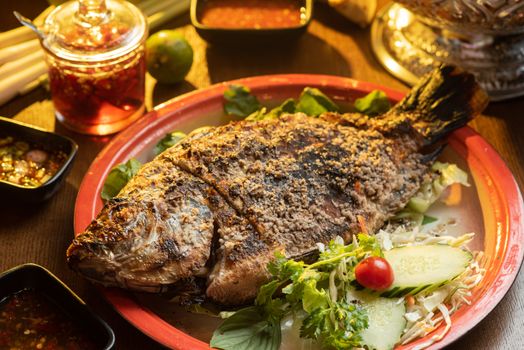
Photo: Sai Kuen Leung / Pexels
Thai
Thai Grilled Fish (Pla Pao)
The diets react (see scores below)
Common Ingredients
- whole fish
- lemongrass
- kaffir lime leaves
- salt
- cilantro
- chiles
- lime juice
- fish sauce
Specific recipes may vary.
Incompatible with 3 of 11 diets
Diet Ratings
Thai Grilled Fish (Pla Pao) is largely keto-compatible. Whole grilled fish provides excellent high-quality protein and healthy fats with zero carbs. The aromatics — lemongrass, kaffir lime leaves, cilantro, and chiles — contribute minimal net carbs in the quantities used as seasonings. Fish sauce contains a small amount of sugar per teaspoon but is used in modest quantities, keeping the contribution negligible. Lime juice adds a small carb load but typically only a squeeze is used. The overall dish is unprocessed, whole-food based, and well within keto macros for a standard serving.
Some strict keto practitioners flag fish sauce due to added sugar in many commercial brands and the cumulative carb effect of lime juice, lemongrass, and kaffir lime leaves when consumed in larger portions or restaurant-sized servings where quantities are unknown. These adherents recommend confirming fish sauce ingredients and limiting lime juice to stay safely under daily carb thresholds.
Thai Grilled Fish (Pla Pao) contains multiple animal-derived ingredients that are unambiguously non-vegan. The primary protein is whole fish, an animal product, and the dish is also seasoned with fish sauce, which is made from fermented fish. Both ingredients are direct animal products with no controversy within vegan ethics. The remaining ingredients — lemongrass, kaffir lime leaves, salt, cilantro, chiles, and lime juice — are all plant-based, but they cannot offset the clear presence of fish and fish sauce.
Thai Grilled Fish (Pla Pao) is largely paleo-compatible in concept — whole grilled fish with lemongrass, kaffir lime leaves, cilantro, chiles, and lime juice are all approved paleo ingredients. However, two ingredients disqualify this dish: salt (added salt is excluded from strict paleo) and fish sauce (a processed condiment that typically contains added salt and sometimes sugar or other additives, making it a processed food). The fish itself and the aromatic herbs are excellent paleo choices, but the dish as traditionally prepared cannot be approved due to these two non-compliant ingredients.
Thai Grilled Fish aligns exceptionally well with Mediterranean diet principles. Whole fish is a cornerstone protein source, recommended 2-3 times weekly. The preparation is simple and clean — grilled whole fish with aromatic herbs and minimal processing. Lemongrass, kaffir lime leaves, cilantro, chiles, and lime juice are all fresh plant-based ingredients that add nutritional value. Fish sauce contributes sodium but is used in small amounts as a condiment. The only notable departure from Mediterranean tradition is the absence of olive oil and the use of Southeast Asian aromatics rather than Mediterranean herbs, but the core nutritional profile is fully compatible.
Some strict Mediterranean diet frameworks emphasize not just ingredients but culinary tradition and context, noting that fish sauce (a fermented, processed condiment) and the absence of olive oil make this a non-traditional preparation. Purists may prefer a Mediterranean-style preparation with olive oil, lemon, and herbs like oregano.
While the primary protein (whole fish) is carnivore-approved, Thai Grilled Fish (Pla Pao) is heavily laden with plant-based ingredients that make the dish incompatible with the carnivore diet. Lemongrass, kaffir lime leaves, cilantro, chiles, and lime juice are all plant-derived and explicitly excluded. Fish sauce, while animal-derived, often contains added sugar and plant-based additives. The dish as prepared is a plant-seasoned fish dish, not a carnivore meal. A carnivore would need to strip it down to just the grilled fish with salt — an entirely different dish.
Most ingredients in Thai Grilled Fish (Pla Pao) are straightforwardly Whole30-compliant: whole fish, lemongrass, kaffir lime leaves, salt, cilantro, chiles, and lime juice are all approved. The key concern is fish sauce, which is technically allowed on Whole30 but commonly contains added sugar and/or wheat in many commercial brands. Compliant fish sauce exists (e.g., Red Boat brand, which is just anchovies and salt), but label-reading is essential. As long as a compliant fish sauce is used, this dish is fully approved — but the need to verify the fish sauce ingredient label warrants a caution rating rather than a straightforward approve.
Official Whole30 guidelines permit fish sauce made from only fish and salt with no added sugar or wheat, and some practitioners argue this dish should be a clear approve since compliant fish sauce is widely available and easy to identify. Others note that many Thai restaurants and recipes use fish sauce with added sugar or wheat, making label verification or sourcing essential in practice.
Thai Grilled Fish (Pla Pao) is largely low-FODMAP. The primary protein — whole fish — is completely FODMAP-free. Lemongrass is low-FODMAP at standard culinary amounts (one stalk or less per serve). Kaffir lime leaves are used in small quantities as an aromatic and have no significant FODMAP load. Salt, cilantro, lime juice, and chiles are all low-FODMAP. Fish sauce is a fermented condiment that, at typical serving amounts (1-2 tablespoons), is considered low-FODMAP by Monash — it contains no significant fructans, GOS, or other problematic FODMAPs. The dish contains no onion, garlic, wheat, legumes, lactose, or high-fructose ingredients. The main caveats are: (1) lemongrass is typically used as a stuffing/flavoring and the fibrous stalk is not eaten, keeping intake low; (2) fish sauce brand and quantity should be moderate, as some commercial preparations may include additives. Overall, this is one of the more naturally low-FODMAP dishes in Thai cuisine.
Some clinical FODMAP practitioners flag lemongrass as insufficiently tested by Monash at larger quantities used in stuffing whole fish, and advise caution if large amounts are consumed directly rather than used purely as an aromatic. Additionally, fish sauce at quantities exceeding 2 tablespoons has limited Monash data, so portion control is advised if used heavily as a dipping sauce.
Thai Grilled Fish (Pla Pao) is built around a DASH-ideal protein — whole grilled fish is lean, rich in omega-3s, and free of saturated fat — and the aromatics (lemongrass, kaffir lime leaves, cilantro, chiles, lime juice) are low-calorie, nutrient-rich, and entirely DASH-compatible. However, the combination of added salt and fish sauce introduces a significant sodium burden. Fish sauce alone contributes roughly 1,400–1,500mg of sodium per tablespoon, and salting the fish before grilling is standard preparation. Together, a single serving of Pla Pao as traditionally prepared could easily approach or exceed 1,000–1,500mg sodium, which is problematic against the standard DASH ceiling of 2,300mg/day and especially the low-sodium DASH target of 1,500mg/day. The dish is not inherently disqualifying — its protein base is excellent — but sodium management is essential. If fish sauce is reduced or replaced with a low-sodium alternative and added salt is minimized, this dish aligns well with DASH principles and would score 7–8.
NIH DASH guidelines emphasize limiting sodium from all sources, including condiments like fish sauce, making the standard preparation of this dish a caution-level choice. However, updated clinical interpretations focused on overall dietary pattern quality note that the lean fish base, anti-inflammatory aromatics, and absence of saturated fat make this dish structurally sound for cardiovascular health — some DASH-oriented dietitians would approve it if sodium from fish sauce and salt is reduced to a modest amount.
Thai Grilled Fish (Pla Pao) is an excellent Zone Diet choice. Whole grilled fish provides lean, high-quality protein with beneficial omega-3 fatty acids, directly aligned with Dr. Sears' anti-inflammatory protocol. The dish is essentially protein-dominant with negligible carbohydrates and minimal fat, making it a clean Zone protein block that pairs easily with Zone-favorable carbohydrate sides (vegetables, salad) and a small amount of monounsaturated fat to complete the 40/30/30 ratio. The aromatics — lemongrass, kaffir lime leaves, cilantro, and chiles — contribute polyphenols and anti-inflammatory compounds Sears specifically advocates. Fish sauce adds sodium but negligible macros. Lime juice contributes minimal low-glycemic carbs. The preparation method (grilling rather than frying) avoids inflammatory seed oils entirely. The only reason this doesn't score a perfect 10 is that as a standalone dish it lacks sufficient carbohydrates to complete a Zone-balanced meal on its own, requiring intentional pairing with vegetables or low-glycemic carb sources.
Thai Grilled Fish (Pla Pao) is an excellent anti-inflammatory dish. The foundation is a whole grilled fish — typically a freshwater or coastal fish like tilapia, sea bass, or snapper — which provides lean protein and, depending on the species, meaningful omega-3 fatty acids. Grilling is a clean cooking method that avoids inflammatory fats. The aromatic herb-and-spice profile is the real anti-inflammatory standout: lemongrass contains citral and other polyphenols with demonstrated anti-inflammatory and antioxidant activity; kaffir lime leaves are rich in antioxidants and volatile oils; cilantro provides antioxidant flavonoids; and chiles contribute capsaicin, a well-established anti-inflammatory compound that inhibits NF-κB signaling. Lime juice adds vitamin C and flavonoids. Fish sauce, while high in sodium, is used in small quantities as a condiment and contributes no inflammatory lipids or additives. Salt content from fish sauce is the only meaningful nutritional concern — relevant for those monitoring blood pressure — but does not drive an inflammatory response in the context of an otherwise clean dish. There are no refined carbohydrates, seed oils, trans fats, added sugars, or processed ingredients. This dish aligns strongly with Dr. Weil's Anti-Inflammatory Food Pyramid principles: omega-3-containing fish as the protein base, generous anti-inflammatory herbs and spices, and minimal processing.
Thai Grilled Fish (Pla Pao) is an excellent GLP-1-friendly dish. Whole grilled fish is a lean, high-quality protein source with minimal added fat, supporting the critical muscle-preservation goal on GLP-1 medications. Grilling is one of the best cooking methods for GLP-1 patients — it avoids added fats and is easy on digestion compared to frying or heavy saucing. The aromatics (lemongrass, kaffir lime leaves, cilantro) are nutritionally negligible but add flavor without calories. Fish sauce adds sodium but in typical condiment quantities is not a concern. Lime juice supports hydration and adds brightness without sugar. The main variable is the chile content — mild to moderate chile use is generally fine, but if prepared with significant fresh chiles, it may trigger reflux or nausea in GLP-1 patients who are sensitive to spice, particularly in the early weeks of treatment.
The primary point of variation in GLP-1 clinical guidance is chile tolerance — some obesity medicine dietitians advise patients to avoid even moderate spice during the nausea-prone dose-escalation phase, while others consider standard Thai spice levels acceptable once GI side effects stabilize. Patients who are sensitive should request mild preparation or reduce chile quantity.
*See how scores were generated at our methodology page.
Nutritional profile
Six traits that cut across every diet.
Fiber & Plants
How much whole-plant food and fiber it delivers.
Healthy Fats
The quality of its fats (unsaturated, omega-3).
Whole / Unprocessed
How close it is to its natural, unprocessed form.
Gut Gentle
How easy it is on digestion (low FODMAP, few irritants).
Low Glycemic
How little it spikes your blood sugar.
Protein Density
How much protein it packs per calorie.
Controversy Index
Higher controversy = more disagreement between diets.
Diet-Specific Tips
 Keto — 8/10
View tips
- Whole fish is zero-carb, high-protein, and contains healthy fats — ideal keto protein source
- Aromatics (lemongrass, kaffir lime leaves, cilantro, chiles) used as seasonings contribute negligible net carbs
- Fish sauce may contain added sugar; carb impact is minimal at standard serving quantities but varies by brand
- Lime juice adds a small carb load; a typical squeeze (~5–10ml) contributes under 1g net carbs
- Dish is unprocessed and whole-food based, aligning well with keto principles
- No grains, starches, or significant sugars present in standard preparation
 Mediterranean — 9/10
View tips
- Whole fish as primary protein — strongly encouraged 2-3x weekly
- Grilled preparation minimizes added fats and preserves nutrients
- All aromatics (lemongrass, kaffir lime, cilantro, chiles, lime juice) are fresh plant-based ingredients
- Fish sauce is minimally processed and used in small quantities as a condiment
- No refined grains, added sugars, or unhealthy fats
- Non-Mediterranean cuisine but nutritionally compatible profile
- Absence of olive oil is a minor deviation from core Mediterranean fat guidelines
 Whole30 — 6/10
View tips
- Whole fish is fully Whole30-compliant
- Lemongrass, kaffir lime leaves, cilantro, chiles, and lime juice are all compliant
- Salt is explicitly allowed on Whole30
- Fish sauce requires careful label-reading — must contain only fish and salt, no added sugar or wheat
- Compliant fish sauce brands (e.g., Red Boat) exist and are widely available
- Overall dish concept aligns well with Whole30 whole-food philosophy
 Low-FODMAP — 8/10
View tips
- Whole fish is completely FODMAP-free — excellent protein base
- Fish sauce is low-FODMAP at standard serving (≤2 tbsp per Monash)
- Lemongrass is low-FODMAP at ≤1 stalk; typically used as aromatic, not eaten directly
- Kaffir lime leaves used in small aromatic quantities — no significant FODMAP load
- Lime juice, cilantro, chiles, and salt are all low-FODMAP
- No onion, garlic, wheat, legumes, or lactose present
- Naturally gluten-free and free of polyols and excess fructose
 DASH — 5/10
View tips
- Whole grilled fish is an excellent lean protein strongly endorsed by DASH guidelines
- Fish sauce is very high in sodium (~1,400–1,500mg per tablespoon), the primary concern
- Added salt compounds the sodium load further
- Lemongrass, kaffir lime leaves, cilantro, and lime juice are DASH-friendly aromatics with negligible sodium
- No saturated fat, added sugar, or processed ingredients beyond the condiments
- Sodium-reduced preparation (low-sodium fish sauce, less salt) would elevate this to an approve rating
- As traditionally served, a single portion may represent 50–100% of the daily DASH sodium allowance
 Zone — 9/10
View tips
- Lean fish protein — ideal Zone protein source with omega-3 anti-inflammatory benefits
- Grilled preparation avoids inflammatory seed oils and trans fats
- Lemongrass, chiles, and cilantro contribute Zone-valued polyphenols
- Fish sauce adds sodium but no meaningful macronutrient disruption
- Lime juice provides negligible, low-glycemic carbohydrates
- Dish is carbohydrate-light and requires pairing with vegetables to achieve 40/30/30 balance
- No high-glycemic ingredients; nothing to trigger unfavorable insulin response
 Anti-Inflammatory — 8/10
View tips
- Whole fish provides lean protein and omega-3 fatty acids (amount varies by species)
- Lemongrass contains citral and polyphenols with antioxidant and anti-inflammatory activity
- Chiles contribute capsaicin, which inhibits NF-κB inflammatory signaling
- Kaffir lime leaves and cilantro add antioxidant flavonoids and volatile oils
- Lime juice provides vitamin C and additional antioxidants
- Grilling is a clean, oil-free cooking method with no added inflammatory fats
- No refined carbohydrates, added sugars, seed oils, or processed additives
- Fish sauce adds sodium; moderate intake appropriate for general population
 GLP-1 Friendly — 8/10
View tips
- Lean grilled fish provides high protein density with minimal fat — ideal for GLP-1 muscle preservation
- Grilling method avoids added fats and supports easy digestibility
- No refined carbohydrates, added sugars, or empty calories — high nutrient density per calorie
- Chiles are a moderate concern for GLP-1 patients prone to reflux or nausea; spice level should be adjusted to individual tolerance
- Fish sauce adds sodium — generally acceptable in typical serving amounts but worth noting for patients monitoring sodium intake
- Aromatic herbs contribute negligible calories with anti-inflammatory micronutrients
- Whole fish preparation may vary in fat content depending on species — leaner white fish score higher than fattier varieties