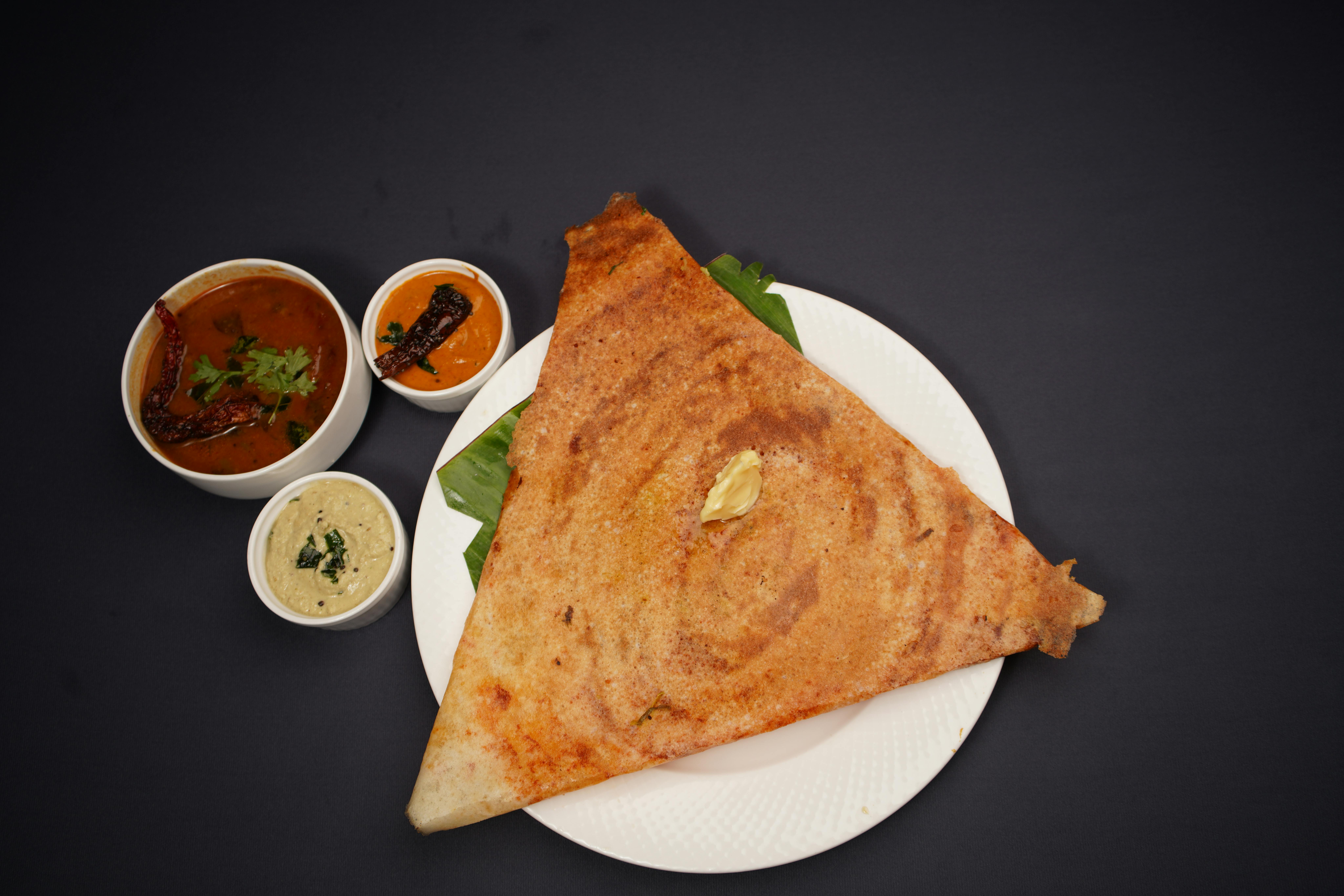
Photo: Jack Baghel / Pexels
The diets react (see scores below)
Common Ingredients
- rice
- urad dal
- fenugreek seeds
- salt
- vegetable oil
Specific recipes may vary.
Incompatible with 4 of 11 diets
Diet Ratings
Plain Dosa is fundamentally incompatible with a ketogenic diet. The batter is made primarily from fermented rice and urad dal (black lentils), both of which are high-carbohydrate ingredients. A single standard dosa (approximately 100g) contains roughly 30-40g of net carbs, which alone can consume or exceed the entire daily carb allowance on keto. Rice is a starchy grain explicitly excluded from keto, and while urad dal has some protein and fiber, it still contributes significant net carbs. The fermentation process does not meaningfully reduce the net carbohydrate content. The only keto-friendly element is the small amount of vegetable oil used for cooking. There is no portion size small enough to make a traditional dosa fit within ketogenic macros while remaining a recognizable serving of the dish.
Plain Dosa is a traditional South Indian fermented crepe made entirely from plant-based ingredients: rice, urad dal (black lentils), fenugreek seeds, salt, and vegetable oil. All components are whole or minimally processed plant foods with no animal products or animal-derived ingredients whatsoever. The fermentation process is microbial, not animal-based. Urad dal provides a solid plant protein source, and the dish is nutritionally well-rounded with complex carbohydrates and beneficial fermentation byproducts. It scores very high on the whole-food plant-based scale.
Plain Dosa is fundamentally incompatible with the Paleolithic diet. Every core ingredient violates paleo principles: rice is a grain (excluded), urad dal is a legume (excluded), salt is an added mineral (excluded), and vegetable oil is a seed/industrial oil (excluded). Fenugreek seeds are the only ingredient with any paleo plausibility, and even those are used here as part of a fermented grain-legume batter. The dish is also a processed, fermented preparation — not a whole, unprocessed food. There is no version of a traditional dosa that can be considered paleo-compliant.
Plain Dosa is made from fermented rice and urad dal (black lentils), which aligns partially with Mediterranean principles. The fermentation process enhances digestibility and nutrient bioavailability, and urad dal provides plant-based protein and fiber consistent with legume-forward eating. However, white rice is the dominant ingredient — a refined grain that modern Mediterranean diet guidelines deprioritize in favor of whole grains. The use of vegetable oil (likely not olive oil) rather than extra virgin olive oil also diverges from the canonical fat source. Fenugreek seeds are a beneficial addition. Overall, this is a minimally processed, plant-based dish with legumes, but the refined rice base and non-olive oil fat lower its Mediterranean alignment score.
Some Mediterranean diet practitioners applying a broader, culturally inclusive lens would view dosa more favorably: the fermented legume-grain combination mirrors traditional Mediterranean dishes like socca (chickpea crepes) or legume-based flatbreads, and the minimal processing and whole-food ingredients are consistent with Mediterranean values. Traditional South Indian practice also pairs dosa with sambar (lentil soup) and chutneys, which would significantly boost the overall nutritional profile toward Mediterranean ideals.
Plain Dosa is entirely plant-derived and contains zero animal products. It is made from rice (a grain), urad dal (a legume), fenugreek seeds (a plant-based spice/seed), and vegetable oil (a plant oil) — every single ingredient is explicitly excluded on the carnivore diet. Grains, legumes, seeds, and plant oils are among the most clearly prohibited foods in all tiers of carnivore eating. There is unanimous consensus across all carnivore authorities and protocols that this dish is incompatible with the diet.
Plain Dosa contains two excluded ingredients: rice (a grain) and urad dal (a legume). Both are explicitly banned on the Whole30 program. Additionally, even if the ingredients were compliant, a dosa is a thin crepe/pancake-style flatbread, which falls squarely into the 'no recreating baked goods/junk food' rule — the program explicitly lists crepes, pancakes, and wraps as prohibited food forms regardless of ingredient compliance. There is no compliant version of this dish possible within the Whole30 framework.
Plain dosa is made from a fermented batter of rice and urad dal (black lentils). The fermentation process is key: like sourdough, long fermentation (typically 8-12 hours) is believed to significantly reduce FODMAP content, particularly the GOS in urad dal. Rice flour itself is low-FODMAP. Fenugreek seeds are used in very small quantities as a leavening aid and are generally considered low-FODMAP at typical culinary doses. Salt and vegetable oil are FODMAP-free. However, the critical issue is urad dal: it is high in GOS in its unfermented state. Whether fermentation reliably reduces GOS to safe levels is not firmly established by Monash University for dosa specifically. Additionally, a standard restaurant or home serving of dosa (1-2 large crepes) may contain a significant cumulative amount of urad dal solids, even post-fermentation. Monash has not published a specific rating for plain dosa as a dish, creating meaningful uncertainty.
Monash University has not explicitly tested fermented dosa batter, so extrapolating from fermentation principles (as applied to sourdough) introduces uncertainty. Many clinical FODMAP practitioners advise caution with urad dal-based dishes during the strict elimination phase, regardless of fermentation, given the high baseline GOS content of urad dal and the variability in home fermentation times and conditions.
Plain Dosa is a fermented crepe made from rice and urad dal (split black lentils), which offers some DASH-compatible qualities: plant-based protein from lentils, fermentation supporting gut health, and use of vegetable oil rather than saturated fats. However, it scores in the caution range for several reasons. First, the batter is typically high in refined white rice, which lacks the fiber of whole grains emphasized by DASH. Second, salt is added both to the batter and during cooking, and sodium content can vary considerably — restaurant dosas can be moderately high in sodium. Third, the cooking process often uses generous amounts of oil on a hot griddle, adding fat calories. The urad dal provides some protein, magnesium, and potassium, which are DASH-positive nutrients, and fenugreek seeds contribute fiber and micronutrients. Overall, a homemade plain dosa with minimal salt and oil is more DASH-compatible than a restaurant version, but the white rice base and sodium from added salt prevent a full 'approve' rating.
NIH DASH guidelines emphasize whole grains over refined carbohydrates, which would place white-rice-based dosa in a less favorable category. However, updated clinical interpretations note that fermentation of rice and lentils lowers the glycemic impact and improves bioavailability of minerals, and some DASH-oriented dietitians consider traditional fermented foods like dosa acceptable as part of a culturally sensitive DASH adaptation, particularly when salt and oil are controlled.
Plain Dosa is a fermented crepe made primarily from white rice and urad dal (black lentil). From a Zone perspective, the dish presents a mixed profile. The urad dal provides some protein and fiber, and fermentation may modestly lower the glycemic impact compared to plain white rice, but white rice remains a high-glycemic, 'unfavorable' carb in Zone terminology. The macronutrient ratio is heavily skewed toward carbohydrates with relatively little protein and fat — far from the 40/30/30 target. A typical plain dosa is roughly 70-75% calories from carbs, 10-15% from protein, and 10-15% from fat. Vegetable oil (often high-omega-6 seed oils like sunflower or canola) is another Zone concern. To fit this into a Zone meal, one would need to pair it with a substantial lean protein source and monounsaturated fat, and limit portion size significantly. The urad dal is a favorable element — legumes are Zone-acceptable protein/carb sources — and fenugreek seeds are polyphenol-rich and anti-inflammatory, which aligns with Sears' later anti-inflammatory focus. However, as a standalone breakfast item, it fails to meet Zone macronutrient ratios and relies on a high-GI base carbohydrate.
Some Zone-informed practitioners and nutritionists note that fermented foods like dosa have a meaningfully lower glycemic response than unfermented white rice due to lactic acid bacterial activity, and that urad dal contributes enough fiber and resistant starch to partially redeem the carb quality. Dr. Sears' later writings (The Anti-Inflammation Zone, The Mediterranean Zone) place greater emphasis on polyphenols and fermented foods, which could support a slightly more favorable view of dosa in small portions. Under this lens, a half-dosa paired with a protein-rich sambar and a small amount of coconut (monounsaturated/medium-chain fat) could approximate a Zone-balanced plate.
Plain dosa is a fermented rice-and-lentil crepe with a mixed anti-inflammatory profile. On the positive side, fermentation of rice and urad dal produces beneficial probiotics and increases bioavailability of nutrients, supporting gut health and potentially reducing systemic inflammation. Urad dal contributes plant protein, fiber, and minerals. Fenugreek seeds are a notable anti-inflammatory addition — they contain soluble fiber, diosgenin, and other phytocompounds shown to modulate inflammatory pathways. The fermentation process also reduces phytic acid, improving mineral absorption. On the cautious side, the dish is predominantly white rice, a refined carbohydrate with a high glycemic index that can spike blood sugar and contribute to low-grade inflammation, particularly in larger portions or in metabolically compromised individuals. The ratio of rice to dal is typically 3:1 or 4:1, meaning refined starch dominates the dish. The type of 'vegetable oil' used for cooking is a meaningful unknown — if it is a seed oil high in omega-6 (e.g., sunflower or corn oil), this is a concern; if it is coconut oil (common in South India) or a small amount of ghee, the profile shifts accordingly. Overall, plain dosa occupies a neutral-to-mildly-positive space: better than most refined grain dishes due to fermentation and legume content, but not a strongly anti-inflammatory food.
Some anti-inflammatory and Ayurvedic practitioners view traditional fermented foods like dosa as actively beneficial for gut-mediated inflammation, rating it more favorably than mainstream anti-inflammatory frameworks which tend to penalize white rice as a refined carbohydrate. Conversely, low-glycemic and autoimmune-focused protocols (e.g., AIP) would flag the high-GI rice base and potential lectin content in urad dal as inflammatory concerns, pushing the rating lower.
Plain dosa is a thin, fermented crepe made primarily from rice and urad dal (black lentils). While the fermentation process improves digestibility and adds modest probiotic benefit, the macronutrient profile is a limitation for GLP-1 patients. A standard plain dosa (one crepe, ~75-100g) delivers roughly 3-5g protein and 2-3g fiber — well below the 15-30g protein per meal target. The urad dal contributes the majority of the protein, but rice dominates the batter ratio, making this largely a refined-carbohydrate food. It is low in fat (a positive), easy to digest due to fermentation (a positive), and light enough to suit small-portion eating. However, on its own it provides minimal nutritional density per calorie for a GLP-1 patient's reduced appetite window. It becomes more acceptable when paired with high-protein accompaniments such as sambar (lentil soup) or a dal-based chutney, which would meaningfully raise the protein and fiber contribution of the meal. The vegetable oil used in cooking is typically a small amount, which is acceptable. The thin, crispy format also means it is not heavy or greasy, avoiding GI aggravation. Rated caution rather than avoid because it is not harmful, not fried in excess oil, and not high-sugar — but it should not be eaten alone as a protein source.
Some GLP-1-focused dietitians note that fermented foods like dosa may support gut microbiome health during the GI adjustment phase of GLP-1 therapy, and view it favorably as a light, easily tolerated meal base — particularly on high-nausea days when appetite is severely suppressed. Others emphasize that the rice-heavy carbohydrate load with minimal protein makes it a poor use of limited caloric intake and recommend substituting a higher-protein batter (e.g., adding moong dal or chickpea flour) or limiting dosa to a partial serving alongside protein-rich accompaniments.
*See how scores were generated at our methodology page.
Nutritional profile
Six traits that cut across every diet.
Fiber & Plants
How much whole-plant food and fiber it delivers.
Healthy Fats
The quality of its fats (unsaturated, omega-3).
Whole / Unprocessed
How close it is to its natural, unprocessed form.
Gut Gentle
How easy it is on digestion (low FODMAP, few irritants).
Low Glycemic
How little it spikes your blood sugar.
Protein Density
How much protein it packs per calorie.
Controversy Index
Higher controversy = more disagreement between diets.
Diet-Specific Tips
 Vegan — 9/10
View tips
- All ingredients are 100% plant-based
- Rice and urad dal are whole foods with no processing concerns
- Fermentation is microbial — no animal involvement
- Vegetable oil is the only refined ingredient, keeping the score just below 10
- No animal-derived additives, dairy, or eggs present
- Traditional preparation method is inherently vegan
 Mediterranean — 5/10
View tips
- Urad dal provides plant-based protein and fiber, consistent with legume emphasis
- White rice is a refined grain, not preferred by modern Mediterranean guidelines
- Fermentation improves digestibility and aligns with minimally processed food principles
- Vegetable oil used instead of extra virgin olive oil, diverging from primary fat source
- No added sugars, minimal processing, and whole-food ingredients are positives
- Fenugreek seeds add beneficial phytonutrients
 Low-FODMAP — 5/10
View tips
- Rice is low-FODMAP and forms the majority of the batter
- Urad dal is high-GOS when unfermented; fermentation may reduce but not eliminate FODMAPs
- Long fermentation (8-12 hours) is theoretically FODMAP-reducing, similar to sourdough logic
- Fenugreek seeds used in very small amounts — generally low-FODMAP at culinary doses
- No specific Monash University testing data for plain dosa as a dish
- Standard serving size (1-2 dosas) may still carry residual GOS load
- Salt and vegetable oil are FODMAP-safe
 DASH — 5/10
View tips
- White rice base lacks whole grain fiber emphasized by DASH
- Urad dal provides plant-based protein, magnesium, and potassium — DASH-positive
- Fermentation may improve nutrient bioavailability and gut health
- Sodium from added salt is a concern, especially in restaurant preparations
- Vegetable oil is preferred over saturated fats, but quantity used in cooking matters
- Homemade low-salt, low-oil versions score higher than restaurant versions
- No added sugar, no red meat, no saturated fat from dairy — favorable
 Zone — 4/10
View tips
- White rice is a high-glycemic 'unfavorable' carb in Zone terminology
- Macronutrient ratio is heavily carb-dominant (~70-75% carbs), far from 40/30/30 target
- Urad dal adds modest protein and fiber, partially redeeming the dish
- Fermentation may lower glycemic index compared to plain white rice — a mild positive
- Vegetable oil is likely a high-omega-6 seed oil, contrary to Zone's monounsaturated fat preference
- Fenugreek seeds are polyphenol-rich and anti-inflammatory, aligning with Sears' later work
- Needs significant portioning down and pairing with lean protein and monounsaturated fat to fit Zone blocks
 Anti-Inflammatory — 5/10
View tips
- Fermentation improves gut microbiome support and nutrient bioavailability — a meaningful anti-inflammatory benefit
- Fenugreek seeds contribute anti-inflammatory phytocompounds and soluble fiber
- Urad dal provides plant protein and fiber, both anti-inflammatory-supportive
- White rice dominates the dish and carries a high glycemic index, potentially pro-inflammatory in excess
- Type of cooking oil unspecified — seed oils high in omega-6 would reduce the score; minimal oil or EVOO would improve it
- Portion size matters: a single dosa is modest in refined carbohydrate; multiple dosas increase glycemic load concern
 GLP-1 Friendly — 5/10
View tips
- Low protein per serving (~3-5g) — falls well short of 15-30g per meal target
- Fermentation improves digestibility — beneficial given GLP-1 slowed gastric emptying
- Rice-dominant batter makes this primarily a refined carbohydrate food
- Low fat content is a positive — unlikely to worsen nausea or reflux
- Acceptable only when paired with high-protein sides (sambar, dal chutney, paneer)
- Small portion format suits reduced GLP-1 appetite
- Fiber content is modest — not a meaningful fiber source on its own