Photo: Jack Baghel / Pexels
The diets react (see scores below)
Common Ingredients
- whole wheat flour
- semolina
- water
- salt
- vegetable oil
Specific recipes may vary.
Incompatible with 8 of 11 diets
Diet Ratings
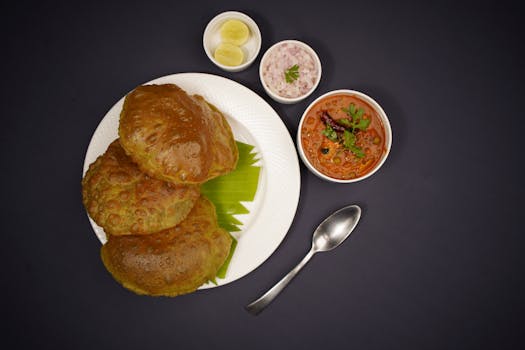
Poori is a deep-fried Indian bread made primarily from whole wheat flour and semolina, both of which are high-carbohydrate grains that are fundamentally incompatible with a ketogenic diet. A single poori (~30-40g) contains approximately 20-25g of net carbs, meaning even one or two pieces would exhaust or exceed the entire daily carb allowance for ketosis. While the deep-frying in vegetable oil adds fat, the overwhelming carbohydrate content from the grain-based dough makes this dish a clear avoid. There are no meaningful modifications that would make poori keto-compatible while retaining its identity as a dish.
Poori as listed is fully plant-based. All five ingredients — whole wheat flour, semolina, water, salt, and vegetable oil — are entirely free of animal products. Traditional poori recipes sometimes include ghee or yogurt to enrich the dough, but this version uses only vegetable oil, keeping it vegan-compliant. Deep-frying in vegetable oil is standard for this dish. The slight deduction from a perfect 10 reflects that poori is a deep-fried, refined-carbohydrate-heavy bread, which whole-food plant-based (WFPB) advocates would consider nutritionally suboptimal despite being technically vegan.
Poori is a deep-fried Indian bread made primarily from whole wheat flour and semolina, both of which are grains explicitly excluded from the Paleolithic diet. Wheat is one of the most clearly non-paleo foods due to its high gluten content, anti-nutrients (lectins, phytates), and the fact that it only became available through agricultural practices beginning roughly 10,000 years ago — well after the Paleolithic era. Semolina is simply coarsely ground durum wheat, compounding the grain problem. Additionally, vegetable oil (a seed oil) is used for deep-frying, which is also firmly excluded from paleo. Salt is a further minor violation. There is virtually nothing in this dish that qualifies as paleo-compliant.
Poori is a deep-fried Indian bread made from whole wheat flour and semolina. While the base ingredients (whole wheat flour, semolina) are acceptable grain sources, the deep-frying process in vegetable oil is the critical issue. Mediterranean diet principles strongly emphasize minimal frying and the use of extra virgin olive oil as the primary fat — not deep-frying in refined vegetable oil. Deep frying significantly increases caloric density and oxidized fat content, contradicting the Mediterranean approach to healthy fats. Semolina (refined durum wheat) also trends toward refined grains, which are less favored than whole grains. The combination of deep-frying and refined grain content places this dish outside Mediterranean diet recommendations.
Some Mediterranean diet interpreters note that whole wheat flour is a whole grain staple and semolina is traditional in Mediterranean cuisines (e.g., Italian and North African dishes). If the dish were baked or pan-cooked with olive oil rather than deep-fried, a moderate 'caution' rating could be argued, as flatbreads are present in traditional Mediterranean food cultures.
Poori is a deep-fried Indian bread made entirely from plant-derived ingredients: whole wheat flour, semolina, water, salt, and vegetable oil. Every single ingredient except water and salt violates carnivore diet principles. Whole wheat flour and semolina are grain-based carbohydrates explicitly excluded from the carnivore diet. Vegetable oil is a plant-derived fat, which is not only non-carnivore but actively discouraged even in broader low-carb communities due to its polyunsaturated fatty acid profile. There is no animal-derived ingredient present whatsoever. This dish is completely incompatible with the carnivore diet at any tier.
Poori contains two excluded grain ingredients: whole wheat flour (wheat is an excluded grain) and semolina (also derived from wheat/durum wheat, an excluded grain). Grains are categorically eliminated on the Whole30. Additionally, poori is a deep-fried flatbread — a type of bread — which falls squarely under the Whole30's 'no recreating baked goods/bread' rule even if compliant ingredients were somehow substituted. This dish is not compatible with the Whole30 program on multiple grounds.
Poori is made primarily from whole wheat flour, which is high in fructans — one of the most significant FODMAPs. Whole wheat flour is even higher in fructans than refined white wheat flour due to the higher bran content. Semolina (durum wheat) is also a wheat-based ingredient and similarly high in fructans. Both ingredients are clearly rated as high-FODMAP by Monash University at any standard serving size. A single poori (~30–40g) would contain enough fructans from whole wheat flour alone to exceed safe FODMAP thresholds during the elimination phase. The remaining ingredients — water, salt, and vegetable oil — are all FODMAP-free and do not affect the rating. There is no fermentation process (unlike sourdough) that would reduce the fructan content. This dish should be avoided during the FODMAP elimination phase.
Poori is a deep-fried Indian bread made from whole wheat flour and semolina. While whole wheat flour is a DASH-approved whole grain, the deep-frying process significantly increases the total fat content per serving. A typical poori absorbs a substantial amount of vegetable oil during frying, making it a high-calorie, high-fat food. The fat source (vegetable oil) is unsaturated, which is preferable to saturated fats under DASH guidelines, but the overall fat load and caloric density are concerns. Sodium from added salt is moderate and manageable. The semolina component is refined grain, slightly less preferred than 100% whole grain. Poori is not inherently high in sodium, saturated fat, or added sugar, but the frying method makes it a food to consume only occasionally and in portion-controlled amounts under DASH guidelines.
NIH DASH guidelines emphasize limiting total fat and favor baking, steaming, or grilling over frying; a deep-fried bread would not be recommended as a regular staple. However, some DASH-oriented dietitians note that if vegetable oil (e.g., canola or sunflower) is used and portions are limited to 1-2 pieces occasionally, the unsaturated fat profile is not categorically incompatible with DASH — the whole wheat base provides fiber and some micronutrients that partially offset concerns.
Poori is a deep-fried Indian flatbread made primarily from whole wheat flour and semolina, cooked in vegetable oil. From a Zone Diet perspective, it presents multiple significant problems. First, it is essentially a pure carbohydrate dish with no protein component, making it structurally impossible to constitute a balanced Zone meal on its own. The carbohydrates come from refined/starchy grains (semolina is a refined wheat product, and even whole wheat flour has a relatively high glycemic load especially when deep-fried), which are classified as 'unfavorable' carbs in Zone terminology — Sears limits grains to 0-1 servings per day and specifically discourages starchy, high-glycemic carbohydrate sources. Second, the frying medium is vegetable oil, which is typically a high omega-6 seed oil (sunflower, canola, or similar), directly contradicting Zone's anti-inflammatory principles that discourage omega-6-heavy seed oils. Third, deep frying dramatically increases the fat content, but it's the wrong kind of fat — not monounsaturated as Zone recommends. The combination of high-glycemic starchy carbs, zero lean protein, and pro-inflammatory omega-6 fats makes this one of the harder foods to incorporate into a Zone-balanced meal. A very small portion alongside a complete Zone-balanced meal (lean protein + vegetables + monounsaturated fat) could technically work as a minimal carb block, but the unfavorable carb quality and inflammatory fat profile push this firmly toward avoid.
Poori is a deep-fried Indian flatbread made from whole wheat flour and semolina. The base ingredients have some redeeming qualities — whole wheat flour provides fiber and complex carbohydrates, and semolina adds some protein and B vitamins. However, the cooking method (deep frying) significantly changes the inflammatory profile. The dish is deep-fried in vegetable oil, which typically refers to high-omega-6 refined oils (sunflower, soybean, corn, or blended vegetable oil) in the Indian culinary context. Deep frying at high temperatures increases omega-6 intake substantially, causes oxidation of polyunsaturated fats, and generates pro-inflammatory oxidation products. The high refined carbohydrate load from the frying process and glycemic impact of the fried dough also contributes modestly to an inflammatory profile. Unlike roti or chapati (same flour, dry-cooked), the deep frying transforms this from a neutral whole grain food into a caution-level item. As a side dish consumed occasionally, it is not categorically harmful, but regular consumption is not aligned with anti-inflammatory eating principles.
Mainstream nutrition and Dr. Weil's framework would note that whole wheat as the base grain is a positive factor, and occasional fried foods in an otherwise anti-inflammatory diet may not meaningfully increase systemic inflammation. However, most anti-inflammatory practitioners, including those following IF Rating methodology, flag regular consumption of deep-fried foods in refined seed oils as pro-inflammatory due to omega-6 loading and oxidation products formed during high-heat frying.
Poori is a deep-fried Indian flatbread made from whole wheat flour and semolina, cooked by submerging in hot vegetable oil. Despite the use of whole wheat flour (which offers some fiber), the deep-frying process makes this a high-fat, greasy food that is fundamentally incompatible with GLP-1 dietary guidelines. The high fat content will significantly worsen GLP-1 side effects including nausea, bloating, and reflux. GLP-1 medications slow gastric emptying, meaning heavy, oily foods like poori will sit in the stomach for an extended period, amplifying discomfort. The dish provides virtually no protein, making it nutritionally poor for GLP-1 patients who must prioritize protein at every meal. The calorie density comes almost entirely from refined carbohydrates and absorbed frying oil, offering very low nutrient density per calorie. A single poori absorbs a significant amount of oil during frying, making even a small serving high in fat. This is not a portion-sensitivity issue — the cooking method itself disqualifies the dish.
*See how scores were generated at our methodology page.
Nutritional profile
Six traits that cut across every diet.
Fiber & Plants
How much whole-plant food and fiber it delivers.
Healthy Fats
The quality of its fats (unsaturated, omega-3).
Whole / Unprocessed
How close it is to its natural, unprocessed form.
Gut Gentle
How easy it is on digestion (low FODMAP, few irritants).
Low Glycemic
How little it spikes your blood sugar.
Protein Density
How much protein it packs per calorie.
Controversy Index
Higher controversy = more disagreement between diets.
Diet-Specific Tips
 Vegan — 8/10
View tips
- All ingredients are plant-derived with no animal products
- Vegetable oil used instead of ghee (common non-vegan alternative in traditional recipes)
- Deep-fried preparation is nutritionally suboptimal from a WFPB perspective
- Semolina and whole wheat flour are both vegan-compliant grains
- No hidden animal-derived additives in the listed ingredient set
 DASH — 4/10
View tips
- Deep-fried preparation significantly increases total fat content
- Vegetable oil used is unsaturated, which is preferable under DASH but still adds substantial calories
- Whole wheat flour is a DASH-approved whole grain ingredient
- Semolina is a refined grain, slightly less preferred than whole grain
- Moderate sodium from salt — manageable within DASH limits
- No saturated fat, added sugar, or high-sodium processed ingredients
- Portion control critical — 1-2 pooris occasionally may be acceptable, not a daily staple
 Anti-Inflammatory — 4/10
View tips
- Deep-fried cooking method introduces large amounts of oxidized omega-6 fatty acids
- Vegetable oil used for frying is typically a high-omega-6 refined seed oil (sunflower/soybean blend common in India)
- Whole wheat flour is a positive factor — fiber and complex carbohydrates
- Semolina adds some nutritional value but also raises glycemic load
- High-heat frying generates aldehydes and other pro-inflammatory oxidation byproducts
- Occasional consumption as a side is less concerning than regular intake