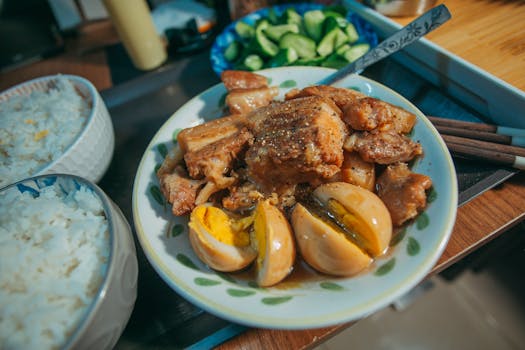
Photo: FOX ^.ᆽ.^= ∫ / Pexels
The diets react (see scores below)
Common Ingredients
- pork shoulder
- soy sauce
- cane vinegar
- garlic
- bay leaves
- black peppercorns
- sugar
- onion
Specific recipes may vary.
Incompatible with 7 of 11 diets
Diet Ratings
Pork shoulder is an excellent keto protein with high fat content, and the vinegar, garlic, bay leaves, and peppercorns are all keto-friendly. However, traditional Filipino adobo includes added sugar and soy sauce (which contains wheat and small carbs), making the dish a caution rather than a full approve. The sugar is the main concern — even a small amount added to a braising sauce concentrates as it reduces. A standard serving would likely contribute a modest but non-negligible amount of net carbs from the sugar and onion. With simple modifications (omit sugar, use tamari or coconut aminos), this dish would easily qualify as an approve. As prepared with the listed ingredients, portion control and awareness of the sugar content is advised.
Strict keto practitioners would point out that any added sugar — even in small braising quantities — is a zero-tolerance violation, and would rate this as avoid. On the other side, lazy keto or flexible keto followers argue that the sugar amount per serving is negligible after dilution across multiple portions and the dish is otherwise highly keto-aligned.
Pork Adobo contains pork shoulder as its primary ingredient, which is animal flesh and unambiguously excluded from a vegan diet. There is no version of this dish that could be considered vegan without replacing the pork entirely with a plant-based alternative. All other ingredients — soy sauce, cane vinegar, garlic, bay leaves, black peppercorns, sugar, and onion — are plant-based, but the presence of pork makes this dish wholly incompatible with veganism.
Pork Adobo contains multiple non-paleo ingredients that disqualify it. Soy sauce is a processed, fermented soy-and-wheat product — it violates both the legume (soy) and grain (wheat) exclusions and is heavily salted. Cane vinegar, while less problematic than some ingredients, comes from processed sugarcane. Sugar (refined) is explicitly excluded. While pork shoulder, garlic, bay leaves, black peppercorns, and onion are all paleo-approved, the foundational sauce of this dish depends on soy sauce and sugar, making the dish as traditionally prepared incompatible with paleo. A paleo-adapted version would require substituting soy sauce with coconut aminos and omitting the sugar.
Pork Adobo conflicts with Mediterranean diet principles on multiple fronts. The primary protein is pork shoulder, a fatty red/processed meat that Mediterranean guidelines recommend limiting to only a few times per month. The dish is also heavily reliant on soy sauce, a highly processed, sodium-dense condiment entirely absent from traditional Mediterranean culinary tradition. Added sugar further pushes this dish away from Mediterranean ideals. There is no olive oil, no emphasis on plant-based ingredients, and the cooking method does not align with Mediterranean food culture. While garlic, bay leaves, black peppercorns, and onion are Mediterranean-friendly aromatics, they cannot offset the core incompatibilities of the dish.
Pork Adobo is fundamentally incompatible with the carnivore diet. While pork shoulder itself is an approved animal protein, virtually every other ingredient in this dish is plant-derived or processed and excluded from carnivore: soy sauce (fermented soy — a legume-based condiment), cane vinegar (plant-derived sugar cane), garlic (plant), bay leaves (plant), black peppercorns (plant), sugar (plant-derived), and onion (plant). The dish is essentially a plant-marinade-braised meat, meaning the pork itself is thoroughly saturated with non-carnivore ingredients. Even practitioners following the most lenient carnivore protocols would find this dish unacceptable due to the soy, sugar, and multiple plant-based aromatics. The soy sauce alone — containing wheat and soy — is a disqualifying ingredient on its own.
Pork Adobo as listed contains two excluded ingredients: soy sauce (soy is a legume and explicitly excluded on Whole30) and sugar (added sugar is explicitly excluded). While pork shoulder, cane vinegar, garlic, bay leaves, black peppercorns, and onion are all compliant, the presence of soy sauce and sugar make this dish non-compliant. A Whole30-friendly version could substitute coconut aminos for soy sauce and omit the sugar entirely, but as written this recipe cannot be approved.
Filipino Pork Adobo contains two high-FODMAP ingredients that are fundamental to the dish and cannot be considered incidental: garlic and onion. Both are among the highest-fructan foods tested by Monash University and are high-FODMAP even in small amounts. Garlic is considered one of the worst offenders on the low-FODMAP diet, with even 1/4 clove triggering symptoms in sensitive individuals. Onion is similarly problematic at any standard culinary quantity. These two aromatics form the flavor backbone of adobo and are not optional garnishes — they are cooked into the braising liquid and their FODMAPs fully infuse the dish. Pork shoulder itself is low-FODMAP, soy sauce is low-FODMAP at standard serving sizes (up to 2 tablespoons), cane vinegar is low-FODMAP, bay leaves and black peppercorns are used in trace amounts and are considered safe, and small amounts of sugar are fine. However, the garlic and onion make this dish clearly high-FODMAP and unsuitable during the elimination phase as traditionally prepared.
Filipino Pork Adobo presents multiple significant conflicts with DASH diet principles. The primary concern is sodium: soy sauce is extremely high in sodium, typically contributing 800–1,000mg per tablespoon, and this dish commonly uses substantial quantities, easily pushing a single serving well beyond the DASH daily sodium limits (2,300mg standard, 1,500mg low-sodium). Pork shoulder is a fatty cut with notable saturated fat content, which DASH explicitly limits. The combination of a high-sodium condiment as a primary cooking liquid with a high-saturated-fat red meat makes this dish doubly problematic for DASH adherence. The small amount of sugar adds unnecessary refined carbohydrates. While garlic, onion, vinegar, bay leaves, and black peppercorns are DASH-neutral or mildly beneficial, they do not offset the core issues. A significantly modified version using low-sodium soy sauce, leaner pork loin, and reduced quantities could improve the score considerably, but the dish as traditionally prepared is not compatible with DASH guidelines.
Pork adobo presents a mixed Zone Diet profile. The primary protein source is pork shoulder, which is a fattier cut with significant saturated fat — Dr. Sears consistently recommends leaner protein sources and limits fatty red meat and pork. The dish also contains added sugar, which adds glycemic load without nutritional benefit. On the positive side, the base flavors (soy sauce, vinegar, garlic, onion, bay leaves, peppercorns) are low-glycemic and even offer some polyphenol benefit. The vinegar (cane vinegar) may actually help blunt glycemic response. However, the fat profile skews toward saturated fat rather than monounsaturated, and the sugar addition — even if small — is unfavorable in Zone terminology. With careful portioning (a modest 3-oz serving to hit ~25g protein), trimming visible fat, and pairing with low-glycemic vegetables and a monounsaturated fat source, this dish can technically fit into Zone blocks, but it requires significant management. The dish as traditionally prepared leans unfavorable primarily due to the pork shoulder fat content and added sugar.
Some Zone practitioners and Sears' later writings (Toxic Fat, The OmegaRx Zone) have softened the strict anti-saturated-fat stance somewhat, acknowledging that saturated fat is less harmful than omega-6-rich seed oils. Under this lens, a modest portion of pork shoulder braised in vinegar-soy sauce could be acceptable in a Zone meal, especially since the dish contains no seed oils. The small amount of sugar in adobo is minimal per serving and may not materially disrupt insulin balance.
Pork Adobo has a mixed anti-inflammatory profile. The primary concern is pork shoulder, a fatty cut high in saturated fat, which anti-inflammatory guidelines recommend limiting due to its pro-inflammatory potential. However, the dish's flavor base includes several genuinely anti-inflammatory ingredients: garlic contains allicin and sulfur compounds that reduce inflammatory markers; black peppercorns contain piperine, a bioactive with anti-inflammatory properties; bay leaves and onion provide quercetin and other polyphenols. Cane vinegar (acetic acid) has some evidence for modest metabolic benefits and is neutral-to-positive compared to refined carbohydrates. Soy sauce is high in sodium, which in excess is associated with inflammation and cardiovascular stress, though fermented soy has some beneficial properties. The small amount of added sugar is a minor concern. The cooking method — braising in an acidic vinegar marinade — may actually help modulate the impact of saturated fat by reducing advanced glycation end-products (AGEs) compared to dry-heat cooking. Overall, the dish is not aggressively pro-inflammatory, but the saturated fat load from pork shoulder and the high sodium from soy sauce prevent it from reaching an 'approve' rating. A leaner cut (pork tenderloin) and low-sodium soy sauce or coconut aminos would meaningfully improve the profile.
Some anti-inflammatory practitioners, particularly those aligned with traditional and ancestral food approaches, argue that unprocessed pork in a vinegar-based preparation is a whole food that should not be categorized alongside processed meats, and that the anti-inflammatory condiments (garlic, vinegar, pepper) meaningfully offset concerns about saturated fat. Conversely, stricter anti-inflammatory protocols following Dr. Weil's framework would place pork shoulder more firmly in the 'limit' category alongside other red/fatty meats, especially for individuals with cardiovascular risk factors or autoimmune conditions.
Pork adobo is a flavorful, protein-containing dish, but the use of pork shoulder — a fatty cut with significant saturated fat — is a meaningful concern for GLP-1 patients. Pork shoulder typically runs 15–20g of fat per 3 oz serving, much of it saturated, which can worsen nausea, bloating, and reflux due to slowed gastric emptying. The braising liquid (soy sauce, cane vinegar, garlic, onion) is largely benign and the vinegar-based acid profile may actually aid digestion somewhat. The small amount of added sugar is not a major concern in typical recipe quantities. Sodium from soy sauce is notable but not a GLP-1-specific disqualifier. The dish provides moderate protein (~18–22g per serving) but not at high density per calorie given the fat load. It is not fried, which is a positive, and the braised preparation makes it relatively easy to chew and digest mechanically. Overall: acceptable occasionally and in small portions, but the fatty cut is the limiting factor.
Some GLP-1-focused dietitians would rate this more favorably, arguing that the braised preparation renders much of the fat into the liquid (which can be skimmed or avoided), and that whole-food, home-cooked meals with real ingredients are preferable to processed alternatives even when fat content is higher. Others would rate it more harshly, noting that pork shoulder's saturated fat load is a consistent trigger for GI side effects in GLP-1 patients and that leaner protein sources should be substituted.
*See how scores were generated at our methodology page.
Nutritional profile
Six traits that cut across every diet.
Fiber & Plants
How much whole-plant food and fiber it delivers.
Healthy Fats
The quality of its fats (unsaturated, omega-3).
Whole / Unprocessed
How close it is to its natural, unprocessed form.
Gut Gentle
How easy it is on digestion (low FODMAP, few irritants).
Low Glycemic
How little it spikes your blood sugar.
Protein Density
How much protein it packs per calorie.
Controversy Index
Higher controversy = more disagreement between diets.
Diet-Specific Tips
 Keto — 5/10
View tips
- Pork shoulder is high-fat, keto-ideal protein
- Added cane sugar raises net carb content and conflicts with strict keto
- Soy sauce contains wheat/carbs; coconut aminos would be a keto-friendly substitute
- Vinegar, garlic, bay leaves, and peppercorns are all keto-compatible
- Onion adds minor carbs but is manageable in typical adobo portions
- Sugar concentration increases as braising liquid reduces
- Easily modified to be fully keto-compliant by omitting sugar
 Zone — 4/10
View tips
- Pork shoulder is a fatty, higher-saturated-fat protein — Zone prefers lean cuts; pork loin or tenderloin would score higher
- Added sugar (even if small) is an unfavorable Zone carbohydrate that spikes insulin
- Cane vinegar may help moderate glycemic response — a minor Zone-positive element
- Garlic and onion provide polyphenols consistent with Sears' anti-inflammatory focus
- Soy sauce adds sodium but is low-glycemic and low-calorie — Zone-neutral
- To Zone-balance this dish, pair with generous low-GI vegetables, reduce portion size to control fat, and omit or minimize sugar
 Anti-Inflammatory — 4/10
View tips
- Pork shoulder is high in saturated fat — a primary concern under anti-inflammatory guidelines
- Garlic provides allicin and anti-inflammatory sulfur compounds
- Black peppercorns contain piperine with documented anti-inflammatory properties
- Onion adds quercetin, a beneficial flavonoid
- Soy sauce contributes high sodium, which may promote inflammation at regular/high intake
- Cane vinegar (acetic acid) is neutral to mildly beneficial — preferable to refined sugar-based sauces
- Small amount of added sugar is a minor but noted concern
- Braising in acid (vinegar) reduces AGE formation compared to high-heat dry cooking methods
- Overall dish is moderate in inflammatory risk — acceptable occasionally, not regularly
 GLP-1 Friendly — 4/10
View tips
- Pork shoulder is a high-fat, high-saturated-fat cut — primary concern for GLP-1 side effects
- Braised (not fried) preparation improves digestibility compared to other cooking methods
- Moderate protein content (~18–22g per serving) but low protein density per calorie due to fat
- No fiber-rich ingredients — minimal contribution to fiber goals
- High sodium from soy sauce warrants portion awareness
- Small amount of added sugar not a significant concern at typical recipe quantities
- Dish is portion-sensitive — a small serving is more manageable than a full plate
- Could be improved significantly by substituting pork tenderloin or chicken thighs/breast