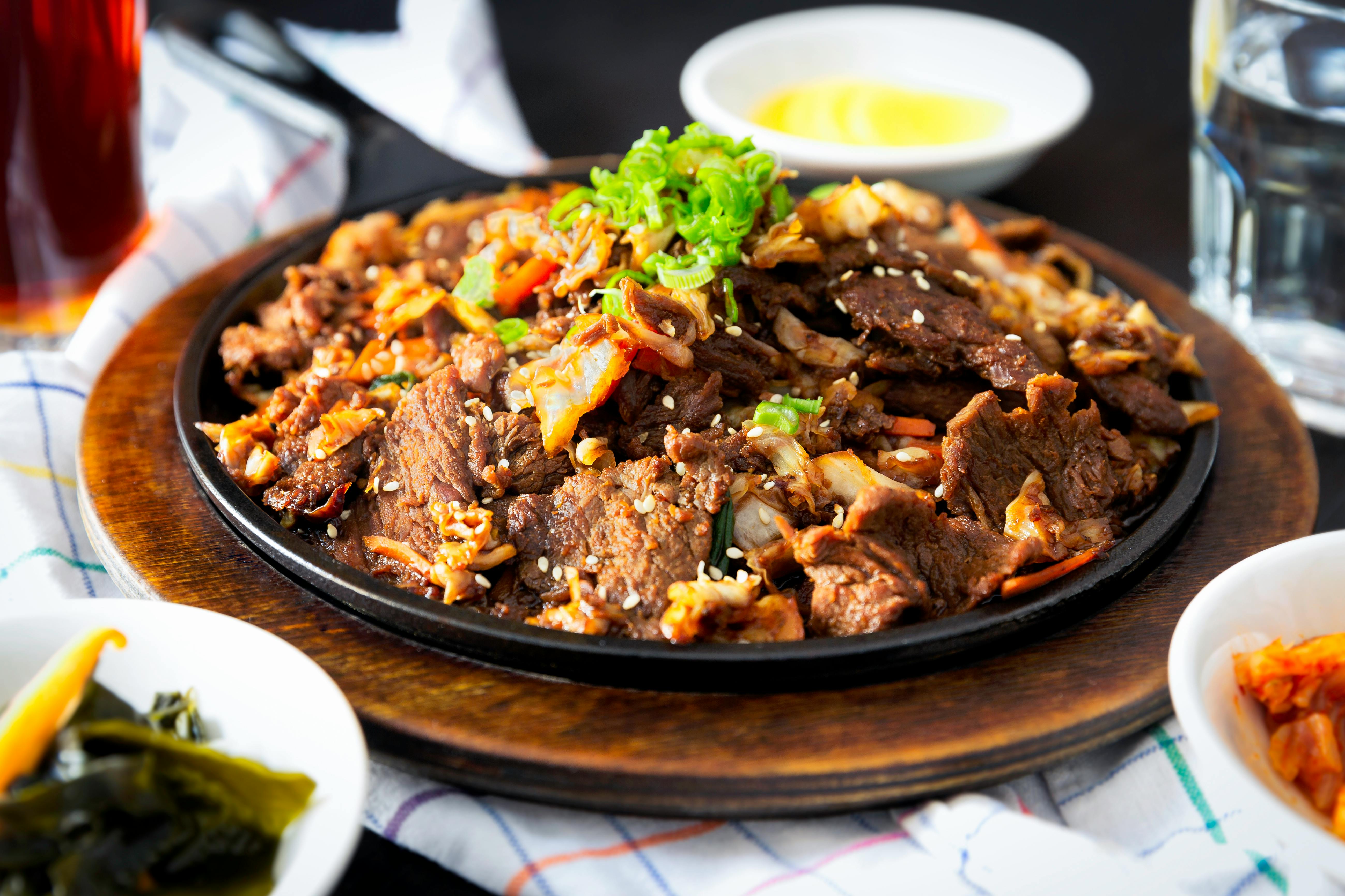
Photo: Lio Photography / Pexels
The diets react (see scores below)
Common Ingredients
- pork
- gochujang
- soy sauce
- garlic
- sesame oil
- onion
- scallions
- sugar
Specific recipes may vary.
Incompatible with 8 of 11 diets
Diet Ratings
Pork Bulgogi is fundamentally incompatible with a ketogenic diet in its standard form. The marinade contains two major keto disqualifiers: gochujang (a fermented chili paste with significant sugar and carbohydrate content, typically 10-15g net carbs per 2 tablespoons) and added sugar as an explicit ingredient. Soy sauce adds minor carbs, and onions contribute additional net carbs. Combined, the marinade alone can push a single serving well above the daily keto carb threshold of 20-50g. While pork itself is keto-friendly and sesame oil and garlic are acceptable, the structural role of gochujang and sugar in this dish means the carb load cannot be meaningfully reduced without fundamentally changing the recipe. This is not a portion-control situation — the marinade is inherently high-carb by design.
Pork Bulgogi contains pork as its primary protein, which is an animal flesh product and is categorically excluded from a vegan diet. There is no ambiguity here — meat is never compatible with veganism. The remaining ingredients (gochujang, soy sauce, garlic, sesame oil, onion, scallions, sugar) are plant-based, but the inclusion of pork renders the entire dish non-vegan.
Pork Bulgogi contains multiple non-paleo ingredients that disqualify it. Soy sauce is a fermented soy (legume) and grain (wheat) product — both categories are strictly excluded from paleo. Gochujang is a Korean fermented chili paste made from glutinous rice, fermented soybeans, and often added sugar — it combines grains, legumes, and refined sugar in a single ingredient. Sesame oil is a seed oil, which is explicitly excluded in favor of animal fats, olive oil, coconut oil, and similar alternatives. Refined sugar is also a direct violation. While the pork, garlic, onion, and scallions are fully paleo-approved, the marinade is built almost entirely on non-paleo foundations. This dish as traditionally prepared cannot be considered paleo-compatible.
Pork Bulgogi conflicts with Mediterranean diet principles on multiple fronts. Pork is a red meat, which the Mediterranean diet limits to a few times per month. The dish also contains added sugar, which Mediterranean guidelines minimize. Gochujang is a processed condiment that typically contains added sugars and refined ingredients. Sesame oil, while a plant-based fat, is not the preferred fat in the Mediterranean pattern — extra virgin olive oil is the canonical fat source. The overall flavor profile and ingredient composition are rooted in Korean culinary tradition with no meaningful alignment to Mediterranean dietary principles.
Pork Bulgogi is fundamentally incompatible with the carnivore diet. While the base protein (pork) is carnivore-approved, the dish is defined by its marinade, which contains multiple plant-derived and processed ingredients that are strictly excluded. Gochujang is a fermented chili paste containing red chili peppers, glutinous rice, and sugar. Soy sauce is a fermented grain-based condiment (wheat and soybeans). Sesame oil is a plant-derived oil. Garlic, onion, and scallions are all plant vegetables. Sugar is a processed plant-derived sweetener. The carnivore diet excludes all of these categorically. This dish is not a borderline case — it is a heavily plant-marinated meat dish that violates nearly every core rule of the carnivore diet beyond simply providing pork as its protein source.
Pork Bulgogi as listed contains three excluded ingredients: (1) soy sauce, which is a soy-based product explicitly banned on Whole30; (2) sugar, which is an added sugar explicitly excluded; and (3) gochujang, a Korean fermented chili paste that standardly contains both sugar and rice (a grain), making it doubly non-compliant. Any one of these three ingredients alone would disqualify the dish. A Whole30-compliant adaptation would require substituting coconut aminos for soy sauce, omitting sugar entirely or using compliant fruit juice if sweetness is needed, and replacing gochujang with a compliant chili paste (gochugaru flakes plus coconut aminos and compliant ingredients). The pork, garlic, sesame oil, onion, and scallions are all fully compliant on their own.
Pork Bulgogi contains multiple high-FODMAP ingredients that make it unsuitable during the elimination phase. Garlic is one of the highest-FODMAP foods tested by Monash University, containing significant fructans even in small amounts. Onion is equally problematic and is a leading trigger food for IBS sufferers — both are high-FODMAP at any culinary quantity. Gochujang (Korean chili paste) typically contains garlic and onion as ingredients, compounding the fructan load. Soy sauce in very small amounts (1 tablespoon) is considered low-FODMAP by Monash, but combined with the other high-FODMAP ingredients, it does not salvage this dish. Scallions (green tops only) would be low-FODMAP, but standard bulgogi recipes use the whole scallion including the white bulb, which is high in fructans. The pork itself, sesame oil, and sugar are all low-FODMAP. However, with garlic, onion, and gochujang all present as core marinade components, this dish is high-FODMAP as traditionally prepared and should be avoided during elimination.
Pork Bulgogi presents multiple significant concerns under DASH diet guidelines. The combination of soy sauce and gochujang creates a high-sodium profile — soy sauce alone contributes approximately 900mg sodium per tablespoon, and gochujang adds further sodium, making a typical serving likely to exceed 800–1,200mg sodium, a substantial portion of even the standard DASH sodium limit (2,300mg/day) in a single dish. Pork, depending on the cut, can be relatively high in saturated fat (especially if belly or shoulder cuts are used, as common in bulgogi). Added sugar is also present, conflicting with DASH guidance to limit added sugars. Sesame oil is a vegetable oil and acceptable in small amounts, and garlic, onion, and scallions are DASH-friendly aromatics, but these positives are outweighed by the high sodium and added sugar load. The dish as commonly prepared in Korean cuisine is not compatible with DASH principles without substantial modification.
Pork Bulgogi presents a mixed Zone Diet profile. The pork provides a lean-to-moderate protein source — lean cuts like pork loin or tenderloin are Zone-acceptable, though fattier cuts (pork belly, shoulder) increase saturated fat and make block balancing harder. The marinade is the primary concern: sugar is a direct Zone antagonist, raising glycemic load, and gochujang typically contains added sugars and fermented rice, adding unfavorable carbohydrate load. Soy sauce contributes sodium but is negligible macronutrically. Garlic, onion, and scallions are favorable Zone vegetables. Sesame oil is a mixed fat — it contains some monounsaturated fat but is primarily omega-6 polyunsaturated fat (linoleic acid), which Sears explicitly cautions against due to its pro-inflammatory arachidonic acid pathway potential. With portion control — lean pork cut, reduced gochujang/sugar, and pairing with colorful low-GI vegetables — this dish can fit Zone blocks, but the marinade sugar and sesame oil make it a 'caution' food requiring modification rather than an easy Zone-friendly choice.
Some Zone practitioners and later Sears writings take a more pragmatic view: the total amount of sugar in a typical bulgogi marinade serving is small (a few grams), and the gochujang's polyphenol content (capsaicin compounds) aligns with Sears' anti-inflammatory emphasis in later works like 'The Zone Diet' updates. From this perspective, if lean pork is used and the dish is served over vegetables rather than rice, it could score higher (6-7). The debate centers on whether marinade sugar in small quantities is a meaningful Zone violation or a negligible rounding issue.
Pork Bulgogi presents a mixed anti-inflammatory profile. On the positive side, garlic is a well-documented anti-inflammatory ingredient (organosulfur compounds), sesame oil contains sesamol and sesamin with antioxidant properties, and gochujang contributes capsaicin (from chili peppers), which has anti-inflammatory activity. Scallions and onions provide quercetin and other flavonoids. However, pork is a red/processed-adjacent meat that falls in the 'limit' category — it is higher in saturated fat than poultry and contains arachidonic acid, which can promote inflammatory pathways. The added sugar is a meaningful concern: refined sugar drives inflammatory cytokine production and is explicitly limited in anti-inflammatory frameworks. Soy sauce adds sodium and is a processed condiment, though fermented soy has some beneficial aspects. Gochujang itself is a fermented chili paste with probiotic potential, but commercial versions often contain added sugar and refined starches, compounding the sugar concern. The dish is not inherently harmful — the anti-inflammatory spices and aromatics offer real benefit — but the combination of pork (saturated fat, arachidonic acid) and added sugar tips it into the caution zone. Preparation matters: a leaner pork cut (tenderloin vs. belly) and reduced sugar or a low-glycemic sweetener substitute would improve the profile considerably.
Some anti-inflammatory practitioners, particularly those following Dr. Weil's broader dietary philosophy, would note that the fermented elements (gochujang) and strong anti-inflammatory aromatics (garlic, chili, sesame) can offset moderate pork consumption, especially if a lean cut is used. Conversely, stricter AIP or autoimmune-focused protocols would flag pork's arachidonic acid content and the added sugar more aggressively, potentially pushing this dish toward 'avoid.'
Pork bulgogi offers moderate protein from pork, but the cut matters significantly — typical bulgogi uses thinly sliced pork shoulder or belly, which carry meaningful saturated fat loads that can worsen GLP-1 side effects like nausea and bloating. The marinade introduces several concerns: gochujang adds moderate-to-high spice and a notable sugar load, plain sugar is added on top of that, and sesame oil adds fat calories. Soy sauce contributes high sodium. On the positive side, the dish is flavorful in small portions, garlic and onion add some fiber and micronutrient value, and it is not fried in the traditional preparation (typically griddled or pan-cooked). If made with lean pork tenderloin or pork loin instead of belly or shoulder, and with reduced gochujang and sugar, this dish moves meaningfully toward the approve range. As typically prepared with fattier cuts and a full sugar marinade, it sits in caution territory.
Some GLP-1-focused dietitians accept pork bulgogi in moderate portions when made with lean cuts, viewing it as a flavorful, portion-friendly protein source that supports dietary adherence — a meaningful clinical consideration. Others flag the spice level from gochujang as a consistent trigger for GI discomfort and reflux in GLP-1 patients, particularly in the early dose-escalation phase, and recommend avoiding it until GI tolerance is established.
*See how scores were generated at our methodology page.
Nutritional profile
Six traits that cut across every diet.
Fiber & Plants
How much whole-plant food and fiber it delivers.
Healthy Fats
The quality of its fats (unsaturated, omega-3).
Whole / Unprocessed
How close it is to its natural, unprocessed form.
Gut Gentle
How easy it is on digestion (low FODMAP, few irritants).
Low Glycemic
How little it spikes your blood sugar.
Protein Density
How much protein it packs per calorie.
Controversy Index
Higher controversy = more disagreement between diets.
Diet-Specific Tips
 Zone — 5/10
View tips
- Sugar in marinade directly raises glycemic load — a Zone unfavorable ingredient
- Gochujang contains added sugars and fermented rice starch, compounding glycemic concern
- Lean pork cuts (loin/tenderloin) are Zone-acceptable protein sources at ~25g protein per meal
- Sesame oil is omega-6 dominant, conflicting with Zone anti-inflammatory fat hierarchy favoring monounsaturated fats
- Garlic, onion, and scallions are favorable low-GI Zone carbohydrate contributors
- Dish can be Zone-adapted by reducing sugar/gochujang, using lean pork, and pairing with non-starchy vegetables
 Anti-Inflammatory — 4/10
View tips
- Pork is a red meat with saturated fat and arachidonic acid — falls in the 'limit' category
- Added sugar is pro-inflammatory and explicitly limited in anti-inflammatory frameworks
- Garlic provides organosulfur anti-inflammatory compounds
- Gochujang/chili pepper contributes capsaicin with anti-inflammatory properties
- Sesame oil contains sesamol and sesamin (antioxidant, anti-inflammatory)
- Onion and scallions provide quercetin (flavonoid with anti-inflammatory activity)
- Commercial gochujang often contains refined starches and added sugar, compounding glycemic load
- Fermented components (gochujang, soy sauce) offer modest probiotic/fermented food benefits
 GLP-1 Friendly — 5/10
View tips
- Pork cut is critical — belly and shoulder are high in saturated fat and worsen GLP-1 GI side effects; tenderloin or loin are acceptable
- Gochujang adds moderate spice and sugar; spicy foods can worsen reflux and nausea on GLP-1 medications
- Added sugar in marinade contributes empty calories in a low-appetite context where nutrient density is paramount
- Sesame oil adds unsaturated fat but increases overall fat load per serving
- High sodium from soy sauce warrants attention, especially with the hydration challenges GLP-1 patients already face
- Moderate protein contribution — adequate but not high-density enough to offset the drawbacks without lean cut selection
- Not fried; griddled or pan-cooked preparation is easier to digest than deep-fried alternatives