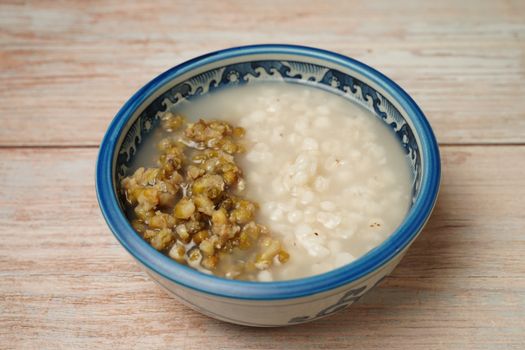
Photo: Kai-Chieh Chan / Pexels
The diets react (see scores below)
Common Ingredients
- jasmine rice
- ground pork
- chicken broth
- ginger
- scallions
- soy sauce
- sesame oil
- white pepper
Specific recipes may vary.
Incompatible with 6 of 11 diets
Diet Ratings
Pork congee is fundamentally incompatible with a ketogenic diet due to its primary ingredient: jasmine rice. Congee is essentially a rice porridge, meaning rice is the dominant component and carbohydrate source. A single serving of congee (approximately 1 cup) can contain 25-40g of net carbs from the rice alone, and a typical bowl serving would far exceed the daily 20-50g keto carb limit in one meal. Jasmine rice is a refined, high-glycemic grain with no meaningful fiber to offset its carb count. The remaining ingredients — ground pork, chicken broth, ginger, scallions, soy sauce, and sesame oil — are largely keto-friendly, but they cannot redeem a dish built on a grain base. There is no practical portion size of traditional congee that fits within ketogenic macros.
Pork Congee contains multiple animal-derived ingredients that are categorically excluded from a vegan diet. Ground pork is a direct animal product (mammal flesh), and chicken broth is derived from poultry. These two ingredients alone make this dish entirely incompatible with veganism. The remaining ingredients — jasmine rice, ginger, scallions, soy sauce, sesame oil, and white pepper — are all plant-based, but the presence of pork and chicken broth is disqualifying. There is no ambiguity or debate within the vegan community regarding meat and poultry-based broths.
Pork Congee contains multiple non-paleo ingredients that are clear violations of the diet's core principles. Jasmine rice is a grain and is excluded under strict paleo rules. Soy sauce is a processed legume-derived condiment containing both soy and wheat. Sesame oil is a seed oil, which is explicitly excluded in favor of animal fats, olive oil, coconut oil, or avocado oil. Added salt (inherent in soy sauce and typically in commercial chicken broth) is also discouraged. While ground pork, ginger, scallions, and white pepper are paleo-compatible, the foundational ingredients — rice, soy sauce, and sesame oil — make this dish incompatible with the paleo diet. There is no meaningful way to characterize this dish as paleo-friendly without fundamentally changing its identity.
Pork congee presents multiple conflicts with Mediterranean diet principles. Ground pork is a red meat, which should be limited to only a few times per month. Jasmine rice is a refined grain with minimal fiber compared to whole grains. Sesame oil, while a plant oil, is not extra virgin olive oil and is not a Mediterranean staple fat. The dish lacks vegetables, legumes, or other plant-forward components that are the cornerstone of Mediterranean eating. As a breakfast, it also misses the opportunity for the fiber-rich, plant-based start that Mediterranean guidelines encourage (e.g., whole grain bread, fruit, nuts, yogurt).
Pork Congee is fundamentally incompatible with the carnivore diet. The dish is built on jasmine rice, a grain that is strictly excluded from all tiers of carnivore eating. Beyond the rice base, it contains multiple plant-derived ingredients: ginger (plant spice), scallions (plant), soy sauce (fermented soy — a legume), and sesame oil (plant oil). White pepper is also a plant spice. While the dish does contain carnivore-compatible components (ground pork, chicken broth), these are vastly outnumbered by disqualifying plant foods. This is not a borderline case — the primary base ingredient is a grain, and the dish includes soy, plant oils, and multiple plant seasonings.
Pork Congee contains two clearly excluded ingredients: jasmine rice (a grain, explicitly prohibited on Whole30) and soy sauce (a soy/legume-derived product, also explicitly prohibited). Rice is a core excluded grain category, and soy sauce contains soy and often wheat — both excluded. Sesame oil is compliant, and pork, ginger, scallions, chicken broth, and white pepper are all fine, but the presence of rice alone is enough to disqualify this dish entirely. There is no compliant workaround that still constitutes 'congee,' as rice is definitional to the dish.
Pork congee is mostly low-FODMAP, but has two ingredients that require careful management. Jasmine rice and ground pork are clearly low-FODMAP. Ginger is low-FODMAP at small amounts (1 teaspoon fresh). Sesame oil and white pepper are fine. The main concerns are: (1) Scallions — the green tops are low-FODMAP but the white bulb portions are high in fructans and must be strictly avoided; many recipes and cooks use the whole scallion. (2) Chicken broth — commercial broths frequently contain onion and/or garlic, making them high-FODMAP; only certified low-FODMAP broth or homemade broth without onion/garlic is safe. Soy sauce is low-FODMAP at standard serving sizes (2 tablespoons). If green scallion tops only are used and the broth is confirmed low-FODMAP (e.g., homemade or a certified brand), this dish becomes largely low-FODMAP. However, as typically prepared in a restaurant or standard home recipe, the broth and scallion white portions pose a real FODMAP risk, warranting a caution rating.
Monash University rates scallion green tops as low-FODMAP and commercial soy sauce as low-FODMAP at ≤2 tbsp, but clinical FODMAP practitioners often flag restaurant-prepared congee as risky during elimination because broth ingredients are unverifiable and whole scallions are commonly used; home preparation with verified ingredients significantly improves the FODMAP profile.
Pork congee presents multiple DASH diet concerns. The combination of soy sauce and chicken broth creates a high-sodium dish — a single bowl can easily exceed 800–1,200mg of sodium, a substantial portion of even the standard DASH limit of 2,300mg/day. Ground pork contributes saturated fat, which DASH limits. Jasmine rice is a refined grain rather than the whole grain DASH emphasizes. Sesame oil adds fat, though it is an unsaturated vegetable oil acceptable in small amounts. On the positive side, ginger and scallions provide beneficial phytonutrients, and the dish is not inherently processed. The dish is not categorically excluded from a DASH diet but requires significant modification — using low-sodium broth, reducing or eliminating soy sauce, substituting lean ground turkey or chicken for pork, and ideally using brown rice — to bring it into alignment with DASH principles.
Pork congee presents notable challenges for Zone Diet compliance. The primary carbohydrate source is jasmine rice, a high-glycemic white rice that Dr. Sears explicitly classifies as an 'unfavorable' carbohydrate. Congee is made by cooking rice in large quantities of liquid until the starch fully gelatinizes, which further elevates its glycemic impact compared to regular cooked rice — the starch is highly accessible, causing rapid blood glucose spikes. The protein component (ground pork) is acceptable as a lean protein source if it is low-fat ground pork, though it carries more saturated fat than skinless chicken or fish. Sesame oil adds fat but is primarily polyunsaturated omega-6, not the preferred monounsaturated fat. On the positive side, the dish is relatively low in total carbohydrate density due to its high water content, and ginger and scallions contribute polyphenols and anti-inflammatory compounds that align with Sears' later nutritional emphasis. However, there are no Zone-favorable low-glycemic vegetables present. To improve Zone compatibility, one would need to significantly reduce the rice portion, substitute brown rice or cauliflower rice, add low-GI vegetables, and ensure the pork is lean. As served, this dish is difficult to fit into a proper 40/30/30 block structure without substantial modification.
Pork congee is a mixed dish from an anti-inflammatory perspective. On the positive side, ginger is a well-established anti-inflammatory spice (contains gingerols and shogaols that inhibit COX enzymes), scallions provide quercetin and organosulfur compounds, and sesame oil in small culinary amounts contains sesamol and sesamin with antioxidant properties. The dish is warming, easily digestible, and broth-based. However, several factors temper its profile: ground pork is a red meat and a source of saturated fat and arachidonic acid, both associated with pro-inflammatory pathways in excess. Jasmine rice is a refined/high-glycemic white rice with minimal fiber, which does not support the anti-inflammatory emphasis on whole grains. Soy sauce adds significant sodium and is a highly processed condiment. Sesame oil, while acceptable in small amounts, is moderately high in omega-6 linoleic acid. White pepper is a mild spice with minimal effect either way. The dish lacks meaningful omega-3s, colorful vegetables, or legumes that would push it into the 'approve' range. As a breakfast, the high glycemic load of the rice porridge may spike blood glucose, which can transiently promote inflammation. The dish is not inherently harmful and benefits from anti-inflammatory spices, but the combination of red/processed meat, refined carbohydrate, and high sodium place it in the 'caution' category. Substituting brown rice, using less pork or swapping for fish, and adding leafy greens or mushrooms would substantially improve its profile.
Some anti-inflammatory practitioners, particularly those drawing on traditional food medicine frameworks (including TCM-aligned nutrition), would view congee more favorably as a gentle, gut-supporting food — the slow-cooked broth and ginger are considered restorative and anti-inflammatory in functional medicine contexts (e.g., Dr. Mark Hyman's emphasis on gut health). Conversely, stricter anti-inflammatory protocols like AIP or Weil's pyramid would flag the refined white rice and pork as meaningful concerns, especially for individuals managing chronic inflammatory conditions.
Pork congee is a gentle, easy-to-digest dish well-suited to GLP-1 patients dealing with nausea or GI sensitivity — the long-cooked rice porridge is soft, warm, and stomach-friendly, and ginger actively supports nausea relief. However, it falls short on several GLP-1 priorities. Jasmine rice is a refined grain with low fiber and high glycemic index, offering little nutritional density per calorie. Protein content depends heavily on the amount of ground pork used — a modest serving may deliver only 10-15g of protein, falling short of the 15-30g per meal target. Ground pork contributes some saturated fat depending on fat percentage of the meat used. Sesame oil and soy sauce are present in small amounts and are not problematic at typical serving sizes. The dish is portion-sensitive: a small bowl can be a reasonable light meal if pork quantity is generous and lean, but a starchy-heavy bowl with minimal meat misses GLP-1 nutritional goals. Overall, this is a conditional caution — acceptable when pork is lean and portioned generously for protein, but the refined rice base limits its score.
Some GLP-1-focused dietitians view congee favorably as a recovery meal on high-nausea days, prioritizing digestibility and hydration over macronutrient optimization — arguing that getting calories and fluids in matters more than hitting protein targets when GI side effects are severe. Others counter that even on difficult days, protein should be maximized to prevent muscle loss, and recommend boosting the dish with egg, tofu, or extra lean protein rather than relying on a starch-forward preparation.
*See how scores were generated at our methodology page.
Nutritional profile
Six traits that cut across every diet.
Fiber & Plants
How much whole-plant food and fiber it delivers.
Healthy Fats
The quality of its fats (unsaturated, omega-3).
Whole / Unprocessed
How close it is to its natural, unprocessed form.
Gut Gentle
How easy it is on digestion (low FODMAP, few irritants).
Low Glycemic
How little it spikes your blood sugar.
Protein Density
How much protein it packs per calorie.
Controversy Index
Higher controversy = more disagreement between diets.
Diet-Specific Tips
 Low-FODMAP — 5/10
View tips
- Jasmine rice is low-FODMAP and safe as the base
- Ground pork is low-FODMAP with no FODMAP concerns
- Scallion green tops only are low-FODMAP — white bulb portions contain fructans and must be excluded
- Commercial chicken broth frequently contains onion/garlic and is high-FODMAP; only verified low-FODMAP broth is safe
- Soy sauce is low-FODMAP at standard serving (≤2 tbsp)
- Sesame oil, ginger (small amount), and white pepper are all low-FODMAP
- Dish is manageable at home with ingredient substitutions but risky as typically prepared
 DASH — 4/10
View tips
- High sodium from soy sauce and chicken broth — a primary DASH concern
- Ground pork contributes saturated fat, which DASH limits
- Jasmine rice is a refined grain; DASH recommends whole grains
- Sesame oil is an acceptable unsaturated fat in small quantities
- Ginger and scallions add beneficial micronutrients with negligible sodium
- Modifiable dish: low-sodium broth, reduced soy sauce, and lean protein substitution can improve DASH compatibility significantly
 Zone — 4/10
View tips
- Jasmine rice is a high-glycemic 'unfavorable' carbohydrate per Dr. Sears' Zone classification
- Congee preparation (gelatinized starch) further elevates glycemic impact vs. regular cooked rice
- High water content means lower carbohydrate density per bowl, which slightly mitigates portion concerns
- Ground pork provides adequate protein but carries more saturated fat than preferred lean Zone proteins
- Sesame oil is omega-6 dominant, not the preferred monounsaturated fat source
- No low-glycemic vegetables present to balance the unfavorable carbohydrate source
- Ginger and scallions provide polyphenols consistent with Sears' anti-inflammatory principles
- Significant modifications (reduce rice, add vegetables, swap fat source) required for Zone compliance
 Anti-Inflammatory — 5/10
View tips
- Ginger: strong anti-inflammatory spice (gingerols, shogaols — COX inhibition)
- Ground pork: red meat with saturated fat and arachidonic acid — mild pro-inflammatory
- Jasmine rice: refined, high-glycemic carbohydrate — not a whole grain
- Sesame oil: moderate omega-6 content, but small culinary amounts limit impact
- Soy sauce: high sodium, highly processed
- Scallions: contain quercetin and organosulfur compounds — mild anti-inflammatory benefit
- No omega-3 sources, colorful vegetables, or legumes present
- Broth-based preparation is gentle and digestible — neutral to positive
 GLP-1 Friendly — 5/10
View tips
- Easy to digest — soft texture and warm broth ideal for GLP-1 GI sensitivity
- Ginger provides active nausea relief, a meaningful benefit for GLP-1 patients
- Jasmine rice is a refined grain — low fiber, high glycemic index, low nutrient density per calorie
- Protein delivery is portion-dependent — lean ground pork in adequate quantity needed to approach 15g+ per serving
- Ground pork carries moderate saturated fat depending on fat percentage; leaner pork or pork loin would improve the rating
- High water content from broth supports hydration, addressing reduced thirst sensation on GLP-1s
- Small serving risk: if rice dominates the bowl, this becomes a low-protein, high-starch meal that underserves GLP-1 nutritional needs