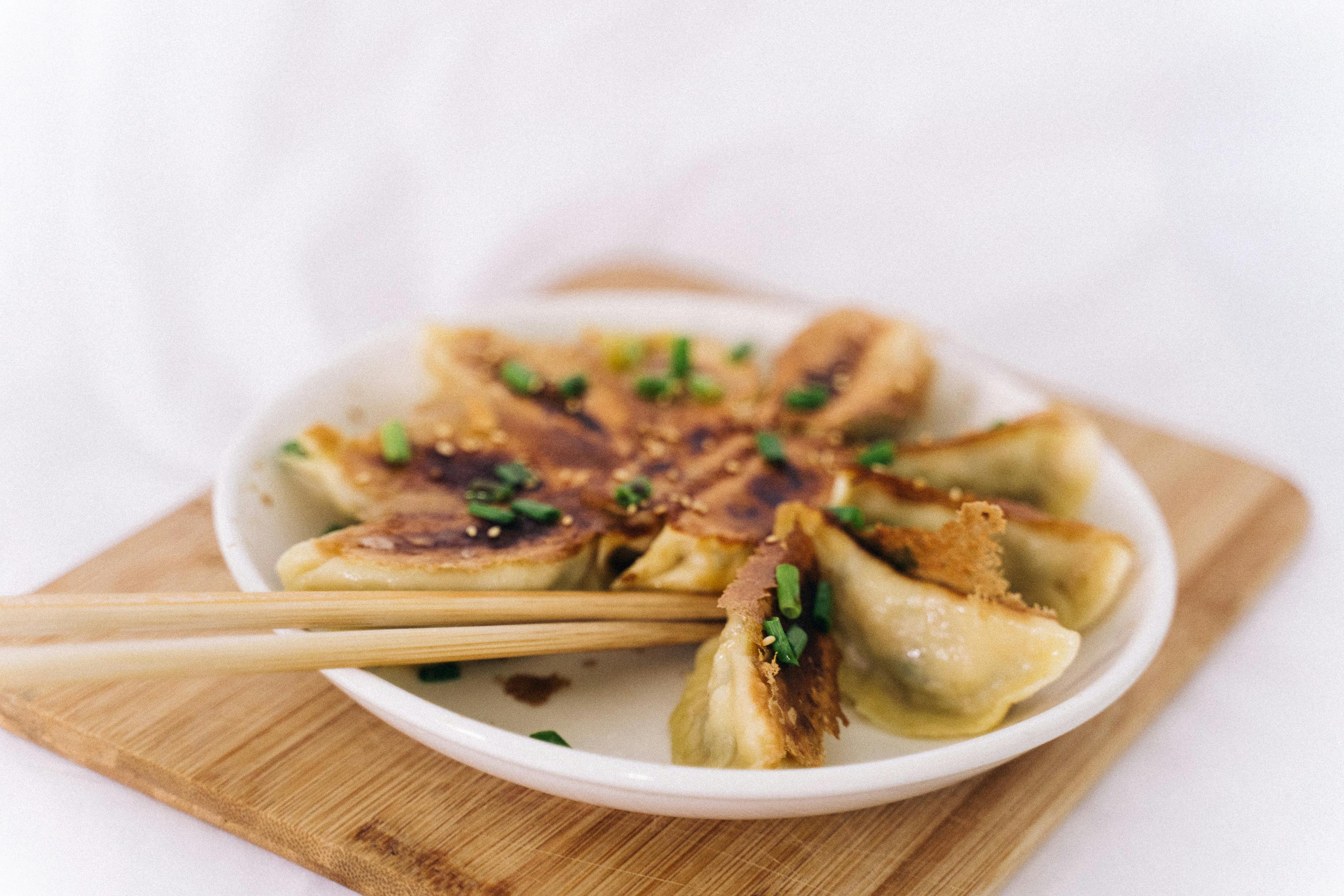
Photo: Anna Tarazevich / Pexels
Chinese
Pork Dumplings
The diets react (see scores below)
Common Ingredients
- ground pork
- Napa cabbage
- dumpling wrappers
- ginger
- garlic
- soy sauce
- sesame oil
- scallions
Specific recipes may vary.
Incompatible with 8 of 11 diets
Diet Ratings
Pork dumplings are fundamentally incompatible with a ketogenic diet due to the dumpling wrappers, which are made from refined wheat flour. Each standard dumpling wrapper contains approximately 5-7g of net carbs, meaning a typical serving of 6-8 dumplings delivers 30-56g of net carbs from the wrappers alone — easily exceeding or maxing out the entire daily keto carb allowance in a single snack. The filling ingredients (ground pork, Napa cabbage, ginger, garlic, sesame oil) are individually keto-friendly, but the grain-based wrapper is a dealbreaker. This is a grain-based product with no reasonable portion size that keeps it within keto limits.
Pork dumplings contain ground pork as the primary protein, which is a direct animal product (mammalian meat). This is an unambiguous violation of vegan dietary rules. There is no debate within the vegan community about whether pork is acceptable — it is not. The remaining ingredients (Napa cabbage, ginger, garlic, soy sauce, sesame oil, scallions, and most dumpling wrappers) are plant-based, but the inclusion of ground pork makes the dish entirely incompatible with a vegan diet.
Pork dumplings are fundamentally incompatible with the Paleo diet due to multiple non-compliant ingredients. The dumpling wrappers are made from wheat flour, a grain that is strictly excluded from Paleo. Soy sauce contains both wheat and soy (a legume), compounding the violation. Sesame oil is a seed oil, also excluded under Paleo guidelines. The remaining ingredients — ground pork, Napa cabbage, ginger, garlic, and scallions — are Paleo-compliant, but the core structural and flavoring components disqualify this dish entirely. There is no meaningful way to call this dish Paleo-friendly in its traditional form.
Pork dumplings conflict with Mediterranean diet principles on multiple fronts. Pork is a red meat, which should be limited to only a few times per month under Mediterranean guidelines. The dumpling wrappers are made from refined white flour, a refined grain that the diet discourages. Sesame oil, while a plant-based fat, is not the canonical Mediterranean fat — extra virgin olive oil is. Soy sauce adds significant sodium and is a processed condiment not aligned with Mediterranean eating patterns. The dish is also non-Mediterranean in culinary tradition, combining several problematic elements simultaneously: red meat, refined grains, and processed condiments, with no olive oil, legumes, or whole grains present.
Pork dumplings are almost entirely incompatible with the carnivore diet. While ground pork is a valid animal protein, virtually every other component violates carnivore principles. The dumpling wrappers are made from wheat flour — a grain and the most fundamental exclusion on the carnivore diet. Napa cabbage, scallions, garlic, and ginger are all plant foods. Soy sauce is a fermented grain/legume product. Sesame oil is a plant-derived oil. The dish is structurally defined by its wrapper and plant-based filling ingredients, making it impossible to adapt without completely deconstructing it into something unrecognizable as pork dumplings. The only salvageable component is the ground pork itself.
Pork dumplings contain multiple excluded ingredients. Dumpling wrappers are made from wheat flour, which is a grain and explicitly excluded on Whole30. Soy sauce contains soy (a legume) and wheat (a grain), both of which are excluded — though coconut aminos could substitute for the soy sauce, the wrapper issue alone disqualifies this dish. Additionally, even if compliant ingredient substitutes were used, dumplings fall into the 'pasta or noodles / recreating junk food' category in spirit, as they are wrapped dough-based items. There is no compliant version of a traditional dumpling wrapper on Whole30.
This dish contains multiple high-FODMAP ingredients that make it unsuitable for the elimination phase. Garlic is one of the highest-FODMAP foods tested, rich in fructans and problematic even in small amounts. Standard wheat-based dumpling wrappers are high in fructans. Onion-containing ingredients like scallions (the white portions) are also high-FODMAP. While some ingredients are low-FODMAP (ground pork, ginger, sesame oil, and soy sauce in small amounts), the combination of garlic, wheat wrappers, and scallion whites creates multiple simultaneous FODMAP triggers that would make this dish clearly unsuitable during the elimination phase.
Pork dumplings are problematic for the DASH diet on multiple fronts. Ground pork is a red meat with significant saturated fat content, which DASH explicitly limits. Soy sauce is extremely high in sodium — just one tablespoon contains approximately 900–1,000mg, and dumplings typically use multiple tablespoons in the filling plus additional dipping sauce. A standard serving of 6–8 dumplings can easily deliver 800–1,500mg of sodium from the soy sauce alone, consuming more than half the standard DASH daily sodium limit (2,300mg) or nearly the entire low-sodium DASH allowance (1,500mg). Sesame oil adds saturated fat and caloric density. The refined-flour dumpling wrappers offer minimal fiber compared to whole grain alternatives. While Napa cabbage, ginger, garlic, and scallions are DASH-friendly vegetables, they are overwhelmed by the high-sodium, high-saturated-fat profile of the dish as a whole. This dish as commonly prepared and consumed is fundamentally misaligned with DASH principles.
Pork dumplings present a mixed Zone profile. The ground pork provides reasonable protein but is fattier than ideal Zone lean proteins (skinless chicken, fish, egg whites), contributing excess saturated fat. The dumpling wrappers are made from refined white flour, making them high-glycemic 'unfavorable' carbs in Zone terminology. However, the Napa cabbage is a favorable low-glycemic vegetable, and the aromatics (ginger, garlic, scallions) are Zone-friendly polyphenol sources. Sesame oil is omega-6 heavy rather than the preferred monounsaturated fats like olive oil or avocado. As a snack portion (3-4 dumplings), this could approximate 1-2 Zone blocks of protein and carbs, but the carb quality is poor and the fat profile is suboptimal. The macro ratios are workable but not ideal — the refined wrapper carbs will spike insulin more than Zone-preferred low-GI carbs, undermining the anti-inflammatory goals central to the diet.
Some Zone practitioners argue that small portions of dumplings (3-4 pieces) can fit within a Zone snack block structure, especially since the filling protein and vegetable content partially offsets the refined wrapper. Sears' later writings emphasize polyphenol density and omega-3/omega-6 balance more than strict glycemic avoidance, and if made with leaner pork or turkey and eaten alongside a polyphenol-rich dipping sauce (e.g., rice vinegar with ginger), the anti-inflammatory profile improves meaningfully.
Pork dumplings present a mixed anti-inflammatory profile. On the positive side, the dish includes several strong anti-inflammatory ingredients: ginger and garlic are well-supported anti-inflammatory spices, Napa cabbage provides cruciferous antioxidants and fiber, and scallions contribute quercetin and other polyphenols. Sesame oil, used in small amounts as a flavoring, contains sesamin and sesamol with some antioxidant activity, though it is relatively high in omega-6 fatty acids. Soy sauce, while high in sodium, is a fermented food and contributes umami without significant inflammatory burden at typical serving amounts. The main concern is ground pork: pork is a red meat and contains saturated fat and arachidonic acid (omega-6), both of which are flagged under anti-inflammatory guidelines as pro-inflammatory when consumed regularly. The fat content depends heavily on cut — lean ground pork is meaningfully better than fatty varieties. Dumpling wrappers are refined carbohydrates, which are a moderate concern. Overall, this is a dish with real anti-inflammatory contributors (ginger, garlic, cabbage) undermined by refined carbs and a red meat protein base. Acceptable as an occasional food rather than a dietary staple.
Some anti-inflammatory practitioners, including those following Dr. Weil's broader dietary philosophy, would view pork more leniently than beef, particularly lean cuts, given its relatively lower saturated fat content compared to red beef and lamb. However, stricter anti-inflammatory protocols would flag any red meat as a concern and would recommend substituting with chicken, shrimp, or tofu — the latter being explicitly emphasized as a beneficial whole soy food in Weil's pyramid.
Pork dumplings offer a moderate protein contribution from ground pork and some fiber from Napa cabbage, but several factors make them a cautious choice for GLP-1 patients. Ground pork is a higher-fat protein source compared to lean alternatives like chicken breast or shrimp, and the sesame oil adds additional fat that can worsen nausea, bloating, or reflux given slowed gastric emptying. The dumpling wrappers are refined carbohydrates with low fiber and minimal nutritional density, reducing the nutrient-per-calorie ratio. The soy sauce content is high in sodium, which may complicate hydration in patients already at risk of dehydration. On the positive side, the dish is soft and easy to chew and digest, works in small portions, and the ginger is actually a mild digestive aid that may help with nausea. A small serving of 3-4 steamed dumplings can be tolerable, but fried versions should be avoided entirely.
Some GLP-1-focused dietitians view dumplings as an acceptable occasional choice because they are portion-controlled by nature and the pork-cabbage filling provides a reasonable protein-to-volume ratio; others flag the refined wrapper and saturated fat content of ground pork as meaningful concerns given reduced caloric intake, making every calorie's nutritional contribution more important.
*See how scores were generated at our methodology page.
Nutritional profile
Six traits that cut across every diet.
Fiber & Plants
How much whole-plant food and fiber it delivers.
Healthy Fats
The quality of its fats (unsaturated, omega-3).
Whole / Unprocessed
How close it is to its natural, unprocessed form.
Gut Gentle
How easy it is on digestion (low FODMAP, few irritants).
Low Glycemic
How little it spikes your blood sugar.
Protein Density
How much protein it packs per calorie.
Controversy Index
Higher controversy = more disagreement between diets.
Diet-Specific Tips
 Zone — 5/10
View tips
- Refined white flour dumpling wrappers are high-glycemic 'unfavorable' carbs in Zone terminology
- Ground pork has higher saturated fat content than ideal Zone lean proteins
- Sesame oil is omega-6 dominant rather than preferred monounsaturated fat sources
- Napa cabbage is a favorable low-glycemic Zone vegetable
- Small portion (3-4 dumplings as snack) could approximate 1-2 Zone blocks but carb quality remains poor
- Ginger and garlic contribute beneficial polyphenols aligned with Sears' anti-inflammatory focus
- Macro ratios skew toward carbs and fat relative to protein without careful portion control
 Anti-Inflammatory — 5/10
View tips
- Ground pork is a red/processed meat high in saturated fat and arachidonic acid — a known pro-inflammatory omega-6 fatty acid
- Ginger and garlic are well-validated anti-inflammatory spices with documented effects on CRP and NF-κB pathways
- Napa cabbage provides cruciferous antioxidants, glucosinolates, and fiber
- Dumpling wrappers are refined carbohydrates with a moderate pro-inflammatory profile
- Sesame oil is used as flavoring (small amount) — antioxidant properties partially offset its omega-6 content at typical doses
- Soy sauce contributes sodium but is a fermented food; not a significant inflammatory driver at normal use
- Dish is ingredient-level moderate — frequency and portion size are key determinants of net inflammatory impact
 GLP-1 Friendly — 5/10
View tips
- Ground pork is moderate-to-high in saturated fat compared to lean protein alternatives
- Dumpling wrappers are refined carbohydrates with low fiber and low nutrient density
- Sesame oil adds fat that may worsen GLP-1 GI side effects such as nausea and reflux
- Soft texture and small individual serving size are GLP-1 friendly
- Ginger ingredient may mildly support nausea relief
- High sodium from soy sauce may worsen dehydration risk
- Steamed preparation preferred — fried versions should be avoided
- Protein per serving is modest and unlikely to meet per-meal targets of 15-30g without a large portion