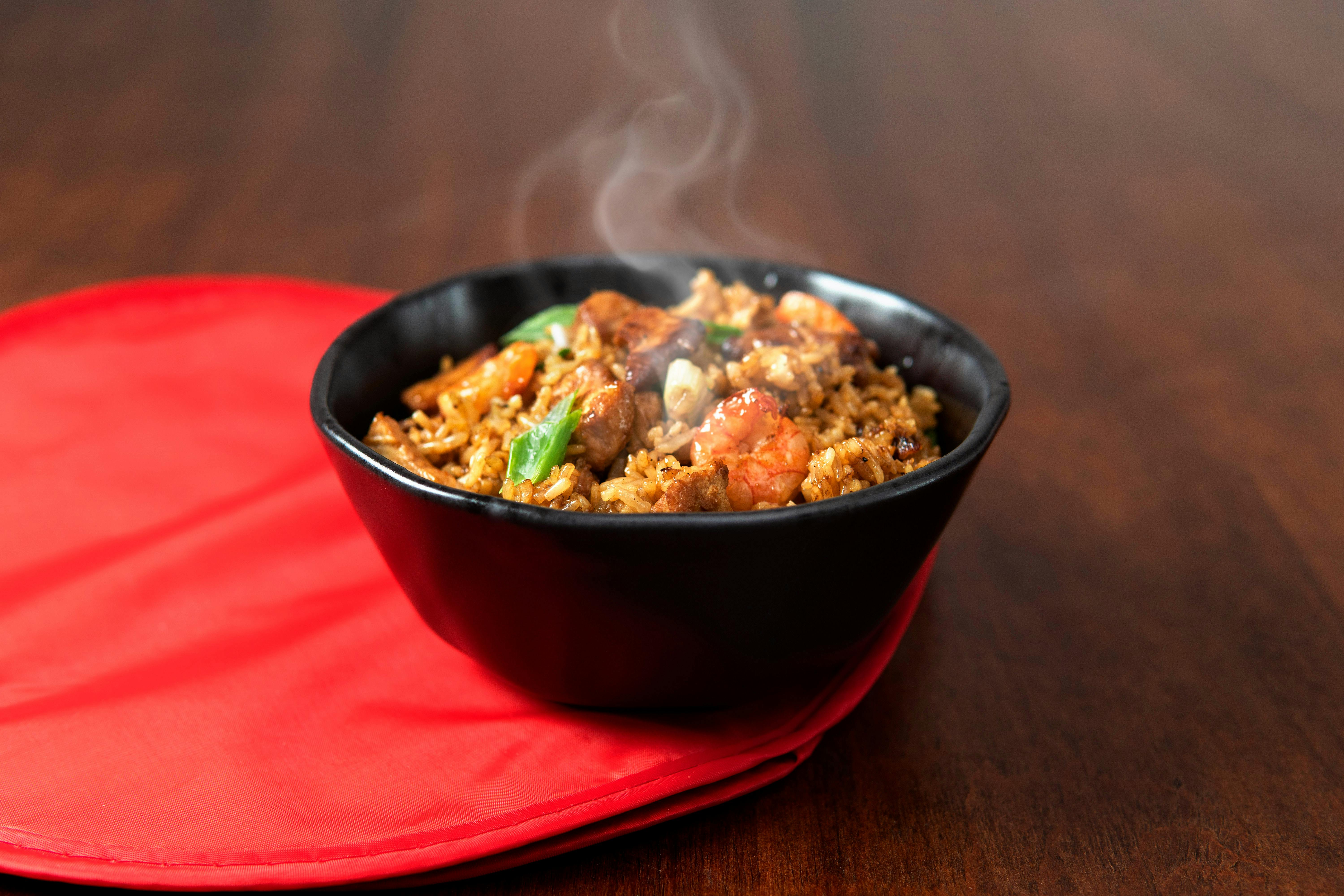
Photo: Visual Tag Mx / Pexels
Chinese
Pork Fried Rice
The diets react (see scores below)
Common Ingredients
- jasmine rice
- char siu pork
- eggs
- peas
- carrots
- scallions
- soy sauce
- sesame oil
Specific recipes may vary.
Incompatible with 7 of 11 diets
Diet Ratings
Pork Fried Rice is fundamentally incompatible with a ketogenic diet. The primary ingredient, jasmine rice, is a high-glycemic starch that contains approximately 45g of net carbs per cup — a single serving would likely exceed the entire daily carb allowance of 20-50g on its own. Char siu pork typically contains added sugar and honey in its marinade, adding further carbs. Peas and carrots are starchy/sugary vegetables that contribute additional net carbs. There is no practical way to consume a standard serving of this dish while maintaining ketosis.
Pork Fried Rice contains multiple animal products that are categorically excluded from a vegan diet. Char siu pork is a barbecued pork product (direct animal flesh), and eggs are an animal product explicitly excluded under vegan rules. These two ingredients alone make this dish entirely incompatible with veganism, regardless of the plant-based components present (jasmine rice, peas, carrots, scallions, soy sauce, sesame oil).
Pork Fried Rice is fundamentally incompatible with the Paleo diet due to multiple core violations. Jasmine rice is a grain and is excluded under strict paleo guidelines. Char siu pork is a processed meat product containing soy sauce, sugar, and other additives. Soy sauce is a fermented soy (legume) and wheat (grain) product — a double violation. Sesame oil is a seed oil, which is excluded in favor of approved fats. Peas are legumes and also excluded. While eggs, carrots, and scallions are paleo-approved, the foundational ingredients of this dish — rice, soy sauce, sesame oil, char siu pork, and peas — are all non-paleo. This dish cannot be considered paleo-compatible in any meaningful way.
Pork Fried Rice conflicts with Mediterranean diet principles on multiple fronts. Char siu pork is a processed, sweetened red meat product — red meat is already limited to a few times per month, and the char siu preparation adds sugars and sodium that further distance it from Mediterranean ideals. Jasmine rice is a refined white grain, not a whole grain, offering little fiber. Sesame oil, while a plant-based fat, is not the Mediterranean-approved extra virgin olive oil. Soy sauce adds significant processed sodium. The dish as a whole is a Chinese-style preparation with no meaningful alignment to Mediterranean dietary patterns — it lacks vegetables as the centerpiece, uses the wrong fat source, features processed red meat, and is built on refined grains.
Pork Fried Rice is fundamentally incompatible with the carnivore diet. The dish is built around jasmine rice, a grain that is entirely excluded on carnivore. Additional plant-based ingredients include peas, carrots, scallions, soy sauce (fermented soy — a legume), and sesame oil (a plant-derived oil) — every one of which violates carnivore principles. Char siu pork is itself problematic as it typically contains sugar, honey, hoisin sauce, and other plant-based marinades, making it a processed meat with non-carnivore additives. The only carnivore-compliant ingredients in this dish are the eggs and plain pork, but they are buried in a heavily plant-based preparation. This dish cannot be adapted to carnivore without being reconstructed entirely from scratch.
Pork Fried Rice contains multiple excluded ingredients that make it clearly non-compliant with Whole30. First, jasmine rice is a grain and is explicitly excluded from the Whole30 program. Second, soy sauce contains soy (a legume) and typically wheat (a grain), both of which are excluded — coconut aminos would be the compliant substitute. Third, char siu pork is traditionally made with hoisin sauce, soy sauce, and added sugar, all of which are excluded. Additionally, even if individual ingredients could be swapped out, fried rice is a grain-based dish at its core, and rice is categorically excluded. There is no compliant version of this dish as described.
Pork Fried Rice contains several ingredients that are individually manageable but collectively create meaningful FODMAP risk. Jasmine rice is low-FODMAP and safe. Eggs and sesame oil are low-FODMAP. Plain pork is low-FODMAP, but char siu pork is a significant concern — traditional char siu marinade contains honey (excess fructose), hoisin sauce (often contains high-FODMAP ingredients like garlic and onion), and sometimes garlic or five-spice with garlic/onion components. Regular soy sauce contains wheat (fructans), though tamari or gluten-free soy sauce would be safe. Scallions (green onion tops) are low-FODMAP in the green parts only — if white bulb portions are included, they become a fructan source. Peas are moderate-FODMAP: Monash rates them as low-FODMAP at 1/4 cup (35g) but high-FODMAP at larger servings, and fried rice often contains more than this threshold. Carrots are low-FODMAP. The combination of char siu pork (likely containing garlic/onion-based marinade), standard soy sauce with wheat, potentially high quantities of peas, and possible scallion white parts means this dish as typically prepared in a restaurant or at home is risky during elimination phase.
Monash University rates many individual components as safe, but clinical FODMAP practitioners would flag char siu pork as high-risk due to its marinade containing honey and often garlic/hoisin — the dish is only safe if char siu is made with a strictly low-FODMAP marinade substituting maple syrup and omitting garlic/onion-containing sauces. Additionally, pea portions in fried rice frequently exceed the Monash-approved 35g threshold, and cumulative FODMAP stacking across multiple moderate-risk ingredients increases the likelihood of symptoms.
Pork Fried Rice as commonly prepared is poorly aligned with DASH diet principles on multiple fronts. Char siu pork is a BBQ-glazed, high-sodium, higher-fat cut of pork — a processed/cured meat preparation that DASH discourages. Soy sauce is extremely high in sodium (one tablespoon contains ~900–1,000mg), and a typical fried rice dish uses multiple tablespoons, pushing the dish well toward or beyond the entire daily DASH sodium limit (1,500–2,300mg) in a single serving. Jasmine rice is a refined white grain, not the whole grain DASH emphasizes. Sesame oil adds caloric fat without meaningful DASH-friendly nutrients. While eggs, peas, carrots, and scallions are DASH-compatible ingredients, they are minor components that do not offset the dish's core problems. The combination of high sodium from soy sauce, processed/glazed fatty pork, and refined grains makes this a clear avoid under DASH guidelines.
Pork Fried Rice presents significant Zone Diet challenges, primarily due to its macronutrient imbalance. Jasmine rice is a high-glycemic refined carbohydrate that Dr. Sears classifies as an 'unfavorable' carb — it raises insulin rapidly and contributes to eicosanoid imbalance. As the dominant ingredient, it skews the carbohydrate ratio toward fast-digesting starches rather than the low-glycemic vegetables the Zone prefers. Char siu pork is a further complication: while pork itself can be a Zone-acceptable lean protein, char siu is marinated in honey, hoisin, and sugar, adding significant glycemic load and saturated fat. Sesame oil is an omega-6-heavy fat, running counter to Zone's anti-inflammatory fat priorities. On the positive side, eggs are a solid Zone protein source, peas and carrots contribute some low-glycemic vegetable carbs and fiber, and scallions add polyphenols. However, the overall dish as traditionally prepared is carb-heavy, protein-insufficient per serving, and fat-misaligned. A small, carefully portioned serving could be worked into a Zone meal if supplemented with additional lean protein and non-starchy vegetables, but the dish as presented does not naturally fit Zone ratios without significant modification.
Pork Fried Rice presents a mixed anti-inflammatory profile with several concerns and a few neutral-to-positive elements. The primary issue is char siu pork — a BBQ-style preparation of red meat that is marinated with sugar and often honey, contributing both saturated fat from pork and added sugars, both of which are pro-inflammatory. Jasmine rice is a refined white rice with a high glycemic index, offering minimal fiber and little nutritional benefit compared to whole grains like brown rice or farro, which the anti-inflammatory framework recommends instead. Soy sauce adds high sodium, which while not directly inflammatory, is worth noting for overall health context. On the positive side, eggs provide choline and selenium (mildly anti-inflammatory), peas and carrots contribute modest fiber, antioxidants (beta-carotene in carrots), and some polyphenols. Scallions are a mild allium with anti-inflammatory quercetin. Sesame oil, particularly toasted, has some antioxidant lignans (sesamin, sesamolin) though it is relatively high in omega-6 and should be used sparingly — its use in small amounts as a finishing oil is acceptable. Overall, this is a reasonable restaurant or comfort dish but lands squarely in the 'caution' zone: the refined white rice, sugary red meat preparation, and moderate saturated fat content outweigh the modest vegetable contributions.
Pork fried rice presents a mixed nutritional profile for GLP-1 patients. The eggs and char siu pork provide meaningful protein, but the dish is dominated by jasmine rice — a refined, low-fiber carbohydrate that spikes blood sugar and delivers minimal nutritional value per calorie. Char siu pork is a fatty, sweet-glazed preparation with added sugar and higher saturated fat than lean pork cuts, compounding the concern. Sesame oil adds additional fat, and traditional restaurant portions are large and calorie-dense. On the positive side, peas and carrots contribute modest fiber and micronutrients, and eggs are a high-quality protein source. The dish is generally easy to digest and not fried in heavy oil in the same way as deep-fried foods, but the stir-fry technique still adds fat. For GLP-1 patients, the low fiber content from refined rice, the sugar and fat load from char siu, and the large-portion nature of the dish make it a caution rather than an approve. A modified version — smaller portion, brown rice substituted, leaner pork — would score meaningfully higher.
Some GLP-1-focused dietitians view rice-based dishes favorably when portioned small, arguing that the protein from eggs and pork can meet per-meal targets and the dish is easy on a slowed GI tract. Others flag the glycemic impact of jasmine rice and the added sugars in char siu as particularly counterproductive given reduced caloric intake, and would recommend avoiding this dish in favor of higher-fiber, leaner alternatives.
*See how scores were generated at our methodology page.
Nutritional profile
Six traits that cut across every diet.
Fiber & Plants
How much whole-plant food and fiber it delivers.
Healthy Fats
The quality of its fats (unsaturated, omega-3).
Whole / Unprocessed
How close it is to its natural, unprocessed form.
Gut Gentle
How easy it is on digestion (low FODMAP, few irritants).
Low Glycemic
How little it spikes your blood sugar.
Protein Density
How much protein it packs per calorie.
Controversy Index
Higher controversy = more disagreement between diets.
Diet-Specific Tips
 Low-FODMAP — 4/10
View tips
- Char siu pork marinade typically contains honey (excess fructose) and hoisin/garlic (fructans) — high-FODMAP unless specially prepared
- Standard soy sauce contains wheat fructans; tamari or gluten-free soy sauce required for safe version
- Peas are low-FODMAP only at ≤1/4 cup (35g); typical fried rice portions often exceed this
- Scallion green tops are low-FODMAP but white bulb portions contain fructans
- Jasmine rice, eggs, carrots, and sesame oil are all low-FODMAP and safe
- Cumulative FODMAP stacking from multiple borderline ingredients increases overall risk
 Zone — 4/10
View tips
- Jasmine rice is high-glycemic and classified as an 'unfavorable' carbohydrate in Zone methodology
- Char siu pork contains added sugars (honey, hoisin) that elevate glycemic load beyond plain pork
- Sesame oil is omega-6 dominant, conflicting with Zone's anti-inflammatory fat guidelines
- Dish is carbohydrate-heavy and protein-light relative to the 40/30/30 Zone target
- Eggs, peas, and carrots are favorable Zone ingredients but are secondary in volume
- Small portions could technically be incorporated into a Zone meal with supplemental lean protein and vegetables
 Anti-Inflammatory — 4/10
View tips
- Char siu pork is red meat with added sugars and saturated fat — both pro-inflammatory
- Jasmine (white) rice is a refined, high-glycemic carbohydrate lacking fiber
- Eggs provide anti-inflammatory choline and selenium
- Peas and carrots add modest fiber, beta-carotene, and antioxidants
- Scallions contain quercetin, a mildly anti-inflammatory flavonoid
- Sesame oil is high in omega-6 but used in small quantities as a flavor oil — low concern at typical doses
- No omega-3-rich ingredients, no whole grains, no significant polyphenol sources
 GLP-1 Friendly — 4/10
View tips
- Jasmine rice is a refined carbohydrate with low fiber and high glycemic index — poor nutrient density per calorie
- Char siu pork is high in saturated fat and added sugar, less ideal than lean pork cuts
- Eggs contribute high-quality protein and improve the dish's GLP-1 suitability
- Sesame oil adds unsaturated fat but increases overall fat content per serving
- Peas and carrots provide modest fiber and micronutrients but not enough to offset the refined rice base
- Traditional portion sizes are large — poorly suited to GLP-1 reduced appetite and small-meal guidance
- No deep frying involved, which moderates the fat concern relative to fully fried preparations
- Added sugars in char siu glaze are a concern given the directive to limit high-sugar foods